
A Church Divided by Sin
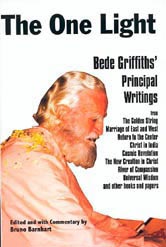
"Hinduism, Buddhism and Sufism have attracted these seekers with a promise and an experience of meaning and fulfillment which they had not found in their own religious tradition. Many of these spiritual pilgrims, on the other hand, found in Bede Griffiths and the life of his ashram a Christianity that spoke to their hearts as well as to their minds. Bede argues that 'biblical Christianity,' as it has developed so far through a western consciousness, is no longer enough. It is in opening itself to the traditions of the East that Christianity will discover itself once again as 'an interior religion, a religion of the heart and not of the head,' a religion of personal experience which gives meaning and direction to human life.”
“[Bruno Barnhart]: As he completed 'The Golden String' (The book appeared
in 1954), Bede Griffiths already saw the church as coextensive with the whole of
humanity. In this light, the divided Christianity of the twentieth
century stood out with stark clarity. It was natural for him to see the history
of western civilization and culture since the Renaissance and Reformation as an
almost unmitigated decline. While Bede recognized the dark shadow of historical
Christianity - corruption, violence and oppression - he found the cause of these
evils within Christendom in the sin of individuals rather than in any systemic
shortcomings. The church stands radiant and inviolate in the world, above these
personal failings. If the Gospel of Christ had so far failed to transform this
world, it is 'we' who must assume the blame. It is due simply to the infidelity
of believers that the church has been divided and that humanity has not yet been
drawn together around its center, Jesus Christ.
[Bede Griffiths]: The divisions which at present exist among Christians are but
one aspect of that deeper conflict which divides mankind and dismembers the Body
of Christ. For we must always remember that the bounds of the church are
coextensive with mankind. When the Word of God, who is that Wisdom by which and
through which and for which all things exist, assumed a human nature, he came to
unite all mankind in one Body in himself. There is no man from the beginning to
the end of the world, who does not receive grace from Christ and who is not
called to eternal life in him. He is the true light which enlightens every man
coming into the world. It is the same Spirit which from the beginning of history
has been leading all men by his grace; it is the same Word, which enlightens
them through their reason and conscience and prepares them for the revelation of
himself...
All the great errors of our civilisation from the Reformation to the Russian
revolution have arisen because of the failure of Christians to embody the truth
of Christ in their lives. If Communism presents itself now as the great enemy of
our civilization, it is because it embodies, in however distorted a manner, that
thirst for social justice which Christianity failed to satisfy. When Marx
declared that the aim of Communism was to"realise the essence of man"In the
classless society, he was proclaiming what is the real aim of Christianity
itself. For Christ is truly the Perfect Man, in whom all the potentialities of
human nature are realised, and it is by membership of his Body, that we become
part of a social organism in which all the conflicts of class and race and
religion are transcended, and man realizes his true nature as a son of God.
Such is the vision of the church which Catholicism presents to us. It
corresponds with all the deepest needs of mankind at the present day. While
remaining true to that tradition of faith and doctrine which has been handed
down from the beginning, it seeks to embrace all that is true in modern science
and ancient philosophy. It envisages mankind in the whole length and breadth of
its history as part of a divine plan, through which the destiny of man is to be
fulfilled in a new order of being transcending this world of space and time. It
faces the full tragedy of the situation in which we find ourselves, and finds
the source of conflict in human life in the free choice of the will by which man
becomes subject to sin.
To be a Christian is to accept the responsibility for sin not only in
oneself but in others also. It is to recognize that we all bear the
responsibility for one another.
[Bruno Barnhart]: In a letter from Bede's South Indian ashram of
Shantivanam to The Tablet thirty years after 'The Golden String,' we hear a very
different voice. For many years now, Bede has been confronted again and again by
the dissatisfaction and alienation of Europeans and North Americans who have
left western Christianity behind to come to India in search of spiritual wisdom.
He takes up their cause against a 'formal, dogmatic, moralistic' Christianity
which they have found to be ' positive obstacle to their interior growth.'
Hinduism, Buddhism and Sufism have attracted these seekers with a promise and an
experience of meaning and fulfillment which they had not found in their own
religious tradition. Many of these spiritual pilgrims, on the other hand, found
in Bede Griffiths and the life of his ashram a Christianity that spoke to their
hearts as well as to their minds. Bede argues that 'biblical Christianity,' as
it has developed so far through a western consciousness, is no longer enough. It
is in opening itself to the traditions of the East that Christianity will
discover itself once again as"An interior religion, a religion of the heart and
not of the head," a religion of personal experience which gives meaning and
direction to human life.
[Bede Griffiths]: Sir: May I add further comment to the notes from an ashram
which you published in The Tablet of 24 March? We have had the same experience
here in our ashram in South India of people coming from the West in"search of
God.”They are of all ages from 20 and even under to over 70, of both sexes and
from many countries. They are almost all sincere seekers of a deeper meaning in
life than the West seems to give them. They go to Hindu ashrams and Buddhist
monasteries and to any Guru who will teach them a method of Yoga or meditation
which will enable them to find the truth and the life which they are seeking.
Those who come to our ashram are nearly all Christians, mostly Catholic, though
some are Jewish and some have no particular religion. What is disconcerting is
that so many Christians, especially Catholics, seem to find their religion an
obstacle to their search for truth and reality. For most of them, Christianity
is deemed to be identified with a formal, dogmatic, moralistic religion, which
is a positive obstacle in their interior growth.
What is the reason for this? I suggest that it may be that in the past,
when western society was nominally Christian, a formal religion was normally
sufficient to give one a sense of direction in life. But now that this is no
longer so, a formal religion simply breaks down in contact with the realities of
life. What people today are seeking is an interior religion, a religion of the
heart and not of the head, which at the same time gives a sense of meaning and
direction in life. This is what Hinduism, Buddhism, Sufism and other forms of
eastern doctrine give and Christianity in the way in which it is now presented
seems unable to give to many people. May this not be a sign that Christianity
today needs to come to terms with oriental religion? Is biblical Christianity,
as interpreted in the West, any longer an adequate religion for the world today?
The Bible belongs to the history of humanity as a whole and needs to be
interpreted in the light of eastern experience no less than western.
It is perhaps significant that Donald Nicholl is at present conducting a seminar
at the Ecumenical Institute in Jerusalem on"The People of the Book in the light
of Asia.”May it not be that the"people of the Book"- Jews, Christians and
Muslims - cannot solve the problems of the world today, unless they are willing
to learn from the religions of India and the Far East? God did not only reveal
himself to Israel, but has revealed himself in other ways to other people and we
need the witness of all people to the truth of Christianity.
The One Light - Bede Griffiths' Principal Writings
Chapter III, West, Part Two - Mystery And Drama Of The Church p.148-153
Edited and with Commentary by Bruno Barnhart
Templegate Publishers, Springfield, Illinois
ISBN 0-87243-254-8
Notes:
[16]"The Seekers," The Tablet, April 28, 1984.
The fulfillment of eschatological instruction promised by Jesus
An apocalypse (Greek: apokalypsis meaning “an uncovering”) is in religious contexts knowledge or revelation, a disclosure of something hidden, “a vision of heavenly secrets that can make sense of earthly realities.” (Ehrman 2014, 59)
“An apocalypse (Ancient Greek: apokalypsis ... literally meaning "an uncovering") is a disclosure or revelation of great knowledge. In religious and occult concepts, an apocalypse usually discloses something very important that was hidden or provides what Bart Ehrman has termed, "A vision of heavenly secrets that can make sense of earthly realities". Historically, the term has a heavy religious connotation as commonly seen in the prophetic revelations of eschatology obtained through dreams or spiritual visions.” Wikipedia 2021-01-09

Total number of recorded talks 3058: Public Programs 1178, Pujas 651, and other (private conversations) 1249
“The Paraclete will come (15:26; 16:7, 8, 13) as Jesus has come into the world (5:43; 16:28; 18:37)... The Paraclete will take the things of Christ (the things that are mine, ek tou emou) and declare them (16:14-15). Bishop Fison describes the humility of the Spirit, 'The true Holy Spirit of God does not advertise Herself: She effaces Herself and advertises Jesus.' ...
It is by the outgoing activity of the Spirit that the divine life communicates itself in and to the creation. The Spirit is God-in-relations. The Paraclete is the divine self-expression which will be and abide with you, and be in you (14:16-17). The Spirit's work is described in terms of utterance: teach you, didasko (14:26), remind you, hypomimnesko (14:26), testify, martyro (15:26), prove wrong, elencho (16:8), guide into truth, hodego (16:13), speak, laleo (16:13, twice), declare, anangello (16:13, 14, 15). The johannine terms describe verbal actions which intend a response in others who will receive (lambano), see (theoreo), or know (ginosko) the Spirit. Such speech-terms link the Spirit with the divine Word. The Spirit's initiatives imply God's personal engagement with humanity. The Spirit comes to be with others; the teaching Spirit implies a community of learners; forgetful persons need a prompter to remind them; one testifies expecting heed to be paid; one speaks and declares in order to be heard. The articulate Spirit is the correlative of the listening, Spirit-informed community.
The final Paraclete passage closes with a threefold repetition of the verb she will declare (anangello), 16:13-15. The Spirit will declare the things that are to come (v.13), and she will declare what is Christ's (vv. 14, 15). The things of Christ are a message that must be heralded...
The intention of the Spirit of truth is the restoration of an alienated, deceived humanity... The teaching role of the Paraclete tends to be remembered as a major emphasis of the Farewell Discourses, yet only 14:26 says She will teach you all things. (Teaching is, however, implied when 16:13-15 says that the Spirit will guide you into all truth, and will speak and declare.) Franz Mussner remarks that the word used in 14:26, didaskein, "means literally 'teach, instruct,' but in John it nearly always means to reveal.” (Stevick 2011, 292-7)
The Holy Spirit as feminine: Early Christian testimonies and their interpretation,
Johannes van Oort, Radboud University, Nijmegen, The Netherlands
Department of Church History and Church Polity, Faculty of Theology, University of Pretoria, South Africa



Stephen E. Witmer, Divine instruction in Early Christianity
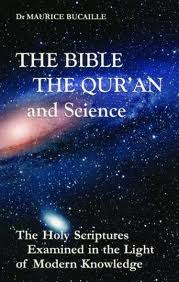
“Jesus therefore predicts that God will later send a human being to Earth to take up the role defined by John .i.e. to be a prophet who hears God's words and repeats his message to man.”
M. Bucaille, The Bible, the Qur'n, and Science
“And when Jesus foreannounced another Comforter, He must have intended a Person as distinct and helpful as He had been.”
F. B. Meyer, Love to the Utmost
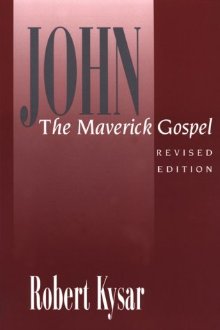
“The Paraclete has a twofold function: to communicate Christ to believers and, to put the world on trial.”
Robert Kysar, John The Meverick Gospel
“But She—the Spirit, the Paraclete...—will teach you everything.”
Danny Mahar, Aramaic Made EZ)
“Grammatical nonsense but evidence of the theological desire to defeminize the Divine.”
Lucy Reid, She Changes Everything
“The functions of the Paraclete spelled out in verses 13-15... are all acts of open and bold speaking in the highest degree.”
David Fleer, Preaching John's Gospel
“The reaction of the world to the Paraclete will be much the same as the world's reaction was to Jesus.”
Berard L. Marthaler, The Creed: The Apostolic Faith in Contemporary Theology
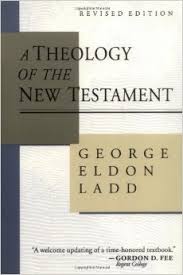
Bultmann calls the “coming of the Redeemer an 'eschatological event,' 'the turning-point of the ages.”
G. Ladd, A Theology of the New Testament
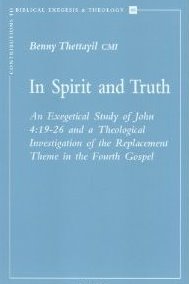
“The Paraclete equated with the Holy Spirit, is the only mediator of the word of the exalted Christ.”
Benny Thettayil, In Spirit and Truth
“The divine Paraclete, and no lessor agency, must show the world how wrong it was about him who was in the right.”
Daniel B. Stevick , Jesus and His Own: A Commentary on John 13-17
Stephen Smalley asserts that “The Spirit-Paraclete ... in John's Gospel is understood as personal, indeed, as a person.”
Marianne Thompson, The God of the Gospel of John
“The Messiah will come and the great age of salvation will dawn (for the pious).”
Eric Eve, The Jewish context of Jesus' Miracles
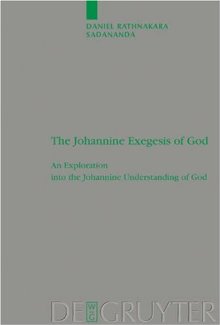
“The remembrance is to relive and re-enact the Christ event, to bring about new eschatological decision in time and space.”
Daniel Rathnakara Sadananda, The Johannine Exegesis of God
“The Spirit acts in such an international situation as the revealer of 'judgment' on the powers that rule the world.”
Michael Welker, God the Spirit
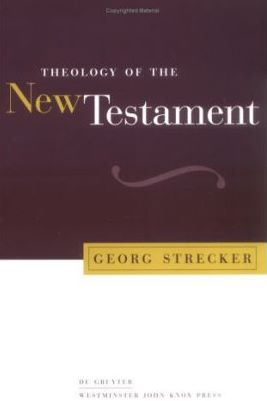
The Paraclete's “Appearance means that sin, righteousness, and judgment will be revealed.”
Georg Strecker, Theology of the New Testament
“While the Spirit-Paraclete is the true broker, the brokers they rely on are impostors.”
T. G. Brown, Spirit in the writings of John
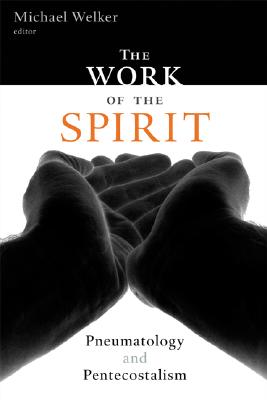
“The pneumatological activity ... of the Paraclete ... may most helpfully be considered in terms of the salvific working of the hidden Spirit.”
Michael Welker, The work of the Spirit
“The pneuma is the peculiar power by which the word becomes the words of eternal life.”
Robert Kysar, Voyages with John
“The gift of peace, therefore, is intimately associated with the gift of the Spirit-Paraclete.”
Francis J. Moloney, The Gospel of John
“This utopian hope, even when modestly expressed, links Jesus and the prophets to a much wider history of human longing.”
Harvey Cox, The Future of Faith
“Because of the presence of the Paraclete in the life of the believer, the blessings of the end-times—the eschaton—are already present.”
Robert Kysar, John
“They are going, by the Holy Spirit's power, to be part of the greatest miracle of all, bringing men to salvation.”
R. Picirilli, The Randall House Bible Commentary
“The Kingdom of God stands as a comprehensive term for all that the messianic salvation included... is something to be sought here and now (Mt. 6:33) and to be received as children receive a gift (Mk. 10:15 = Lk. 18:16-17).”
G. Ladd, A Theology of the New Testament
 Lessons for Living Found in Views of the Last Judgment
Beliefs
By PETER STEINFELS JAN. 20, 2007
“The image of the God who judges in wrath has caused a great deal of spiritual damage," Professor Moltmann will be telling his listeners.
But he is not satisfied with the alternative that makes eternal destiny simply a matter of the individual's own choice of whether to reject God. In that case, Professor Moltmann says, the Last Judgment becomes no more than "the ultimate endorsement of our free will." God really has nothing much to do with it beyond implementing the human outcome; in short, "we are the lords, and God is our servant," he says.
The alternative, in Professor Moltmann's view, is to put Jesus Christ at the center of this final drama. "It is high time to Christianize our traditional images and perceptions of God's Final Judgment," he says.
Any Last Judgment with Christ at the center must answer the cries of human victims for justice, without simply meting out vengeance on the perpetrators of injustice, Professor Moltmann suggests. A Christian eschatological vision would involve not the retributive justice of human courts but "God's creative justice," which can heal and restore the victims and transform the perpetrators.
The goal of a final judgment, in this interpretation, is not reward and punishment but victory over all that is godless, which he calls "a great Day of Reconciliation." Professor Moltmann argues for the universal preservation and salvation not only of humans, as individuals and as members of groups, but also of all living creatures. It has been "a fatal mistake of Christian tradition in doctrine and spirituality," he argues, to emphasize the "end of the old age" rather than "the new world of God," the beginning of the "life of the world to come."
This resurrected life will be bodily and worldly, and its expectation, he says, should teach people to "give ourselves wholeheartedly to this life here and surrender in love" to its “beauties and pains.”
New York Times, Lessons for Living Found in Views of the Last Judgment
January 20, 2007
Disclaimer: Our material may be copied, printed and distributed by referring to this site. This site also contains copyrighted material the use of which has not always been specifically authorized by the copyright owner. We are making such material available to our readers under the education and research provisions of "fair use" in an effort to advance freedom of inquiry for a better understanding of religious, spiritual and inter-faith issues. The material on this site is distributed without profit. If you wish to use copyrighted material for purposes other than “fair use” you must request permission from the copyright owner.

