
"Resurrection is accomplished by the wind of heaven that sweeps the worlds"
“Resurrection can be judged as one of the sharpest Valentinian
differences from dogmatic Christianity, a difference that appears in
Sufism and other esoteric traditions, and in many varieties of what I
have called the American Religion, the denominations and sects
indigenous to the United States. As in earlier Gnostic religion,
resurrection for Valentinus is distinctly not something that takes
place after death. Henry Corbin, in support of his Sufi Gnostics,
quotes from Balzac's novella Louis Lambert, itself a Hermetic tale:
Resurrection is accomplished by the wind of heaven that sweeps the
worlds. The Angel carried by the wind does not say: Arise ye dead! He
says: Let the living arise!
This is the kernel of the Valentinian resurrection: to know releases
the spark, and one rises up from the body of this death. Ignorance
falls away, one ceases to forget, one is again part of the Fullness.
The Valentinian Gospel According to Philip, a sort of anthology, has
nine crucial passages on resurrection, of which the bluntest
insists, 'Those who say the lord first died and then arose are
mistaken, for he first arose and then died.' Another adds," While we
exist in this world we must acquire resurrection.”Baptism, for the
Valentinians as for many Americans, itself was the resurrection,
again according to The Gospel of Philip:
People who say they will first die and then arise are mistaken. If
they do not first receive resurrection while they are alive, once
they have died they will receive nothing. Just so it is said of
baptism: "Great is baptism!" For if one receives it, one will live...
The crucial text for understanding Valentinus is the subtlest and
fullest we have by him, the beautiful sermon named The Gospel of
Truth, and I turn to it now seeking what is most central to
Valentinus's sense of resurrection.
Layton shrewdly remarks upon the 'Gnostic rhetoric' of The Gospel of
Truth, and notes its spiritual similarity, in atmosphere and in the
concept of salvation-resurrection to the proto-Gnostic Gospel of Thomas, which I suspect deeply influenced Valentinus. Both works, the
sermon and the collection of Jesus' "hidden" sayings, are allied by a
wonderful freedom from dogma and from myth, both Christian and
Gnostic. In each, there is a directness and a passion that breaks
down the barriers of reservations put up by historicizing scholars.
We are addressed directly, whether by Valentinus or Jesus, and
challenged to see what it is that is all around us, what it is that
we already know, even if we do not know that we know...
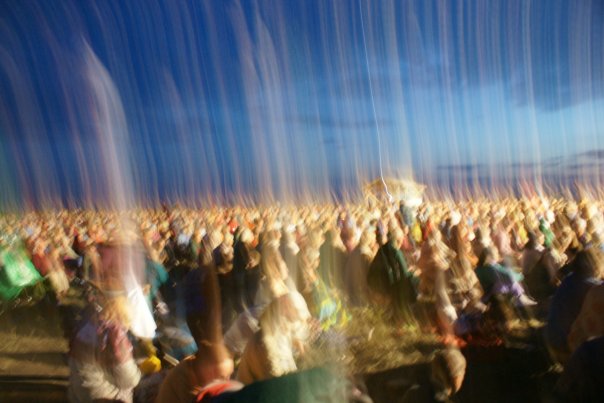
those taking part in the Resurrection (Photo
taken 1st August 2008 in Russia of Ruach
which, though invisible to the naked eye,
can be felt as Cool Breeze flowing from the
hands, head and other parts of the body.
(Click image for uncropped original)
Here is Valentinus upon our present state in his one complete
surviving work, the beautiful meditation The Gospel of Truth:
Thus they did not know God, since it was he whom they did not see.
Inasmuch as he was the object of fear and disturbance and instability
and indecisiveness and division, there was much futility at work
among them on his account, and much empty ignorance—as when one falls
sound asleep and finds oneself in the midst of nightmares: running
toward somewhere—powerless to get away while being pursued—in hand-to-
hand combat—being beaten—falling from a height—being blown upward by
the air, but without any wings; sometimes, too, it seems that one is
being murdered, though nobody is giving chase—or killing one's
neighbors, with whose blood one is smeared; until, having gone
through all these dreams, one awakens.
This nightmare of death-in-life, composed eighteen centuries ago,
need but little modification. The Gnostic Jesus of The Gospel of
Thomas, a wayfaring Jesus, closer to Walt Whitman than to the Jesus
of the Churches, speaks to us as if each of us is a passerby, and
with an ultimate eloquence tells us precisely into what we have been
thrown:
But if you do not know yourselves, then you dwell in poverty, and you are poverty.
Fortunate is one who came into being, before coming into being.”
Omens of the Millennium: The Gnosis of Angels, Dreams, and Resurrection,
Harold Bloom, Riverhead Books (October 1, 1997) pages 188-243
Did Jesus teach bodily resurrection of the dead?
"This age of logic, having struggled out of a long dark night of
superstition, belies belief in a literal interpretation of Christ's words in
this verse. The word"graves"used by Jesus gave Biblical interpreters of little
or no direct intuitional perception the thought that after death man's soul
waits with its cold corpse entombed, able to rise only on Resurrection Day when
archangel Gabriel blows his trumpet. It appears that for twenty centuries
Gabriel has not sounded his trumpet, because the skeletons of millions can be
found still in their graves.
This misconception of resurrection, that God would keep living souls
refrigerated for years beneath the cold sod, and then suddenly warm them up to
be sent to Hades or Heaven, is baseless, revolting, injurious, and unreasonable.”- Paramahansa Yogananda
Did Jesus teach bodily resurrection of the dead?
"Do not marvel at this; for an hour is coming, in which all who are in the tombs
shall hear His voice, and shall come forth; those who did the good deeds to a
resurrection of life, those who committed the evil deeds to a resurrection of
judgment.” (John 5:28-29)
This age of logic, having struggled out of a long dark night of
superstition, belies belief in a literal interpretation of Christ's words in
this verse. The word "graves" used by Jesus gave Biblical interpreters of little
or no direct intuitional perception the thought that after death man's soul
waits with its cold corpse entombed, able to rise only on Resurrection Day when
archangel Gabriel blows his trumpet. It appears that for twenty centuries
Gabriel has not sounded his trumpet, because the skeletons of millions can be
found still in their graves.
This misconception of resurrection, that God would keep living souls
refrigerated for years beneath the cold sod, and then suddenly warm them up to
be sent to Hades or Heaven, is baseless, revolting, injurious, and unreasonable.
If that is the plan, what injustice it is that sinners and the virtuous alike,
without discrimination, have been kept waiting for centuries. Surely the just
law of cause and effect has something better to offer those who strived
sincerely to live a righteous life. Are we to believe that an autocratic God,
without rhyme or reason, dumps all souls after death under a clod of earth and
keeps them sleeping peacefully or dreaming in nightmares for centuries until His
mood suddenly chooses to command Gabriel to blow the trumpet and wake the dead?
And what of those highly spiritual souls whose bodies are not buried but were
cremated and the ashes scattered in the winds and seas?
If Gabriel sounds the trumpet tomorrow, souls who died today would wake
up after only a few hours, along with the souls who have been dead for centuries
before the time of Christ. To drug immortal souls with the sleep of death for
centuries, to gag their expression in the gloom of the tomb for aeons, to
chloroform their intelligence for millenniums, and then suddenly wake them up
and sort them out for Heaven and Hades, is an untenable conception to ascribe to
a just and loving God.
How would God select from the various grades of dead sinners and the various
degrees of virtuous people, and the babies who have had no time to be either
virtuous or evil, which ones are to go eternally to Heaven and which eternally
to Hades? From such a medley of imperfect, half-perfect, and neutral souls no
divine justice could perform any reasonable selections. If God arbitrarily makes
persons of reasonable or unreasonable mentality, souls predisposed to be either
good or bad, nudged by a favorable or unfavorable earthly inheritance, and
endows babies with reason and then lets them die before they can express their
potentials, just for the sake of variety, then this earth is a hopeless mess,
and its creatures hapless puppets dancing on strings of chance. Our common sense
tells us that there must be a wiser purpose from a Creator who is wisdom itself.
The reason and free choice of every human being must have time and equal
opportunity to evolve and express the full God-given divinity of the soul.
The true meaning of these verses becomes clear when understood in the light of
the law of karma and reincarnation.”
The Second Coming of Christ (The Resurrection of the Christ within
You) Volume 1, Discourse 21, pg. 358-359
Paramahansa Yogananda
Resurrection refers instead to the way that Christ's presence can be experienced here and now
"That Jesus 'rose from the grave' to new life is a fundamental theme of Christian teaching; certainly it is the most radical. For even though most people believed in eternal life, the insistence of certain Christians like Irenaeus that their bodies would be buried, decompose — and yet rise again at the appointed time — was met not only with disbelief but with horror. Christians themselves were unclear about what kind of body this resurrected body would be. When Paul wrote about the resurrection, although his words are often mistaken as arguing for physical resurrection, he himself clearly says the opposite: 'What I am saying, brothers and sisters, is this: flesh and blood cannot inherit the kingdom of God, nor does the perishable inherit the imperishable'. (1 Corinthians 15:50). Without claiming to understand exactly what happens, Paul acknowledges that resurrection is a mystery, in which, he says, 'we will all be changed' from physical to spiritual existence (1 Corinthians 15:51:53)....
Yet Christians like this author, while rejecting the idea of bodily resurrection, do not reject life after death. On the contrary, they suggest other ways of envisioning what that life might be. The 'Gospel of Philip', for example, calls belief in resurrection of the flesh the 'faith of fools.' Resurrection, this gospel claims, far from being a single historical event in the past, refers instead to the way that Christ's presence can be experienced here and now. Thus, those who are 'born again' in baptism, symbolically speaking, also are 'raised from the dead' when they awaken to spiritual life. Another anonymous Christian teacher, asked by a student named Rheginos to explain resurrection, wrote in reply an interpretation of what Paul had taught. Although resurrection does not involve the physical body, the teacher tells Rheginos, it is indeed a reality:
...do not think the resurrection is an illusion. It is no illusion, but it is the truth! Indeed, it is more fitting to say the world is an illusion, rather than the resurrection, which has come into being through our Lord the Savior, Jesus Christ ('Treatise on the Resurrection' 48:10-19).
Struggling to speak, as Paul had, of 'mystery,' this teacher suggests that resurrection is 'the revelation of what is, and the transformation of things, and a transition into newness.' Yet descriptions like these, he acknowledges, are only 'the symbols and the images of resurrection'; Christ alone, he says, brings us into its reality ('Treatise on the Resurrection' 48:30-49:9).”
Reading Judas: The Gospel of Thomas and the Shaping of Christianity
Elaine Pagels and Karen L. King, Penguin Group, pp. 83-87
The resurrection of the body is unintelligible
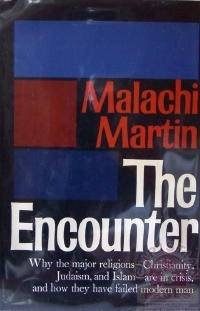
"The doctrine of bodily resurrection, linked closely to the soul's nature and destiny, suffers like a fate. The ancients knew little or nothing about the human organism—its chemical constituents, its functioning parts, its psychology—and even less about the nature of death. Modern man has measured corruption, can detail the chemical changes that take place when bodily life ceases, has a clear idea of what precisely corruption and decay of the human frame connote, and defines human death precisely by the cessation of the observable functions of the body. The three religions define death as the moment when the soul leaves the body.
On the other hand, the scientist cannot accept the 'outside' explanation: that a god will 'resurrect' the corrupted body. He knows that in a living body today the actual molecules which compose it were not part of it some time ago. In another decade it will be made up of molecules which at present are elsewhere: in African lions, in passion-flowers of the Amazon, in Maine lobsters, in earth in Patagonia, and in the fur of a Polar bear. For the scientist, the body as such has truly ceased to exist. No 'shade' or reduced form of the body exists in an' underworld' or in Elysian fields. The body has ceased to exist. He therefore finds the resurrection of the body unintelligible.”
Malachi Martin, The Encounter,
Farrar, Straus and Giroux, 1970, 286.
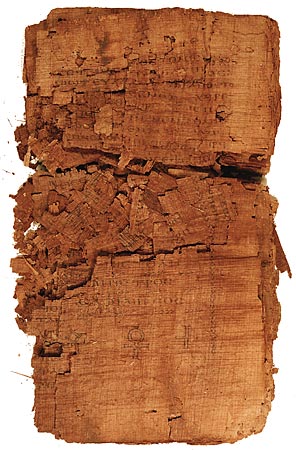
Gospel of Judas text
A resurrection of the body is the very last thing that Jesus, or any of his true followers, would want
"It will strike many readers as odd that the Gospel of Judas ends
where it does, with the so-called betrayal. But it makes perfect
sense given the views otherwise advanced in the book. The death of
Jesus is a forgone conclusion: All that is needed is the means by
which it will occur, and Judas does his part in making sure it will
happen. That is why he 'exceeds' all the others.
There will be no resurrection. This is perhaps the key point of all.
Jesus will not be raised from the dead in this book. Why would he be?
The entire point of salvation is to escape this material world. A
resurrection of a dead corpse brings the person back into the world
of the creator. Since the point is to allow the soul to leave this
world behind and to enter into 'that great and holy generation'—that
is, the divine realm that transcends this world—a resurrection of the
body is the very last thing that Jesus, or any of his true followers,
would want.
View of Salvation
That, of course, is the goal of Jesus' true followers as well. This
world and all its trappings are to be transcended. That can occur
when the soul learns the truth of its origin and destination, and
then escapes from the material prison of the body.
This teaching becomes clear in a key conversation between Judas and
Jesus, in which 'this' generation—that is, the race of people here on
earth—is contrasted with 'that' generation, the realm of the divine
beings. Some people belong to this generation, some to that one.
Those with the divine element within belong to that one; only they
can be saved when they die. When the others—of 'this' generation—
die, that will be the end of their story. As Jesus says,
The souls of every human generation will die. When these people
[i.e., those who belong to the realm above], however, have completed
the time of the kingdom and the spirit leaves them, their bodies will
die but their souls will be alive, and they will be taken up.
In this way of understanding, humans consist of a body, a spirit, and
a soul. The body is the material part that clothes the inner soul,
which is the real essence of the person. The spirit is the force that
animates the body, giving it life. When the spirit leaves the body,
the body dies and ceases to exist. For those who belong only to this
human realm, the soul then dies as well. As Jesus later says, 'It is
impossible to sow seed on [rock] and harvest its fruits.' In other
words, without a spark of the divine within, there will be no ongoing
life. But for those who belong to the realm above, the soul lives on
after death and is taken up to its heavenly home.”
The Gospel of Thomas, pp. 110-2
National Geographic 2006

Shri Mataji Nirmala Devi “Of course there are some absurd things which grew with misinterpretation and interference from unholy people, which are common in these religions. For example, Jews, Christian and Muslims believe that when they die their bodies will come out of their graves and they will all be resurrected at the Time of Resurrection, at the Time of Last Judgment, at the Time of Qiyamah. It is illogical to think what will remain inside those graves after five hundred years. Nobody wants to think and understand that it is not the body but the soul that will come out of these bodies, be born again as human beings and be saved through Qiyamah and Resurrection.
Who will tell them? No one can talk to them. As soon as one wants to talk one can be killed. This is the only way they know - how to kill.”
The Paraclete Shri Mataji
"But these are special time, the Blossom Time. They call it the Last Judgment, you can call it the Resurrection Time, you can call it the Qiyamah, they call it in Koran. It is said that people will come out of their graves and will get their Resurrection. I mean what is left to the graves is nothing but a few stones and a few bones. No. All these souls which are dead will take their birth, take human body and take their Realization in these special times. This is a sensible thing to say and is also happening.”
The Paraclete Shri Mataji
"We are now in the Blossom Time, as I call it, because many flowers are born and they are to become the fruits. This is the Resurrection Time, which is described in all the scriptures. But it's not like this, the way they had described us. Something wrong with them that all the dead bodies who are in the graves will come out of the graves. I mean, how much is left out of them, God knows. Must be some bones or maybe some skulls there. So they'll come out of the graves and they will get their Resurrection!!!? This is a very wrong idea.
Once I happened to meet a fellow, a Muslim from Bosnia and he told Me, 'I want to die for my religion, for God's sake.' I said, 'But why? Who told you to die?' He said, 'Now, if I die in the name of God, I'll be resurrected.' I said, 'it's all wrong. That's not the way it is going to work out. Resurrection is going to work out this way that at this time, all these souls will take their birth. All these souls will take their birth and they will be resurrected. As human beings they'll have to come.'
That's why we find all kinds of funny people these days, all kinds of cruel, criminal, all kinds of idiotic, stupid, I mean very queer, weird, funny ideas which find such, such a variety of people and such a tremendous population that we should understand they have to have their chance of Resurrection. But how many will come? That's the point. How many are going to come?”
The Paraclete Shri Mataji Philadelphia, USA — October 15, 1993
“There are lots of myths in the Bible and one of them is that at the Time of Resurrection your bodies will come out of the graves. This is not only for Christians, but also for the Muslims and Jews. Think of this - What remains in the grave after many years? Only a few bones. And if these bones came out how can you give them Realization? Think of it. It is a big myth. Not possible logically.”
The Paraclete Shri Mataji
India - December 25, 1993
“It is very hard to believe that we can become the Spirit. This is one of the big myths of Modern Times and many a times when I speak about becoming the Spirit people say that, 'How can you say like that? How can it be that easy?'
But it is a living process of our evolution and if it is done by the Power of a living God, then it has to be very simple, has to be very easy ...
Today that Time has come. That Time has come. The Time of Judgment has come and at this Time we have to see that we'll be judging ourselves; but not by some sort of an authority, but by something which is within us which we call as the Kundalini, is placed in the triangular bone called as sacrum. Just see, Greeks knew about it. That's why they call the bone as sacrum. But what is this bone in the biblical understanding? It is the reflection of the Holy Ghost.”
The Paraclete Shri Mataji
Related Articles
The resurrection of Jesus is not the central datum of Christianity
Deepak Chopra: "Jesus belongs to the world. The promise ...”
Crucifixion demonstrates"What dies is mortal body, not living spirit"
Entrance into Kingdom of God which Jesus speaks
The granting of the spirit of holiness is viewed as yet to take place ...
The Second Birth of Man—In Spirit
Eschatological aspect of the kingdom possesses for Jesus ...
"As in earlier Gnostic religion, resurrection ... is distinctly not ...”
The Resurrection of Christ within You
Jesus rebukes those who seek access to God elsewhere
Jesus proclaimed"salvation through knowledge ... of the divine light"
Jesus presented"salvation .. based upon knowledge of self"
THE APOCALYPSE OF THE SPIRIT-PARACLETE
Fulfillment of the promised divine eschatological instruction






 "it's better to tell you after Realization that I am the Holy Ghost — no doubt. I am the one about whom Christ has talked.”
The Paraclete Shri Mataji
Stephen E. Witmer, Divine instruction in Early Christianity
"Jesus therefore predicts that God will later send a human being to Earth to take up the role defined by John .i.e. to be a prophet who hears God's words and repeats his message to man.”
M. Bucaille, The Bible, the Qur'n, and Science
"And when Jesus foreannounced another Comforter, He must have intended a Person as distinct and helpful as He had been.”
F. B. Meyer, Love to the Utmost
"The Paraclete has a twofold function: to communicate Christ to believers and, to put the world on trial"
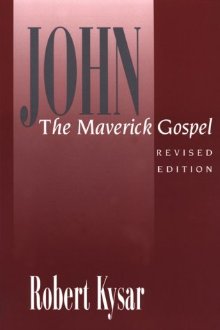
Robert Kysar, John The Meverick Gospel
"But She—the Spirit, the Paraclete...—will teach you everything.”
Danny Mahar, Aramaic Made EZ)
"Grammatical nonsense but evidence of the theological desire to defeminize the Divine.”
Lucy Reid, She Changes Everything
"The functions of the Paraclete spelled out in verses 13-15... are all acts of open and bold speaking in the highest degree.”
David Fleer, Preaching John's Gospel: The World It Imagines
"The reaction of the world to the Paraclete will be much the same as the world's reaction was to Jesus.”
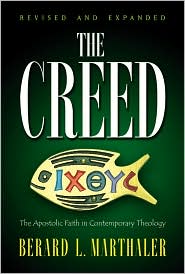
Berard L. Marthaler, The Creed: The Apostolic Faith in Contemporary Theology
Bultmann calls the "coming of the Redeemer an 'eschatological event,' 'the turning-point of the ages.”
G. Ladd, A Theology of the New Testament
"The Paraclete equated with the Holy Spirit, is the only mediator of the word of the exalted Christ.”
(M.E. Boring) Benny Thettayil, In Spirit and Truth
"The divine Paraclete, and no lessor agency, must show the world how wrong it was about him who was in the right.”
Daniel B. Stevick , Jesus and His Own: A Commentary on John 13-17
Stephen Smalley asserts that "The Spirit-Paraclete ... in John's Gospel is understood as personal, indeed, as a person.”
Marianne Meye Thompson, The God of the Gospel of John
"The Messiah will come and the great age of salvation will dawn (for the pious)"
Eric Eve, The Jewish context of Jesus' Miracles
"The remembrance is to relive and re-enact the Christ event, to bring about new eschatological decision in time and space.”
Daniel Rathnakara Sadananda, The Johannine Exegesis of God
"The Spirit acts in such an international situation as the revealer of 'judgment' on the powers that rule the world.”
Michael Welker, God the Spirit
The Paraclete's" appearance means that sin, righteousness, and judgment will be revealed.”
Georg Strecker, Theology of the New Testament
"While the Spirit-Paraclete is the true broker, the brokers they rely on are impostors.”
T. G. Brown, Spirit in the writings of John
"The pneumatological activity ... of the Paraclete ... may most helpfully be considered in terms of the salvific working of the hidden Spirit.”
Michael Welker, The work of the Spirit
"The pneuma is the peculiar power by which the word becomes the words of eternal life.”
Robert Kysar, Voyages with John: Charting the Fourth Gospel
"The gift of peace, therefore, is intimately associated with the gift of the Spirit-Paraclete"
Francis J. Moloney, The Gospel of John
"This utopian hope, even when modestly expressed, links Jesus and the prophets to a much wider history of human longing.”
Harvey Cox, The Future of Faith
"Because of the presence of the Paraclete in the life of the believer, the blessings of the end-times—the eschaton—are already present"
Robert Kysar, John
"They are going, by the Holy Spirit's power, to be part of the greatest miracle of all, bringing men to salvation.”
Robert E. Picirilli, The Randall House Bible Commentary
"The Kingdom of God stands as a comprehensive term for all that the messianic salvation included... is something to be sought here and now (Mt. 6:33) and to be received as children receive a gift (Mk. 10:15 = Lk. 18:16-17).”
G. Ladd, A Theology of the New Testament
Disclaimer: Our material may be copied, printed and distributed by referring to this site. This site also contains copyrighted material the use of which has not always been specifically authorized by the copyright owner. We are making such material available to our readers under the education and research provisions of "fair use" in an effort to advance freedom of inquiry for a better understanding of religious, spiritual and inter-faith issues. The material on this site is distributed without profit. If you wish to use copyrighted material for purposes other than “fair use” you must request permission from the copyright owner.

