
But, if the Spirit of him who raised Jesus from the dead dwells in you, he who raised from the dead Christ Jesus shall quicken your mortal bodies also through His Spirit who dwells in you.
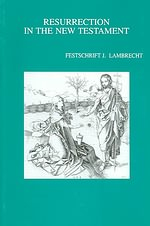
"Though the letter thus commences with the implicit identification of Paul's gospel with the message of the salvific death and resurrection of Christ, resurrection terminology elsewhere in the letter occurs only in the reference to eternal life from the Spirit in 6,8, and possible in that to the new creation in 6,15. The new creation, like the reference to Christ's living in Paul in 2,19, probably should be taken as indicative of a sharing in resurrection life which is already being experienced to some extent. Paul often tends to speak of present experience as an anticipation of what is to come fully in the resurrection...
Elsewhere in his writings, also, resurrection is associated with the work of the Spirit. See Rom 8,11, where Cransfield translates: "But, if the Spirit of him who raised Jesus from the dead dwells in you, he who raised from the dead Christ Jesus shall quicken your mortal bodies also through His Spirit who dwells in you.”The divine agent, then, is the Holy Spirit, in unity with the human spirit. This destiny of the inward self is indicated also in 2 Cor 4,16-17, where this self is destined ultimately to be the recipient of"An eternal weight of glory", i.e., the splendour of the resurrected body, conformed to the glorious body of Christ himself (Phil 3,20-21).”
F. J. Lambretch Resurrection in the New Testament, pg. 297
Translations of Romans 8:11
New American Standard Bible
But if the Spirit of Him who raised Jesus from the dead dwells in you, He who raised Christ Jesus from the dead will also give life to your mortal bodies through His Spirit who dwells in you.
God's Word Translation
Does the Spirit of the one who brought Jesus back to life live in you? Then the one who brought Christ back to life will also make your mortal bodies alive by his Spirit who lives in you.
King James Bible
But if the Spirit of him that raised up Jesus from the dead dwell in you, he that raised up Christ from the dead shall also quicken your mortal bodies by his Spirit that dwelleth in you.
American Standard Version
But if the Spirit of him that raised up Jesus from the dead dwelleth in you, he that raised up Christ Jesus from the dead shall give life also to your mortal bodies through his Spirit that dwelleth in you.
Bible in Basic English
But if the Spirit of him who made Jesus come again from the dead is in you, he who made Christ Jesus come again from the dead will in the same way, through his Spirit which is in you, give life to your bodies which now are under the power of death.
Douay-Rheims Bible
And if the Spirit of him that raised up Jesus from the dead, dwell in you; he that raised up Jesus Christ from the dead, shall quicken also your mortal bodies, because of his Spirit that dwelleth in you.
Darby Bible Translation
But if the Spirit of him that has raised up Jesus from among the dead dwell in you, he that has raised up Christ from among the dead shall quicken your mortal bodies also on account of his Spirit which dwells in you.
Weymouth New Testament
And if the Spirit of Him who raised up Jesus from the dead is dwelling in you, He who raised up Christ from the dead will give Life also to your mortal bodies because of His Spirit who dwells in you.
World English Bible
But if the Spirit of him who raised up Jesus from the dead dwells in you, he who raised up Christ Jesus from the dead will also give life to your mortal bodies through his Spirit who dwells in you.
Young's Literal Translation
And if the Spirit of Him who did raise up Jesus out of the dead doth dwell in you, He who did raise up the Christ out of the dead shall quicken also your dying bodies, through His Spirit dwelling in you.
Treasury of Scripture Knowledge
But if the Spirit of him that raised up Jesus from the dead dwell in you, he that raised up Christ from the dead shall also quicken your mortal bodies by his Spirit that dwelleth in you.
The Holy Spirit:
The Feminine Aspect Of the Godhead
J. J. Hurtak, PhD, The Academy For Future Science
"There is currently much talk of"feminine issues," particularly in
social and political contexts. This growing awareness of gender-
related matters was not something ignored by the early Church and the
writers of ancient religious texts. As we see in this article by Dr.
Hurtak, the notion of femininity played an extremely important and
significant role in the thinking and belief system of the
intertestamental authors. Far from being the overbearing patriarchal
advocates as they are often portrayed, more recent findings reveal an
innate sensitivity and appreciation for the feminine aspect of
Divinity than has been previously suspected. For this reason, this
particular article becomes a meaningful and insightful contribution
to the current discussion of the role of the female in modern times.
Once more we find a rich and profound history reshaping the future
even as it unfolds before our eyes.
A new response to the"Image"of the Holy Spirit is taking shape
quietly in scholarly circles throughout the world, as the result of
new findings in the Dead Sea Scriptures, the Coptic Nag Hammadi and
intertestamental texts of Jewish mystics found side-by-side the
writings of the early Christian church. Scholars are recognizing the
Holy Spirit as the"female vehicle"for the outpouring of higher
teaching and spiritual rebirth. The Holy Spirit plays varied roles in
Judeo-Christian traditions: acting in Creation, imparting wisdom, and
inspiring Old Testament prophets. In the New Testament She is the
presence of God in the world and a power in the birth and life of
Jesus.
The Holy Spirit became well-established as part of a circumincession,
a partner in the Trinity with the Father and Son after doctrinal
controversies of the late 4th century AD solidified the position of
the Western Church. Although all Christian Churches accept the union
of three persons in one Godhead, the Eastern Church, particularly the
communities of the Greek, Ethiopian, Armenian, and Russian, do not
solidify a strong union of personalities, but see the figures
uniquely differentiated, but still in union. Moreover, the Eastern
Church places the Holy Spirit as the Second Person of the Trinity
with Christ as the Third, whereas the Western Church places the Son
before the Holy Spirit. In the Old Testament and the Dead Sea Scrolls
the Holy Spirit was known as the Ruach or Ruach Ha Kodesh (Psalm
51:11). In the New Testament as Pneuma (Romans 8:9). The Holy Spirit
was not rendered as"Holy Ghost"until the appearance of the 1611
Protestant King James Version of the Bible. For the most part, Ruach
or Pneuma have been considered the spiritual force or presence of
God. The power of this force can be seen in the Christian church as
the"gifts of the Spirit" (especially in today's tongues-speaking
Pentecostals). The Holy Spirit was also a source for Divine guidance
and as the indwelling Comforter.
Likewise in Hebrew thought, Ruach Ha Kodesh was considered a voice
sent from on high to speak to the Prophet. Thus, in the Old Testament
language of the prophets, She is the Divine Spirit of indwelling
sanctification and creativity and is considered as having a feminine
power.”He"As a reference to Spirit has been used in theology to
match the pronoun for God, yet the Hebrew word ruach is a noun of
feminine gender. Thus, referring to the Holy Spirit as"she"has some
linguistic justification. Denoting Spirit as a feminine principle,
the creative principle of life, makes sense when considering the
Trinity aspect where Father plus Spirit leads to the Divine Extension
of Divine Sonship.
The Spirit is not called"It"despite the fact that pneuma in Greek
is a neuter noun. Church doctrine regards the Holy Spirit as a
person, not a force like magnetism. The writings of the Catholic
fathers, in fact, preserve the vision of the Spirit encapsulating
the"peoplehood of Christ"As the Bride or as the"Mother Church.”
Both are feminine aspects of the Divine. In the Eastern Church,
Spirit was always considered to have a feminine nature. She was the
life-bearer of the faith. Clement of Alexandria states that"she"Is
an indwelling Bride. Amongst the Eastern Church communities there is
none more clear about the feminine aspect of the Holy Spirit as the
corpus of the Coptic-Gnostics. One such document records that Jesus
says," Even so did my mother, the Holy Spirit, take me by one of my
hairs and carry me away to the great mountain Tabor [in Galilee].”
The 3rd century scroll of mystical Coptic Christianity, The Acts of
Thomas, gives a graphic account of the Apostle Thomas' travels to
India, and contains prayers invoking the Holy Spirit as"The Mother
of all creation"And"compassionate mother," among other titles. The
most profound Coptic Christian writings definitely link the"spirit
of Spirit"manifested by Christ to all believers as the"Spirit of
the Divine Mother.”Most significant are the new manuscript
discoveries of recent decades which have demonstrated that more early
Christians than previously thought regarded the Holy Spirit as the
Mother of Jesus.
One text is the Gospel of Thomas which is part of the newly
discovered Nag Hammadi texts (discovered 1945-1947). Most are
composed about the same time as the Biblical gospels in the 1st and
2nd century AD. In this gospel, Jesus declares that his disciples
must hate their earthly parents (as in Luke 14:26) but love the
Father and Mother as he does," for my mother (gave me falsehood), but
(my) true Mother gave me life.”In another Nag Hammadi discovery, The
Secret Book of James, Jesus refers to himself as"The son of the Holy
Spirit.”These two sayings do not identify the Holy Spirit as the
mothering vehicle of Jesus, but more than one scholar has interpreted
them to mean that the maternal Holy Spirit is intended.
So far in Western traditional theology, the voices advocating a
feminine Holy Spirit are scattered and subtle. But for them, it is a
view theologically defensible and accompanied by psychological,
sociological, and scientific benefits of recognizing"The new
supernature"developing within vast consciousness changes happening
in the human evolution.
The German theologian Jurgen Moltmann, a well-known thinker in
mainline Protestantism, says"monotheism is monarchism.”He says a
traditional idea of God's absolute power"generally provides the
justification for earthly domination"- - -from the emperors and
despots of history to 20th century dictators. Moltmann argues for a
new appreciation of the"persons"of the Trinity and the community or
family model it presents for human relations.
According to Professor Neil Q. Hamilton at Drew University School of
Theology, the Gospel of John shows us how"The Holy Spirit begins to
perform a mothering role for us that is unconditional acceptance,
love and caring.”God then begins to parent us in father and mother
modes.
A Catholic scholar, Franz Mayr, a philosophy professor at the
University of Portland, also favors the recognition of the Holy
Spirit as feminine. He contends that the traditional unity of God
would not have to be watered down in order for scholars to accept the
feminine side of God . Mayr, who studied under the renown German
theologian Karl Rahner, said he came to his view during his study of
the writings of St. Augustine (AD 354-430) who saw that a significant
number of early Christians must have accepted a feminine aspect of
the Holy Spirit such that the influential church father of North
Africa castigated this view. St. Augustine claimed that the
acceptance of the Holy Spirit as the"mother of the Son of God and
wife-consort of the Father"Was merely a pagan outlook. But Mayr
contends that Augustine"skipped over the social and maternal aspect
of God," which Mayr thinks is best seen in the Holy Spirit, the
Divine Ruach Ha Kodesh. St. Jerome, a contemporary of Augustine's,
and two church fathers of an earlier period, Clement of Alexandria
and Origen, quoted from the pseudopigraphic Gospel of the Hebrews,
which depicted the Holy Spirit as a"mother figure.”
A 14th Century fresco in a small Catholic Church southeast of Munich,
Germany depicts a female Spirit as part of the Holy Trinity,
according to Leonard Swidler of Temple University. The woman and two
bearded figures flanking her appear to be wrapped in a single cloak
and joined in their lower halves showing a union of old and new
bodies of birth and rebirth.
In conclusion, we are living at a time of profound and revelatory
discoveries of archaeology and ancient spiritual texts that point the
way to the future. Christ, himself, was said to have female disciples
as disclosed in Gnostic literature and recent archeological findings
of early Christian tombs in Italy. A beginning has been made to
reclaim"The Spirit"of the Ruach found in the mountain of newly
discovered pre-Christian texts and Coptic-Egyptian texts of the early
Church . It is becoming clear in re-examining the first 100 years of
Christianity that an earlier Christianity was closer to the"Feminine
Spirit"of the Old Testament, the Ruach or the beloved Shekinah. The
Shekinah, distinct from the Ruach, was seen as the indwelling Divine
Presence that activated the"birth of miracles"or the anointed self.
Accordingly, the growth of traditional Christianity made alternative
adjustments of the original position of the"birth of gifts"As
Christendom compromised for the privilege of becoming an
establishment.
The new directions of spiritual and scientific studies are showing
that it is now possible that the Holy Spirit, Ruach Ha Kodesh, can be
portrayed as feminine as the indwelling presence of God, the
Shekinah, nurturing and bringing to birth souls for the kingdom.
Spiritual insights recorded in the Book of Knowledge: Keys of Enoch
carefully remind us that we are being prepared to understand that
just as the Old Testament was the Age of the Father, the New
Testament the Age of the Son, so this coming Age where gifts are
poured forth will be the Age of the Holy Spirit.”
J. J. Hurtak, PhD, The Academy For Future Science
http://www.pistissophia.org/The_Holy_Spirit/the_holy_spirit.html
Web (May 24, 2013)
Related Articles
The coming Messiah would inaugurate the age of salvation
Messiah will come and the great age of salvation will dawn
Quran explicitly refers to the return of the Jews to the land of Israel
Therefore this promise of the coming Spirit points to the future
Jesus: "you must have another Mother who will give you birth"
But, if the Spirit of him who raised Jesus from the dead dwells in you
The Nature the Holy Spirit
The Holy Spirit by Swami Nirmalananda Giri
Coming of the Holy Spirit
The mystery of the Holy Spirit
Disclaimer: Our material may be copied, printed and distributed by referring to this site. This site also contains copyrighted material the use of which has not always been specifically authorized by the copyright owner. We are making such material available to our readers under the education and research provisions of "fair use" in an effort to advance freedom of inquiry for a better understanding of religious, spiritual and inter-faith issues. The material on this site is distributed without profit. If you wish to use copyrighted material for purposes other than "fair use" you must request permission from the copyright owner.

