
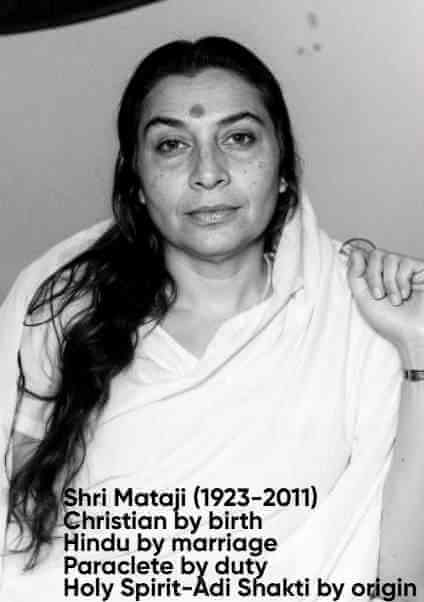
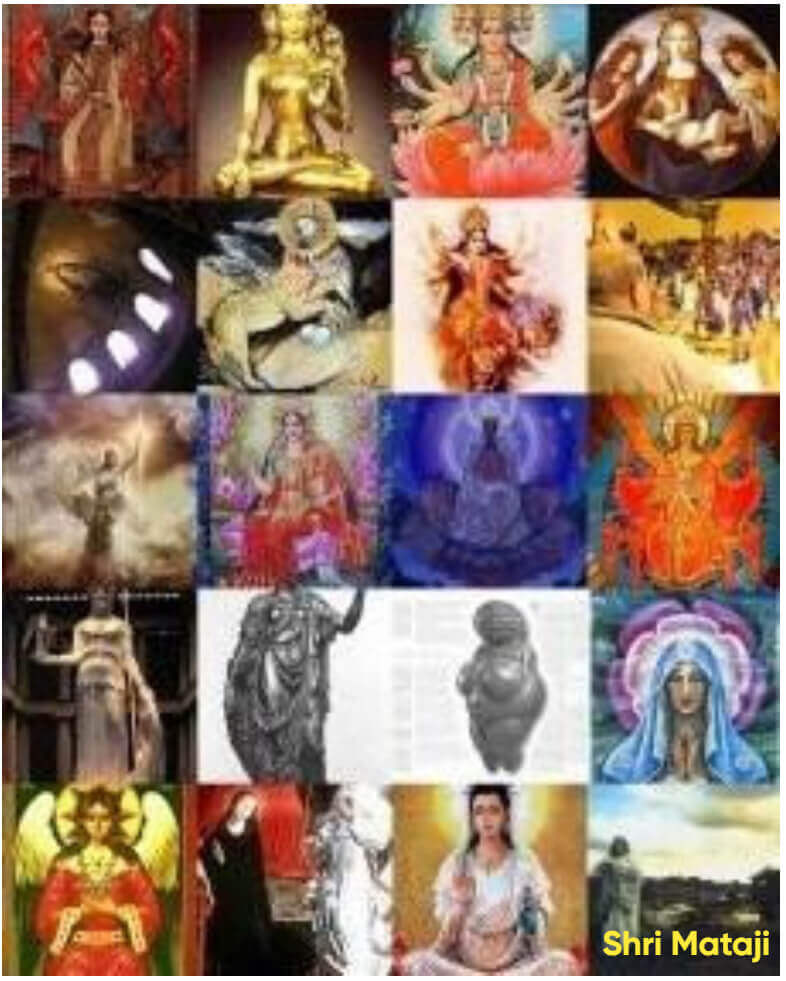
Devi: “I and Brahman are One.” Brahman is not meant for the ordinary or the ignorant souls

"Brahman is the central theme of almost all the Upanishads. Brahman is the indescribable, inexhaustible, omniscient, omnipresent, original, first, eternal and absolute principle who is without a beginning, without an end, who is hidden in all and who is the cause, source, material and effect of all creation known, unknown and yet to happen in the entire universe... The Brahman of the Upanishads is not meant for the ordinary or the ignorant souls, who are accustomed to seek spiritual solace through ritualistic practices and rationalization of knowledge... All the gods and goddess are His manifestations only. In His female aspect He is Shakti, who as the Divine Universal Mother assists the whole creation to proceed through the process of evolution in Her own mysterious ways.”
The Supreme Identity: Devi's Declaration of Non-Dual Brahman and Its Esoteric Exclusivity
Table of Contents
- Abstract
- Introduction: The Upanishadic Brahman and the Problem of Accessibility
- I. Devi as Brahman: The Ontological Declaration
- II. The Barrier of Ordinary Understanding: Ritual, Dualism, and Ignorance
- III. Soteriological Implications: Liberation Through Identity-Consciousness
- Conclusion: The Paradox of Universal Truth and Exclusive Realization
- References
Abstract
This paper examines the theological and philosophical implications of the Devi’s declaration, “I and Brahman are One,” as found within the Shakta Upanishadic corpus and texts such as the Devi Gita. It argues that this assertion positions the Divine Feminine not as a subordinate deity but as the ultimate, non-dual Reality (Brahman) itself. Crucially, this identification underscores a core Upanishadic principle: the realization of Brahman is an esoteric knowledge (jñana) inaccessible to the ordinary or ignorant soul attached to ritualism and dualistic worship. Through an analysis of key source texts, this paper delineates how the Devi tradition simultaneously universalizes the divine principle and restricts its authentic apprehension to those who transcend conventional piety through radical introspection and spiritual discipline.
Introduction: The Upanishadic Brahman and the Problem of Accessibility
The Upanishads consistently define Brahman as the indescribable, absolute ground of existence—the one without a second
(ekam evadvitiyam). As the source text notes, this principle is incomprehensible even to the gods,
transcending sensory perception, rational intellect, and the conventional religious machinery of ritual (karma-kanda) [1]. The Brahman of the Upanishads is thus categorically not meant for the ordinary or the ignorant souls
. This creates a theological tension: if Brahman is the fundamental reality of all, why is its realization so exclusive?
The Shakta (Goddess-centric) resolution to this tension is profound: it reconceptualizes the Supreme as the Divine Feminine (Devi), who explicitly declares her identity with Brahman. This does not dilute the Upanishadic exclusivity but rather channels it through a specific metaphysical lens. The Devi, as Shakti (power), is the active, conscious principle of Brahman, making the absolute dynamically accessible yet still requiring the same supreme qualification for realization.
I. Devi as Brahman: The Ontological Declaration
The Devi Gita and Shakta Upanishads like the Bahvricha and Bhavana explicitly dissolve any ontological distinction between the Goddess and the absolute.
Non-Dual Consciousness: The Bahvricha Upanishad (1.5) states:
Here, Devi is not a manifestation of Brahman but is identical to the non-dual consciousness that is Brahman. The Bhavana Upanishad (1.27) confirms this by identifying the supreme Goddess Lalita with one’s own blissful Self
(atmarati).
The Primacy Prior to Creation: In the Devi Gita, the Devi declares that before creation, she exists as the sole supreme Brahman, pure consciousness.
This aligns with the classic Advaitic (non-dual) description of nirguna Brahman (Brahman without attributes). By claiming this state, the Devi appropriates the most rarified, formless aspect of the divine, asserting that the Feminine principle is not merely the creative energy (saguna Brahman) but the unconditioned source itself.
The Identity Statement: The central declaration, I and Brahman are One,
is the ultimate mahavakya (great saying) within the Shakta tradition. It functions analogously to Aham Brahmasmi
(I am Brahman) but with a crucial theological shift: the speaking subject is the Divine Mother. This personalizes the impersonal without diminishing its absoluteness.
II. The Barrier of Ordinary Understanding: Ritual, Dualism, and Ignorance
The source text powerfully articulates why Brahman—and by extension, Devi-as-Brahman—remains elusive to most. The obstacle is not divine concealment but the conditioned state of the seeker.
The Trap of Ritualistic Solace: Ordinary souls are accustomed to seek spiritual solace through ritualistic practices.
The Mundaka Upanishad famously condemns rituals as unsafe rafts
for crossing the ocean of worldly life. Worship of deities for boons constitutes the lower knowledge
(apara vidya), which reinforces a dualistic mindset antithetical to non-dual realization [2]. The Devi, though worshipped in form, declares that such worship, if devoid of penetrating knowledge, cannot yield liberation.
The Inadequacy of Mere Intellect: Brahman is totally out of the reach of all sensory activity, rationale effort and mere intellectual... endeavor.
Similarly, rationalization or scholarly knowledge about the Devi is insufficient. As the Devi Gita warns, Till the complete knowledge in the form of my consciousness arises, there is no liberation.
Bhakti (devotion) alone, if construed as dualistic affection, becomes another form of attachment.
The Qualifications for the Path: The aspirant must possess discipline, determination, guidance from a self-realized soul, purity of mind, mastery of the senses, self-control and desireless actions.
These are the prerequisites for jñana-yoga. The weak and timid
and the materialistic
find no comfort here, as the path demands the dissolution of the individual ego. The Devi’s path is not an easier alternative; it is the Upanishadic path’s gendered but equally demanding equivalent.
III. Soteriological Implications: Liberation Through Identity-Consciousness
The ultimate goal in the Shakta non-dual framework is moksha (liberation), defined as the direct realization of one’s own self as non-different from Devi/Brahman.
From Devotion to Recognition: The highest bhakti transforms into jnana. The devotee does not merely love the Goddess as other but comes to recognize the Goddess as the very consciousness animating their own being. The search redirects from an external heaven to the interior ground of awareness.
The Island of Liberation: The Devi Gita speaks of the Devi’s Island
(Shakti-pitha), a metaphor for the state of liberation. This is attained by the inward turn that dislodges layer after layer of illusion and ignorance.
The Inward Temple: The text notes that Brahman chooses not to be worshipped in the temples... but in one’s heart and mind as the indweller.
This applies perfectly to Devi-as-Brahman. While she is worshipped in temples in her manifold forms (saguna), her ultimate, liberating form (nirguna) is the Self within. External worship becomes a preparatory aid, but the final realization must be aniconic and interior.
Conclusion: The Paradox of Universal Truth and Exclusive Realization
Devi’s declaration, I and Brahman are One,
serves as both a radical democratization and a stern elitism of the sacred. It democratizes by asserting that the supreme principle can be approached as the immanent, compassionate Mother. Yet, it maintains an uncompromising elitism by insisting that the realization of this identity is reserved for those who undertake the most demanding spiritual journey—from the outwardness of ritual to the inwardness of pure, non-dual consciousness.
Thus, the Shakta tradition, through the voice of the Goddess, resolves the Upanishadic paradox. Brahman is indeed for all, as it is the very substance of all. Yet, the knowledge of this truth is only for the “strong of heart and pure of mind,” who dare to see the Divine not in the idol, but in the mirror of their own deepest Self. In the end, the Song of the Goddess reveals the Absolute in its most intimate and formidable aspect, inviting a transformation so total that the seeker disappears into the Sought.
References
[1] "Brahman." Hindu Website, Accessed 28 Jan. 2026.
[2] Swami, V. R. The Essence of the Upanishads.
Vedanta Press, 2009, pp. 45–78.
BRAHMAN
Brahman is the central theme of almost all the Upanishads. Brahman is the indescribable, inexhaustible, omniscient, omnipresent, original, first, eternal and absolute principle who is without a beginning, without an end, who is hidden in all and who is the cause, source, material and effect of all creation known, unknown and yet to happen in the entire universe.
He is the incomprehensible, unapproachable radiant being whom the ordinary senses and ordinary intellect cannot fathom grasp or able to describe even with partial success. He is the mysterious Being totally out of the reach of all sensory activity, rationale effort and mere intellectual, decorative and pompous endeavor.
The Upanishads describe Him as the One and indivisible, eternal universal self, who is present in all and in whom all are present. Generally unknown and mysterious to the ordinary masses, Brahman of the Upanishads remained mostly confined to the meditative minds of the ancient seers who considered Him to be too sacred and esoteric to be brought out and dissected amidst public glare.
Though impassioned and above the ordinary feelings of the mind, the masters of the Upanishads sometimes could not suppress the glory, the emotion, the passion and the poetry that accompanied the vast and utterly delightful, inner experience of His vast vision. In the Mundaka Upanishad the mind explodes to reverberate with this verse," Imperishable is the Lord of love, as from a blazing fire thousands of sparks leap forth, so millions of beings arise from Him and return to Him.” Again in the Katha Upanishad we come across a very poetic and emphatic expression," In His robe are woven heaven and earth, mind and body... He is the bridge from death to deathless life.”
The Brahman of the Upanishads is not meant for the ordinary or the ignorant souls, who are accustomed to seek spiritual solace through ritualistic practices and rationalization of knowledge. Discipline, determination, guidance from a self-realized soul, purity of mind, mastery of the senses, self-control and desireless actions are some of the pre-requisites needed to achieve even a semblance of success on this path. Only the strong of the heart and pure of the mind can think of dislodging layer after layer of illusion and ignorance that surrounds him and see the golden light of Truth beckoning from beyond.
He is not like the other gods either. He is incomprehensible even to almost all the gods. And He chooses not to be worshipped in the temples and other places of worship but in one's heart and mind as the indweller of the material body and master of the senses, the charioteer. He is too remote and incomprehensible to be revered and approached with personal supplications although He is the deepest and the highest vision mankind could ever conceive of or attain.
The weak and the timid stand no chance to approach Him even remotely, except through some circuitous route. For the materialistic and the otherworldly who excel in the art of converting everything and anything into a source of personal gain, He does not offer any attraction, solace or security as a personal God.
That is why we do not see any temples or forms of ritualistic worship existing for Brahman either at present or in the past. We only hear of fire sacrifice, later to be called Nachiketa fire, to attain Him, which was taught to the young Nachiketa by Lord of Death, but lost in the course of time to us. Perhaps the sacrifice was more a meditative or spiritual practice involving the sacrifice of soul consciousness than a ritual worship.
Whatever it is, the fact is that Brahman of the Upanishads is more appealing to the seekers of Truth and Knowledge than seekers of material gains. Even during the Islamic rule when the principles of monotheism challenged the very foundations of Hinduism, Brahman was never brought into the glare of public debate to challenge the invading and overwhelming ideas of the monotheistic foreign theology.
And even during the period of the Bhakti movement, when the path of devotion assumed unparalleled importance in the medieval Hindu society, Brahman was somehow not made the center of direct worship in the form of Brahman as such. He became the personal God with a name and form, but as Brahman remained outside the preview of the Bhakti movement.
Perhaps the exclusion was so evident and seemingly so intentional that even Lord Brahma, the first among the Trinity and the first among the created, was also simultaneously excluded from the ritualistic worship, probably for the similarity in names. Very few temples exist for this god even today in India, probably as He is seen more as a source of intelligence and creativity than of material wealth.
Some Upanishads do describe Brahman as the Lord of Love. It is a description born out of pure personal experience of a seeker of truth, not from a devotee's imaginative and self-induced emotional energy. The description and approach, therefore, is more philosophical and impressionably revelatory in its approach than feverishly emotional or reverently devotional. The reason was not difficult to understand.
Brahman was too remote, indifferent, disinterested, too vast a principle to be reduced into meaningful and intellectually satisfying forms and shapes and worshipped as such. Existing beyond all the surface activities of illusory life, he was like the remote star, heard but rarely seen, seen but vaguely remembered, remembered but rarely explicable, unlike the daily sun that traversed across the sky spreading its splendor in all directions and appealing to the common man with its intensity, visible luminosity and comforting him with its assuring and predictable routine.
Hidden, however, in the practice of Bhakti was the inherent and inviolable belief that the aim of all devotion was the attainment of the Supreme Self, though the path chosen for the purpose was circuitous and symbolic, rarely suggestive of any direct involvement of the eternal Brahman Himself in His original formless condition. Since the mind could only comprehend and derive inspiration in a language that it can understand and interpret, the Saguna Brahman, Iswara in the form of various manifestations became the object of devotion and personal worship.
But the same was not true of the formless Nirguna Brahman, beyond duality and activity. Ignoring the citadels of human civilization, He, the Absolute, continued to remain in the hearts of His spiritual aspirants, away from the din of materialistic life. He remained confined even as of today, to a few illumined minds, guiding them in His mysterious and invisible ways through the minds of self-realized souls, who have been too spiritualistic and disinterested in worldly life to consider any thing other than self as a matter of spiritual interest.
The ancient seers described Brahman as the One eternal principle, the unity behind all, the connecting principle, the light shining through all. But at the same time they also referred to him variously as almost every thing. He was thus One and the many, the finite and the infinite, the center as well as the circumference, the enjoyer as well the enjoyee, the hidden as well as the manifest, in a nut shell, every thing and any thing that we can conceive of or imagine or perhaps much more than that. Incomprehensible even to the gods, as Kena Upanishad narrates, He stands above all, tall and mysterious, almost incommunicable except through personal experience and inner voyage.
As a formless Being He was the Nirguna Brahman, the unqualified principle totally beyond the reach of all levels of intelligence. Assuming myriad forms He becomes Saguna Brahman, the one with attributes and qualifications. In this capacity as the formless and the One with form, He becomes all the multiplicity in this vast universe. He becomes everything and also nothing. Thus He is the day and night, light and darkness, knowledge and ignorance, the river and the ocean, the sky and the earth, the sound and the silence, the smallest as well as biggest of all and also the abyss of the mysterious nothingness.
The attributes are many and repetitively suggestive of His universality and His unquestionable supremacy. This existence of the duality and the myriad contradictions inherent in the creation of life are the riddles which the minds of the disciples were expected to understand and assimilate till all the confusion and contradiction becomes reduced to one harmonious and meaningful mass of Truth.
In the Katha Upanishad we come across this explanation of Brahman being compared to the Aswaththa tree in reverse, whose roots are above and the branches spread down below. "Its pure root is Brahman from whom the world draws nourishment and whom none can surpass.” Actually this is an analogy drawn from the Sun whose base is above and whose rays spread downwards in thousand directions.
Myriad are the ways in which Brahman is described in the Upanishads. The verses strenuously struggle to explain the novice students of spiritual practice the immensity of the object of their meditation. Theirs is a feeling of respect and reverence mixed with fear and awe. Even the gods seems to be not very comfortable with this concept of an unknown, mysterious and unfathomable God. The Lord of death explains to the young Nachiketa," In fear of Him the fire burns, the sun shines, the clouds rain and the winds blow. In fear of Him death stalks about to kill.”
He is the creator, the life giver and also the reliever of the devoted and determined from bondage. The manifest universe is his creation. He created it through Self-projection, out of Ananda, pure Delight. The process of creation is not very explicitly mentioned but one can draw some inferences from verses such as this," The deathless Self meditated upon Himself and projected the universe as an evolutionary energy. From this energy developed life, the mind, the elements, and the world of karma.”
This is not the God who can be supplicated with rituals and sacrifices. The Upanishadic seers did not show much respect to the outer aspects of religious practice. The rituals according to them constituted the lower knowledge. "Such rituals," declares Mundaka Upanishad," are unsafe rafts for crossing the sea of worldly life, of birth and death. Doomed to shipwreck are they who try to cross the sea of worldly life on these poor rafts.” The argument does not end here. It goes on," Ignorant of their ignorance, yet wise in their estimate, these deluded men proud of their learning go round and round like the blind, led by the blind. Living in darkness, immature, unaware of any higher good or goal, they fall again and again into the sea.”
Hinduism: Belief in One God
The Hindus believe in many gods and goddesses. At the same time they also believe in the existence on one Supreme God, whom they call variously as Paramatma (Supreme Self), Parameshwar (Supreme Lord), Parampita (Supreme Father), Iswara, Maheswara, Bhagawan, Purusha, Purushottama, Hiranyagarbha and so on.
God is one, but also many. He manifests Himself in innumerable forms and shapes. As Purusha (Universal Male), He enters Prakriti (Nature, Matter or Divine Energy) and brings forth the numerous worlds and beings into existence. He upholds His entire creation with His unlimited powers.
He is both the Known and the Unknown, the Being as well as the Non- Being, Reality as well as Unreality. As the Unknown, He is rarely known and worshipped for difficult and painful is the path for those who choose to worship Him as the Unmanifest (The Bhagavad-Gita XII.6).
He exists in all and all beings exist in him. There is nothing other than Him, and there is nothing that is outside of Him. He is Imperishable, unknowable, immortal, infinite, without a beginning and without an end. All the same when worshipped with intense devotion and unshakeable faith, He responds to the calls of His devotees and comes to their aid and rescue.
All the gods and goddess are His manifestations only. In His female aspect He is Shakti, who as the Divine Universal Mother assists the whole creation to proceed through the process of evolution in Her own mysterious ways.
The relationship between man and God is purely personal and each can approach Him in his own way. There are no fixed rules and no central controlling authority on the subject of do's and don'ts. There are of course scriptures and Smritis but whether to follow them or not is purely an individual choice.
The concept of monotheism is not new to Hinduism. It is as old as the Vedas themselves. References to One indivisible and mysterious God are found in the Rigveda itself. The concept is the central theme of all the Upanishads in which He is variously referred as Brahman, Iswara, Hiranyagarbha, Asat etc.
While the students of Upanishads tried to understand Him through the path of knowledge and thereby made it the exclusive domain of a few enlightened persons, the bhakti marg or the path of devotion brought Him closer to the masses. The One Imperishable and Ancient Being was no more a God of remote heights, but down to the earth, ready to help His needy devotees and willing to perform miracles if necessary.
The rise of tantric cults added a new dimension to our understanding of Him. To the tantric worshipers the Supreme Self is the Universal Mother. Purusha is subordinate to Her and willing to play a secondary role in Her creation. By Himself He cannot initiate creation unless He joins with His Shakti.
On the abstract level He is satchitananda; Truth, Consciousness and Bliss. He is the inhabitant of the whole world. There is nothing that is outside of Him or without Him. He exists in the individual being as Atman, the Enjoyer who delights in Himself, without undergoing any change, but willing to participate in the cycle of births and deaths and bear witness to all the illusions of life.
He can be realized in many ways, which broadly fall into three main categories: the path of knowledge, the path of devotion and the path of renunciation. Of this the middle one is the best, the first one is very difficult and the third one requires immense sacrifice and inner purification. In the Bhagavad-Gita we come across the path of action which combines the rest of the three into one integrated whole in which a devotee has to live his life with a sense of supreme sacrifice, performing his actions with detachment, without any desire for the fruit of actions and offering them to God with pure devotion and total surrender.
Hindus have a very broader approach to the concept of God. The names that people give to Him are just mere reference points for the sake of our understanding. How can He have names, who is actually beyond all words and thoughts? He represent the loftiest ideal which mankind can aspire to achieve. He is the goal and reaching Him in our individual ways is the very purpose of our lives. Those who quarrel on His name are blind men who grope in darkness and go to the worlds of ignorance.
Truly the Brahman of Hinduism represents the Highest principle which the human mind can ever conceive of. He is not God of just one world or a few worlds, but represents the entire known and unknown Universe as well as the past, the present and the future that is yet to come.
Brahman
www.hinduwebsite.com/onegod.htm
Interactive Chat
Access an intelligent analysis environment where you can explore texts, ask questions, and discover connections between ideas.
Open chat