
"In the twenty-first century ... India will conquer her conqueror"
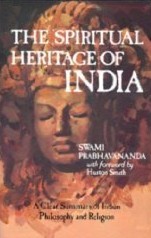
“Around the middle of this century Arnold Toynbee predicted that at
its close the world would still be dominated by the West, but that in
the twenty-first century 'India will conquer her conquerors'.1
Preempting the place that is now held by technology, religion will be
restored to its earlier importance and the center of world happenings
will wander back from the shores of the Atlantic to the East where
civilization originated five or six thousand years ago.
The spiritual heritage of India is one of the world's standing
miracles. It would rank among the greatest human achievements were it
not that 'achievement' isn't really the right word. It is more like a
reception - the opening of a people to receive, through inspiration,
The Breath of the Eternal. For the outbreathing of the eternal is
what India has taken truth to be - see infra, p. 8. We know
that 'Hinduism' is a label affixed by outsiders. Long ago, people to
the west of the Indus River mispronounced its name and called those
who lived on it or to its other side 'Hindus,'and in time 'Hinduism'
came to be used for their beliefs and practices. The Indians
themselves knew no such word. There was no need for them to think of
the truth by which they lived as other than the sanatana dharma, the
Eternal Truth. It was Truth Itself—truth that had become incarnate in
the tradition that sustained them.
How the incarnation was effected is itself an interesting point. In
the West we tend to think of knowledge as cumulative: bits of
information get joined in bodies of information that can grow
indefinitely. India recognizes a kind of knowledge that fits this
model, but she considers it 'lower knowledge'—knowledge that is
gained by reason and the senses playing over objective, finite
particulars. Higher knowledge (paravidya) proceeds differently. Or
rather, it doesn't proceed at all, for it enters history full blown.
It is futile to ask when this higher knowledge first appeared, for
India has no notion of absolute beginnings—beginnings require time,
and time for India is not absolute. The most we can say is that when
a new cosmic cycle opens there are souls waiting in the wings, so to
speak, with the higher wisdom already in store. Who these souls are
is not a generic accident: India has no place for chance or accident—
the law of karma precludes it. The men and women who are born wise on
the morning of a new creation are so because, though the world they
enter is young, they themselves are not. Their jivas (individual
psyches) having being held over from preceding cosmic cycles, they
are already 'old souls'—old chronologically, to be sure, but more
importantly in experience... Their concluding legacy to the
phenomenal world is to impregnate the new cycle with reflective
knowledge of the truth they have assiduously shepherded. Keeping in
touch with this truth through meditation, these rishis (seers)
transmit it orally, direct from guru to disciple, until eventually
their oral tradition gets committed to writing. In India the texts
that result are the Vedas.
If we see the Vedas in this light, as apertures through which the
Infinite entered conscious human awareness in South Asia in the
present cosmic cycle, what word of the Infinite do the Vedas impart?
First the warning that on this topic words are unequal to their task.
They can be useful, of course, or the Vedas themselves would not have
been written, but a fundamental Vedic teaching concerns the
limitations of words themselves when directed towards ultimates.
Sooner or later these ultimates phase beyond language entirely. Neti,
neti, not this, not this; the map is not the terrain, the menu is not
the meal—the Vedas never tire of repeating this basic point. In this
kind of knowing, words do not cause understanding; at best they
occasion it: from spirit to spirit communion leaps. The
word 'Upanishads,' denoting the culminating sections of the Vedas,
makes this point in its very etymology. Deriving from the roots which
when conjoined mean to approach (upa) with utter (ni) firmness to
loosen and destroy (sad) spiritual experience, it warns the reader
right off that the topics he is about to encounter call for more than
book learning. For their province is that 'higher mathematics' of the
human spirit where knowing merges with being. Upanishadic truth is so
subtle, so abstruse, that purely objective, rational intellectuals
are likely to miss it entirely—off such intellectuals it rolls like
water off oil. Only when discerned in a life that is living it—a life
that incarnates it in its outlook, moods, and conduct—does truth of
this order become fully convincing.”
Huston Smith, in the foreword to The Spiritual Heritage of India by
Swami Prabhavananda
Note:
1. Culturally, not politically, Toynbee's prediction appeared in an address he
gave to The Philosophical Society of Edinburgh University in November, 1952.
Shri Mataji: A day will dawn, when the whole world would bow to this country (India) in reverence.
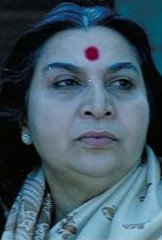
Shri Mataji Nirmala Devi “We are made out of Yoga. Ours is the land of Yoga. We are not egoistic, nor do we want to be so. We desire to live on this land as Yogis. A day will dawn, when the whole world would bow to this country (India) in reverence. Then people would know who Jesus Christ was, and from where He came! He would then be worshipped with due respect on this sacred land.
In India, even today, the modesty of women is protected and they are treated with proper respect. All over our country, we regard The Mother with great reverence. When the people from other countries would visit this land they would know that it is in this country that real Christianity is practiced with great devotion, but not in countries which profess the Christian religion.
Jesus Christ said that we should be born again. In our country we refer to this process as dwija or born for the second time. The second birth of any human being is possible only by awakening of the Kundalini power. As long as the Kundalini is not awakened, one will not acquire the second birth, and as long as we do not have rebirth we will not be able to recognise God. You read the Bible after Realisation and you will be surprised to know that Jesus Christ has spoken of nothing but the importance of Sahaja Yoga. Everything has been explained, even the minor details. Those who have no insight misrepresent matters.
In reality, baptism means the awakening of the Kundalini power so that after it rises and pierces the Sahasrara, there is the union of the all-pervading power of God and the Kundalini power. This, in fact, is the final job of the Kundalini power.
Jesus Christ came to save and liberate the whole of humanity. He was not the personal possession of any particular sect. He himself was Omkara incarnate. He was pranava and the truth. The bodies of the other incarnations were made up of the earth principle, whereas the body of Jesus was made of the soul principle. That is why He was resurrected after death. And it was only through the Resurrection that His disciples could know that He was none other than God Himself.
Then they started beating the trumpets, started reciting His name and started delivering lectures on Him. The most important thing is that God incarnated. If the people could recognise Him and secure spiritual development and bliss, this would enlighten the soul and spread happiness and bliss everywhere. May all of you acquire the Yoga of God.”
The Paraclete Shri Mataji
Shri Kundalini Shakti And Shri Jesus Christ
Bombay, India—September 26, 1979
.jpg)
Shri Mataji Nirmala Devi “When we say spontaneous salvation, it implies that salvation has to click by itself. The translation of word spontaneous is Sahaj. Sahaj means Saha means with, Ja means born. It is born within you. That means the right of getting salvation is born within you, the mechanism by which you are going to get salvation is also born with you. And the opportunity of getting salvation is also born with you. But when I say it is born with you, it is spontaneous, it is within yourself- one starts wondering that many books have written like that; so many people have said that salvation has to be spontaneous, sahaj. All the great Gurus, the real people, all the great incarnations have described that salvation is going to come to you spontaneously.
Even rationally,if you understand that if salvation means an evolutionary process it has to be spontaneous. Till you have become a human being, the evolution from Ameoba to this stage has taken place spontaneously, not with your effort, effortlessly. You cannot do anything about living process.
So far man has not been able to do anything whatsoever. What he has done is just to transform the forms of dead matter into something else. But all the living processes have worked sponateously, have clicked spontaneously. Even your salvation has to be spontaneous.
The only difference between the evolving of human being from animal stage and the evolution of human being to the super-human into the forth dimension, as I told you this morning is that so far all the your evolution took place without your awareness. You were not aware of it. A dog does not know how he become a dog from a fish. Human beings do not know how he became, or was not aware, how he become from a chimpanzee, a regular human being? He was not aware even when he was a prehistoric man. He is not aware, how he has evolved his ego, how he had evolved his frontal brain from pre-historic stage to this modern stage.
But now the ascent of man is going to happen in his own awareness. We can say (passage in Hindi ....). In your awarenesss you will know i.e. your awareness is the most important thing. Anything that takes away your awareness like trans or switching off the mind is against evolution, is against your ascent. It is something that will deaden you. Now the life force is going to act in your awareness and you will know that you have evolved. It may happen so quickly that you may feel that how you have achieved. For example - suddenly if you jump on to the moon you will be quite surprised how you are there. But if you start feeling the moon, when you start feeling the atmosphere and when you start feeling that you are in a different planet and a different understanding then you will definitely evolved. You have become a different personality.
So many Gurus and Avataras, Rishi-Munis, have talked about ascent of man. Christ, Mohammed Sahib, Guru Nanak - all these people have talked about this that you have to go beyond this maya, this bhav-sagar, this misidentification. Just see how we are misidentified. We are born in this country. We could be born in England. We could be born any where. We are born as Hindus. We could be born as Muslims. We could have been born as Christians. We could have been anything. For a Hindu there is nothing like caste and community. If he believes in the previous birth, he must know that he must have been a Muslim. he must have been a Chinese, he must have been anything. He could be anything. If you believe in the previous birth, you cannot be fanatic about this. That is why Hindu religion is the most tolerant of all. It is extremely tolerant because all the findings of this philosophy are done by people in the actual field of spiritual life.It is not based on one personality. But all those religions who are even based on one personality are nothing but flowers on the same tree. They follow us even as Hindus.”
The Paraclete Shri Mataji
New Delhi, India—March, 1975
Christ was in India, claims Kolkata filmmaker
By: Jacob Chaterjee
Monday, 21 November 2005, 9:23 (IST)
"Kolkata — A filmmaker based in Kolkata has made a shocking revelation that Jesus Christ had spent the missing years of his life in India and had probably died in Kashmir and will be documenting a movie on the missing years in the life of the Messiah.
Engineer—turned filmmaker, Subhrajit Mitra's The Unknown Stories of the Messiah attempts to trace the unexplored life of Christ and his unaccounted years in the Bible.
Did Christ visit India after his crucifixion? Is a tomb in the Kashmir Valley that of Christ? These are some of the controversial questions Mitra raises in his film.
According to Mitra, Jesus did visit India and has substantiated his claims by taking recourse to the scrolls found in caves near the Dead Sea or at Nag Hammadi (in Egypt), believed to be the first drafts of the Bible.
According to the alternative theory about Christ, he said, the Messiah did visit India.
Hindu, Buddhist and Islamic scriptures and beliefs corroborate his claims, he said, and gives a glimpse of the missing years of his life that he had spent in India.
He stayed in India for 14 years, Mitra continued. His Christianity was influenced by Hinduism as we find that the New Testament of the Bible was more akin to Hinduism than Judaism.
In Bhavishya Maha Puran, a text dating back to the second century AD, there are references of Christ's interaction with King Shalivahan, the grandson of Vikramaditya, in Kashmir, he added. Scholars say it happened after Christ's resurrection.
There are many documents in the vault of the Vatican and the church doesn't publish them because they obviously want to project Christ as a god and not as a human, the filmmaker argued. Assimilation of all such stories raises the question why there was no proper research on the alternative theory about Christ.
In November 2003, noted German scholar H.J. Trebst, who has been researching on the subject of Christ's missing 12 years, had invited scholars to a seminar at Puri, Orissa. In that seminar, several scholars contended that Christ had visited Puri where he had studied Veda and yoga before returning home to preach Christianity.
Trebst, himself, claimed that Christ also studied Buddhism in the Indian subcontinent.
According to Trebst, Puri was a famous seat of learning some 2,000 years ago and history has revealed that various religious leaders visited the city over the centuries.
There is also a belief that Christ's tomb is in the Kashmir Valley and foreigners, especially Israelis, visit it in large numbers. The main attractions in the valley for Israelis are two graves — believed by some to be those of Christ and Moses.
Incidentally, a section of the local population believes that Kashmiris are one of the lost tribes of Israel. Aziz Kashmiri, author of the bookChrist in Kashmir, insists that Kashmiris are descendants of one of the 10 lost tribes of Israel and that Christ died during one of his visits to the valley.
Mitra's film, seeks to focus on these very questions through the discourses of an archaeologist and novelist played by noted Bengali award—winning actors Soumitra Chatterjee and Aparna Sen.
We have shot in Ladakh, Kashmir, the Silk Route, Kerala, Varanasi and Puri for the film — following the trail of Christ, said Mitra.
According to Mitra, the History Channel has shown interest in his film and it is time serious research began to verify the alternative theory about Christ and his Indian connections.
About 2.3 percent of India's population of 1.1 billion follows Christianity, with about 60 percent of them being Catholics.”
www.in.christiantoday.com/
(Web. February 12, 2013)
“It was a great day when Christ came on this earth, and you know about how He was specially created to come down as a human being, to work out this salvation of the people. It is said that he came to India in Kashmir and he met there the king, Shalivahan.”
Shri Mataji Nirmala Devi
Christmas Puja, Ganapatipule, India
24 December, 1995
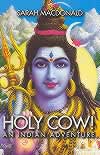
"India is the land of the profound and the profane: a place where
spirituality and sanctimoniousness sit miles apart. I have learnt
much from the land of many gods and many ways to worship. From
Buddhism the power to begin to manage my mind, from Jainism the
desire to make peace in all aspects of life while Islam taught me to
desire goodness and to let go of that which cannot be controlled. I
thank Judaism for teaching me the power of transcendence in rituals
and the Sufis for affirming my ability to find answers within and
reconnecting me to the power of music. Here is to the Parsis for
teaching me that nature must be touched lightly and the Sikhs for
the importance of spiritual strength. I thank the gurus for trying
to pierce my ego armour and my girlfriends for making me laugh. And
most of all I thank Hinduism for showing me that there are millions
of paths to the divine.”- Sarah MacDonald
Holy Cow, a best-seller by Sarah MacDonald
(Sarah a journalist and girl friend of the ABC's South Asia
correspondent deals with her experiences in India. These extracts
are from the concluding pages of the book where she summarises her
experience.)
The ABC has found a new correspondent and now it is time to leave for
Australia and let the tide of a billion lives ebb and flow without
us...
"In Sydney I rediscover my relationship with nature. The ocean
becomes my temple and my Ganges...I walk through the pristine
quiet of the suburban bush of my childhood as fluorescent orange
streaks across the sky...Gleaming cars zoom fast on empty, wide and
clean roads. A couple bent double laughs with hysterical abandon at
a cafe table. I delight to see such open joy and such easy lives,
yet at times the luxury and space sit uneasily. My country and I
want it all - to be part of a war and not to face its consequences,
to be part of the global community but not a port for its refugees.
The city rants religiously of real estate and fashion...The
worship of land ownership, the body beautiful, self-help and self
obsession for beings blinded by option over load is strangely
unfamiliar.
I went to India for love and that country tested that love to a large
degree....We now both have a new view of our so lucky lives, yet our
innocent optimism has been sucked from our hearts. The overall
feeling about our adventure is positive though. Jonathan's career
has taken off and I have gained much in my karma chameleon journey.
I am reborn as a better person, less reliant on others for my
happiness and full of a desire to replace anger with love. Plus I
have gained another home. For, I have two spiritual homes now - the
quite empty lands of my birth and the cataclysmic crowded land of my
rebirth. When I remember India, I think of its ability to find
beauty in small things — the tattoo of circles on a camel's rump, a
bright silk saree in a dark slum, a peacock feather in a plastic
jar, a delicate earring glinting by a worn face and a lotus painted
on a truck. I miss the sheer exuberance of a billion individuals
and their pantomime of festivals...
India is the land of the profound and the profane: a place where
spirituality and sanctimoniousness sit miles apart. I have learnt
much from the land of many gods and many ways to worship. From
Buddhism the power to begin to manage my mind, from Jainism the
desire to make peace in all aspects of life while Islam taught me to
desire goodness and to let go of that which cannot be controlled. I
thank Judaism for teaching me the power of transcendence in rituals
and the Sufis for affirming my ability to find answers within and
reconnecting me to the power of music. Here is to the Parsis for
teaching me that nature must be touched lightly and the Sikhs for
the importance of spiritual strength. I thank the gurus for trying
to pierce my ego armour and my girlfriends for making me laugh. And
most of all I thank Hinduism for showing me that there are millions
of paths to the divine...
Yet, I have brought back something even more important than sacred
knowledge. A baby is growing inside me. A baby conceived during our
last weekend in the country. This child will forever remind me of
the land I lived in and what it took and what it gave. And this baby
made in India, will always remind me that India to some extent made
me.”
Holy Cow, Sarah MacDonald
Broadway (April 13, 2004)
Deepak Chopra: Deep stuff or New Age fluff?
ST. PETERSBURG
"Motivational guru Deepak Chopra believes he provides answers for a new age, teaching his international body of followers that the key to solving problems is to seek God within. Chopra's philosophy, zealously marketed through books, seminars and tapes, has won him legions of fans...
'There is no guilt in his system. There is no need for remorse or anything like that. It is not like you have to stop sinning (or) you have to clean up your act. There are no commandments,' John Morreall, professor of religious studies at USF, said of Chopra's teachings. 'People want easy, digestible stuff that doesn't require them to change their life, and any way you can package that will be successful,' Morreall added.
In fact, a sell-out crowd is expected Monday when Chopra makes an appearance at the Mahaffey Theater, said the Rev. Joan Pinkston, minister at the Center for Positive Living, which is sponsoring his visit.
She said this is the third time her church, at 5200 29th Ave. N, has brought Chopra to Tampa Bay.
'He is so popular and he does bring a universal message of truth for those who are ready to hear it,' Pinkston said. 'He brings it to the masses who are unchurched and who may never capture that message other than through the secular community.'
In a telephone interview, Chopra, who was born in India, said he prefers to be thought of as spiritual rather than religious. 'The founders of religion were universal beings,' he said. 'But at some point it developed dogma and ideology and unfortunately we have had more anguish and more war and more hatred and more bigotry and more suffering in the name of religion than in every other name... . I like to think of myself as seeking spirituality, which is the basis of religion. God gave humans the truth, and the devil came and he said, 'Let's give it a name and call it religion.' '
Chopra, whose teachings are based in part on the Vedantas, the sacred writings that are the root of Hinduism, added that it often is said that God created man in his own image. 'I think it is the other way. Man created God in his own image,' he said. 'The image of God is usually a dead white man in the sky. That is just an image. It is not satisfactory. Why can't God be black or a woman? ... All the conflict in the world is because we have different images of God. God is beyond image. As soon as you create an image about God, you limit God.' But, he said, that is what defines most religion.
Spirituality is different, giving one the ability to love and have compassion, added Chopra, author of 22 books, including best-sellers Ageless Body, Timeless Mind, The Seven Spiritual Laws of Success and The Pathway to Love. 'It is the capacity to experience joy and spread it to others,' he said. 'It is the security of knowing that your life has meaning and purpose. It is a sense of connection to the creative power of the universe. This creative power of the universe is by various religions called God. 'In my experience, it is infinite. It is unbounded. it's immanent and transcendent. It is timeless. It expresses itself in the infinite organization of the universe and in the infinite intelligence of the universe.'
And to find God, those caught up in the search must get in touch with what Chopra refers to as 'the essence' of their own being. That essence, he explained, is God. And it is within every person, said Chopra, quoting Jesus in the book of John...
And it seems to sell particularly well among intellectuals, Morreall said. For those trying to cope with stressful conditions, Chopra's message finds a ready welcome.
'What Chopra offers is the promise that you will be able to quiet down the noise and you will be able to control your world. And that is immensely appealing,' Morreall said.
To members of the Center for Positive Living, part of the Spokane, Wash.-based Religious Science organization, Chopra reaffirms a familiar philosophy.
'With what we teach, we believe in one power and it doesn't matter what you call it, whether it is God, spirit, nature, life,' Pinkston said. 'It is the ultimate one power. What we believe is true about God is also true about us. The one thing that may separate us from other mainline, traditional religions is that we truly believe that this power that created us is within us and is not something that is outside and separate from us and that it is, yes, greater than we are and that we can use it and we are using it every moment.' Chopra's popularity, she said, is based on his universal message.
'Here is a medical doctor who has taught at Tufts University, and he is very well-read. I believe that people are really hungry for the message ... that the soul responds to — that we are divine beings,' added Pinkston, a former Baptist who began searching for a new path about 30 years ago.
'We teach the metaphysical, the inner message of Jesus the Christ,' Pinkston said. '(Chopra) is teaching the same message. The way he is teaching is that love can renew, heal. Love can make us safe. Love can inspire us and bring us closer to God and that is what we are all searching for, the union of the self and the spirit.'...
What morsels of wisdom will he leave with his audience Monday?
'I only want to achieve one thing in that when they leave they will say to themselves there is a lot to think about,' he said. And in some of them it will start a new journey which will radically affect the way they live their life.'"
Kitty Bennett, Times researcher, UMI Company 1998
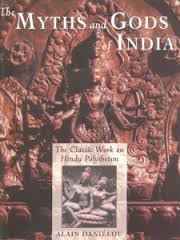
"The word 'Hindu,' used for convenience, can be misleading, for it may convey the idea that Hinduism belongs to a country, to a particular human group, to a particular time. Hinduism, according to Hindu tradition and belief, is the remnant of a universal store of knowledge which, at one time, was accessible to the whole of mankind. It claims to represent the sum of all that has come to be known to man through his own effort or through revelation from the earliest age of his existence.
The development of the mutually exclusive creeds which now claim membership of the greater number of human beings seems to be, in the Hindu view, a comparatively recent phenomenon, which appeared only during the K?l? Yuga, the 'Age of Conflicts.'1 Whatever value we attribute to more recent religions, we should not attempt to equate Hinduism with them. Hinduism cannot be opposed to any creed, to any prophet, to any incarnation, to any way of realization, since one of its fundamental principles is to acknowledge them all and many more to come.
Hinduism, or rather the 'eternal religion' (sanatana dharma), as it calls itself, recognizes for each age and each country a new form of revelation and for each man, according to his stage of development, a different path of realization, a different mode of worship, a different morality, different rituals, different gods.
The duty of the man of knowledge, of the realized being, is to teach to a worthy student what he has himself experienced and nothing more. He cannot claim that his is the only truth, because he cannot know what may be true to others. He cannot claim his way to be the only way, for the number of ways leading from the relative to the absolute is infinite. The teacher expounds what he knows and must leave the seeker to make his own discoveries, to find the path of his own development, for which each individual can be responsible finally only to himself.”
Daniélou, Alain. The Myths and Gods of India: The Classic Work on Hindu Polytheism
Princeton/Bollingen Paperbacks) (Kindle Locations 646-661). Inner Traditions/Bear & Company. Kindle Edition.
PARAA VIDHYAA
THE NOUMENAL STATE OF MAN
"In the last chapter, we looked into the phenomenal state of man, as considered by Shankara. This chapter attempts to study the noumenal state of man. According to Shankara, man's ultimate destiny does not consist in being caught up in the phenomenal existence; rather, man is called to live at a depth at which he must experience the source of the universe within himself. The task of man is not to search for his ultimate destiny outside, but to move into himself and discovering the ultimate in the cave of his heart. It is not a new knowledge, but a realization of what one really is. Paraa vidhyaa, therefore, is nothing else but a self-realization in which one experiences Brahman (Brahmaanubhava) as one's own indwelling spirit (Aatman). This chapter deals with the goal, nature and characteristics of para vidhya.
2.1.1. THE GOAL OF PARAA VIDHYAA
The goal of para vidhya is Brahman, the ultimate universal spirit behind the universe and Aatman, the ultimate principle in the individual. Only when one has true knowledge about both Brahman and Aatman, can one begin to experience the oneness between these two. In this section, we will clarify these two notions, in preparation for the analysis of the nature of para vidhya.
2.1.1. BRAHMAN
The word 'Brahman'[1] is derived from the Sanskrit root 'brih' which literally means 'to gush forth', 'to grow', 'to be great', and 'to increase'. The suffix 'man' added to the root 'brih' signifies the absence of limitation. Thus, the term 'Brahman' etymologically means that which is absolutely the greatest.[2] So 'Brahman' denotes 'that first ... reality from which the entire universe of our experience has sprung up.'[3] In the words of the Vedaanta-Suutras, Brahman is that omniscient, omnipotent cause from which proceeds the origin of the world.[4] Thus, the term 'Brahman' signifies the absolute and ultimate reality which is the substratum and the foundation of the world we know, and on which everything depends for its existence. Brahman is self-sufficient and does not depend on anything else for its existence. Hence it must be spiritual entity, since matter is not self-sufficient, limited and subject to change. George Thibault, in his introduction to the Vedaanta-Suutraas, says that whatever exists is in reality one, and this one universal being is called Brahman. This being is absolutely homogeneous in nature; it is pure Being, Intelligence and Thought. Intelligence or thought is not predicated of Brahman as its attribute, but constitutes its substance. Brahman is not a thinking being, but thought itself. It is absolutely destitute of qualities and whatever qualities or attributes are conceivable can only be denied of it.[5] Thus, Brahman is without qualities (nirguna), beyond the order of our empirical and worldly experience. We cannot grasp Brahman with our empirical experiences, since the being of Brahman is necessary for anything to exist, and even for the possibility of empirical experience. In other words, Brahman is a priori and cannot be grasped by a posteriori or limited experience.
Because of our inability to grasp the true nature of Brahman, whatever positive description is developed about Brahman will remain in the level of phenomenal experience, and Brahman is beyond all phenomena. That is why we find contrary characteristics attributed to Brahman. In Brhadaaranyaka Upanishad, we read that Brahman is 'light and not light, desire and absence of desire, anger and absence of anger, righteousness and absence of righteousness.[6] Kaatha Upanishad speaks of Brahman as 'smaller than the small, greater than the great, sitting yet moving, lying and yet going everywhere.'[7] Brahman is light and not light, in the sense that it is only because there is Brahman that there is light and darkness. Again there exist small and the greater only because Brahman exists.
At the same time the word 'existence' cannot be attributed to Brahman and to the empirical world in the same way, for Brahman's existence is different in nature. The existence of Brahman is opposed to all empirical existence, so that in comparison with this it can just as well be considered as non-existence. Brahman is the being of all beings.[8] The nature of Brahman is so transcendent, that it cannot be compared with anything in the world we know. At the same time, Brahman is present in all its manifestations, for without the Being of Brahman nothing can exist. Yet the empirical experience of Brahman is not possible. Thus, Brahman is that unalterable and absolute Being which remains identical with itself in all its manifestations. It is the basis and ground of all experience, and is different from the space-time-cause world. Brahman has nothing similar to it, nothing different from it, and no internal differentiation, for all these are empirical distinctions. It is non-empirical, non-objective, wholly other, but it is not non-being.[9]
Shankara repeatedly speaks of, and strongly defends, the absolute, unchangeable, attributeless nature of Brahman, alluding to many texts in the scripture which points to the nirgunaa Brahman.[10] Commenting on the Upanishadic text, as a lump of salt is without interior or exterior, entire and purely saline taste, even so is the self (Brahman) without exterior or interior, entire and pure intelligence only,[11] Shankara points to the oneness of Brahman. In the lump of salt there is nothing other than salt, so too Brahman is nothing other than itself. It is the absolute being without a second.[12] Shankara also uses the example of the sun reflecting in water and appearing as many, in order to bring home the same truth. He says that just as the reflection of the sun in water increases with the increase of water, and decreases with its reduction, it moves when the water moves, and it differs as the water differs, so is the self. The sun seem to conform to the characteristics of water, but in reality the sun never has these increasing or decreasing qualities. So also Brahman, which from the highest point of view always retains its sameness, seems to conform to such characteristics as increase and decrease of the limiting adjunct owing to its entry into such an adjunct as a body.[13]
For Shankara, therefore, Brahman is a principle of utter simplicity. There is no duality in Brahman, for no qualities are found in his concept of Brahman. It is also simple in the sense that it is not subject to inner contradictions, which would make it changeable and transitory. Though Shankara uses logic and arguments to understand the nature of Brahman and to speak of Brahman, still for him in its reality Brahman is not a metaphysical postulate that can be proved logically, but must be experienced in silence.[14] Thus, Brahman is one: It is not a 'He', a personal being; nor is it an 'It', an impersonal concept. It is that state which comes about when all subject-object distinctions are obliterated. Ultimately, Brahman is a name for the experience of the timeless plenitude of Being.[15]
2.1.2. AATMAN
The term 'Aatman' comes from the Sanskrit root 'an' which etymologically means 'to breathe'. It is often rendered as 'soul' or 'self', and signifies the most fundamental being of the individual. There is no one who can deny the existence of the self for it is the basis of all individual actions. Everyone is conscious of the existence of his self and never thinks that he is not.[16] To doubt the existence of the self would be a contradiction in terms because then one would doubt the existence of the very doubter who engages in the doubt. The doubter of the self is often compared by Advaitins to a person who searches for the necklace while wearing it; or to a person who wears the spectacles on his face and at the same time looks for them elsewhere. Without the existence of the self, it is impossible for us to entertain the idea even of its being capable of refutation. For the knowledge of the self is not established through the so-called means of right knowledge, but it is self-established.[17] Thus, the very existence of understanding and its functions presuppose an intelligence known as the self which is different from them, which is self-established and which they subserve. [18] The very possibility of knowledge and the means of knowledge (pramaanas) have relevance if there exists the self which is the source of all knowledge. Therefore, Aatman is beyond all doubt, for it is the essential nature of him who denies it.[19] Therefore, Shankara believed that it was the nature of the self and not its reality, which is to be proved.The self must seek itself in order to find what it is, not that it is.[20]
Having established the existence of the self, we can turn now to the discussion of the nature of the Aatman. Aatman is the deathless, birthless, eternal and real substance in every individual soul. It is the unchanging reality behind the changing body, sense organs, mind and ego. It is the spirit, which is pure consciousness and in unaffected by time, space and causality. It is limitless and without a second. [21] Vedantins speak of three states of consciousness, namely the waking state (vishwa), the dream state (taijasa), and the state of dreamless sleep (pragna). The basic underlying principle which witnesses all these three states of one's existence is the pure consciousness (chaitanyam), the self. It is because of the presence of this ultimate substratum, that the body, the senses, the mind and the intellect function properly. At the same time it is not identified with these, nor affected by the changes that take place in the body, in the other sense or intellectual functions. Thus, Aatman.is the unrelated witness of the experiences of the three stages, which include a man's diverse activities.[22]
Shankara gives a number of illustrations to clarify the nature of the self, especially in its role of being a witness (saakshin) to all activities of body, mind, senses, and intellect. Firstly, Shankara gives the analogy of a king's court. In the court, the king sits in his high throne as the observer of the activities of his ministers, councilors and all the others present. But because of his majesty as the king, he is unique and different from all. So too the self which is pure consciousness dwells in the body as a witness to the functions of the body, mind and other faculties, while at the same time it is different from them by its natural light. Thus, the witness is the absolute consciousness, the unchanging intelligence that underlies the finer and grosser bodies. It is neither Iishvara nor jiva, but it is Aatman which is untouched by the distinction of Iishvara and jiva. [23]
To those who come with the objection that the self is not only a mere observer or witness, but also participates in the activities of the body, Shankara replies using the analogy of the moon and the clouds. The movement of the clouds on a moonlight night suggests that the moon is moving, whereas in fact it is the clouds that move. Likewise, the activities of the mind and senses create the illusion that the self is active. [24] To the one who would say that activity belongs to the senses or other faculties and considers them the self, Shankara gives the following illustrations. Just as the iron filings become active at the presence of the magnet, so also it is the presence of the self that makes the body, the senses and all the other faculties active. It is fire which makes the iron ball red-hot. So also neither can the mind, the intellect or the body combined make the self. It is the self which is the source of all their activities. Just as a man who works with the help of the light that in inherent in the sun does so without ever affecting the sun, so too the mind, the body, the intellect, and the senses, engage in their respective activities with the help of the self, but without exerting any influence on the self. [25] All these illustrations point to the basic and absolute nature of the Aatman. The following Upanishadic statement bear witness to this reality. That the imperishable is the unseen seer, the unheard hearer, the unthought thinker, the ununderstood understander. Other than It, there is naught that hears, other than It, there is naught that thinks; other than It, there is naught that understands. [26]
The terms 'Brahman' and 'Aatman', both basically denote one and the same underlying principle: the former stands for the underlying and unchanging principle of the universe; while the latter refers to the unchanging reality in the individuals. Both of these terms are used in the Upanishads and by the interpreters as synonyms they do interchange these two terms in the same sentence. Commenting on the Upanishadic statement: Who is an Aatman? What is Brahman?, [27] Shankara remarks: By Brahman, the limitations implied in the Aatman are removed, and by the Aatman the conception of Brahman as a divinity to be worshipped is condemned.[28] These two terms fundamentally refer to one and the same reality, which is the ground of everything. In other words, these two terms stand for two different descriptions of the same ultimate reality, from the point of view of the universe and the individual. The ultimate reality represented by these two terms is the goal of paraa vidhya or Brahmaanubhava.
2.2. NATURE OF PARAA VIDHYAA
We have analyzed the goal of paraa vidhya, in the preceding section. Here, we must attempt to clarify the nature of paraa vidhya, in which the Brahman-realization is attained by the seeker. We elaborate the nature of paraa vidhya, by looking into its meaning and clarifying the identity between Brahman and Aatman.
2.2.1. MEANING
Paraa Vidhya or Brahmaanubhava is the ultimate and monumental state of man. The term 'Bramaanubhava' is a compound word, which consists of two Sanskrit words, viz. 'Brahman' (absolute reality) and 'anubhava' (intuitive experience or knowledge). The term 'anubhava' means not a mere theoretical or intellectual knowledge, but the knowledge obtained through an integral experience. Anubhava is not the immediacy of an uninterrupted sensation, where the existence and the content of what is apprehended are separated. It is related to artistic insight rather than to animal instinct; it is an immediate knowledge.[29] Thus, literally the term 'Brahmaanubhava' means the integral and intuitive experience of the absolute reality. When we speak of the intuitive experience of Brahman, from the Advaitic point of view there arise many basic questions as to the nature of Brahmaanubhava. How is it possible to have an experience if there is no subject to experience and no object to be experienced? Besides, if there is no duality in an experience, can it be described? If Brahmaanubhava is an experience, and if it has no duality in itself as an experience, then what is the nature of the experience involved in Brahmaanubhava? These questions stem from the fact that the Advaita philosophy of Shankara does not permit the possibility of duality in this fundamental experience.
Possession of intellectual knowledge about the nature of Brahman and that of Brahmaanubhava is the first step towards the attainment of Brahmaanubhava. Obtaining intellectual knowledge by the study of the Scriptures, especially by understanding the meaning and the import of the Vedantic statements like 'That art Thou', is necessary for Brahmaanubhava. In knowing the nature of Brahman intellectually, one can work towards the attainment of Brahmaanubhava. When we speak of the attainment of Brahmaanubhava, we use the term attainment' (labdha) in a figurative sense (upacara). [30] In an empirical experience we attain some new knowledge, i.e., knowledge which had not been previously existed as far as we were concerned. In Brahmaanubhava, however, we do not attain anything new, but only realize what we are, i.e., our true nature, the identity with Brahman. According to Shankara, we are Brahman, and Brahmaanubhava is that experience by which we recognize our own real nature.
Many texts in Shankara's works point to the fact that the attainment of Brahmaanubhava consists in the recognition and the realization that one's real and true nature is Brahman.The state of being Brahman is the same as the realization of the self.[31]Perfect knowledge ... is the realization of the Aatman as one with Brahman.[32]When a man knows the Aatman, and sees it inwardly and outwardly as the ground of all things animate and inanimate he has indeed reached liberation.[33]No man who knows Brahman to be different from himself is a knower of truth.[34]My self is pure consciousness, free from all distinctions and sufferings.[35] Thus, Brahmaanubhava which is the experience of identity with Brahman, is an attainment only from the point of view of the aspirant or the seeker of truth. From the absolute of paramaartha point of view there is no attainment of Brahman.
2.2.2. IDENTITY OF BRAHMAN AND AATMAN
From what has been said about the nature of Brahmaanubhava, so far, there arises the question, how, at all, can we know or have any kind of knowledge about this experience called Brahmaanubhava? No empirical means of knowledge (pramaana) can help us in this regard, except scriptural knowledge. Though scriptural knowledge is limited to the level of duality, still it provides knowledge about the reality of Brahman and enables us to have an intellectual understanding of Brahman.
Shankara holds the authority of the scriptural testimony in our intellectual understanding of Brahman. Nothing else on earth, except the scriptures, can reveal to us the nature of Brahman and of Brahmaanubhava. In this regard Shankara is very clear; he does not substitute any pramaana than the scriptural testimony, for the attainment of the intellectual knowledge about Brahman. He does make use of other pramaanas, but only to elucidate, clarify and demonstrate what he accepts on the basis of scriptural authority about Brahman and Brahmaanubhava. He says, The fact of everything having its self in Brahman cannot be grasped [intellectually], without the aid of scriptural passageThat art Thou'.[36]
The word 'upanishad' (scripture) derives its meaning from its capacity to lead to the truth those who, having been thoroughly dissatisfied with the things seen and unseen, seek liberation from ignorance, which is the source of bondage and suffering. The Upanishads are capable of accomplishing all these, for in them the highest end of life is embodied.[37]"
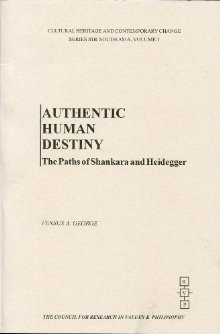
Authentic human destiny: the paths of Shankara and Heidegger
Vensus A. George, Council for Research in Values & (August 1998), pp. 47-54
NOTES [1] The word 'Brahman' appears for the first time in the Rig Veda as related various sacred utterances, which were believed to have magical powers. So, initially it meant 'spell' or 'prayer', which can be used for the attainment of one's wishes and desires. In the Brahmanas, it began to signify that which stands behind God as their ground and basis. Finally, in the Upanishads, this terms came to stand for the unitary principle of all beings, the knowledge of which frees one from finitude. Cf. Eliot Deutsch, p. 9.
[2] Cf. BSB, I, i, 1, pp. 11-12.
[3] Ramkant A Sinari, p. 67.
[4] Swami Virswarananda (trans.), Brahma-Suutra (Mayavata, Almor, Himalayas: Advaita Ashrama, (1948), I, i, 2, p. 26 (hereafter: BSB, Virsawarananda).
[5] George Thibaut (trans.), Brahma-Sutras, vol. XXIV, Introduction, pp. xxiv-xxv (hereafter: BSB, Thibaut).
[6] S. Radhakrishnan (ed.), The Principal Upanishads (London: George Allen & Unwin, 1953), p. 272.
[7] Ibid., p. 617.
[8] Cf. Paul Deussen, The System of Vedanta, trans. Charles Johnson (Chicago: Open Court Publishing Co., 1912), pp. 211-212. Cf. also BUB, II, i, 20.
[9] S. Radhakrishnan and C. A. Moore (eds.), A Source Book in Indian Philosophy, 5th printing (New Jersey: Princeton University Press, 1973), p. 507. [10] In interpreting the Upanishadic text, Shankara is of the opinion that one must accept only those texts which speak of Brahman without qualities and forms. But other texts speaking of Brahman with form, he says, have the injunctions about meditation as their main objectives. So long as they do not lead to some contradictions, their apparent meaning should be accepted. But, when they involve contradictions, the principle to be followed for deciding one or the other is that those that have the formless Brahman as their main purport are more authoritative than the others which have not that as their main purpose. It is according to this that one is driven to the conclusion that Brahman is formless and not its opposite. Cf. BSB, III, ii, 14, p. 612.
[11]Brihadaaranayaka Upanishad, IV, v, 13, R. E. Hume, The Thirteen Principal Upanishads, 2nd revised ed. (New York: Princeton University Press, 1973), p. 147 (hereafter: BU., Hume).
[12] Cf. BSB, III, ii, 16, pp. 615-617.
[13] CF. ibid., III, ii, 18-20, pp. 615-617.
[14] Baskali asked Bhava three times about the nature of Brahman. The latter remained silent all three times, but finally he replied, I have already spoken, but you cannot comprehend that the self is silence. ibid., III, ii, 17, p. 614.
[15] Cf. Eliot Detsch, p. 9.
[16] Cf. BSB, I, i, 1, p. 12.
[17] Cf. ibid., II, iii, 7, p. 455.
[18] Cf. ibid., p. 456.
[19] Ibid., p. 457.
[20] Organ Troy Wilson, The Self in Indian Philosophy (London: Mounton & Co., 1964), p. 104.
[21] Cf. AB, p. 118.
[22] Ibid., p. 133.
[23] Cf. ibid., p. 136, Cf. Mahendranath Sircar, The System of Vedaantic Thought and Culture, pp. 156-157.
[24] Cf. ibid., pp. 136-137.
[25] Cf. ibid., pp. 137-138.
[26] BU., III, viii, 1, Hume, p. 118.
[27]Chaanduukhya Upanishad, V, ix, 1, Hume, p. 234 (hereafter: Ch. U., Hume).
[28] Paul Deussen, The Philosophy of the Upanishads (New York: Dover Publications Inc., 1996), pp. 86-87.
[29] Radhakrishnan S., Indian Philosophy, vol. II, p. 513.
[30] BUB, VI, v, 6, pp. 500-501.
[31] Shankara, Gaudapaadakaarika Bhaasya and Maanduukya Upanishad Bhaasya, trans. Swami Nihilananda (Mysore: Sri Ramakrishna Ashrama, 1955), IV, 85 (hereafter: GKB).
[32] VC, p. 65.
[33] Ibid., p. 89.
[34] Shankara, Upadeshasaahasrii, trans. Swami Jagadaananda, 6th ed. (Madras: Sri Ramakrishna Math, 1979), II, xvi, 70, p. 189 (hereafter: UI).
[35] BSB, IV, i, 2, p. 815.
[36] Ibid., I, i, 2, p. 815.
[37] Cf. A. Ramamuarthi, p. 116.
Self-realization involves an identity-experience, wherein one realizes his oneness with the ultimate Brahman
4.1.2. Incommunicability of Self-realization
"The self-realization involves an identity-experience, wherein one realizes his oneness with the ultimate Brahman. Therefore, self- realization is of the nature of Brahman, i.e., without subject-object duality, eternal and uncaused, immediate and direct, besides being incomprehensible, indescribable and trans-empirical. Brahmaanubhava is not available to the empirical experience, as the scope of the former goes far beyond that of the latter. The words and languages we use refer to the phenomenal world and relative realities. As Brahman is beyond the phenomenal, Brhamaamubhava cannot be described in ordinary language. Therefore, one can speak of self-realization only by way of negation, by denying the qualities of the empirical experience superimposed on it. For instance, the qualities that are attributed to Brahman, such as reality (satyam), knowledge (jnaanam) and infinitude (aanandam) are not positive descriptions of Brahman, but are mere negations of qualities superimposed on Brahman, such as unreality, ignorance and finitude. Thus, all statements we make about Brahman, Brahmaamubhava and Brahmajnaani are mere approximations in the light of the phenomenal knowledge. Such a philosophical position makes self-realization, for all practical purposes, incommunicable. Since, Brahmaanbhava is unknowable and indescribable, it cannot be communicated by the Brahmajnaani to any one in the realm of phenomenal existence. Since Brahman-experience cannot be passed on to the other in any form of communication, it would always remain the subjective experience of the Brahmajnaani. Any attempt to communicate it, using phenomenal language, would be nothing else but a mere phenomenal approximation of the transcendental experience. Such approximations would never take one to the core of self-realization, as it is incommunicable.
4.1.3. Insignificance of the Other's Role in Brahmaajijnaasa
Shankarite path to self-realization, viz., the movement from ignorance to knowledge, is a way that is basically walked by the aspirant alone. The only involvement of the other, on the aspirant's effort to attain the goal of Brahmaanubhava, is the Guru. He is a detached guide, who helps the student to understand the true import of the Vedaantic statements, especially at the hearing (sravana) state of Brahmaajijnaasa. The relationship that exists between the aspirant and the Guru is that of a teacher and a student. In this relationship, the aspirant is totally obedient to the Guru, does personal service to him, looks after the daily chores in the ashram and listens to the teachings of the Guru by sitting at his feet. It is not a one to one, I Æ'' Thou relationship, in which one enters into the life of the other as an equal partner. Other than the teacher, the aspirant does not have any significant relationship with any other person. This is clear from what the aspirant does in the three stages of Brahmaajijnaasa, viz., sravana, manaana and nididhyaasana. In these three stages of Brahmaajijnaasa the aspirant firstly, hears the instructions of the teacher personally. Secondly he reflects on the content of the Guru's teachings in solitude, so as to remove the apparent contradictions and to be intellectually convinced of the true import of the scriptural aphorisms. Thirdly, he meditates in silence on the truths he achieved through hearing and reflection. The various stages of Brahmaajijnaasa in the jnaana path are so centered on the individual seeker and his personal effort the presence of the other in the process is seen as an interference that would distract him from the goal of self-realization. So the seeker is basically all alone through out the process of Brahmaajijnaasa. Even after the seeker has attained self-realization, he does not need to have any relationship with the other or to a community of others, because all such relationships would be irrelevant and unreal to the Brahmajnaani. Thus, Shankara's path to self-realization does not give any significance to the I-Thou relationship that is genuine and inter- subjective communion of hearts between human persons...
From what has been said, it is clear that Shankara by his doctrine of Brahmaanubhava and the self's absolute oneness with Brahman, does not speak of a dissolution of the world. At the attainment of Brahmaanubhava, the external world is not destroyed or annihilated. But, the Brahmajnaani views the world no longer from the phenomenal point of view. He sees everything in terms of oneness, which is characteristic of Brahmaanubhava. Thus, from the point of view of the liberated man the phenomenal world is real in the relative sense, because the state he is in, i.e., his absolute identity with Brahman is that which is really real. As long as one tries to understand Shankara's Advaita philosophy purely from the phenomenal point of view, he will always meet with contradictions, for what is absolutely true is the transcendental and trans-empirical.
4.2.2. Advaita Vedaanta as Pantheism
Many consider Advaita Vedaanta to be pantheistic, because self- realization consists in the identity of the self and Brahman. Those who hold this view cite the mahaavaakya 'That art Thou' in their support.9 In interpreting the above mentioned Vedaantic aphorism, we say that it cannot be interpreted in the direct meaning of 'That' and 'Thou', viz., Iishvara and jiiva, since such a union between the supreme Lord and the limited soul is not possible. It its implied meaning 'That' refers to Brahman and 'Thou' refers to Aatman. Brahman is the absolute and eternal reality in the universe and Aatman is the pure consciousness, the eternal reality behind the individual self. Brahman and Aatman are eternally identical. In Brahmaanubhava, as we know, there is not experiencer and the experienced. What really happens in Brahmaanubhava is that the self, removed of all ignorance and its effects, realizes its eternal identity with Brahman. Thus, Brahmaanubhava cannot be considered as involving an identity between supreme Lord and the soul. Besides, the terms, 'union' and 'identity', are used figuratively because there is not new identity reached in Brahmaanubhava, but only the existing eternal identity between Brahman and Aatman is realized. Again there is no notion of God (as a theist would understand) in Shankara's thought. He does not consider Brahman as a deity to be worshipped or to be devoted to, but as the absolute ontological reality behind all the phenomena, which is identical with the self, the pure consciousness. So, for Shankara Brahman is not to be worshipped, but to be realized. If Brahman is viewed as a deity to be worshipped, and such a deity is seen as being identical with everything in the universe, then we have a pantheistic world-view. Since Shankara does not consider Brahman as deity who is identical with the universe, it seems clear that in Shankara's Advaita there is no trace of pantheism. Advaita goes beyond the distinction of theism, atheism and pantheism, as the question of God is not at all an issue in Advaita Vedaanta. Therefore, Shankarite thought does not involve any form of 'isms' that views the absolute reality in terms of Godhead. But rather it is a mystical philosophy that aims at making everyone aware of his true ontological nature, i.e., Brahman and move towards attaining it.”
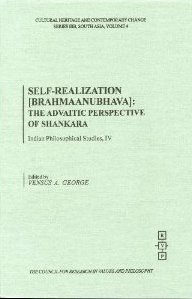
Vensus A. George, Self-realization (Brahmaanubhava)
Council for Research in Values & (January 2001), pp. 23-31
Related Articles
Why We Need to Get Connected to God
One Message Runs Through All Faiths: Only Connect
Yoga - Beyond The Body And Mind
Guru's Guidance to a Life of Fulfillment
Every Day is a Celebration For the God-conscious
Your Mind is a Monkey, Learn to Steady It
Awaken Aspiration by Raising Energy
Reason and not Dogma is the basis of Vedanta
Special Spiritual Benefits (Of Yoga)
Kundalini Yoga
Religion And Spirituality
In the 21st. CenturyIndia will conquer her conqueror
Disclaimer: Our material may be copied, printed and distributed by referring to this site. This site also contains copyrighted material the use of which has not always been specifically authorized by the copyright owner. We are making such material available to our readers under the education and research provisions of "fair use" in an effort to advance freedom of inquiry for a better understanding of religious, spiritual and inter-faith issues. The material on this site is distributed without profit. If you wish to use copyrighted material for purposes other than “fair use” you must request permission from the copyright owner.

