
Jesus was a Jewish heretic. Buddha was a Hindu heretic.... Mystical experiences inspired the founders and reformers of religion.
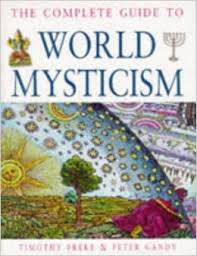
“Jesus was a Jewish heretic. Buddha was a Hindu heretic. The ancient Greek state executed the great philosopher Socrates for his heretical beliefs. Pythagoras was burnt to death along with most of his fellows. Al-Hallaj, the tenth-century Sufi mystic, was crucified by the Muslim authorities. The thirteen-century German mystic Meister Eckhart was prohibited from writing by the Catholic Church and eventually excommunicated a few days after his death. The sixth/seventeenth century mystic Jacob Boehem, known as 'the inspired shoemaker', was chased out of his home town of Gorlitz in Silesia by the Protestant authorities, who even desecrated his grave after his death. The Church of Rome tortured the Italian mystic philosopher Giordano Bruno over a period of eight years before he was burnt at the stake.”- Timothy Freke and Peter Gandy
Chapter 1
Mysticism and Religion
“Enlightenment is real, and each of us, whoever we are, can in the
right circumstances and with the right training realise the nature of
the mind and so know in us what is deathless and eternally pure. This
is the promise of all the mystical traditions of the world, and it
has been fulfilled and is being fulfilled in countless thousands of
human lives. There are enlightened masters still on the earth. When
you actually meet one, you will be shaken and moved in the depths of
your heart and you will realize that all the words such as
'illumination' and 'wisdom', which you thought were only ideas,
are in fact true.”
Sogyal Rinpoche, Modern Tibetan Lama
Mysticism is not religion. It is not concerned with beliefs and doctrines, but with a natural state of consciousness which has been experienced by people of all cultures, at all times in history, by followers of every religion and no religion. This mystical awareness is available to everyone, regardless of race, creed or culture. It is the spontaneous experience of a wider reality, beyond the limited horizon of ordinary existence. It does not invalidate the lives we are living, but rather deepens them, filling them with joy and meaning. Mystics discover a richer reality than they could have dreamed of. They are immersed in a blissful love that they know to be the very foundation of life. They are enveloped in a supreme oneness that can embrace all of life's contradictions. Their lives become a journey of spiritual awakening, to rediscover and live within the truth they have glimpsed.
Mysticism is the contemplation of the essential mysteries of life. It confronts the questions that all children ask, but most adults prefer to push away: 'Who am I?', 'What is the purpose of life?' - questions that cannot be solved by the rational adult mind, but only 'dissolved' into the child-like experience of mystic wonder. The mystics do not want us to have blind faith in particular religious creeds, but rather to set out on a personal exploration of consciousness....
Religious authorities may say that God is this way or God is that way, and that this is right or that another way is wrong, but when the donkey brays, the mystics believe the donkey. They dare to trust their own personal experience, rather than an external authority. They question the prevailing beliefs of their culture or religious tradition. They are open to new possibilities, willing to be surprised, to have their world turned upside down, to let go of the safety of mass consciousness and embark on their won spiritual journey to find their own intuitive sense of meaning. This is why they have so often been heretics and non-conformists.
Jesus was a Jewish heretic. Buddha was a Hindu heretic. The ancient Greek state executed the great philosopher Socrates for his heretical beliefs. Pythagoras was burnt to death along with most of his fellows. Al-Hallaj, the tenth-century Sufi mystic, was crucified by the Muslim authorities. The thirteen-century German mystic Meister Eckhart was prohibited from writing by the Catholic Church and eventually excommunicated a few days after his death. The sixth/seventeenth century mystic Jacob Boehem, known as 'the inspired shoemaker', was chased out of his home town of Gorlitz in Silesia by the Protestant authorities, who even desecrated his grave after his death. The Church of Rome tortured the Italian mystic philosopher Giordano Bruno over a period of eight years before he was burnt at the stake.
Ironically, it is by losing themselves in God that mystics find the rugged individualism courageously to follow their visions wherever they may lead, in a world usually hostile to their penetrating insight and spiritual values. The figure of the mystic appears eccentric and challenging to those who want to remain secure in the commonly accepted view of the world that happens to be prevalent at the time. That is why so many mystics have been forced to live precarious lives on the edges of social acceptability.
While some managed to maintain an uneasy alliance with the religious authorities of the day, most mystics were vilified and horribly persecuted for claiming direct personal knowledge of a God whom the religious establishment wished to make accessible only via their hierarchy of priests and theologians. Yet the natural experience of spiritual awakening that lies in the heart of mysticism is the birthplace of all religions, and they find their common ground in this common source. Mystical experiences inspired the founders and reformers of religion as well as its greatest heretics indeed, they have often been the same people. The history of mysticism is the history of their revelations.”
The Complete Guide to World Mysticism Timothy Freke and Peter Gandy, Piatkus Books (October 1998) pp. 13-16
Apokalypsis: The fulfillment of eschatological instruction by the Paraclete in the Age to Come promised by Jesus at the Last Supper
“The original meaning of the word ‘apocalypse’, derived from the Greek apokalypsis, is in fact not the cataclysmic end of the world, but an ‘unveiling’, or ‘revelation’, a means whereby one gains insight into the present.” (Kovacs, 2013, 2)
An apocalypse (Greek: apokalypsis meaning “an uncovering”) is in religious contexts knowledge or revelation, a disclosure of something hidden, “a vision of heavenly secrets that can make sense of earthly realities.” (Ehrman 2014, 59)
“An apocalypse (Ancient Greek: apokalypsis ... literally meaning "an uncovering") is a disclosure or revelation of great knowledge. In religious and occult concepts, an apocalypse usually discloses something very important that was hidden or provides what Bart Ehrman has termed, "A vision of heavenly secrets that can make sense of earthly realities". Historically, the term has a heavy religious connotation as commonly seen in the prophetic revelations of eschatology obtained through dreams or spiritual visions.” Wikipedia 2021-01-09
An apocalypse (Greek: apokalypsis meaning “an uncovering”) is in religious contexts knowledge or revelation, a disclosure of something hidden, “a vision of heavenly secrets that can make sense of earthly realities.” (Ehrman 2014, 59)
“An apocalypse (Ancient Greek: apokalypsis ... literally meaning "an uncovering") is a disclosure or revelation of great knowledge. In religious and occult concepts, an apocalypse usually discloses something very important that was hidden or provides what Bart Ehrman has termed, "A vision of heavenly secrets that can make sense of earthly realities". Historically, the term has a heavy religious connotation as commonly seen in the prophetic revelations of eschatology obtained through dreams or spiritual visions.” Wikipedia 2021-01-09
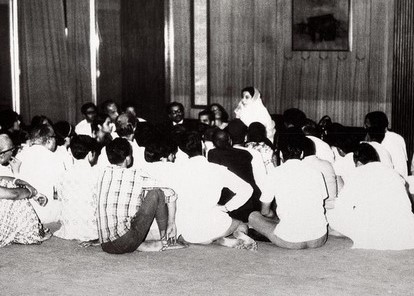
Shri Mataji Nirmala Devi (1923-2011) was Christian by birth, Hindu by marriage, and Paraclete by duty.
Total number of recorded talks 3058: Public Programs 1178, Pujas 651, and other (private conversations) 1249
“The Paraclete will come (15:26; 16:7, 8, 13) as Jesus has come into the world (5:43; 16:28; 18:37)... The Paraclete will take the things of Christ (the things that are mine, ek tou emou) and declare them (16:14-15). Bishop Fison describes the humility of the Spirit, 'The true Holy Spirit of God does not advertise Herself: She effaces Herself and advertises Jesus.' ...
It is by the outgoing activity of the Spirit that the divine life communicates itself in and to the creation. The Spirit is God-in-relations. The Paraclete is the divine self-expression which will be and abide with you, and be in you (14:16-17). The Spirit's work is described in terms of utterance: teach you, didasko (14:26), remind you, hypomimnesko (14:26), testify, martyro (15:26), prove wrong, elencho (16:8), guide into truth, hodego (16:13), speak, laleo (16:13, twice), declare, anangello (16:13, 14, 15). The johannine terms describe verbal actions which intend a response in others who will receive (lambano), see (theoreo), or know (ginosko) the Spirit. Such speech-terms link the Spirit with the divine Word. The Spirit's initiatives imply God's personal engagement with humanity. The Spirit comes to be with others; the teaching Spirit implies a community of learners; forgetful persons need a prompter to remind them; one testifies expecting heed to be paid; one speaks and declares in order to be heard. The articulate Spirit is the correlative of the listening, Spirit-informed community.
The final Paraclete passage closes with a threefold repetition of the verb she will declare (anangello), 16:13-15. The Spirit will declare the things that are to come (v.13), and she will declare what is Christ's (vv. 14, 15). The things of Christ are a message that must be heralded...
The intention of the Spirit of truth is the restoration of an alienated, deceived humanity... The teaching role of the Paraclete tends to be remembered as a major emphasis of the Farewell Discourses, yet only 14:26 says She will teach you all things. (Teaching is, however, implied when 16:13-15 says that the Spirit will guide you into all truth, and will speak and declare.) Franz Mussner remarks that the word used in 14:26, didaskein, "means literally 'teach, instruct,' but in John it nearly always means to reveal.” (Stevick 2011, 292-7)
The Holy Spirit as feminine: Early Christian testimonies and their interpretation,
Johannes van Oort, Radboud University, Nijmegen, The Netherlands
Department of Church History and Church Polity, Faculty of Theology, University of Pretoria, South Africa
Total number of recorded talks 3058: Public Programs 1178, Pujas 651, and other (private conversations) 1249
“The Paraclete will come (15:26; 16:7, 8, 13) as Jesus has come into the world (5:43; 16:28; 18:37)... The Paraclete will take the things of Christ (the things that are mine, ek tou emou) and declare them (16:14-15). Bishop Fison describes the humility of the Spirit, 'The true Holy Spirit of God does not advertise Herself: She effaces Herself and advertises Jesus.' ...
It is by the outgoing activity of the Spirit that the divine life communicates itself in and to the creation. The Spirit is God-in-relations. The Paraclete is the divine self-expression which will be and abide with you, and be in you (14:16-17). The Spirit's work is described in terms of utterance: teach you, didasko (14:26), remind you, hypomimnesko (14:26), testify, martyro (15:26), prove wrong, elencho (16:8), guide into truth, hodego (16:13), speak, laleo (16:13, twice), declare, anangello (16:13, 14, 15). The johannine terms describe verbal actions which intend a response in others who will receive (lambano), see (theoreo), or know (ginosko) the Spirit. Such speech-terms link the Spirit with the divine Word. The Spirit's initiatives imply God's personal engagement with humanity. The Spirit comes to be with others; the teaching Spirit implies a community of learners; forgetful persons need a prompter to remind them; one testifies expecting heed to be paid; one speaks and declares in order to be heard. The articulate Spirit is the correlative of the listening, Spirit-informed community.
The final Paraclete passage closes with a threefold repetition of the verb she will declare (anangello), 16:13-15. The Spirit will declare the things that are to come (v.13), and she will declare what is Christ's (vv. 14, 15). The things of Christ are a message that must be heralded...
The intention of the Spirit of truth is the restoration of an alienated, deceived humanity... The teaching role of the Paraclete tends to be remembered as a major emphasis of the Farewell Discourses, yet only 14:26 says She will teach you all things. (Teaching is, however, implied when 16:13-15 says that the Spirit will guide you into all truth, and will speak and declare.) Franz Mussner remarks that the word used in 14:26, didaskein, "means literally 'teach, instruct,' but in John it nearly always means to reveal.” (Stevick 2011, 292-7)
The Holy Spirit as feminine: Early Christian testimonies and their interpretation,
Johannes van Oort, Radboud University, Nijmegen, The Netherlands
Department of Church History and Church Polity, Faculty of Theology, University of Pretoria, South Africa


 “The teaching of the Paraclete, as the continuation of Jesus' teaching, must also be understood as the fulfillment of the promise of eschatological divine instruction.”
Stephen E. Witmer, Divine instruction in Early Christianity
“Jesus therefore predicts that God will later send a human being to Earth to take up the role defined by John .i.e. to be a prophet who hears God's words and repeats his message to man.”
M. Bucaille, The Bible, the Qur'n, and Science
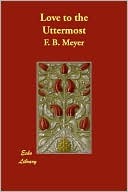
“And when Jesus foreannounced another Comforter, He must have intended a Person as distinct and helpful as He had been.”
F. B. Meyer, Love to the Utmost
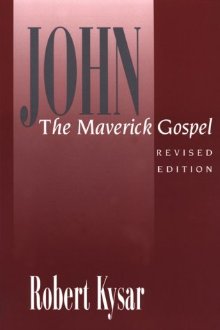
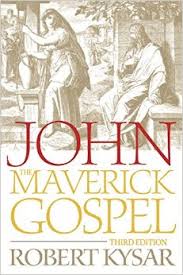
“The Paraclete has a twofold function: to communicate Christ to believers and, to put the world on trial.”
Robert Kysar, John The Meverick Gospel
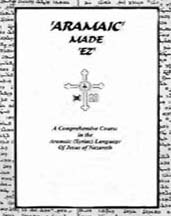
“But She—the Spirit, the Paraclete...—will teach you everything.”
Danny Mahar, Aramaic Made EZ)
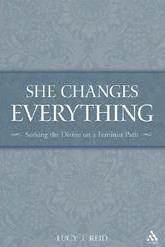
“Grammatical nonsense but evidence of the theological desire to defeminize the Divine.”
Lucy Reid, She Changes Everything
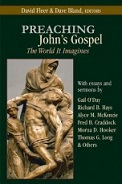
“The functions of the Paraclete spelled out in verses 13-15... are all acts of open and bold speaking in the highest degree.”
David Fleer, Preaching John's Gospel
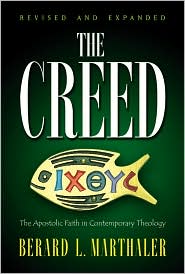
“The reaction of the world to the Paraclete will be much the same as the world's reaction was to Jesus.”
Berard L. Marthaler, The Creed: The Apostolic Faith in Contemporary Theology
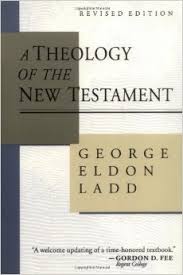
Bultmann calls the “coming of the Redeemer an 'eschatological event,' 'the turning-point of the ages.”
G. Ladd, A Theology of the New Testament
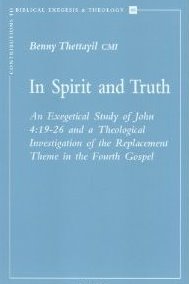
“The Paraclete equated with the Holy Spirit, is the only mediator of the word of the exalted Christ.”
Benny Thettayil, In Spirit and Truth
“The divine Paraclete, and no lessor agency, must show the world how wrong it was about him who was in the right.”
Daniel B. Stevick , Jesus and His Own: A Commentary on John 13-17
Stephen Smalley asserts that “The Spirit-Paraclete ... in John's Gospel is understood as personal, indeed, as a person.”
Marianne Thompson, The God of the Gospel of John
“The Messiah will come and the great age of salvation will dawn (for the pious).”
Eric Eve, The Jewish context of Jesus' Miracles
“The remembrance is to relive and re-enact the Christ event, to bring about new eschatological decision in time and space.”
Daniel Rathnakara Sadananda, The Johannine Exegesis of God
“The Spirit acts in such an international situation as the revealer of 'judgment' on the powers that rule the world.”
Michael Welker, God the Spirit
The Paraclete's “Appearance means that sin, righteousness, and judgment will be revealed.”
Georg Strecker, Theology of the New Testament
“While the Spirit-Paraclete is the true broker, the brokers they rely on are impostors.”
T. G. Brown, Spirit in the writings of John
“The pneumatological activity ... of the Paraclete ... may most helpfully be considered in terms of the salvific working of the hidden Spirit.”
Michael Welker, The work of the Spirit
“The pneuma is the peculiar power by which the word becomes the words of eternal life.”
Robert Kysar, Voyages with John
“The gift of peace, therefore, is intimately associated with the gift of the Spirit-Paraclete.”
Francis J. Moloney, The Gospel of John
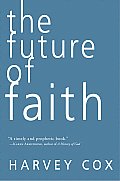
“This utopian hope, even when modestly expressed, links Jesus and the prophets to a much wider history of human longing.”
Harvey Cox, The Future of Faith
“Because of the presence of the Paraclete in the life of the believer, the blessings of the end-times—the eschaton—are already present.”
Robert Kysar, John
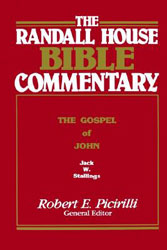
“They are going, by the Holy Spirit's power, to be part of the greatest miracle of all, bringing men to salvation.”
R. Picirilli, The Randall House Bible Commentary
“The Kingdom of God stands as a comprehensive term for all that the messianic salvation included... is something to be sought here and now (Mt. 6:33) and to be received as children receive a gift (Mk. 10:15 = Lk. 18:16-17).”
G. Ladd, A Theology of the New Testament
Disclaimer: Our material may be copied, printed and distributed by referring to this site. This site also contains copyrighted material the use of which has not always been specifically authorized by the copyright owner. We are making such material available to our readers under the education and research provisions of "fair use" in an effort to advance freedom of inquiry for a better understanding of religious, spiritual and inter-faith issues. The material on this site is distributed without profit. If you wish to use copyrighted material for purposes other than “fair use” you must request permission from the copyright owner.

