
People who have never even glimpsed the realm of the sacred, the infinite vastness behind that word (God), use it with great conviction, as if they knew what they are talking about.
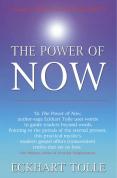
The word God has become a closed concept. The moment the word is uttered, a mental image is created, no longer, perhaps, of an old man with a white beard, but still a mental representation of someone or something outside you, and, yes, almost inevitably a male someone or something.” Eckhart Tolle
Enlightenment - what is that?
"The word enlightenment conjures up the idea of some super-human
accomplishment, and the ego likes to keep it that way, but it is
simply your natural state of felt oneness with Being. It is a state
of connectedness with something immeasurable and indestructible,
something that, almost paradoxically, is essentially you and yet is
much greater than you. It is finding your true nature beyond name and
form. The inability to feel this connectedness gives rise to the
illusion of separation, from yourself and from the world around you.
You then perceive yourself, consciously or unconsciously, as an
isolated fragment. Fear arises, and conflict within and without
becomes the norm.
I love the Buddha's simple definition of enlightenment as 'the end of
suffering.' There is nothing superhuman in that, is there? Of course,
as a definition, it is incomplete. It only tells you what
enlightenment is not: no suffering. But what's left when there is no
more suffering? The Buddha is silent on that, and his silence implies
that you'll have to find out for yourself. He uses a negative
definition so that the mind cannot make it into something to believe
in or into a superhuman accomplishment, a goal that is impossible for
you to attain. Despite this precaution, the majority of Buddhists
still believe that enlightenment is for the Buddha, not for them, at
least not in this lifetime.
You used the word Being. Can you explain what you mean by that?
Being is the eternal, ever-present One Life beyond the myriad forms
of life that are subject to birth and death. However, Being is not
only beyond but also deep within every form as its innermost
invisible and indestructible essence. This means that it is
accessible to you now as your own deepest self, your true nature. But
don't seek to grasp it with your mind. Don't try to understand it.
You can know it only when the mind is still. When you are present,
when your attention is fully and intensely in the Now, Being can be
felt, but it can never be understood mentally. To regain awareness of
Being and to abide in that state of 'feeling-realization' is
enlightenment.
When you say Being, are you talking about God? If you are, then why
don't you say it?
The word God has become empty of meaning through thousands of years
of misuse. I use it sometimes, but I do so sparingly. By misuse, I
mean that people who have never even glimpsed the realm of the
sacred, the infinite vastness behind that word, use it with great
conviction, as if they knew what they are talking about. Or they
argue against it, as if they knew what it is that they are denying.
This misuse gives rise to absurd beliefs, assertions, and egoic
delusions, such as 'My or our God is the only true God, and your God
is false,' or Nietzsche's famous statement 'God is dead.'
The word God has become a closed concept. The moment the word is
uttered, a mental image is created, no longer, perhaps, of an old man
with a white beard, but still a mental representation of someone or
something outside you, and, yes, almost inevitably a male someone or
something.
Neither God nor Being nor any other word can define or explain the
ineffable reality behind the word, so the only important question is
whether the word is a help or a hindrance in enabling you to
experience That toward which it points. Does it point beyond itself
to that transcendental reality, or does it lend itself too easily to
becoming no more than an idea in your head that you believe in, a
mental idol?
The word Being explains nothing, but nor does God. Being, however,
has the advantage that it is an open concept. It does not reduce the
infinite invisible to a finite entity. It is impossible to form a
mental image of it. Nobody can claim exclusive possession of Being.
It is your very essence, and it is immediately accessible to you as
the feeling of your own presence, the realization I am that is prior
to I am this or I am that. So it is only a small step from the word
Being to the experience of Being.”
Eckhart Tolle: The Power of Now: A Guide to Spiritual Enlightenment
New World Library; 1 edition (September 27, 1999) pp. 4-5
World religions are living parts of the mystical body of God's teachings to Mankind
"Concepts about God which were not warranted by the underlying experience of the one Reality only too often provided a conceptual framework for man's foulest deeds. Instead of being a reflection of the sublime, formal religious doctrines have happened to befool people to such an extent that it looked sometimes like a bad joke turned into a cold-blooded murder. When mythical beliefs are legitimized by short-sighted rationality and strengthened through the mechanisms of social organisation, one might well witness the birth of a monster, a monster which is to devour many a human life: it is the holy war (the jihad) for the "true faith", the Nation, the victory of the proletariat: God, of course, fades from the picture but not the legitimization of violence.
Give a truth to men, and see what they will do with it! It seems, alas, that half received truths are sometimes more dangerous than plain ignorance because they generate fanaticism and deeper mistakes. The various religions might well have manifested themselves as real flowers on the universal tree of religion. Cannot we perceive a basic unity underlying the different messages of Shri Rama and the Prophet Muhammad, Lord Buddha and Lord Mahavira? Are they not all expressions of the Holy Spirit? But people removed the flowers from the living tree and made the dead flowers their own property. "Religion" comes from the latin word "religare" which means to bind, to unite. What religion happens to be about could precisely be to unite the history of God and the story of man into a single poem to be sung within human consciousness. But historical world religions have not been very successful in their attempt to realise this end.
World religions are living parts of the mystical body of God's teachings to Mankind. But this body has been cut into pieces. Today, at the time of integration, the dead pieces lie apart... "Jesus is the only one!" "Muhammad is the last one ...while Lord Jesus and Muhammad are angry at the fanaticism of such followers. Contradictions in the scriptures and dogmatism go against the principle of Universality. But before feeling the vibrations from the Holy Spirit who could tell who is right or wrong? One could not feel God! Now, with Kundalini rising, we have seen that all the incarnations are aspects of one Being; the exclusion of one of them by the mind of the sadhaka causes hurdles in their integration as the corresponding chakra does not open. (p.136) So a Christian has to take the adornation mantra for Muhammad, Lord Shiva, etc.
Fanatics are the hardest to crack. Most remarkably, the incarnation they are supposed to worship is angry with them. A dogmatic Catholic is stopped at the Ajnya chakra by Christ himself; a Muslim would have a problem with his void (adorned by the principle of the Primordial Master of whom Muhammad is an incarnation); and Hindus have trouble with their Nabhi chakra (adorned with Lord Vishnu). The deities are angry with the misidentification of the sadhaka. Lord Jesus said: 'You will call me, Christ, Christ, but I will not recognize you'.”
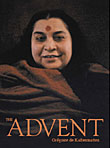
Gregoire de Kalbermatten, The Advent
The Life Eternal Trust Publishers (1979) pp. 135-6
The history that vanished when disbelieving Western scholars tempered with time to fit the 4000-year-old biblical creation
"The History That Vanished
Since the early 1920s, archaeologists have been unearthing an
astonishing ancient civilization in northwestern India, now called
the Indus-Saraswati culture. It was enormous, at least seven hundred
miles from north to south and eight hundred miles from east to west.
If you dropped the entire Egyptian civilization along with all of
Sumer (two high cultures which were flourishing at about the same
time) into that same geographical area, you still would have lots of
room left over!
Here researchers found the best-planned cities anywhere on the
planet. The neatly arranged gridiron pattern of streets and houses
revealed organizational and construction skills unparalleled in the
ancient world, and not always equalled in the world today. There
cities were gargantuan for the time—three miles in diameter, which
isn't a bad size for a town even today.
The quality of the drainage system in these towns, which included
brick-lined sewers complete with manholes, would not be seen again
till Roman engineers set up shop two thousand years later.
The people who lived there had many of the trappings of civilization
as we know it today (except maybe TV). They had nicely appointed
bathrooms where they took bucket showers. They had one of the
earliest written languages in the world. They had a sophisticated
system of weights and measures that was burrowed by the businessmen
of Mesopotamia.
They had seaports, but those excavated docks are eerie to look at
these days because the river tributaries they once served have gone
away. The long-abandoned piers now overlook the bleak Thar desert.
Messing with the Past
Western archeologists were astounded by these findings but orthodox
Hindus weren't surprised at all. Their ancient chronicles—enormous
religious anthologies like the Puranas and the Mahabharata—often
mentioned glorious cities of the distant past. They even mentioned
legendary architects like Asura Maya who could whip up spectacular
buildings with gardens and lotus-laden pools and mirrored walls.
But western scholars never believed those ancient chronicles for a
minute. The surprising thing is that even as they dug up more and
more evidence that the Hindus' own version of their history was more
or less correct, Western scholars still couldn't believe it!
Here's why. In the nineteenth-century European intellectual circles,
Oxford University professor Frederick Max Muller was held in only
slightly less esteem than God. One day Muller announced that the
Veda, India's most ancient classic and the very foundation of its
faith, had been composed between 1200 to 1000 B.C.E. As far as
Western scholars were concerned, God had spoken. This in spite of the
fact that some of the positions of the stars and planets mentioned in
the Veda could only have occurred sometime between 3500 and 4000
B.C.E.!
Tampering with Time
Where did Muller come up with a date as late as 1000 B.C.E. for a
scripture Hindus themselves considered much older? It turns out that
unlike the Hindus who believed the universe was billions of years
old, a Christian Muller believed the world had been created in 4004
B.C.E. By adding the ages of the patriarchs listed in the Bible who
lived between Adam and Noah, Muller could calculate the number of
years that had passed since the creation and the Great Flood. This
brought him to 2488 B.C.E.
Now, Muller was no fool. He knew it would take time for Noah's
descendents to migrate to India, repopulate the subcontinent, and
create the hundreds of different languages and distinctive cultures
flourishing here. This, he figured out, must have taken at least
1,200 years, maybe as much as 1,400. Veda, the earliest Hindu
scripture, could not have been written earlier than 1200 B.C.E.
University textbooks uncritically repeated this date through the mid-
1990s!
To give this guy credit, later in life Muller had second thoughts
about his guesstimate, admitting," Whatever may be the date of the
Vedic hymns, whether 1500 or 15,000 B.C., they have their own unique
place and stand by themselves in the literature of the world.”But
the damage had been done: Everyone believed that when he's given out
that date of 1200 B.C.E. he knew what he was talking about.
Muller's mistake had catastrophic consequences for the study of
Indian history. Saints who according to the Hindus had lived before
3000 B.C.E. were shifted to 1000 B.C.E. The Buddha, who according to
Northern Buddhist school lived around 1000 B.C.E., got shuffled to
somewhere around 500 B.C.E. No less an authority than the sixteenth
Dalai Lama has appealed to Western scholars to get together, clear
their minds, and straighten out this mess for once and for all!
"There is no more absorbing story than that of the discovery and
interpretation of India by Western consciousness," noted the renowned
Rumanian professor of religion, Mircea Eliade. You can say it again,
Mircea.
Chronological Conundrums
Back to our archeologists. They've discovered a high civilization
that flourished in north-western India between 2700 and 1900 B.C.E.
Since the Veda wasn't composed till maybe 1000 B.C.E. (according to
Muller) and the sages who composed the Veda were the founders of
Hinduism (according to Western scholars), then the people who lived
in these cities must not have been Hindus. They supposedly lived
nearly 2000 years before Hinduism was invented! Who were these people
and where did they go?
Enter the Aryan Invasion Theory. It was decided that the original
inhabitants of India were Dravidians. They are the people who fill up
much of South India today. They speak a totally different language
from most north Indians, and some of them have skin that's a little
darker in color. Till 1000 B.C.E., they must have inhabited the whole
of India, Muller's twentieth-century disciples decreed. The ancient
cities in the north were built by them.
Then, the Western experts concluded, somewhere between 1500 and 1000
B.C.E., the primitive barbarians who composed the Veda invaded
northern India, driving the hapless Dravidians into the southern part
of the subcontinent where they live today. There were two
difficulties with this popular theory:
1. Today's northern Hindus have absolutely no memory of having
ever driven the Dravidians out of north India. None of their ancient
manuscripts mention any such thing.
2. Today's Dravidians have absolutely no memory of ever having
lived in North India. In fact, their ancient traditions suggest that
their forebears came from the South, not from the North.
The Aryan Invaders
Minor problems like these did not discourage the European and
American scholars of the time. Thousands of pages of the Hindus' own
historical records were simply dismissed as fiction. These white
scholars were sure a virile white race of white warriors, much like
themselves, had invaded India.”
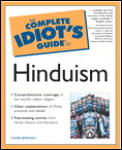
Linda Johnsen, The Complete Idiot's Guide to Hinduism,
Alpha; 1st edition (October 11, 2001) pp. 18-20
"The Mother of religion, the world's earliest spiritual teachings of the Vedic tradition contains the most sublime and all-embracing of philosophies.”
"'India is The Mother of religion. Her civilization has been acknowledged as much older than the legendary civilization of Egypt...
On the basis of archaeology, satellite photography, metallurgy, and ancient mathematics, it is now clear that there existed a great civilization—a mainly spiritual civilization perhaps—before the rise of Egypt, Sumeria, and the Indus Valley. The heartland of this ancient world was the region from the Indus to the Ganga—the land of the Vedic Aryans,' state N.S. Rajaram and David Frawley, O.M.D., in 'Vedic Aryans and the Origins of Civilization' (New Delhi: Voice of India, 1997).
The scriptures of India 'are the oldest extant philosophy and psychology of our race,' says renowned historian Will Durant in 'Our Oriental Heritage (The Story of Civilization', Part I). Robert C. Priddy, professor of the history of philosophy at the University of Oslo, wrote in 'On India's Ancient Past' (1999): 'India's past is so ancient and has been so influential in the rise of civilization and religion, at least for almost everyone in the Old World, that most people can claim it actually to be the earliest part of our own odyssey... The Mother of religion, the world's earliest spiritual teachings of the Vedic tradition contains the most sublime and all-embracing of philosophies.'
In his two-volume work 'India and World Civilization' (Michigan State University Press, 1969), historian D.P. Singhal amasses abundant documentation of India's spiritual nurturing of the ancient world. He describes the excavation of a vase near Baghdad that has led researchers to the conclusion that"by the middle of the third millennium B.C., an Indian cult was already being practiced in Mesopotamia....Archaeology thus has shown that two thousand years before the earliest references in cuneiform texts to contact with India, she was sending her manufactures to the land where the roots of Western civilization lie.”
India's spiritual influence extended not only west, but east. 'India conquered and dominated China for 20 centuries without ever having to send a single soldier across its border,' observed Dr. Hu Shih, former chancellor of Beijing University and Chinese ambassador to the United States. And Professor Lin Yutang, the famous Chinese philologist and author, says in 'The Wisdom of India' (New York: Random House, 1942): 'India was China's teacher in religion and imaginative literature, and the world's teacher in philosophy... India is a land overflowing with religion and with the religious spirit. A trickle of Indian religious spirit overflowed to China and inundated the whole of Eastern Asia.'
The high civilizations of the Americas, as well, show definite evidence of India's influence. 'In ancient times, no civilization spread abroad more extensively than that of India,' Professor Singhal writes. 'And thus, occupying a central position in the cultures of the world, India has contributed enormously to human civilization. Indian contacts with the Western world date back to prehistoric times.' He goes on to quote the illustrious scientist and explorer Baron Alexander von Humboldt, founder of the systematic study of ancient American cultures, who was convinced of the Asian origin of the advanced pre-Columbian civilizations in the New World: 'If languages supply but feeble evidence of ancient communication between the two worlds, their communication is fully proved by the cosmogonies, the monuments, the hieroglyphical characters, and the institutions of the people of America and Asia.'
'The traces of Hindu-Buddhist influence in Mexico... correspond in kind precisely to those cultural elements which were introduced by Buddhist monks and Hindu priests in Southeast Asia,' Dr. Singhal observes, and cites the conclusion of Professor Robert Heine-Geldern in 'The Civilizations of the Americas' as follows: "We have little doubt that a sober but unbiased comparative analysis of the Mexican religions will reveal many traces of the former influences of either Hinduism or Buddhism or of both ... to such an extent, both in a general way and in specific details, that the assumption of historic relationship is almost inevitable.”
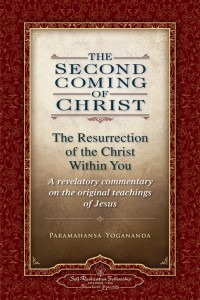
Paramahansa Yogananda, The Second Coming of Christ (The Resurrection of the Christ within You)
Volume 1, Discourse 5 (Sept 1, 2008) p. 84
The Kaballah, Sufism, and Christian Gnosticism—reflect Hindu insights in almost every detail
"Inner Religion
One of the great ironies of religious history is that, although the religions that came out of the Near East—Judaism, Islam, Christianity—adamantly reject most of Hinduism's fundamental teachings, their mystical traditions—the Kaballah, Sufism, and Christian Gnosticism—reflect Hindu insights in almost every detail. Numerous students of comparative religion, from Muslim scholar Al Buruni in 1000 C.E. to the world famous writer Aldous Huxley nearer our own time, have expressed their amazement at the parallels between the major mystical traditions of the world and Hinduism...
Hinduism is by far the most complex religion in the world, shading under its enormous umbrella an incredibly diverse array of contrasting beliefs, practices, and denominations. Hinduism is by far the oldest major religion. It has had more than enough time to develop a diversity of opinions and approaches to spirituality unmatched in any other tradition.”
Linda Johnsen, The Complete Idiot's Guide to Hinduism,
Alpha; 1st edition (October 11, 2001) pp. 76-77
"The Eternal Religion
Hinduism is so ancient its origins are lost in the mist of prehistory. Many sages are associated with it, but none claim to be its first prophet. Hindus believe their religion has existed forever, even before the universe came into being. They say the truths of their faith are inherent in the nature of reality itself, and that all men and women peering into the depths of their inner nature will discover the same truths for themselves.
The image too many outsiders have of the Hindu tradition is of primitive, superstitious villagers worshipping idols. As we get to know the Hindus better, we'll see that their understanding of who and what is God is incredibly sophisticated. In fact, their view of the world and our place in it is so stunningly cosmic in scope that our Western minds start to boggle!
Let's enter the universe of Hinduism, an amazing world where inner and outer realities reflect each other like images on a mirror, and the loving presence of the divine is as close as the stillness behind your own thoughts...
Beginningless Truth
You might think it takes a lot of chutzpah (if I may borrow a Jewish term) to claim that your religion is eternal. What Hindus mean when they say this is their tradition doesn't come from any one founding father or mother, from any single prophet towering over the bastion of hoary antiquity. In fact, the first few verses of the Veda, an incredibly old book, parts of which were composed 6,000 years ago, acknowledge the sages who were already ancient to its composers living in 4000 B.C.E.!
Very old Hindu texts speak of a time when it became almost impossible to survive on Earth because of ice and snow. This could be a reference to the last Ice Age, some Hindu scholars believe. Archaeologists have unearthed small statues of goddesses from 10,000 years ago (that's about the time the Ice Age was ending) like those being worshipped in Indian villages today. So even if we're not willing to grant that Hinduism is eternal, we still have to admit it got a jump on the other major religions...
I'd really like to bring home to you the vastness of the time scale Hindus are talking about here. One area where Hinduism and Judeo- Christian tradition agree is in saying that at the moment we're in the seventh day of creation. But according to the Hindu sages, a day for God is a bit longer than our human day of 24 hours.
The following schema was taught to me by Swami Veda Bharati, a renunciate who lives in a tiny ashram in Rishikesh in northern India. He's a devotee of the Divine Mother. (The Goddess is a major league player in Hinduism, and you'll soon see.)
Swami Bharati's time frame, preserved in the Hindu mystical tradition, starts with a day and a night in the life of our local creator god. Years here mean human years:
- One day and night in the life of Brahma is 8,640,000,000 years.
- The lifetime of Brahma is 311,040,000,000,000 years.
- One day and night in the life of Vishnu equals 37,324,800,000,000, 000,000 years.
- The life of Vishnu is 671,846,400,000,000,000,000,000 years long.
- One day and night in the life of Shiva lasts 4,837,294,080,000,000, 000,000,000,000,000 years.
- Shiva's lifetime corresponds to 87,071,293,440,000,000,000,000, 000,000,000,000 years.
- One glance from The Mother of the Universe equals 87,071,293,440, 000,000,000,000,000,000,000,000,000 years.
It might surprise you that Hinduism speaks of gods dying. Not to worry—they're reborn again later like the rest of us! According to Swami Veda Bharati's tradition, at any one moment there are trillions upon trillions of Brahmas, Vishnus, and Shivas manifesting their universes within the endless expanse of the Divine Mother's awareness.
This, folks, is Hinduism's Big Picture...
Inner Vision
But the thought I'd like to leave you with is that for many millennia the Hindu sages have claimed that if we purify our minds with spiritual practices and open our hearts to learn from her, The Mother of the Universe begins to share her secrets with us.
In the West, we peer into space with powerful telescopes hoping to learn the origin of the universe. The Hindu approach is to couple astute observation of the world outside us with a self-disciplined inner journey. Peering into the depths of consciousness in our own minds, we connect with the consciousness that underlies the entire cosmos. Truths other cultures need radio telescopes to ferret out simply present themselves to our concentrated inward attention.
To India's mystics, Brahma, Vishnu, and Shiva are not just characters invented to make a good story. They represent actual states of divine awareness that are available to devotees, provided only that the devotee is prepared to do the spiritual work to access them.
In fact, in Hinduism the point of doing spiritual practices is to attain jnana, living knowledge of Divine Being. it's an ambitious agenda! (Jnana means knowledge, specifically knowledge that you know in your soul, not just your brain. it's related to the English words gnosis or gnostic.)...
The BIG Picture
Why did God create the universe? Hinduism offers several suggestions:
1. He was lonely. He looked around and saw He was by Himself. He desired to become many. And whatever God wants, God gets. The moment that wish entered His mind, an infinite number of souls emerged from His limitless intelligence to keep Him company.
2. She likes to play. The Goddess can't sit still for a moment. She's always got to be doing something. All these worlds are Her game, or"Her sport"As Hindus like to say.
3. The Divine Being is so brimming with bliss, He/She spills over. Shiva/Shakti (God and Goddess who are both two and one in Hinduism) spontaneously generate cosmoc after cosmos. Creative energy simply pours out of the Divine. it's the nature of the Supreme One to create, as it's the nature of light to shine.
In the Western religious traditions, God creates us out of nothing. In Hinduism, Divine Being creates us out of itself. This means we are literally one with the divine, one with everything else in the universe, and one with each other.
Hinduism is about finding our place in an immense universe. It shows us how to deal with suffering and where to find joy. It reveals how learning to know our own inner Self is the key to entering the consciousness of God.
In the Western world, until very recently, there's been a tendency to consider Hindus"primitive"And"supertitious"because they believe there is a living spirit everywhere. What I hope you remember is that Hindu thought isn't primitive at all. In fact it's fantastically sophisticated. Hindus look at reality through a different lens than Westerners do, but in the context of Hindu culture, their understanding of who God is, how His laws operate, and what our position is in relation to him is just as insightful as the Western viewpoint.
The least you should know:
- The Hindu tradition is extremely mystical.
- Hindus consider their faith to be "The eternal religion.”
- Time doesn't end; it spins on in cycles through eternity.
- Direct personal expereince of God is the purpose of life.
- Everything arise out of consciousness.
If you had been around in the third millennium B.C.E., India is where you would have wanted to be. The quality of life was higher there than practically anywhere else in the world. In fact, the towns of North India in 2600 B.C.E. were more comfortable and technologically advanced than most European cities till nearly the time of the Renaissance!
Religious life was vibrant in ancient India. Some of the oldest surviving spiritual writings came from this part of the world. They reveal a religion that was both boisterously earthy and transcendently mystical—not unlike Hinduism today.”
Linda Johnsen, The Complete Idiot's Guide to Hinduism,
Alpha; 1st edition (October 11, 2001) pp. 1-17
"Al Biruni Takes Notes
Al Biruni was born in Khwarizm (today's Khiva in Uzbekistan) in 973 C.E. He was a brilliant astrologer and scholar who published books on optics, mineralogy, chemistry, mechanics, astronomy, mathematics, and the calendars and dating systems of many cultures.
Khwarizm was raided by the Muslim despot Abu-Said Mahmud in 1017. Al Biruni was taken to India as one of Mahmud's reluctant human prizes, and lived there for 13 years.
Al Biruni despised Mahmud, who he complained wrecked northern India economically as well as killing Hindus "like specks of dust scattered every which way.” He found a good use for his time, however, in purchasing all the Sanskrit manuscripts he could find and consulted endlessly with Indian pandits about Hindu science and spirituality.
The result was the Indika, Al Biruni's monumental study of Hindu culture and spirituality.
Notes on the Hindu God
Al Biruni was a good Muslim and was by no means always sympathetic to Hindu ideas or culture. He thought the Hindus' claim that the universe was billions of years old was ludicrous, and mocked their tendency to think in terms of incredibly long cosmic cycles. But he made a sincere effort to report Hindu beliefs objectively, so that Muslims interested in India could clearly understand the Hindu perspective. In the Indika, Al Biruni described the Hindu view of God:
—There is one God only Who is without beginning or end. He cannot be reached by thought but is sublime beyond our ability to conceive. He is infinitely vast, but not in the spatial sense since He exists outside of time and space.
—How can we worship this one whom we cannot perceive? He lies beyond the grasp of the physical senses, but the soul feels His presence and the mind understands His divine qualities.
—Meditating on Him one-pointedly is true worship. When meditation is practiced for a long time without interruption, one attains the highest state of blissfulness.”
Notes on reincarnation
Al Biruni's description of the Hindu view of reincarnation is particularly interesting:
Until it reaches the highest state of consciousness, the soul is not able to experience all things at once, as if there were no space or time. Therefore it has to experience the universe piecemeal, one thing at a time, until it has been through all possible experiences. An awfully lot of experiences are possible, so this process takes a very long time.
So immortal souls range through the universe in mortal bodies, which have good or bad experiences depending on whether their behaviour has been virtuous or evil. The purpose of experiencing heavenly states in the time between physical incarnations is so that the soul learns what is truly good, and wants to become as good as possible. The purpose of experiencing hellish states in the time between lives is so that the soul learns what evil is, and determines to avoid it all together.
The process of reincarnation begins at very low levels of consciousness, like minerals, plants or animals, and slowly winds its way upward toward very elevated states of awareness.
The process ends when the soul no longer desires to explore new worlds, but gains insight into the sublime nature of its own being, and rests content in itself. At that point the soul turns away from matter, and its links with physical existence are broken. It returns to its true home, carrying with it the knowledge it has gained during its many journeys.
Having closely studied all their systems, Al Biruni noted that the Greek, Indian and Sufi mystics taught essentially the same doctrine.
Linda Johnsen, The Complete Idiot's Guide to Hinduism,
Alpha; 1st edition (October 11, 2001) pp. 39-41

"Really big numbers are part and parcel of modern science; but I don't want to leave the impression that they were invented in our time.
Indian arithmetic has long been equal to large numbers. You can easily find references in Indian newspapers today to fines or expenditures of lakh or crore rupees. The key is: das = 10; san = 100; hazar = 1,000; lakh = 105; crore = 107; arabh = 109; carabh = 1011; nie = 1013; padham = 1015; and sankh = 1017.
Before their culture was annihilated by the Europeans, the Maya of ancient Mexico devised a world timescale that dwarfed the paltry few thousand years that the Europeans thought had passed since the creation of the world. Among the decaying monuments of Coba, in Quintana Roo, are inscriptions showing that the Maya were contemplating a Universe around 1029 years old. The Hindus held that the present incarnation of the Universe is 8.6 X 10⁹ years old — almost right on the button.”
Carl Sagan, Billions & Billions, Ballantine Books, 1997, p. 11-2.
Ballantine Books; 1 edition (May 12, 1998)
.jpg "The Great Adi Shakti Shri Mataji Nirmala Devi")
The Paraclete Shri Mataji “So this is how we finish all fundamentalism. Fundamentalists are the ones who believe that this is written in this book, this is written in this book, and that we, because we read this book, we are something better. Anybody can read any book, what is so great?”
The Paraclete Shri Mataji
Cabella Ligure, Italy—10 May 1992
"The main target, I feel today, should not be so much political, as fundamentalism. So we have to openly say to these fundamentalists that 'You are nonsensical. You don't know the truth. You don't know anything about truth. You don't know that you are the spirit. You don't know that there is a power that is working.' You have to tell very clearly, 'You are all stupid people running after something that is a mirage and all of you will end up into hell described by all the scriptures.' We have to openly say it this thing whichever way you like. You may write books. You may publish it. You may tell people about it. But now the new announcement has to come to say that running after falsehood is not going to take you to God. And, in that, they have used the power of hatred. So you have to say that we believe in the power of love and not in the power of hatred that you believe in. For us, everybody is capable of finding the truth and is capable of getting to the heaven of that paradise, which is promised to us, the Kingdom of God.”
The Paraclete Shri Mataji
Fiuggi, Italy—6 May 1990
"Now you know Australia was full of racialism once upon a time, nobody was come, allowed to come in here, might be fifty years back or so, but today in Australia what a change it is! Though they talked of Christianity and all those things, but they didn't think what Christ has said, they were just the opposite of what Christianity should be. Islam is the same, Islam talks of very great things, but it has to be confessed that the Muslims have nothing to do with Islam. Is absolutely from outside, if you see Christianity you have a very, very funny idea about it. If you ask any Hindu gentleman about Christianity they will say they are the worst possible people, very cunning, very aggressive and it takes them no time to kill each other. Imagine, disciples of Christ; but if you ask a Christian about a Muslim he will tell you, 'Oh, these Muslims are the most quarrelsome, dirtiest people ever born, fundamentalist.'
They are all fundamentalist, whether it's a Hindu, Christian, Muslim, anyone, they're fundamentalist because they are reading one book and that too, just reading. The book also doesn't go, if the book goes inside they will realize that all these books are telling the same thing under different names, that's all. But that universal thing you have got, thanks to your Spirit, that was there quite intact and which has started shining within you. So we have now a new community, a new civilization of people who are extremely honest with themselves, honest to each other. They are extremely righteous and good people, they are absolutely non-violent, absolutely law-abiding, very loving, affectionate, at the same time extremely constructive, and at the same time very intelligent. They understand Sahaja Yoga, it's such a subtle subject. Sahaja Yoga is such a subtle subject, because you know everybody has failed to make people understand anything about truth. it's an impossible situation. But this was the trick, your Spirit. Once your Spirit is enlightened it goes into your head without any difficulties, absolutely Sahaj. You don't know how difficult is this subject of Sahaja Yoga. It is such a fulfilment for the desire of the Divine that your Divinity is now expressing itself.”
The Paraclete Shri Mataji
Newcastle, Australia—29 February 1992
Disclaimer: Our material may be copied, printed and distributed by referring to this site. This site also contains copyrighted material the use of which has not always been specifically authorized by the copyright owner. We are making such material available to our readers under the education and research provisions of "fair use" in an effort to advance freedom of inquiry for a better understanding of religious, spiritual and inter-faith issues. The material on this site is distributed without profit. If you wish to use copyrighted material for purposes other than “fair use” you must request permission from the copyright owner.

