

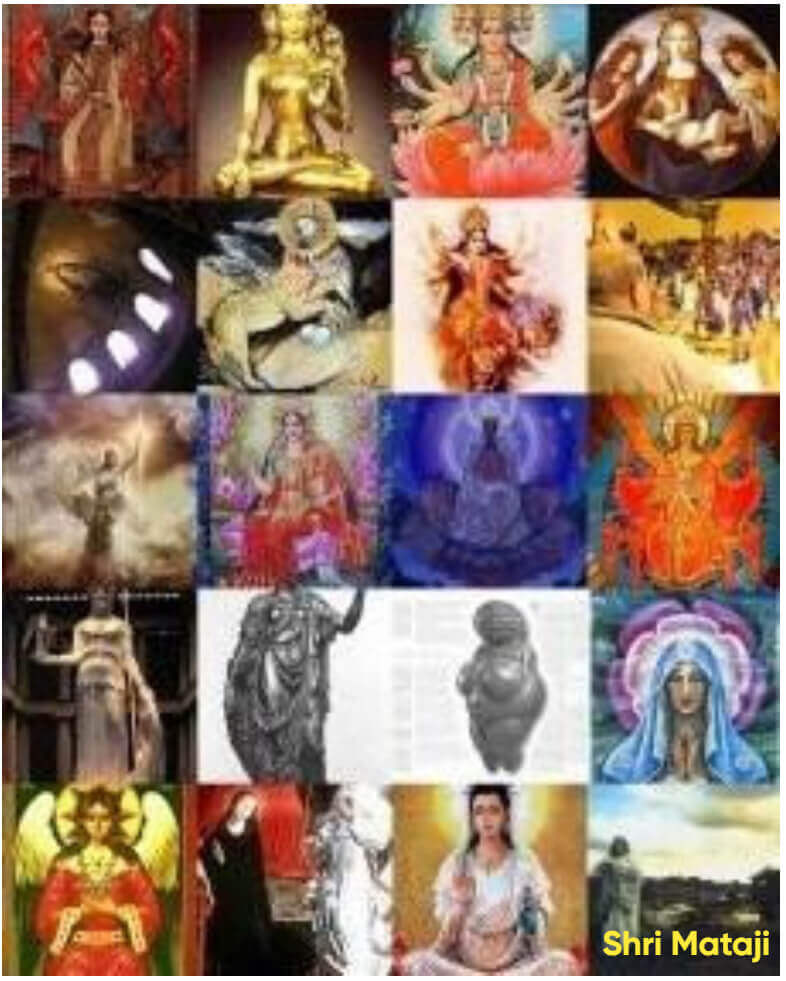
“The resurrection of Jesus is not the central datum of Christianity. The central point, from the earliest times, was God's intervention in history, the coming of his rule.”
Explore why the resurrection of Jesus, though revered, is not the central datum of Christianity. This spiritually provocative article reveals the deeper fulfillment of Christ's promise through the Comforter—Shri Mataji Nirmala Devi—whose Divine Feminine revelation offers living proof of spiritual transformation and cosmic unity. While the resurrection has long been upheld as the cornerstone of Christian faith, this article invites seekers to look deeper. Jesus promised the coming of the Comforter—one who would teach all things and guide humanity into truth. Shri Mataji Nirmala Devi, as the incarnation of the Divine Feminine, fulfills this prophecy through the awakening of the Kundalini and the direct experience of the Spirit. The resurrection is a historical claim, accepted by faith. The Comforter, however, offers living proof—a tangible, repeatable experience of divine connection through Self-realization. This shift from belief to experience marks the true spiritual revolution.
“Although the followers of Jesus who continued his preaching after
his death certainly made Jesus' role a part of that preaching, as we
have outlined, the pattern of their preaching remained the same as it
had been for Jesus: God's rule is coming, and under the rule there
will be salvation for those who have already begun to act accordingly
and to put their trust in God. A new element was added by the idea
that salvation had become possible above all through the death of
Jesus. By this death God had reconciled himself with those who
remained, who had been attached to Jesus and who relied on God for
their salvation. This is in outline the way in which the earliest
Christian preaching developed...
True, Jesus' followers only continued their theological preaching of
Jesus after his death in a form in which Jesus' unique role as the
messenger sent by God, his death and resurrection were constitutive
elements. They did not revert to the Jewish apocalyptic tradition
without Jesus. What they continued was a theological preaching in
which God was regarded as acting through Jesus' earthly work,
including his death and resurrection. To that extent faith in the
resurrection of Jesus was an integral part of early Christian
theology. And certainly their confidence that Jesus had risen and
been exalted was one of the factors that helped his followers to
continue his theological preaching. Belief in the resurrection and
exaltation of Jesus was a catalyst for the earliest history of the
church; it gave Christians the strength and inspiration to preach and
act. Nevertheless, as Marxsen said, we must stick to the point
that 'the resurrection of Jesus is not the central datum of
Christianity.” The central point, from the earliest times, was God's
intervention in history, the coming of his rule.'”
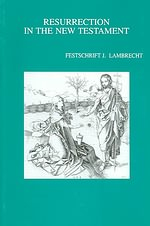
Resurrection in the New Testament: Festschrift J. Lambrecht,
Peeters (October 2002), pages 50-142
The Resurrection of Jesus Is Not the Central Datum of Christianity: Divine Intervention and Eschatological Fulfillment in the Age of the Paraclete
Abstract
This article contends that the core datum of Christianity is not the resurrection of Jesus per se, but the enduring pattern of God's intervention in history. From the proclamations of Jesus and his earliest followers to the contemporary testimony of the Paraclete Shri Mataji Nirmala Devi, divine action emerges as Christianity's central theme. Drawing on pneumatological experiences and interfaith scholarship, the article argues that the "Cool Breeze" phenomenon represents concrete, contemporary evidence of God's ongoing activity—fulfilling the messianic promises first inaugurated by Jesus and now realized on a universal scale through the Paraclete.
Introduction
The prevailing consensus in popular and much of scholarly Christianity is that the resurrection of Jesus stands at the faith's center. Yet, as early theological evidence and critical scholarship suggest, the originary Christian proclamation—kerygma—was not the self-referential elevation of Jesus, but the announcement of God's direct action in history. As Willi Marxsen observed:
"The resurrection of Jesus is not the central datum of Christianity. The central point, from the earliest times, was God's intervention in history, the coming of his rule..." (Peeters 2002, 50).
This original theocentricity is often lost in later Christological developments. The resurrection event is best read as a sign confirming God's action, not as the singular axis of Christian theology.
God's Central Action in Early Christian Preaching
Early Christian communities prioritized the message that "God's rule is coming," focusing—as Jesus had—on the transformative sovereignty of God (Peeters 2002, 50-142). After Jesus' death, his disciples did not shift the focus to Jesus' own role exclusively; rather, their preaching remained "concerned chiefly with God's actions and not with those of Jesus. In both cases, it was primarily about theology and not Christology" (Peeters 2002, 56).
"[T]hey continued... a theological preaching in which God was regarded as acting through Jesus' earthly work, including his death and resurrection. To that extent faith in the resurrection of Jesus was an integral part of early Christian theology. And certainly their confidence that Jesus had risen and been exalted was one of the factors that helped his followers to continue his theological preaching. Belief in the resurrection and exaltation of Jesus was a catalyst for the earliest history of the church; it gave Christians the strength and inspiration to preach and act. Nevertheless, as Marxsen said, we must stick to the point that 'The resurrection of Jesus is not the central datum of Christianity.' The central point, from the earliest times, was God's intervention in history, the coming of his rule..." (Peeters 2002, 57).
Thus, the early Church articulated a theocentric theology—divine initiative and action, sometimes expressed through Jesus and continuously open to further divine intervention.
The Johannine Paraclete: Promise of Future Divine Action
In the Fourth Gospel, Jesus promises the coming of the "Paraclete," the "Comforter" who will lead believers into all truth (John 14:16, 26; 16:13). This was not the closure of the divine narrative, but its projected continuation. Christian theologians increasingly acknowledge that Johaninne Pneumatology anticipates a future divine act not ending in the first-century Church, but open to new interventions (Welker 2006, 78).
The Paraclete Shri Mataji: Empirical Fulfillment of Divine Promise
Contemporary theological developments, especially those documented by adishakti.org, identify Shri Mataji Nirmala Devi as the Paraclete whose advent fulfills the open-ended messianic expectation. In dialogue with seekers and journalists, Shri Mataji explained:
"Yes, She is very much here and She's talking to you now... That's the proof of the thing. You've already started feeling it in your hands." (Talkback Radio 2UE, Sydney, March 31, 1981; adishakti.org)
This refers to the "Cool Breeze"—the direct experience of Pneuma, Ruach, or Ruh—which can be experienced as a tangible wind or vibration on the hands or above the head.
"The Cool Breeze, or the wind-like experience... is the universally available sign of the Holy Spirit... This experience parallels the Ruach of Judaism, the Pneuma of Christianity, and the Ruh of Islam..." (The Cool Breeze — Pneuma and Its Equivalence to Ruach in Judaism, Christianity, and Islam, adishakti.org).
This phenomenon, anchored in widespread empirical testimony, is not symbolic but functional: an ongoing confirmation of divine presence experienced across traditions (adishakti.org, Karkkainen 2002, Keizer 2010).
Ruach, Pneuma, Ruh: Interreligious Evidence
The Cool Breeze as divine breath or wind is documented in:
- Judaism: Ruach Ha-Qodesh ("the immanent aspect of The Godhead that interacts with those who seek her"—Keizer 2010, 42).
- Christianity: "The Pneuma... an awesome, mysterious power of breath and wind..." (Welker 2006, 78).
- Islam: Sibghatullah, "Baptism of Allah," as the direct touch of divinity (Ahmed 2005).
This pneumatic phenomenon, accessible and verifiable by seekers of any religious or secular background, provides evidence of divine activity that bridges doctrinal divides.
The Divine Feminine: Pneumatology and Motherhood
The womanly aspect of the Spirit is explicit in Hebrew (Ruach is feminine grammatical gender); Jurgen Moltmann argues:
"If believers are 'born again' from the Holy Spirit, then the Spirit is 'The Mother' of God's children and can in this sense be termed a feminine Spirit" (Moltmann 1967, 211, cited by adishakti.org).
Shri Mataji's role as a universal Mother echoes this tradition and completes the Trinitarian circle, restoring the Divine Feminine to centrality.
Eschatological Realization: Divine Action Now
The work of the Paraclete constitutes a second, global Pentecost—a realized eschaton. The Cool Breeze is verifiable, repeatable evidence that God has again "rendered Himself perceptible"—in the spirit, not merely as memory (adishakti.org, The Cool Breeze). The "unfinished crucifixion" and "ministry of Jesus" find their eschatological fulfillment here, not in past miracle, but in "the living miracle" of self-realization offered through modern experience.
Conclusion
The axis of Christianity is not an event frozen in the past, but the ever-unfolding initiative of God in history. The resurrection is affirmation; the descent and experience of the Paraclete's Wind is fulfillment. God's work in history is not closed:
"As in the time of Jesus, so now—in the Age of the Paraclete—God acts directly to renew creation... The eschaton is now. God's Breath once more moves upon the waters of the world's consciousness." (adishakti.org)
Bibliography
- Ahmed, Mufti M. Mukarram. Encyclopaedia of Islam, Vol. 25. 2005.
- Adi Shakti—The Divine Feminine. https://adishakti.org/index.htm
- Karkkainen, Veli-Matti. Pneumatology: The Holy Spirit in Ecumenical, International, and Contextual Perspective. Baker Academic, 2002.
- Keizer, Lewis. The Kabbalistic Teachings of Jesus in the Gospel of Thomas. 2010.
- Moltmann, Jurgen. Theology of Hope. Harper & Row, 1967.
- Peeters, F., ed. Resurrection in the New Testament: Festschrift J. Lambrecht. Peeters Publishers, 2002.
- The Cool Breeze—Pneuma and Its Equivalence to Ruach in Judaism, Christianity, and Islam. https://adishakti.org/AI/Pneumatology/The-Cool-Breeze-Pneuma-and-Its-Equivalence-to-Ruach-in-Judaism-Christianity-and-Islam.htm
- Welker, Michael. The Work of the Spirit: Pneumatology and Pentecostalism. Eerdmans, 2006.