
What did Jesus (and the Comforter) ask people to "Believe"? - 3
"We will see that the good news Jesus Christ brought is not just a message about His life and death leading to our salvation; His message also concerns the meaning of salvation and how He intends to save the human race from its present problems. The gospel reveals the glorious destiny of mankind! Sadly, humankind has reduced the gospel to the story about the person of Jesus Christ while neglecting and overlooking the deeper and vastly more encompassing message He brought. He most certainly brought good news-the most wonderful news this tired, troubled world can hear!"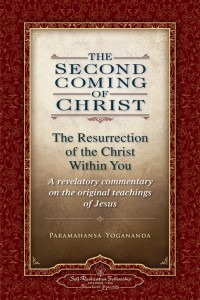
What did Jesus ask people to "Believe"?
"Jesus came into Galilee, preaching the gospel of the kingdom of God, and
saying," The time is fulfilled, and the kingdom of God is at hand: repent and
believe the gospel.” (Mark 1:14-15)
Jesus' exhortation to"believe the gospel"does not refer to study of or
belief in scriptural writings per se.[1] In the original Greek in which the New
Testament was written, the word used for gospel is 'euangelion'," good news"or
"good message.”As used by Jesus it expressed the"good message," the
revelations of truth, he was bringing to man from God.
When Jesus said to"believe the gospel," he meant more than a casual mental
acceptance of his message. Belief in general is that conditional receptive
attitude of mind that must precede an experience in order to cognize it. One
must have sufficient belief in a concept in order to put it to the test, without
which one cannot possibly verify its validity. If a man is thirsty and
is advised to quench his thirst with the water from a nearby good well, he must
believe in that advice sufficiently to make the effort to go to the well and
drink from it.
Similarly, Jesus emphasizes that truth-seeking souls must not only repent of the
foolishness of following unsatisfying material ways of living, and believe in
the truths experienced by him through God; they must also act accordingly that
they might realize those truths for themselves.
To be an orthodox unquestioning believer in any spiritual doctrine, without the
scrutiny of experimentation to prove it to oneself, is to be ossified with
dogmatism. Jesus did not ask the people merely to believe in his message, but to
keep faith in his divine revelations with the assurance that by believing in,
and hence concentrating upon, the gospel, they would surely and ultimately
experience within themselves the truths in those revelations. Belief is wasted
on false doctrines; but truth poured out to man through the authority of
God-realized saints is worthy of belief and sure to produce divine realization.
Even on the authority of the fame of scriptural text, one cannot judge what it
teaches, for various are the meanings and consequent distortions drawn from holy
writ, some of which defy the laws of both reason and wisdom. Also, who can deny
what errors might have come down through the centuries in the form of
mistranslations or mistakes made by scribes? The Bible and the Vedas may well be
inspired texts that came from heaven, but the ultimate test of truth is one's
own realization, direct experience received through the medium of the soul's
omniscient intuition.”
The Second Coming of Christ (The Resurrection of the Christ within
You) Volume 1, Discourse 22, pg. 378-379
Paramahansa Yogananda
Printed in the United States of America 1434-J881
Notes:
[1]"While two of the New Testament gospels use the word 'gospel' (it is missing in Luke and John), they use it to indicate not the written works themselves, but rather the message preached either by Jesus (in Matthew) or about him (in Mark). Not until the middle of the second century are documents about the words and deeds of Jesus called gospels.”- Robert J. Miller, ed., 'The Complete Gospels: Annotated Scholars Version' (HarperSanFrancisco, 1994).
"The English word 'gospel' is a descendant of the Anglo-Saxon word 'godspel' or 'good news'. 'Godspel' was an accurate equivalent of the original Greek word 'euangelion', literally a 'good message' or 'good tidings'. And the oldest surviving Greek manuscript copies of the four canonical gospels bear only the headings. According to Matthew, Mark, Luke, or John (the four books together comprise the whole of the single 'gospel'; and the word 'canonical' derives from the Greek 'kanon' or 'measuring rod' and indicates, in this case, those few gospels that were approved as holy scriptures by the orthodox church of the late second century).”- Reynolds Price, 'Three Gospels' (New York: Simon and Shuster, 1997). ('Publisher's Note')

Shri Mataji Nirmala Devi
"So according to the Gospel of Thomas, Jesus ridiculed those who thought of the 'Kingdom of God' in literal terms, as if it were a specific place: "If those who lead you say to you, 'Look, the Kingdom is in the sky,' then the birds will arrive there before you. If they say to you, 'It is in the sea,' then, he says, 'the fish will arrive before you.'" Instead, it is a state of self-discovery:
'... Rather, the Kingdom is inside of you, and it is outside of you. When you come to know yourselves, then you will be known, and you will realize that you are the sons of the living Father. But if you will not know yourselves, then you dwell in poverty, and it is you who are that poverty.'
But the disciples, mistaking the 'Kingdom' for a future event, persisted in their questioning:His disciples said to him, 'When will ... the new world come?' He said to them, 'What you look forward to has already come, but you do not recognize it...' His disciples said to him, 'When will the Kingdom come?' (Jesus said,) "It will not come by waiting for it. It will not be a matter of saying 'Here it is' or 'There it is.' Rather, the Kingdom of the Father is spread out upon the earth, and men do not see it.”
That 'Kingdom,' then, symbolizes a state of transformed consciousness:
Jesus saw infants being suckled. He said to his disciples, 'These infants being suckled are like those who enter the Kingdom.' They said to him, 'Shall we, then, as children, enter the kingdom?' Jesus said to them, 'When you make the two one, and when you make the inside like the outside and the outside like the inside, and the above like the below, and when you make the male and female one and the same ... then you will enter [the Kingdom].'
Yet what the 'living Jesus' of Thomas rejects as naive — the idea that the Kingdom of God is an actual event expected in history — is the notion of the Kingdom that the synoptic gospels of the New Testament most often attribute to Jesus as his teaching. According to Matthew, Luke, and Mark, Jesus proclaimed the coming Kingdom of God, when captives shall gain their freedom, when the diseased shall recover, the oppressed shall be released, and harmony shall prevail over the whole world. Marks says that the disciples expected the Kingdom to come as a cataclysmic event in their own lifetime, since Jesus had said that some of them would live to see 'the Kingdom of God come with power.' Before his arrest, Mark says, Jesus warned that although 'the end is not yet,' they must expect it any time. All three gospels insist that the Kingdom will come in the near future (though they also contain many passages indicating that it is here already.) Luke makes Jesus say explicitly 'the kingdom of God is within you.' Some gnostic Christians, extending that type of interpretation, expected human liberation to occur not through actual events in history, but through internal transformation.”
Elaine Pagels, The Gnostic Gospels,
Random House Inc. New York, 1989, p. 128-29.

"What makes us free, according to Christian dogma, is knowing the truth, which is Christ's Incarnation, Crucifixion, and Resurrection, and this truth is to be known by faith, the faith that at a moment, both in and out of time, these events once took place. When however we say that what makes us free is Gnosis, or 'knowing,' then we are Gnostics, and instead of believing that something was and is so (something that would be still different for Jews, and again for Muslims), we rely upon an inward knowledge rather than upon an outward belief. Gnosis is the opposite of ignorance, and not of disbelief. As an ancient Greek word widely used by Jews and Christians, Gnosis did not mean knowing that something was so, but rather just knowing someone or something, including knowing God. 'Knowing God' has a special twist that makes it the Gnosis: it is a reciprocal process in which God also knows what is best and oldest in you, a spark in you that always has been God's. This means that knowing God is primarily a process of being reminded of what you already know, which is that God never has been wholly external to you, however alienated or estranged he is from society or even the cosmos in which you dwell....
Here is Valentinus upon our present state in his one complete surviving work, the beautiful meditation The Gospel of Truth:
Thus they did not know God, since it was he whom they did not see. Inasmuch as he was the object of fear and disturbance and instability and indecisiveness and division, there was much futility at work among them on his account, and much empty ignorance—as when one falls sound asleep and finds oneself in the midst of nightmares: running toward somewhere—powerless to get away while being pursued—in hand-to- hand combat—being beaten—falling from a height—being blown upward by the air, but without any wings; sometimes, too, it seems that one is being murdered, though nobody is giving chase—or killing one's neighbors, with whose blood one is smeared; until, having gone through all these dreams, one awakens.
This nightmare of death-in-life, composed eighteen centuries ago, need but little modification. The Gnostic Jesus of The Gospel of Thomas, a wayfaring Jesus, closer to Walt Whitman than to the Jesus of the Churches, speaks to us as if each of us is a passerby, and with an ultimate eloquence tells us precisely into what we have been thrown:
But if you do not know yourselves, then you dwell in poverty, and you are poverty. Fortunate is one who came into being, before coming into being.”
Harold Bloom, Omens of the Millennium: The Gnosis of Angels, Dreams, and Resurrection, pages 243
Paperback: 255 pages
Publisher: Riverhead Books (October 1, 1997)
Related Articles:
What did Jesus (and the Comforter) ask people to "Believe"? - 1
What did Jesus (and the Comforter) ask people to "Believe"? - 2
What did Jesus (and the Comforter) ask people to "Believe"? - 3
What did Jesus (and the Comforter) ask people to "Believe"? - 4
What did Jesus (and the Comforter) ask people to "Believe"? - 5
What did Jesus (and the Comforter) ask people to "Believe"? - 6
Disclaimer: Our material may be copied, printed and distributed by referring to this site. This site also contains copyrighted material the use of which has not always been specifically authorized by the copyright owner. We are making such material available to our readers under the education and research provisions of "fair use" in an effort to advance freedom of inquiry for a better understanding of religious, spiritual and inter-faith issues. The material on this site is distributed without profit. If you wish to use copyrighted material for purposes other than “fair use” you must request permission from the copyright owner.

