
The Mysteries of the Kingdom: reasons i am stunned (Part 1)
Dear All,
i would like to extend the Silence over the week-end please. When
its over i will explain the reasons why i am stunned. So please
bear with me the delay which can be used to better comprehend Jesus
and His teachings.”The Mysteries of the Kingdom"should be read
very slowly, line by line, paragraph by paragraph. We must begin to
remember and meditate on our Primordial Father/Spirit/Brahman and
Mother/Holy Spirit/Adi Shakti—to recognize our true nature as
children of these 'spiritual' parents—from within! Thanks for the
cooperation.
regards to all,
jagbir
The Mysteries of the Kingdom:
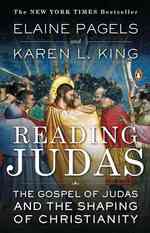
"The 'Gospel of Judas' does not stop with condemning erroneous views
about God and sacrifice, or practices of eucharist and baptism. On
the contrary, such criticism of mistaken church leaders marks only
its beginning. From this point, this gospel goes on to show"divine
mysteries"revealed only to Judas—about God, about Jesus and the
divine source whence he comes, and about how he—and the disciple
who follows him—may enter that spiritual reality.
Reason I am stunned:
i know for a fact that centuries of rules, rituals and debates over
Christ's teachings have created massive volumes of confusing, even
contradictory, human interpretations that have little to do with God.
Shri Mataji too has criticized religious institutions, condemning
their erroneous views about the Divine which have led their followers
astray, preachings that have nothing to do with Self-realization.
The Mysteries of the Kingdom:
Jesus teaches Judas that at death, the bodies of all human beings will perish—there is no resurrection of the flesh. Only the souls of the great and holy race will be lifted up when their spirits separate from them (Judas 8:3-4). At the beginning Judas does not really understand, for when he has a dream, Jesus laughs at him, a clear indication that Judas has made some error. But rather than dismissing Judas, Jesus promises to support him. He encourages Judas to speak about his distress when he dreamed that"The twelve" disciples were stoning and persecuting him. But Judas also had a vision of the heavenly Temple—a glorious vision of a great house filled with brilliant light, and, high above, dense green foliage (Judas 9:9-12). (P.78) People would immediately recognize this as the infinite light in which God dwells—the house of God. That, of course, is what Jews called the Jerusalem Temple; but what Judas sees - in stark contrast to"The twelve's"dream about bloody sacrifice in the earthly Temple—is the spiritual reality beyond this world, the divine reality that Israel's prophets often described simply as"light", the glory of God's presence, at which humanly built"houses of God", from the Jerusalem Temple to the cathedral at Chartres, can only hint.
Reason I am stunned:
"The doctrine of bodily resurrection, linked closely to the soul's nature and destiny, suffers like a fate. The ancients knew little or nothing about the human organism — its chemical constituents, its functioning parts, its psychology — and even less about the nature of death. Modern man has measured corruption, can detail the chemical changes that take place when bodily life ceases, has a clear idea of what precisely corruption and decay of the human frame connote, and defines human death precisely by the cessation of the observable functions of the body. The three religions define death as the moment when the soul leaves the body.
On the other hand, the scientist cannot accept the"outside" explanation: that a god will"resurrect"The corrupted body. He knows that in a living body today the actual molecules which compose it were not part of it some time ago. In another decade it will be made up of molecules which at present are elsewhere: in African lions, in passion-flowers of the Amazon, in Maine lobsters, in earth in Patagonia, and in the fur of a Polar bear. For the scientist, the body as such has truly ceased to exist. No"shade"or reduced form of the body exists in an"underworld"or in Elysian fields. The body has ceased to exist. He therefore finds the resurrection of the body unintelligible.”
Malachi Martin, The Encounter,
Farrar, Straus and Giroux, 1970, 286.
The Mysteries of the Kingdom:
But when Judas asks to go there and join the distinguished elders who surround the divine presence, Jesus rebukes him: "Your star is leading you astray, Judas" (Judas 9:15). This shows that although only Judas, of"The twelve," caught a glimpse of what Jesus meant when he began to speak to them about the mysteries that are beyond the world—for Judas alone perceived that Jesus came from the immortal realm above (Judas 2:22-23)—he still has not fully understood what Jesus is trying to tell him. No mortal is worthy to go there, Jesus insists, because that place is reserved for the holy ones—that is, for people who are no longer subject to the sun and moon and the other angels who rule over the realm of chaos. So even though Jesus has already told Judas that he is able to reach the immortal realm (Judas 2:27), the disciple still doesn't understand fully Jesus' most central teaching—that for human beings to gain eternal life, they have to perceive the deeper vision of God that emerges from within. That is why Jesus began by challenging the disciples"to bring forth the perfect human.” (P.79) Those who do so discover that they have within them spiritual resources of which they were unaware.
Reason I am stunned:
The eternal Spirit World exists and that is where Jesus descended from. It is an immortal realm where countless liberated souls live. Jesus demonstrates that no human being can enter the immortal realm until and unless humans have realized their Self i.e., perceived the deeper vision of God that emerges from within.
The Mysteries of the Kingdom:
For in the process of bringing forth the perfect human, one becomes aware of the deeper meaning of the 'Genesis' account, which tells how God created humankind:
Then God said," Let us make humankind in our image, according to our likeness...”So God created humankind in his image, in the image of God he created them; male and female he created them" (Genesis 1:26- 27).
If human beings are created in the image of the divine, why is this image so hard to perceive and why does it take such courage to discover? Here Jesus goes on to explain that creation"In the image" refers to our original, spiritual nature, hidden deep within what we seem to be as ordinary men and women. It is that original quality of human being that was created in the image of a spiritual being called Adamas, who dwells in the light, where the true God dwells, hidden even from the angels (Judas 11:1-2). The human Eve, too, is created after the image of the heavenly race—because, like Adamas, Eve is also a heavenly being—and it is she who most deeply represents humanity's spiritual nature. For within the luminous cloud of light where Adamas dwells on high there also dwelt Eve. In Greek her name ("Zoe") means"Life," drawing on the wordplay found in Hebrew, in which"Eve"means"life," as the 'Genesis' account shows: "The man called his wife's name Eve, because she was The Mother of all living" (Genesis 3:20). (P.80) Here Jesus teaches that"The whole race"of humans should seek eternal life 'in her name' (Judas 13:2-4). What this means for human beings now is that those who come to recognize their true nature are children of these 'spiritual' parents—not children like Cain and Abel, enmeshed in the story of the first murder, but children who resemble the lesser-known one, Seth, whom 'Genesis' says Eve bore to Adam as their third son:
When God created humankind, he made them in the likeness of God ... When Adam had lived one hundred thirty years, he became the father of a son in his likeness, according to his image, and named him Seth (Genesis 5:1,3)
All humanity, then, belongs to"The incorruptible race of Seth" (Judas 11:5), since everyone is a child of Adam and Eve, created according to the likeness and the image of God.
Reason I am stunned:
When God said," Let us make humankind in our image, according to our likeness", that image is that of the same substance as that of the Creator i.e., of a spiritual nature. Thus our soul (Atma) is the same as that of Spirit (Paramatma). All humanity are created according to the likeness and the image of Brahman and they have to recognize their true nature as children of the creator i.e., as eternal souls of the Spirit. They have to remember again their original, spiritual nature, hidden deep within what seems to be as ordinary, physical men and women.
"One of the messages of the Upanishads is that the Spirit can only be known through union with him, and not through mere learning. And can any amount of learning make us feel love, or see beauty or hear the 'unheard melodies'? Some have only seen the variety of thought in the Upanishads, not their underlying unity. To them the words in the sacred texts might be applied: "Who sees variety and not the unity wanders on from death to death.”
The spirit of the Upanishads is the Spirit of the Universe. Brahman, God himself, is their underlying spirit. The Christians must feel that Brahman is God, and the Hindu must feel that God is Brahman. Unless a feeling of reverence independent of the barriers of names can be felt for the ineffable, the sayings of the Upanishads is true: "Words are weariness," the same idea expressed by the prophet that"Of making many books there is no end.”
The Holy Spirit may be the nearest translation of Brahman in Christian language. Whilst God the Father and God the Son are in the foreground of the mind of many Christians, the Holy Spirit seems to receive less adoration. And in India the Brahman of the Upanishads is not as popular as Siva, Vishnu or Krishna. Even Brahma, the manifestation of Brahman as creator, and not to be confused with him, is not living in the daily devotions of the Hindu, as are the other two gods of the trinity, Siva and Vishnu. The Upanishads doctrine is not a religion of the many; but rather the Spirit behind all religions in their central theme repeated in such a wonderful variety of ways.
Brahman in the Universe, God in his transcendence and immanence is also the Spirit of man, the self in every one and in all, Atman. Thus the momentous statement is made in the Upanishads that God must not be sought as something far away, separate from us, but rather as the very inmost of us, as the higher Self in us above the limitations of our little self. Thus when the sage of the Upanishads is pressed for a definition of God, he remains silent, meaning that God is silence. When asked again to express God in words, he says"Neti, neti," "Not his, not this"; but when pressed for a positive explanation he utters the sublimely simple words"TAT TWAM ASI," "Thou art That.” "
Juan Mascaro, The Upanishads
The Mysteries of the Kingdom:
Why, then, does Jesus speak of atwo' kinds of human races? Why is it that not everyone automatically understands the spiritual nature? To help Judas understand, Jesus tells him that Saklas was the one who decreed that human beings should only live for a short time and then perish. People have been led astray and polluted with the foolish "Wisdom"of the world (Judas 8:7), because the rulers of chaos and oblivion"lord it over them.”They've come to believe that this life of the flesh, our present life in this world, is all that really exists. (P.81) When they try to imagine eternal life, they imagine it only as living on forever in the flesh, just as Justin, Irenaeus, and Tertullian say. But Jesus insists they are wrong. Although the 'Gospel of Judas', like the New Testament gospels, says that Jesus' teaching offers a path to eternal life, the key to that path is not what happens to the physical body; it is understanding humanity's spiritual connection to God. Those who understand the deeper secrets of creation, aware that they are created"In the image"of the divine source, may come to dwell above in the realm of the Spirit.
Reason I am stunned:
Jesus says there are two types of human races; the overwhelmingly vast majority that thinks in terms of the physical body and the miniscule minority that has attained knowledge of their original nature, hidden deep within. The former have been led astray and polluted with the foolish"Wisdom"of the world by political leaders and guardians of religious regimes — priests, pastors, reverends, bishops, popes, rabbis, clerics, imams, mullahs, shaikhs, ulema, ayatollahs, gurus, swamis, pandits, brahmins, acaryas, bhagwans, granthis, gianis, lamas, monks, dalai lamas. Even when they try to imagine eternal life, they imagine it only as living on forever in the flesh—graves opening up during resurrection, 72 virgins in heaven to fornicate at will for all eternity, heaven and eternal life on earth etc.
Jesus' teaching offers a path to eternal life. The key to that path is not what happens to the physical body. Instead it is understanding humanity's spiritual connection to God> Only the miniscule minority have taken this path to eternal life by attaining Self-realization i.e., realization of the Self/God/Brahman within. Only the few who understand the deeper secrets of creation are aware that they are created"In the image"of the divine source. Jesus promises that only they will come to dwell above in the realm of the Spirit.
The Mysteries of the Kingdom:
Jesus explains to Judas that God did not abandon humanity to the lower angels but made sure that Adam and those with him learned that the image of God they carry deep within makes them superior to the rulers of chaos (Judas 13:16-17). Judas is astonished when he hears this. At first he can't believe it is true, but gradually he comes to understand what it means. Jesus explains that because everyone received a divine spirit, everyone can worship God truly. Those who do so free themselves from the power of the lower angels, so that when their physical bodies die, their souls—now joined with spirits of the great and holy race above—ascend to the heavenly realm above (Judas 8:2-4; 9:22; 13:12-15). Judas finally understands Jesus' teaching, so that this time he does not turn his eyes away, but he lifts up his eyes so that he sees the cloud of light, and he enters into it (Judas 15:15-19).
Reason I am stunned:
This is nothing but Self-realization! Jesus explains that because everyone received a divine spirit, everyone can truly worship that divine spirit (God) from within. Those able to worship their Self can free themselves from this physical world and their liberated souls ascend to the immortal heavenly realm of the Spirit above ...... and live forever. This is the eternal afterlife promised by all the Holy Scriptures.
The Mysteries of the Kingdom:
Yet the 'Gospel of Judas', like the New Testament gospels, shows that Jesus' teaching is not limited to words; he also teaches through what he does. What he reveals is not complete when he finishes speaking — but only when he dies. His death demonstrates that the death of the body is not the end of life, but only a step into the infinite.
Reason I am stunned:
Jesus Christ is the only incarnation who has demonstrated and given evidence through His crucifixion and resurrection that"The death of the body is not the end of life, but only a step into the infinite.” Shri Mataji is absolutely right when She heaped this praise on Jesus: "He was the Holiest of the Holy. You accept that position.” And for more than 30 years She has glorified Jesus Christ and declared the Good News of the Kingdom of God—the promised Resurrection and eternal afterlife in the Spirit World—month after month, year after year, decade after decade. The end of this physical life is but a step into the spiritual infinite!
The Mysteries of the Kingdom:
What meaning, then, does Jesus' death have? Jesus shows Peter that he should not fear death, because what dies is only the mortal body, not the living spirit. To show him this, Peter is given a vision of Jesus' passion to prepare him to face his own suffering and death. The Savior reveals to Peter that if he perceives the crucifixion not with his physical ears and eyes but with spiritual apprehension, he will be able to perceive the truth. The one into whose hands and feet they drive the nails is only the fleshly part; the living Jesus is untouched by this suffering and death ('pocalypse of Peter' 81:4- 24). [4] Peter expresses astonishment, for in a kind of double vision, he seems to see one person being seized and nailed to the cross while another, joyful and laughing, stands nearby. When Peter asks Jesus what this means, Jesus explains that when the body suffers mortal agony, it releases"The Spirit filled with radiant light" (83:9-10). Human beings are not saved by dying as martyrs but only by accepting God's forgiveness and standing fast against those who teach error and violence.
Reason I am stunned:
First Falsehood: "But They Killed Him Not... But So It Was Made To Appear To Them"
"Islam denies Shri Jesus' crucifixion contrary to massive scriptural and historical evidence. This might be quite a shock to non-Muslims, but it is true. Ask any Muslim and he or she will tell you that Christ was never crucified. All Muslims firmly believe so, thinking that the Qur'n says so!
That they said (in boast)," We killed Christ Jesus the son of Mary, the Messenger of Allah"—
But they killed him not, nor crucified him,663 but so it was made to appear to them,
And those who differ therein are full of doubt, with no (certain) knowledge, but only conjecture to follow,
For a surety they killed him not.
surah 4:157 Al Nisa (The Women)
Abdullah Yusuf Ali, The Holy Qur'n, Amana Corporation, 1989.
"663. The Qur'nic teaching is that Christ was not crucified nor killed by the Jews, notwithstanding certain apparent circumstances which produced that illusion in the minds of some of his enemies.; that disputations, doubts, and conjectures on such matters are vain.”
Abdullah Yusuf Ali, The Holy Qur'n
Abdullah Yusuf Ali, The Holy Qur'n, Amana Corporation, 1989.
The critical words"but so it was made to appear to them"clearly indicates that humans did see Him being crucified. They saw Him being crucified and killed (and the body later removed and entombed.) All this did happen but it was made to appear to them that they had crucified and killed Him. But in Reality," for a surety they killed him not.”This means that they 'killed' Him physically, but spiritually He was alive. He never died because the Spirit is eternal. So, for sure they never killed Him just as no human ever dies as we are all eternal spirits. Shri Jesus was physically crucified but He did not die spiritually. In other words, He was not crucified although it was made to appear so. The spirit is eternal and cannot be crucified, killed, maimed, burnt, or cut, i.e., it is indestructible. This was probably the simplest way of explaining a very subtle and complex Truth to illiterate tribal folks.
The Qur'n does not deny the crucifixion; it only affirms that Shri Jesus was not killed, although in all appearance it seemed so. And the only way this is possible if humans saw Shri Jesus 'dead' on a cross. All His disciples and followers knew about His death by crucifixion because there were many who witnessed it. Even though they buried his dead body, He resurrected Himself three days later. So He did not die even though He 'died.' So He did die by crucifixion, a common form of Roman punishment. If this is not the case then will one billion Muslims please enlighten the precise nature of His death. We are dying to know what you know.”
Shri Adi Shakti: Kingdom of God, pages 2993-94
Disclaimer: Our material may be copied, printed and distributed by referring to this site. This site also contains copyrighted material the use of which has not always been specifically authorized by the copyright owner. We are making such material available to our readers under the education and research provisions of "fair use" in an effort to advance freedom of inquiry for a better understanding of religious, spiritual and inter-faith issues. The material on this site is distributed without profit. If you wish to use copyrighted material for purposes other than "fair use" you must request permission from the copyright owner.

