Shri Mataji: "But this Judgment is so beautiful ... you enjoy the bliss of your Spirit ... You become One with the awareness of God"
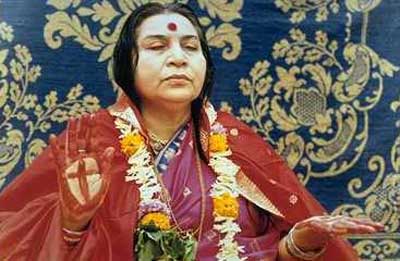

The Great Adi Shakti Shri Mataji Nirmala Devi
Shri Mataji Nirmala Devi

"But today the time has come where thousands can get their realization and can be established because the Last Judgment has started. The Last Judgment is going to be through Kundalini awakening, as if Kundalini is the pointer in the balance. It has started! People are not aware it has started! They do not want to be judged as yet, but time should not be lost.

But this Judgment is so beautiful that when you are judged you get powers of your own, of your love; you enjoy the bliss of your Spirit; you become so peaceful, all the tensions disappear; you become so dynamic and the blessings of all the well-beings come on you. As Krishna has said "Yogakshema." First the yoga then the kshema. Kshema is well-being. If you have not achieved your yoga the kshema is not bothered.

People say I am preaching Advaita of Shankaracharya. Of course, it is the same, whether it is Shri Sankaracharya or anybody. I am doing that. Only he was preaching, I am doing it.

What Christ said, what Krishna said, and what Muhammad said is nothing but Advaita, that "you have to become One with God". But there are many who do not like it, they want to have dvaita, they want to keep their personalities, so-called, with them. I asked the other day one gentleman who was a minister and all that. I said "What do you want to keep that? What, which part?" He said "Not my ego." I said "What is it then? It is that only. You want to keep back your ego".

Unless and until you become big you cannot evolve. And how do you become big? – by becoming the Ocean yourself. A small drop becomes an ocean, as long as he becomes One with the Ocean. You become One with the awareness of God. This is what Christ has said, "You have to be born again." Is said by everyone. Moses has said it, everyone has said it but people are telling you "No, no, no, no. That should not be done" because these middle agencies will be losing their income. How will they exist without it?

Try to see these points. Achieve your own powers of Love; achieve your Self, become your Self. If you want it you can have it, but if you don't want nobody can force this. Nobody can take away your freedom. If you want to remain as you are, you are left with that; then you face it up and live with it.

But if you want the ultimate, the absolute, it is there. That's the only way you can get rid of your confusions and get rid of all your ideas of relative existence – political, economic and everything can be only dissolved through achievement of your absolute. Because after realization you can feel, you can ask any absolute question. For example, if you want to ask the question "Is there God?", immediately the cool breeze starts coming out. Tremendous! The answer comes as if like a computer you start working out because you are put to the mains.

So it is necessary for the whole humanity to pay attention today because the time is coming when the sorting out will take place. That time nobody is going to persuade, or tell you and fill the halls and request you. The sorting out will be there. Better get it now and establish it. Whole humanity has to be saved. No use doing patchwork. Do something substantial. Substantial is only possible if you go to the roots of this Tree of Life and nourish it, enlighten it. That is the only way one can work it out. May God bless you all."

Shri Mataji Nirmala Devi
Achieving Truth, May 25, 1980


PHILOSOPHY OF ADVAITA VEDANTA AS EXPOUNDED IN THE UPANISHADS
Brahman as Bliss

(1). Brahman is described as Sat Cit Ananda. Ananda is translated in English as Bliss. But the word ananda used to define Brahman's nature, does not refer to experiential happiness. It should be equated with anantatvam i.e. infinitude – infinitude not only space wise, but time wise and entity-wise – indicated by the word "anantam' occurring in the Taittiriya Upanishad mantra II.i – " Satyam Jnanam Anantam Brahma". This anantatvam (or poornatvam) is reflected in the pure, calm mind of a Jnani who has identified himself with the infinite Brahman. And so, he has a sense of utter fulfilment and such a sense, we can say, is supreme happiness. Thus, we have to distinguish between "swaroopa ananda", ananda as the nature of Brahman and "kosa ananda", the ananda experienced by a jnani. (The ananda experienced by a jnani is unconditional happiness., i.e., it is not dependent on contact with objects and it has no gradation.; happiness experienced by others is conditional and graded.) The word ananda to define Brahman is used as such in some places in the Upanishads.–Brhadaranyaka Upanishad III.ix.28 (7) –"vijanam anandam Brahma ....parayanam tishtam aanasya tat vida' ("Knowledge, Bliss, Brahman ......the supreme goal of him who has realised Brahman and is established in It."- Taittiriya Upanishad III.vi.1 – "anando brahma iti vijanat" ("He knew Bliss as Brahman"). Taittiriya Upanishad II.v.1– "ananda atma" ("Bliss is Atma" ,i.e., Brahman) Taittiriya Upanishad II.vii – " ko hi eva anyat pranat yat esha akasa (Brahman) ananda na syat" ("Who indeed will inhale, who will exhale, if this Bliss be not there in the supreme space within the heart) - Taittiriya UpanishadII.iv.1 and II.ix.1 – "anandam bramano vidwan na vibheti kadacaneti - kudascaneti" ("The enlightened man is not afraid of anything after realising that Bliss that is Brahman") Chandogya VII.xxiii.1 "yo vai bhooma tat sukham" (" The Infinite alone is Bliss"). – Brhadaranyaka IV.iii.32 "Esha Brahmalokah....esha asya parama anandah. Eta anandasya anya bhootani matram upajivati" ("This is the state of Brahman....This is Its supreme bliss. On a particle of this very bliss other beings live.") Kathopanishad II.ii.14 refers to Brahman as supreme bliss ("paramam sukham.") . Kaivalya Upanishad 6 refers to Brahman as consciousness and bliss ("cidanandam ").

(2). The ananda which a Jnani derives from his sense of utter fulfilment or desirelessness is brought out in certain places in the Upanishads. In the "Ananda mimamsa" portion in Taittiriya Upanishad ( Chapter II, Valli 2, anuvaka 8 and in Brhadaranyaka Upanishad mantra IV.iii.33, it is equated with the absence of desire for the happiness available in the highest world, the plane of Hiranyagarbha, which is the highest plane of the vyavaharika satyam. In Taittiriya Upanishad Chapter 2, Valli 2, anuvaka 7 (mantra 2), the name for Brahman is " rasah". "Rasah", in Sanskrit, in such contexts is the synonym for ananda . The mantra says, "The One described as Self Created (i.e. Unborn) in the previous mantra, is indeed rasah (ananda swaroopam). Attaining that rasa (identifying himself with that ananda, the Brahman) the jivatma becomes anandi (enjoys supreme happiness.).

(3). The logic of saying that Brahman's nature is Ananda is contained in Brhadaranyaka Upanishad in the second chapter, fourth section, fifth Mantra. Here, Yajnavalkya tells Maitreyi, his wife ( who is such an expert in Vedic lore that she carries on a long and wonderful debate with her husband who is a Jnani) " Verily the husband is dear ( to the wife ) not for the sake of the husband, my dear, but it is for her own sake that he is dear. Verily the wife is dear ( to the husband) not for the sake of the wife, my dear, but it is for his own sake that she is dear. Verily sons are dear ( to parents) not for the sake of the sons, my dear, but it is for the sake of the parents themselves that they are dear. Verily wealth is dear not for the sake of wealth, my dear, but it is for one's own sake that it is dear. ……..verily worlds are dear not for the sake of the worlds, my dear, but it is for one's own sake. Verily gods are dear not for the sake of gods, my dear, but it is for one's own sake that they are dear. Verily beings are dear not for the sake of beings, my dear, but it is for one's own sake that they are dear. Verily all is dear not for the sake of all, my dear, but it is for one's own sake that all is dear………" The argument is that everyone ultimately loves only oneself and all other love is only because it subserves the primary love of oneself. And one loves only that which is a source of happiness. So, it is conclued that Atma is the source of happiness and, therefore the nature of Atma is ananda. (Atma is none other than Brahman.)

(4). The nearest example to the ananda aspect of Brahman is our state of deep sleep. Cf. Brhadaranyaka Upanishad IV.3.xxi - Just as a man embracing his beloved wife becomes one with her and does not know anything at all, external or internal, so does this Infinite Jivatma fully embraced by the Paramatma does not know anything at all, external or, internal. `Being embraced by Paramatma' is not to be taken literally. When there is no contact with objects and when there is no thought either, in the dormant mind, in that calmness, the ananda aspect of Paramatma as sakshi is reflected. The reflected ananda is not known at that time but it is recollected when the person wakes up. In the next mantra, it is said, " in this state, father is no more father, mother is no more mother, worlds are no more worlds, gods are no more gods, Vedas are no more Vedas". ( i.e., all relationships and the consequent samsara are due to the notion of individuality. Since ahamkara is suspended during sushupti, there is no notion of individuality and there is no notion of relationships. There is no notion of means and ends, either. Vedas are means for moksha. There is no idea of wanting to have recourse to Veda.) However, sushupti should not be mistaken to be moksha. Sushpti is only a rough example for the state of liberation. In sushupti, only empirical dealings (vyavahara) are suspended. Avidya is still there. In the state of liberation, in jivan mukti, empirical dealings are seen as mithya and, in videha mukti, there are no empirical dealings at all. Moreover, in sushupti, there is no awareness of happiness at that time, whereas in jivanmukti, there is unconditional happiness arising out of the sense of poornatvam and in videha mukti one is pure infinite consciousness itself.

Section 16 – Benefit of identification with Brahman

All over the Upanishads, we get statements mentioning the benefit of the knowing, "I am Brahman". ( Some of the statements have been paraphrased, in the light of Sankaracarya's commentaries). Chandogya Upanishad VII. 1. iii – " I have heard from masters like you that he who knows the Brahman transcends sorrow." Taittiriya Upanishad II.i.1 "The knower of Brahman attains Brahman. ("Brahmavid apnoti param":). Mundaka Upanishad III.2.ix. – "Anyone who knows that supreme Brahman becomes Brahman indeed. ….He overcomes grief, rises above punya papa; and becoming freed from the knots of the heart (i.e., overcoming self-ignorance), he attains immortality." Kathopanishad II.ii.12 – "Eternal peace consisting in the blissfulness of the Self is for those who recognize the One God (Paramatma) who, because of his inscrutable power makes by His mere existence one form, His own Self that is homogenous and consists of unalloyed consciousness diverse through the differences in the impure conditions of name and form and who recognise Him as residing in the space of the heart within the body, i..e., as manifested as knowledge in the intellect, like a face appearing to exist in a mirror and have identified with Parmatma., not for others". Kathopanishad II.ii.13 – "To those who recognize the Paramatma in their hearts, the eternal among the ephemereal, the indestructible consciousness among the destructible manifestors of consciousness such as the living creatures beginning with Hiranygarbha accrues eternal peace that is their very Self, not for others. (It is due to fire that water etc get the power to burn, similarly, the power to manifest consciousness that is seen in beings is due to the consciousness that is atma.) . Kathopanishad I.iii.15 – " One becomes freed from the jaws of death by knowing That (i.e.,Brahnan) which is soundless, colourless, undiminishing, and also tasteless, eternal, odourless, without beginning, and without end, distinct from mahat, and ever constant." Taittiriya Upanishad II.vii – "whenever an aspirant gets established in this unperceivable, bodiless, inexpressible, and unsupported Brahman, he reaches the state of fearlessness." Svetasvatara Upanishad II.14. –"Knowing the Atma, one becomes nondual, fulfilled and free of sorrow." Svesvatara Upanishad II.15 – "when one knows Brahman as Atma, i.e., knows "I am Brahman" ("the original consciousness in me is the infinite Brahman"), the Brahman which is unborn, whose nature is immutable, which is unaffected by avidya and its products and which is effulgent, one becomes freed from all bonds." Svesvatara Upanishad III.7 – "Knowing that Brahman that is beyond the universe and Hiranyagarbha and is infinite, that is the indweller of all beings, that encompasses the universe, men become immortal." Brhadaranyaka Upanishad IV.iv.23 -"This ( Brahman described as `not this, not this') is the eternal glory of a knower of Brahman. It neither increases nor decreases through work; therefore one should know the nature of that alone. Knowing it one is not touched by evil action. Therefore he who knows it as such becomes self-controlled, calm, withdrawn into himself, enduring and concentrated and sees the Atma in his own body; he sees all as the Atma. Papa does not overtake him, but he transcends all papa. Papa does not trouble him but he consumes all papa. He becomes free of papa, taintless, free from doubts and a Brahmana ,i.e., knower of Brahman." Svesvatara Upanishad IV.17 - "Benefited by the teaching that negates the Universe and discriminates between atma and anatma and reveals the unity of Jivatma and Brahman, he who knows that Brahman becomes immortal." Taittiriya Upanishad II.ix.1 - _ "He who knows ananda that is Brahman has no fear." _ Taittiriya Upanishad II.1.i. – "Brahman is Existence-Consciousness-Infinity; he who knows that Brahman as existing in the cave-like space of the heart (i/e., mind) (i.e., as the consciousness behind one's own mind) and thus having identified himself with that infinite Brahman, enjoys, simultaneously, all the desirable things." ("Simultaneous enjoyment of all desirable things" implies sarvatmabhava.) Mundaka III.i.3 – " When the seeker recognizes the effulgent Sakshi as the all pervading Brahman, who, in the form of Iswara, is the creator of the universe, becomes free from punya papa, becomes taintless and attains total identity with Brahman." Mundaka Upanishad II.i.10 – "He who knows this supremely immortal Brahman as existing in the heart destroys, here, the knot of ignorance." Brhadaranyaka Upanishad IV.iv.12 – " If a man knows Atma (Brahman) as "I am this" then desiring what and for whose sake will he suffer when the body is afflicted?" Sankaracarya's commentary – " If a man.....knows the atma which is his own atma as well as the Paramatma – knows how? – as `I am this Paramatma', the sakshi of perceptions of all beings, which has been described as `not this, not this' and so on, than which there is no seer.........knower and is in all beings, and which is by nature eternal, pure consciousness and free, desiring what other thing distinct from his own Self which is everything and for whose sake, i.e., for the need of what other person distinct from himself will he become miserable when mithya body is afflicted? Because he as the atma has nothing to wish for, and there is none other than himself for whose sake he may wish it, he being the atma of all, therefore desiring what and for whose sake will he suffer when the body is afflicted?. For, this is possible for the man who identifies himself with anatma (that which is not atma, i.e. the body mind complex) and desires things other than atma and struggles and desires something for himself, something else for his son, and a third thing for his wife and so on, goes round the births and deaths and is diseased when his body is diseased. Bur all this is impossible for the man who sees everything as his atma." "If a man knows the Atma as Brahman, then desiring what and for whose sake will he suffer when the body is afflicted? "(Since he, as Brahman, is the Atma in all beings, there is no other seer than he and there is no other knower than he; as Atma, he has nothing to wish for and Atma being all, there is none other than himself for whose sake he may wish anything). Kathopanishad II.ii.11 – " Just as the sun which is the eye of the world is not tainted by the ocular and external defects, similarly the Atma that is one in all beings is not tainted by the sorrows of the world, it being transcendental." ( it is through avidya superimposed on Atma and, consequently, by superimposing false notions of karma, karta and karmaphalam, like the superimposition of snake on rope, that people suffer the sorrows arising from desire and work and experience the misery of birth, death etc.) Prasna Upanishad IV.10 – "He who realizes that shadowless, pure, immutable attains the supreme immutable itself." Kaivalya Upanishad 4 – "Through a life of renunciation, the pure minded seekers clearly grasp the meaning of Vedantic teaching. Having become one with the Infinite Brahman (while living), all those seekers get totally resolved into Brahman at the time of final death." ( "Vedanta vijnana suniscitartha sanyasa yogat yataya suddhatatva; te brahmalokeshu parantakale paramrutah parimucyanti sarve." Kaivalya 9 –"He alone is everything which was in the past , which is in the present and which will be in the future and He alone is eternal. Having recognised Him, one crosses immortality. There is no other means for liberation. Kaivalya Upanishad 23 – " Thus having recognised the nature of Paramatma which is manifest in the mind , which is partless, non- dual, the wines of all, distinct from cause and effect and is pure, one attains the nature of Paramatma.". Brhadaranyaka Upanishad I.iv.2 – "From a second entity only fear arises." (.The gist is that the jnaani has the advantage of fearlessness, in that nothing in the world which is mithya can disturb him who is the satya atma. Since everything is in essence atma and everything is superimposed on atma and since it is the atma caitanyam that is reflected in everybody's antahkarana, and in this sense since everyone's enjoyment can, intellectually, be regarded as his own, the jnaani has a sense of having attained all desires and hence has no desire for anything and is free to enjoy the ananda arising from the sense of utter fulfillment.)

Section 17 – benefit of knowing that i am all

"Sarvatmabhava" is not different from the realisation, " Brahmasatyam jaganmithya". "The existence part of everything is Brahman and I am Brahman. In this sense everything is myself. Since everything is myself, I have no sense of lacking anything. So I am without desire. Since all cidabhasas are reflections of my original consciousness, I can regard, as a matter of intellectual attitude, all glories and all happiness as my glory and happiness. At the same time, there is the understanding that the nama roopas superimposed on the Existence- Consciousness-Infinity which is myself, are of a lesser order of reality and I cannot be disturbed by any untoward phenomena. This is the position of one who has known `aham brahmasmi". Isavasya Upanishad 6 – "He who sees all beings in the Atma and Atma in all beings feels no hatred." ("yastu sarvaani bhootani atmani eva anupasyanti sarvabhooteshu ca atmaanam tato na vijupsate.") Isavasya Upanishad 7 – "When one understands all beings to be his own Atma, for that seer of oneness what sorrow can there be?" ("yasmin sarvaani bhootani atma eva abhoot vijanatah tatra ko moha kah sokah ekatvam anupasyata"). Kaivalya Upanishad 10 - "Clearly recognising oneself to be present in all beings and clearly recognising all beings in oneself, the seeker attains the supreme Brahman; not by any other means". ("Sarva bhotastam atmaanam sarva bhootani ca aatmani sampasyan paramaam yaati na anyena hetuna"). . Brhadaranyaka Upanishad IV.iii.21 – "That is his form (The identity with all is his form); it is the form of atma in which all objects of desire have been attained; hence there is no desire. Desireless, he abides in the atma." ("Tat vaa asya etat aaptakaamam aatmakaamam akaamam roopam." Chandogya Upanishad VII.xxiv.2 – "The atma is indeed below, the atma is above, the atma is behind, the atma is in the south, the atma is in the north, the atma indeed is all this. Anyone who sees thus, reflects thus, understands thus, revels in the atma, disports in the atma, has union in the atma, has joy in the atma. He becomes a sovereign. He has freedom of movement in all the worlds' ("……..,Evam pasyan evam manvaana evan vijnaanan aatmaratih atamakridah aatmamithunah aatmaanandah sa swarat bhavati tasya sarvaeshu lokeshu kaamacaarah bhavati". Since everybody is himself, he loves all equally and he has no jealousy or hatred towards anybody or fear of anything or anybody. He goes on teaching or working for the welfare of society peacefully and happily. In this connection, we can usefully refer to Brhadaranyaka Upanishad II.4.vi. " The Brahmana rejects him who knows the Brahmana to be different from the Self. The Kshatriya rejects him who knows the Kshatriya to be different from the Self. Worlds reject him who knows the worlds to be different from the Self. The gods reject him who knows the gods to be different from the Self. Beings reject him who knows beings to be different from the Self. All reject him who knows all to be different from the Self. This Brahmana, this Kshatriya, these worlds, these gods, these beings and this all are only the Self (one's own atma)"

http://www.katha.org/Academics/Advaita-FrontPg.html


Related Articles:
Self as Spirit: “Jesus answered them ..."
Jesus: "God is spirit, and those who worship him ..."
Silence Is God's First Language
Theosis is a state akin to 'enlightenment'
Look deep within
God (Brahman) exists in every living being
Aim of being reborn known to almost every religion
All Holy Scriptures uphold the Self as Spirit, for Self is God
Allβh is "closer to him (the human) than [his] jugular vein."
Yoga and Meditation (Dhyana) by Georg Feuerstein
Has Yoga strayed from its core?
Yoga is an art of living and not a religious practice
A Christian practicing sahaja yoga meditation
Shri Mataji: "Achieve your Self, become your Self."
Shri Mataji: "But this Judgment is so beautiful."
Shri Mataji: "What Christ said ... is nothing but Advaita."
On being liberated from the dualities of pleasure and pain
Yoga Methods in Christian Mysticism
Shri Mataji: "The ultimate act against the Spirit ..."
Shri Mataji: "Self-Realization will ... lead to the creation of a new race"
Each religion springs from a profound experience of the Spirit
This new mode of being and consciousness is the ...
For if you walk on this road, it is impossible to go astray
Mystic’s discovery of the higher Self is only a step on a greater journey
For the mystics, Jesus was a living embodiment of union with God
Gnosis essentially is act of distinguishing soul from deepest self
People who have never even glimpsed the realm of the sacred
Eckhart Tolle's Teachings and Self-realization are in perfect harmony
Eckhart Tolle's Stillness Speaks and T. A. are in perfect harmony
What and where is Self/Brahman/God/Being ...?


Archives of FAQs and Articles on Shakti/Last Judgment/Qiyamah
Homepage


search www.adishakti.org