
S. Vivekananda: "Mark me, every one of you will have to be a Govind Singh.”
From: "jagbir singh"
Date: Tue Jan 24, 2006 2:33 pm
Subject: Swami Vivekananda: "Mark me, every one of you will have to be a Govind Singh"
—- In adishakti_sahaja_yoga@yahoogroups.com," jagbir singh"
>
> Ancient Hindu civilisation and mathematics
> By Dr R.N. Das
>
> Therefore, the lowest was 34,000th of a second known as krati and
> the highest of the measurement of the Time was known as kalpa,
> which equalled to 4.32 billion years. Is it not amazing? Are you
> not feeling proud to be a Hindu descendent? Swami Vivekananda, the
> modern sage of Bharat, stated in his famous sermons compiled in his
> Rousing Call to the Hindu Nation, “Take pride in Hinduism;
> pronounce yourselves as a descendant of a Hindu. Boast to be a
> Hindu and give a clarion call to rouse the Hindu nation from its
> lethargy and slumber.”...
>
> We should take a vow to work together to search those hidden
> treasures out, propagate the notion that Sanskrit is not a dead
> language. Sanskrit is the elite of the elitist, classic of the
> classics and it should be revived once again. We will again sit in
> the seat of the world assembly with our head held high and with
> pride. I would like to draw the final touch with the quotation from
> Swami Vivekananda, “I do not see into the future nor do I care to
> see. But one vision I see clear as life before me, that the ancient
> Mother has awakened once more sitting on her throne rejuvenated,
> more glorious than ever. Proclaim her to all the world with the
> voice of peace and benediction.”
>
Guru Gobind Singh Ji
Guru Govind Rai (Singh) in Line Of Shri Rama And Shri Krishna by V.
Wadher
Punjab, rightly claimed as the traditional sword-arm of
Bharatvarsha, has valiantly borne the first brunt of all the pre-European aggressors upon her. And one of the most luminous stars
which rose in that northwestern horizon and shed its luster over the
entire length and breadth of the country is undoubtedly Guru Govind
Singh (born at Patna on Maargashtra Shukla Saptami - the 7th Day of
bright half of Maargashira, i.e. 24 December 1666) the tenth and the
final Guru in the holy tradition initiated by the great saint Guru
Nanak. In fact, his life of pain and fortitude is a saga without
many parallels in he world.
Rightly, Guru Govind Singh inherited the legacy of the fearless
martyrdom of his father, Guru Tegh Bahadur. Guru Tegh Bahadur, with
a view to instilling courage and confidence among the Kashmiri
Hindus to withstand Aurangzeb's fanatical tyranny and threats to
Islamize them, challenged the Moghal emperor to convert him first.
And the great Guru preferred to have his head roll down in Chandni
Chowk of Delhi rather than sacrifice his faith. Govind was just a
boy of nine years at that time. On coming to know of his father's
terrible end he exclaimed: “He saved with his blood the honor of
Hindu Dharma. Oh, what a remarkable act in this Kaliyuga! He
preferred to give up his life, but not his faith!”
It is with such a fiery note of idealism that the young Govind Rai
embarked upon his life-mission even from his infancy. As a child he
had drunk deep at the fount of Ramayana, Mahabharata, and the
Puranas. He was inspired with the heroic examples of Sri Rama, Sri
Krishna, Bheema and Arjuna. He felt convinced that he too like those
great forbears was born to vanquish the wicked and to protect
Dharma. He began preparing himself in a thorough fashion to play
that historic role.
Though engaged with a very busy life, Guru Govind was a great patron
of literature. The Guru himself wrote in all genres of poetry,
though his forte was martial poetry. His great passion was to get
the entire Hindu mythology translated into Braj Bhasa, the lingua
franca of those times. Where necessary he also made innovations.
His 'Ramavtar' and 'Krishnavtar' are examples. He assimilated the
spiritual truths enshrined in the Vedas, Upanishads and the Bhagavad
Geeta. He became adept in the Persian, Arabic, and Punjabi
languages, just as in Sanskrit and Hindi, and was a peerless poet as
well.
As an archer he was unequalled in the whole of Hindusthan. No
wonder, equipped as he was with such a rare combination of
brahmateja and kshaatrateja, he wrote in his auto-biographical poem
Bichitra Natak that he was commanded by God to take birth to uphold
the true path of Dharma.
The clues to what Guru Govind Singh achieved are to be found in his
autobiographical poem Bichitra Natak (the Resplendent Drama). The
most interesting formulation in the Bichitra Natak is that the Guru
Panth is an extension of the great Raghu dynasty to which Rama
belonged. According to Guru Govind Singh, Guru Nanak is a direct
descendant of Kush, the elder son of Rama, and Guru Govind Singh
himself is a direct descendant of Lava, the younger son of Rama.
On what basis was the Guru to fight the Mughals? If he were just a
rebel, he could not arouse Punjab. Besides, he was a Guru who had no
business to fight the king. But if the kingdoms of Lahore and Kasur
(it is believed that Kasur was founded by Kush and Lahore by Lava)
were in fact the legacy of the Gurus themselves, then to fight for
regaining the throne of Punjab would become the legitimate right of
Guru Govind Singh. Even in his person the Guru had started wearing a
bow and a quiver of arrows which were the two distinguishing marks
of Lord Rama.
According to ancient Punjabi tradition, Lava and Kush were born in
Punjab. Ram Tirath, a place some miles away from Amritsar, is known
to have been the hermitage of Valmiki where Sita took refuge when
Rama banished her. The sage is known to have brought up Lava and
Kush.
Govind Singh wrote that in his past life, he was a Rishi who
performed great penances at Hemkunt. He has given a graphic
description of a place in the Himalayas ensconced by twelve mountain
peaks. It was here that he was ordained by the Param Purukh to take
another birth for the specific purpose of uprooting adharma. This
story went well with the kind of life he led and the things he
achieved. He was born to Guru Tegh Bahadur because the latter too
was propitiating God to bless him with a great son. The whole stance
of this story is the same as of Dasaratha who also performed
penances in his earlier birth and was blessed by the Lord that He
himself would be born to him.
In the tradition of Lord Rama, Guru Govind Singh performed a year-
long Chandi Yagna at Naina Devi (the shrine of the Goddess of
beautiful eyes) overlooking Anandpur Sahib before launching upon his
mission. Lord Rama had done the same before marching into Lanka. The
Goddess, pleased with his austerities, had blessed Rama with victory.
Lord Krishna had taken Arjuna to the temple of the Goddess for
seeking her blessings before the battle with the Kauravas.
RULING DEITY
According to tradition, Chandi is the ruling deity of the Jalander
Peeth, the triangle pervaded by the Goddess of which Jalander, Kulu
and Vaishno Devi form the three angles. In Punjab when the Shaktas
(the worshipers of Shakti) ruled the roost, the Mother was known to
be residing in every nook and corner of the triangle, alternatively
known as the Trigarth Peeth. The important shrines of the Goddess in
this region bear testimony to this point. There are Ambala
(Ambalaya - the home of the Goddess), Chandigarh (the fortress of
the Goddess), Kalka (abode of Kali), Naina Devi (in the Shivaliks),
Asa Devi (in the Dhaulaladhars), Hidimba (in the Kulu hills),
Vajreshwari (The Mother of Thunderbolt) at Kangra, Jwala Devi (The
Mother of the Flaming Mouth) at Jwala Mukhi, Chintpuri in Hosiarpur
and finally Vaishno Devi (The Vaishnavi Mother) in the Jammu Hills.
No catastrophe to his personal self or to his family members,
however tragic, could shake his rocklike resolve to pursue his
chosen mission. When his two elderly sons, Ajit and Jujhar whom he
had sent to lead the battle laid down their lives before his very
eyes, thus did the Guru offer prayers to God: “O Lord, I have
surrendered to Thee what belonged to Thee.” Later, when his two
younger sons Jorawar and Phatte were bricked alive by the Mughals
for refusing to succumb to Islam, and the heartrending news reached
the Guru, he simply lifted his hands in prayer and uttered the
words: “These two, Thy trust, I have rendered unto Thee.” The Guru's
mother, Gujri Devi, from whom the two boys had been snatched away,
broke her heart and died.
The tone of the historic epistle which the Guru wrote some time
later to Aurangzeb is evidence of the majestic equanimity and the
supremely high moral posture he maintained even in the wake of such
dire calamities. “I know you believe neither in God nor in your
Prophet, nor do you know the worth of an oath on Koran. Did your God
ask you to tyrannize over others? Fie on your sovereignty and on
your regard for God and religion! Fear God, Who is the Master of
earth and heaven and Whose vengeance is terrible. What if you have
killed my four sons? By putting out a few sparks, you cannot quench
the blazing fire. My protection is God than Whom there is no one
higher.”
The Guru bore all the cruel blows of fate with an invincible will
and fortitude and pressed forward in rousing and organising his
countrymen in the cause of Swadeshi and Swadharma. He moved from the
north to the southern parts of the country contacting and trying to
string together the various patriotic forces. Finally, in the south
he found a great warrior turned into a yogi, Maadhav Daas by name,
and charged him with the task of proceeding to Punjab to lead the
struggle there. Maadhav Daas, known in history as Banda Bairaagi,
abided by the Guru's command and carried out the war of liberation
with such remarkable ability and was crowned with such rare success —
finally falling a martyr to the cause in the true tradition of the
Gurus — that even to this day he stands as a glowing testimony to
the magic touch of Guru Govind Singh.
KHALSA
The spirit of oneness and harmony which the Guru infused in society
has also made him a social reformer of the highest order. His vision
encompassed the whole of Bharat, and his love embraced within itself
the lowliest in the society. The Panch Pyaare, the five self-
sacrificing heros of the Khalsa whom he chose through a fiery ordeal
on Baisakhi in 1699 at Anandpur Sahib were those drawn from distant
parts of the country, from Bidar in Karnataka, Jagannaath Puri in
Orissa, Dwarka in Gujarat to Delhi and Lahore.
In baptising his followers into Khalsahood, the Guru once again
followed the example of Lord Rama. Rama had created warriors out of
the common people of the lower Vindhyas known as the Kishkinda where
Bali and Sugriva, the twin brothers, lorded over the aboriginal
clans. To make them invincible in battle, Rama had given them his
name and a uniform which gave them a martial identity. The Khalsa
was also created on the same pattern. The Guru gave them the Name to
mutter and a martial identity to fight Mughals to protect Hindu
Dharma.
Four things in the main need to be explained in this context. They
are the concepts of the Sant-Sepahi, the Khalsa uniform, the
ultimate authority of the Panch Pyare, and the aphorism "Raj Karega
Khalsa."
The first is the concept of Sant-Sepahi (saint soldier). In the
Hindu tradition, the first model Sant-Sepahi was created by Lord
Rama in the person of the monkey god Hanuman. He knew only two
things— remembering the Name of Rama all the time and keeping
himself ready for the greatest sacrifice at the bidding of his
mentor.
The second is the creation of the Khalsa uniform in the image
of "Narsinh Avtar," which is the half-man, half-lion incarnation of
Lord Vishnu. The Guru's Khalsa had to modify the image a little.
They had to keep their hair unshorn and make Singh as part of their
proper names. This made them look as ferocious and brave like lions.
The third concept is the ultimate authority now vested in the will
of the five beloved ones. Even the Guru had to bow before them. Lord
Rama had also vested the final authority in his chosen five while
sending out the "monkey" warriors to find out where Sita was. His
beloved five were Hanuman, Angad, Nala, Neel and Jambvant.
The fourth and last concept is the amulet of victory contained in
the aphorism "Raj Karega Khalsa." Modern psychologists tell us that
success comes to those who don't think of failures. Guru Govind
Singh understood the human psychology only too well. However, the
slogan is as good as the translation of "Satyameva Jayate" which
means that the truth alone prevails. The Khalsa clearly stands for
the one who stands for truth and never compromises with untruth.
Guru Govind Rai gave the war cry of “Sat Sri Akal.” It is probably
the shortest capsule of Vedanta and it means that the Timeless has
two manifestations viz Shiva and Shakti which reside in Him. When we
read it together with its first part which is “Jo Bole So Nihal,”
then it means that anyone who speaks of such a Timeless becomes
eternally blessed. He also does not fear death. Such thoughts, ideas
and statements could not have been formulated by the Guru without
deep roots in Hindu tradition.
Finally the Guru himself, while in the south at Nanded, fell a
martyr to the treacherous designs of the Moghals and embraced
Mahaasamaadhi (on 7 October 1708 in the true tradition of yogis.)
Rarely do we come across in the annals of human history a life of
such all-round greatness as that of Guru Govind Singh, who was a
yogi and a warrior — a martyr, a poet and a social reformer, a
national emancipator and a dharmic rejuvenator — all rolled into one
supremely majestic personality commanding the reverence of his
countrymen and even of his enemies.
No better appreciation could be there of the inspiring legacy left
behind to the entire nation by that Guru than what Swami Vivekananda
observed :
“Mark me, every one of you will have to be a Govind Singh, if you
want to do good to your country. You may see thousands of defects in
your countrymen, but mark their Hindu blood. They are the first gods
you will have to worship, even if they do everything to hurt you;
even if every one of them sends out a curse to you, you send out to
them words of love. If they drive you out, retire to die in silence
like that mighty lion, Govind Singh. Such a man is worthy of the
name Hindu; such an ideal ought to be before us always.”
Guru Gobind Singh Ji
Guru Govind Rai (Singh)in Line Of Shri Rama And Shri Krishna by V. Wadher
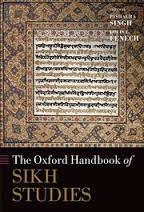
“Bachitra Natak is followed by three different compositions narrating roughly the same events, the exploits of the goddess Durga or Chandi. (These three sections are included in the Bachitra Natak Granth section of the Dasam Granth.) The first, Chandi Charitra Ukti Bilas, mentions that it is a retelling of the Sanskrit Markandeya Purana. Both it and Chandi Charitra II depict the goddess Durga slaying the buffalo demon Mahisha as well as a host of other demons. The third composition concerning the goddess, Var Durga Ki, or Chandi di Var, is in Punjabi, and mentions a connection to the Sanskrit Durga Saptasati. The opening verses of Chandi di Var are part of the frequently recited ardas prayer or petition. Each of these compositions employs finely crafted imagery to narrate the battles between the goddess and the demons, with weapons and wounds they inflict portrayed with exacting detail. The stories highlight the goddess' role in allowing the gods to maintain the proper order of dharma with her ability to vanquish demons that the gods cannot overcome.
The opening line of Chandi di Var, 'First I remember Bhagauti, and then I turn my attention to Guru Nanak', illustrates one of the key controversies about the Dasam Granth. The term bhagauti is the feminine form of a word for Lord or God. i.e., Goddess [Sanskrit bhagavati], so that one might translate the first phrase of this line as, 'First I remember the Goddess.'”
Pashaura Singh, Louis E. Fenech The Oxford Handbook of Sikh Studies
Oxford University Press (Apr 9 2014) p. 139
So why did Guru Nanak and Guru Gobind pray to the Divine Mother?
The word 'Ardas' literally means 'prayer.' But the traditional Sikh Ardas has come to represent a specific form of prayer recited in every Gurdwara program. It is recited before the Guru is transported or brought into Prakaash, just before the hukam is taken, and again when the Guru is set into Sukhasaan. It can also be recited before undertaking any activity of significance, before leaving on a journey, to give thanks, or as a way of daily remembering the Creator.
The core of Ardas is an invocation which Guru Gobind Singh recited at the beginning of his epic poem Chandi di Vaar. In it, he calls upon the power of Adi Shakti in the form of Pritham Bhagauti. He then calls upon the Spirit of the Guru, elaborating upon the nine manifestations from Guru Nanak through Guru Teg Bahadur. This part of Ardas is unchangeable and should be recited in the original Gurmukhi, if possible. Sikh ministers should be able to recite this short prayer from memory, and should be prepared to offer Ardas at any time, at the request of the Sangat.” (www.fateh.sikhnet.com/)
The Ardas is often adorned with various passages from the Guru Granth Sahib. The recitation of Ardas commences with the opening stanza of Var Sri Bhagauti Ji written by Guru Gobind Singh Ji (The Var Sri Bhagauti Ji is contained with the Dasam Granth). This smoothly written ode begins by going through the order of meditation by placing Sri Bhagauti (The Divine Mother) foremost above all else, and then systematically referring to each of the other Gurus in turn entreating them for aid and protection.
The opening verses of the Ardas reads:
Ardaas: Ek Onkar Waheguru Ji Ki Fateh. Sri Bhagauti Ji Sahae. Var Shri Bhagauti Ji Ki Patshahi Dasvin
Ardaas: God is One. All victory is of the Wondrous Guru. May the respected Shri Bhagauti (Divine Mother) help us! Ode of the respected Shri Bhagauti recited by the Tenth Guru.
Pritham bhagauti simari kai gur nanak lain dhiai
First call up Bhagauti (The Divine Mother) in your mind, then meditate on Guru Nanak.
Guru Gobind Singh was a worshiper of the Divine Mother (Shri Bhagauti/Bhagawati). Not only did he entrench Her in the Ardas as is evident from his writings, but also sought Her blessings for the completion of the holy Granth Sahib:
Kripa kari hum par Jag Mata, Granth kara puran subh rata
Divine Mother of this universe shower Your blessings on me, so that I shall be able to complete this Granth.
In his auto biography he writes,
Hemkunt parbat hai jahan, sapt sring sobhat hai tahan
Vaha hum anik tapasya sadhi, Mahakal Kalka aaradhi
In my previous life, I did lot of penance at Hemkunt, and worshipped the Primordial Mother (Mahakal Kalka).
(Note: Aaradhi means worshipping a female deity.)
V. Wadher in "Guru Govind Rai (Singh) in Line Of Shri Rama And Shri Krishna" has this to say:
“Govind Singh wrote that in his past life, he was a Rishi who performed great penances at Hemkunt. He has given a graphic description of a place in the Himalayas ensconced by twelve mountain peaks. It was here that he was ordained by the Param Purukh to take another birth for the specific purpose of uprooting adharma. This story went well with the kind of life he led and the things he achieved. He was born to Guru Tegh Bahadur because the latter too was propitiating God to bless him with a great son. The whole stance of this story is the same as of Dasaratha who also performed penances in his earlier birth and was blessed by the Lord that He himself would be born to him.
In the tradition of Lord Rama, Guru Govind Singh performed a year- long Chandi Yagna at Naina Devi (the shrine of the Goddess of beautiful eyes) overlooking Anandpur Sahib before launching upon his mission. Lord Rama had done the same before marching into Lanka. The Goddess, pleased with his austerities, had blessed Rama with victory. Lord Krishna had taken Arjuna to the temple of the Goddess for seeking her blessings before the battle with the Kauravas.”
RULING DEITY
According to tradition, Chandi is the ruling deity of the Jalander Peeth, the triangle pervaded by the Goddess of which Jalander, Kulu and Vaishno Devi form the three angles. In Punjab when the Shaktas (the worshipers of Shakti) ruled the roost, the Mother was known to be residing in every nook and corner of the triangle, alternatively known as the Trigarth Peeth. The important shrines of the Goddess in this region bear testimony to this point. There are Ambala (Ambalaya - the home of the Goddess), Chandigarh (the fortress of the Goddess), Kalka (abode of Kali), Naina Devi (in the Shivaliks), Asa Devi (in the Dhaulaladhars), Hidimba (in the Kulu hills), Vajreshwari (the Mother of Thunderbolt) at Kangra, Jwala Devi (The Mother of the Flaming Mouth) at Jwala Mukhi, Chintpuri in Hosiarpur and finally Vaishno Devi (the Vaishnavi Mother) in the Jammu Hills.
Ek Onkar Waheguru Ji Ki Fateh. Shri Bhagauti Ji Sahae.
Whatsapp, November 28, 2018
11/18/18, 6:41 AM - Shindi-Jagbir:
The Primordial Mother (Aykaa Mayee) of the morning Japji Sahib is a far better Mother. She lives in you as the Antaryami (Inner Witness). Guru Nanak wrote the Japji Sahib and confirmed the existence of the Aykaa Mayee (one Divine Mother) with these words:
Aykaa Mayee, jugat viaaee, tin chalay parvaan.
Ek sansaree, ek bhandaree, ek laa-ya deeban.
Translation: The One Divine Mother created the three gods (dieties).
One was Creator (Brahma), one Sustainer (Vishnu), and one Destroyer (Shiva).
11/18/18, 6:45 AM - Shindi-Jagbir:
Guru Gobind Singh was also a worshipper of the same Aykaa Mayee which he called by various names, including Bhagauti, Jag Mata and Mahakal Kalka Aaradhi.
11/18/18, 6:47 AM - Shindi-Jagbir:
Guru Gobind asked all Sikhs to seek help from Her in his Ardaas which ends all Sikh prayers.
11/18/18, 6:54 AM - Shindi-Jagbir:
The opening words of the Ardaas reads:
Ek Onkar Waheguru ji ki fateh. Shri Bhagauti Ji sahae.
Var Shri Bhagauti ji ki patshahi dasvin.
God is one. All victory is of this Wondrous Guru.
May the respected Shri Bhagauti (Divine Mother) help us. Ode of the respected Shri Bhagauti recited by the Tenth Guru.
11/18/18, 6:57 AM - Shindi-Jagbir:
Pritam Bhagauti simari kai Guru Nanak lain dhiai.
First call up Bhagauti (the Divine Mother) in your mind, then meditate on Guru Nanak.
11/18/18, 7:03 AM - Shindi-Jagbir:
Guru Gobind also sought Her blessings for the completion of the Holy Granth Sahib:
Kripa kari hum par Jag Mata kara puran subh rata.
Divine Mother of the universe shower your blessings on me so that I shall be able to complete this Granth.
11/18/18, 7:10 AM - Shindi-Jagbir:
In his autobiography he writes:
Hemkunt parbat hai jaha, sapt sring sobhat hai tahan,
Vaha hum anik tapasya sadhi, Mahakal Kalka aaradhi.
In my previous life, I did lots of penance at Hemkunt,
And worshipped the Primordial Mother (Mahakal Kalka).
(Note: aaradhi means "worshipping a female deity")
11/18/18, 7:16 AM - Shindi-Jagbir:
The gianis that Sikhs follow have no idea about the Divine Mother. So which Waheguru are they praying to if they do not know about the Divine Mother that both Guru Nanak and Guru Gobind worshipped, prayed, and meditated on?
11/18/18, 7:18 AM - Shindi-Jagbir:
PASS THIS ON TO ALL THE FOOLISH GIANIS AND BABAS WHO HAVE MADE FOOLS OUT OF INNOCENT SIKHS!
11/18/18, 7:20 AM - Shindi-Jagbir:
Send it also to all Sikhs so that they can finally start worshipping, praying and meditating on the Aykaa Mayee (One Divine Mother).
11/18/18, 7:24 AM - Shindi-Jagbir:
The Aykaa Mayee is the Mother that Shindi and myself meditate on, not the Shri Mataji who came and introduced all humans to i.e. She told us to worship this Divine Mother who is the Antaryami who resides within all beings.
11/18/18, 7:26 AM - Shindi-Jagbir:
Once you know the Aykaa Mayee you will never leave Her. She is the Waheguru that Guru Nanak and Guru Gobind asked us to worship 500 years ago.
11/18/18, 7:31 AM - Shindi-Jagbir:
Again, I am telling you all that the gianis have made fools of us. They are ignorant and make others even more ignorant. It is just unbelievable how little they know about Waheguru. If you follow their waheguru then you are definitely NOT worshipping the Waheguru that both Guru Nanak and Guru Gobind asked us to do.
11/18/18, 9:11 AM - Shindi-Jagbir:
The word "Waheguru" was NEVER used by any Sikh guru and is absent from their compositions in AGGS.
"Waheguru" was invented by Bhatt Gyand and appears 16 times in the Granth on page 1402 and 1403. Yes, just two pages in Sawayias Mehlay Chauthay composed by Bhatt Gyand.
11/18/18, 9:15 AM - Shindi-Jagbir:
So Sikhs today are praying to Bhatt Gyand's waheguru. Nobody knows who or what that waheguru is. They are just blindly mumbling "waheguru" "waheguru" hundreds of times.
11/18/18, 9:20 AM - Shindi-Jagbir:
So when you ask any Sikh to whom did Guru Nanak and Guru Gobind pray to? Millions of fools will answer: Waheguru!
11/18/18, 9:21 AM - Shindi-Jagbir:
Ask any giani, granthi, or baba the same question and they will declare even louder "WAHEGURU" !
11/18/18, 9:22 AM - Shindi-Jagbir:
Hearing all this the first time? Definitely!
11/18/18, 9:24 AM - Shindi-Jagbir:
Will you hear the same from the highest Sikh authority at the Golden Temple? Definitely!
11/18/18, 9:27 AM - Shindi-Jagbir:
Follow the waheguru of Bhatt Gyand at your own peril. That is the god that he invented on his own.
11/18/18, 9:33 AM - Shindi-Jagbir:
If not for Shri Mataji I too would have continued praying to waheguru. Today Shindi and myself meditate on the same Divine Mother of the Guru Granth Sahib - whom Guru Nanak called "Aykaa Mayee" and Guru Gobind called "Shri Bhagauti" or "Jag Mata."
11/18/18, 3:23 PM - Shindi-Jagbir:
I have to make a correction here as even I use Waheguru wrongly. I should have said:
"If you follow their waheguru then you are definitely not worshipping the Divine Mother that both Guru Nanak and Guru Gobind asked us to worship."
11/18/18, 3:42 PM - Shindi-Jagbir:
In other words, Guru Nanak and Guru Gobind NEVER talked about any waheguru. I do not even know who is this Bhatt Gyand fellow is. This guy is not even one of the ten gurus. He is just a nobody and yet Sikhs are praying to his waheguru! Will Bhatt Gyand's waheguru answer your prayers or the Divine Mother of Guru Nanak and Guru Gobind? Both have clearly identified the Jag Mata in the Japji and Ardaas. Sikhs are deaf and blind because even after hearing them DAILY thousands of times they still cannot follow Guru Nanak and Guru Gobind. They are really dumb and stupid because their gianis have made them so.
11/18/18, 4:03 PM - Shindi-Jagbir:
So why did Guru Nanak and Guru Gobind pray to the Divine Mother? The only reason is because She is whom both the Gurus prayed to. There is no Aykaa Pita or Jag Pita i.e., a Divine Father. It has been, is and always will be the Aykaa Mayee or Jag Mata i.e., the Divine Mother. She is the God Almighty of the Guru Granth Sahib. This is the first time in Sikhism this truth is emerging. It is time to dump the gianis and the temples where they teach their bullshit.
11/18/18, 4:06 PM - Shindi-Jagbir:
Sikhs will take out their kirpans and kill me for saying what I have just said.
11/18/18, 4:10 PM - Shindi-Jagbir:
They are so conditioned and brainwashed by centuries of this waheguru bullshit that no amount of gian can penetrate their thick skulls, all the more if they are wearing turbans.
11/18/18, 4:16 PM - Shindi-Jagbir:
But what I have said will never die. On the contrary, it will slowly but surely spread. The Internet will destroy the control gianis have over Sikhs. More and more people will know about the Divine Mother of Guru Nanak and Guru Gobind. It is only a matter of time.
11/18/18, 4:45 PM - Shindi-Jagbir:
I have even more explosive stuff about Sikhism. It is so shocking that I cannot talk about it yet. I need at least one year of research before I can present it. I am truly shocked by what I have discovered - I know for a fact that the Sikhism of today is NOT what Guru Nanak taught. I am really disturbed by this centuries old scriptural corruption and collective ignorance. But one day I will publish it on the Internet - just like the Divine Mother, no Sikh will be able to challenge it.
Thoon Dhareeaao Sabh Thujh Hee Maahi ||
You are the River of Life; all are within You (Mother).
Note: A few minutes I was listening to Rehraas, the Sikh evening prayers on YouTube when I thought I heard the word "Maahi" (Mother) being mentioned. I reverted back a couple of times to the exact verse and began double checking what I heard.
However, the transliteration showed the same 500-year-old patriarchal bias of Sikhs in the daily evening prayers as it is with the Aykaa Maahi of Japji, the morning prayers.
"Thoon Dhareeaao Sabh Thujh Hee Maahi" is translated as "You are the River of Life; all are within You" but "Maahi" is left out. This is just another deliberate 500-year-old attempt by Sikhs to erase all reference to the Mother as that would be Hinduism's "Devi" .......................... and that is something that Sikhs, especially their priests, do not want. Like all other religions, their so-called "god-almighty" cannot be associated with those of any other religion.
So as I continue to find a better grasp of being "conscious of the Consciousness behind all that is Mother Earth", I believe that Consciousness continues to make me conscious of what I am seeking - the exclusiveness of the Primordial Mother to everything else, second to none! She, without question, is also the "god almighty" of all religions. Period!
Life is eternal,
jagbir
Sabh Thaeree Thoon Sabhanee Dhhiaaeiaa ||
All belong to You, all meditate on you.
Jis No Kirapaa Karehi Thin Naam Rathan Paaeiaa ||
Those who are blessed with Your Mercy obtain the Jewel of the Naam, the Name of the Lord.
Guramukh Laadhhaa Manamukh Gavaaeiaa ||
The Gurmukhs obtain it, and the self-willed manmukhs lose it.
Thudhh Aap Vishhorriaa Aap Milaaeiaa ||1||
You Yourself separate them from Yourself, and You Yourself reunite with them again. ||1||
Thoon Dhareeaao Sabh Thujh Hee Maahi ||
You are the River of Life; all are within You (Mother).
Thujh Bin Dhoojaa Koee Naahi ||
There is no one except You.
Jeea Janth Sabh Thaeraa Khael ||
All living beings are Your playthings.
Vijog Mil Vishhurriaa Sanjogee Mael ||2||
The separated ones meet, and by great good fortune, those suffering in separation are reunited once again. ||2||
Jis No Thoo Jaanaaeihi Soee Jan Jaanai ||
They alone understand, whom You inspire to understand;
Har Gun Sadh Hee Aakh Vakhaanai ||
They continually chant and repeat the Lord's Praises.
Jin Har Saeviaa Thin Sukh Paaeiaa ||
Those who serve You find peace.
Sehajae Hee Har Naam Samaaeiaa ||3||
They are intuitively absorbed into the Lord's Name. ||3||
Thoo Aapae Karathaa Thaeraa Keeaa Sabh Hoe ||
You Yourself are the Creator. Everything that happens is by Your Doing.
Thudhh Bin Dhoojaa Avar N Koe ||
There is no one except You.
Thoo Kar Kar Vaekhehi Jaanehi Soe ||
You created the creation; You behold it and understand it.
Jan Naanak Guramukh Paragatt Hoe ||4||2||
O servant Nanak, the Lord is revealed through the Gurmukh, the Living Expression of the Guru's Word. ||4||2||
March 31, 2019
Concepts of Sikhi
1:26 AM (9 hours ago)
to me
I find your article on internet website Adhi Shakti about prediction and prophecy of Guru Nanak in Vedas bhagvad Gita puraans and by Patanjali.
But I am confused I downloaded PDF of Vedas puranaas and Gita and couldn't find it.
Can you provide me full reference for that???
Help me I need full reference and please improve your website about this article
Jagbir Singh
8:24 AM (3 hours ago)
Hi Saman Singh Ji,
Sat Sri Akaal !
That article was from a book written by Sant Kirpal Singh Ji Maharaj https://en.wikipedia.org/wiki/Sant_Kirpal_Singh_Ji_Maharaj.
I have not found anything to back his claim. So that webpage is now deleted from https://adishakti.org/index.htm where the vast expanse of the Adhi Shakti (Aykaa Maahi of the Japji Sahib and Shri Bhagauti of the Rehras) is embedded in all scriptures.
I am the owner and editor of https://adishakti.org/index.htm and stand by both Guru Nanak and Guru Gobind Ji's reverence of the Aykaa Maahi. The following pages are made by me, a Sikh, about the Adhi Shakti or Aykaa Maahi or just Maahi of the Guru Granth Sahib:
Aykaa Mayee (One Divine Mother) Of The Japji Sahib and Lok Mata (Mother Of All) Of The Jaap Sahib
https://adishakti.org/meeting_his_messengers/the_aykaa_mayee_of_jap_ji_sahib.htm
Guru Gobind Singh was a worshiper of the Divine Mother (Shri Bhagauti/ Bhagawati)
https://adishakti.org/forum/guru_gobind_singh_was_a_worshipper_of_the_divine_mother_shri_bhagauti_bhagawati_4-07-2009.htm
The Lok Mata of the Jaap Sahib
https://adishakti.org/meeting_his_messengers/lok_mata_of_the_jaap_sahib.htm
Dasam Dvar, the tenth door opens into the abode of God, the Creator
https://adishakti.org/_/dasam_dvar_the_tenth_door_opens_into_the_abode_of_god_the_creator.htm
I am at present just extracting the mention of Adhi Shakti (Maahi) in the Guru Granth Sahib and will work on this in the future. I was shocked when I got 377 hits - YES! THREE HUNDRED AND SEVENTY-SEVEN.
I was then flabbergasted by the patriarchal bias and rampant mistranslation of every mention of "Maahi" (Adhi Shakti). These blatant and repetitive mistranslations then continue throughout, leaving Sikhs with a misleading comprehension of the Divine Maahi (Mother) as a mere human mother. This has been going on for hundreds of years!
Right from the beginning that deliberate downplay of the Divine Mother begins. For example, right after the clear and concise definition of the Mother on page 7 and 8, on page 9 this mistranslation (not mistranscription) starts i.e., the third mention of the Mae (Mai, Mata) on page 9, line 16:
Page 7, Line 2
Eka mai jugat viai tin chele parvan.
The One Divine Mother conceived and gave birth to the three deities.
Guru Nanak Dev
Page 8, Line 10
Pavan guru pani pita mata dharat mahat.
Air is the Guru, Water is the Father, and Earth is the Great Mother of all.
Guru Angad Dev
Page 9, Line 16
So kio visrai meri mae?
How can I forget Him, O my mother?
Guru Nanak Dev
The correct translation should have been "How can I forget my Mother?"
Page 9, Line 16
So kio visrai meri mae?
How can I forget my Mother?
Guru Nanak Dev
I have found that more than 100 of the 377 mentions of "mae, mata, maia, maahi" in the Guru Granth Sahib are specifically about the Adhi Shakti (Mae, Mata, Maia, Maahi) and not a human mother as in mother-in-law, birth mother or just mothers in general. You can check that at this screen capture which bears today's date. It is 37 pages long and thus will take a minute or two to download:
https://adishakti.org/screen_capture/Maahi_Divine_Mother_Gurbani-2019-03-31.pdf
As the owner/editor of https://adishakti.org/index.htm i.e., the only website dedicated to the Aykaa Mae of all scriptures, religions, and messengers I call upon Sikhs to defy and deny the Aykaa Maahi (One Divine Mother) that Guru Nanak, Guru Gobind and other Gurus revered and worshipped.
As to your inquiry "about prediction and prophecy of Guru Nanak in Vedas bhagvad Gita puraans and by Patanjali", the only information I can give you in relation to your inquiry is that of my Whatsapp chat last year when I found out in the Guru Granth Sahib that "that the Spirit of Lord Krishna had taken a new format and incarnated in Guru Nanak Dev." It is on page 1402 and 1403 of the Guru Granth Sahib and probably extracted from Hindu scriptures i.e., Shri Krishna will take a new incarnation as Guru Nanak.
I can also answer that with a question: "What about the prediction and prophecy of Guru Nanak in the Guru Granth Sahib about the Adhi Shakti (Mae, Mata, Maia, Maahi)?"
As I said before, this is a challenge to all Sikhs to prove me wrong. You may approach any Sikh scholar or Akal Takth pradhaan or gurdwara giani .............................. or anybody for the matter to see if they can deny the Aykaa Mae that is mentioned in every morning Japji, evening Rehras, every Ardhaas for the last 500 years. Yes, 500 years and counting!
Life is eternal,
Jagbir Singh
Disclaimer: Our material may be copied, printed and distributed by referring to this site. This site also contains copyrighted material the use of which has not always been specifically authorized by the copyright owner. We are making such material available to our readers under the education and research provisions of "fair use" in an effort to advance freedom of inquiry for a better understanding of religious, spiritual and inter-faith issues. The material on this site is distributed without profit. If you wish to use copyrighted material for purposes other than "fair use" you must request permission from the copyright owner.

