The Eight Commandment
"You shall not bear false witness against your neighbor.” The eighth commandment forbids misinterpreting the truth in our relations with others. This moral prescription flows from the vocation of the holy people to bear witness to their God who is the truth and wills the truth.
“You shall not bear false witness against your neighbor. [252]
It was said to the men of old, "You shall not swear falsely, but shall perform to the Lord what you have sworn.”[253]
The eighth commandment forbids misinterpreting the truth in our relations with others. This moral prescription flows from the vocation of the holy people to bear witness to their God who is the truth and wills the truth. Offenses against the truth express by word or deed a refusal to commit oneself to moral uprightness: they are fundamental infidelities to God and, in this sense, they undermine the foundations of the covenant ...
The duty of Christians to take part in the life of the Church impels them to act as witnesses of the Gospel and of the obligations that flow from it.”
(252. Ex 20:16; cf. Deut 5:20; 253. Mt 5:33.)
Joseph Cardinal Ratzinger, Catechism of the Catholic Church
USSC Inc, 1994, p. 591-3.)
What Christ taught concerning the 10 Commandments in the New Testament?
Christ consistently upheld the 10 Commandments as given in the Old Testament. In His Sermon on the Mount, He very pointedly stated: "Do not think that I came to destroy the Law or the Prophets. I did not come to destroy but to fulfill" (Matthew 5:17).
Although some mistakenly think that "fulfill" in this passage means to complete and therefore abolish, what Jesus said afterwards shows this could not be the case. Continuing, Jesus said: "For assuredly, I say to you, till heaven and earth pass away, one jot or one tittle will by no means pass from the law till all is fulfilled. Whoever therefore breaks one of the least of these commandments, and teaches men so, shall be called least in the kingdom of heaven; but whoever does and teaches them, he shall be called great in the kingdom of heaven" (verses 18-19).
Realizing that Jesus consistently upheld all of the commandments, including observing the seventh-day Sabbath (Matthew 19:17-19; Luke 4:16), some wrongly suggest that it was the apostle Paul, with Jesus' personal approval, who introduced grace and the abolishment of the law.
The truth is that Jesus did not change His mind about the importance of keeping all of the 10 Commandments. As Hebrews 13:8 states: "Jesus Christ is the same yesterday, today, and forever.”
Toward the end of the first century—some 60 years after His death and resurrection—Jesus revealed end-time instructions through John in the book of Revelation. In this book He identifies faithful members of His Church as those "who keep the commandments of God" (Revelation 12:17). Some of the final words of the Bible and this revelation of Jesus Christ likewise state: "Blessed are those who do His commandments, that they may have the right to the tree of life, and may enter through the gates into the city" (Revelation 22:14).
The 10 Commandments given by God in the Old Testament continue to be God's expectations of Christians today.”
www.https://lifehopeandtruth.com/
Web (January 3, 2014
And he went out from thence, and came into his own country;
And his disciples follow him.
And when the sabbath day was come, He began to teach in the synagogue:
And many hearing him were astonished, saying,
From whence hath this man these things?
And what wisdom is this which is given unto him,
That even such mighty works are wrought by his hands?
Is not this the carpenter, the son of Mary, the brother of James, and Joses,
And of Juda, and Simon?
And are not his sisters here with us? And they were offended at him.
Mark 6:1-3
"The role of James, the brother of Jesus, has always been seen as a threat by the Roman Catholic Church, and from its earliest times the Church has controlled history by removing information about this highly important figure. As recently as 1996 Pope John Paul II issued a statement declaring that Jesus was Mary's only child and that therefore James was not his brother after all. The Pontiff made this strange and completely unsubstantiated statement despite biblical evidence and much scholarly opinion to the contrary.”
The Times (London), 30 August, 1996
Pope Stephen II personally interrogated his predecessor, Pope Formosus (891-6) by dressing him in full pontifical and placing him on the throne in the Lateran. Some say he was completely mad. Perhaps they were right, taking into consideration that Pope Formosus had died nine months ago, and his cadaver was on trial.
Justinian called the Fifth General Council, which concluded that his Holiness was a heretic and excommunicated. The gravity of this controversy does not lie in what was debated centuries ago. It lies in the fact that a Council believed itself to be above the pope, able to excommunicate and depose him for heresy. During the Middle Ages, these famous case histories proved to all theologians that a Council was superior to a pope. It was not until much later that forgeries altered this settled conviction.
Pope Adrian VI pronounced Pope Celestine a heretic.
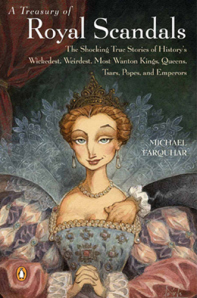
A Treasury of Royal Scandals: The Shocking True Stories History's Wickedest, Weirdest, Most Wanton Kings, Queens, Tsars, Popes, and Emperors
Michael Farquhar, Penguin Books; (10) edition (May 1, 2001)
Part VIII "Papal Vice"
"The Borgia clan of the fifteenth century could very well qualify as the prototypical Mafia family. Like any good Gambino or Genovese, they looked out for their own, used ill-gained wealth to get whatever they wanted, and killed without blinking. Of course there was also the religious hypocrisy. Few mobsters ever missed a Mass. Rodrigo Borgia became the pope. As Alexander VI, he ruled as the ultimate godfather, and his reign—marked by murder, greed, and unbridled sex—was one of the most infamous in papal history. But it was his rise to power that provided the most lurid chapter of
Alexander's checkered career.
Rodrigo Borgia indicated early on that he had the makings of a great Renaissance pontiff. He was only twelve when he reportedly committed his first murder, stabbing to death another boy his age. His uncle, Pope Callistus III, assured Rodrigo's place in the Church by making him a cardinal when he was twenty-five and vice-chancellor of the Holy See a year later. Thanks to the offices provided by Uncle Cal, Rodrigo soon became a very rich man.
"He is enormously wealthy," a contemporary wrote, "and through his connections with kings and princes, commands great influence. He has built a beautiful and comfortable place for himself between the bridge of Sant' Angelo and the Campo di Fiori. His revenues from his papal offices, his abbeys in Italy and Spain, his three bishoprics of Valencia, Portus, and Cartagena, are vast... . His plate, his stuffs embroidered with silk and gold, his books are all of such quality as would befit a king or pope. I hardly need mention the sumptuous bed-hangings, trappings for his horses and similar things of gold, silver, and silk, nor the vast quantity of gold coin which he possesses.”
Rodrigo Borgia's money would later come in handy when he set out to buy himself the papacy. In the meantime, he settled into his luxurious lifestyle as a prince of the Church with his mistress, Vannozza de' Catanei. In addition to the children he had from previous affairs, Vannozza bore him four more illegitimate children over the next twenty years. Two of them, Cesare and Lucrezia Borgia, would become as infamous as their dad.
Much as he loved Vannozza, however, Rodrigo eschewed monogamy as vigorously as he had celibacy. His extravagant sex life was greeted with a wink by his uncle Pope Callistus, but after Callistus died in 1458, his successor Pius II took a less favorable view. No slouch in the sack himself, having sired two children of his own, Pius was nevertheless shocked by Cardinal Borgia's behavior.
"Beloved Son," the pope wrote Rodrigo after hearing of a particularly lusty evening. "We have heard that, four days ago, several ladies of Sienna—women entirely given over to worldly frivolities—were assembled in the gardens of Giovanni di Bichis and that you, quite forgetful of the high office with which you are invested, were with them from the seventeenth to the twenty-second hour. With you was one of your colleagues whose age alone, if not the dignity of his office, ought to have recalled him to his duty. We have heard that the most licentious dances were indulged in, none of the allurements of love were lacking and you conducted yourself in a wholly worldly manner. Shame forbids mention of all that took place—not only the acts themselves but their very names are unworthy of your position. In order that your lusts might be given free rein the husbands, fathers, brothers and kinsmen of the young women were not admitted... . All Sienna is talking about this orgy... . Our displeasure is beyond words... . A cardinal should be beyond reproach.”
Between the orgies, Cardinal Borgia continued to accumulate vast wealth. He made lots of money selling pardons for all manner of crimes, even the most heinous. After hearing protests over his paid reprieve of a father who murdered his daughter, he retorted, "It is not God's wish that a sinner should die, but that he should live—and pay!"
Borgia had more than enough money to take a stab at the papacy. Although popes were no longer elevated to the office by powerful Roman families or Christian emperors, the palms of the cardinals who elected them took plenty of greasing. In the conclave of 1484, after the death of Sixtus IV, Borgia lost the coveted crown to Innocent VIII, the great witch hunter. After Innocent died in 1492, however, Borgia was determined that he would not be cheated of the world's ultimate throne again. He nearly bankrupted himself in the process.
It was a tight race, but Borgia had plenty of money. He even boasted that he had sacks of gold enough to fill the Sistine Chapel. And though he was a hated foreigner (both Borgia and his uncle Callistus III were Spanish), the price was right for many of the obdurate Roman cardinals.
One persistent rival stood in his way, however. Cardinal Ascario Sforza was also enormously wealthy and came from the ruling dynasty of the Duchy of Milan, which would give him much support. Taking Sforza aside, Borgia bluntly asked him what it would take to withdraw. Sforza settled for the lucrative office of vice chancellor and a huge cash payment. The next day, four mule-loads of bullion were on their way to Sforza's palace. Now Borgia needed only one more vote, which was purchased from the cardinal of Venice. Though the amount was a pittance compared to what Borgia had spent on the others, it was certainly more than the ninety-six-year-old cardinal could ever hope to spend in the time he had left.
The election was held and, as expected, Rodrigo Borgia won. The new Alexander VI could barely contain his glee "I am pope, I am pope," he exclaimed as he donned his sumptuous new papal vestments. "We are now in the clutches of perhaps the most savage wolf the world has ever seen," remarked Giovanni di Medici, the future Pope Leo X.”Either we flee or he will, without a doubt, devour us.”
After an extravagant, debauched coronation ceremony that bordered on the pagan, Alexander VI settled right into his new position. He traded his long-term mistress Vannozza for the much younger and fresher Giulia Farnese, who was about sixteen at the time; the pope was pushing sixty. Giulia was immediately dubbed "The Pope's Whore" and "The Bride of Christ" by the snickering Roman populace, but her position garnered power and she was able to get her brother, the future Pope Paul III, a plush position as a cardinal.
Usually the office was very expensive to acquire, and Alexander VI fed his coffers by constantly making new cardinals. After they paid for the position, the pope was known to have them poisoned to make room for more. (One exception was Alexander's teenage son, Cesare, who got his post for free.) Ironically, Pope Alexander himself fell victim to a deadly potion, most probably intended for someone else. His grotesque demise in 1503, at age seventy-three, was vividly recorded by his aide John Burchard.
As the pope lingered on his bed, unable to swallow, his face turned the color of mulberry and his skin started to peel off. The fat of his belly liquified, while his bowels bled. Alexander finally died after hours of agony, but the indignity he faced was only just beginning. As the pope's blackened corpse started to putrefy, the tongue swelled and forced open the mouth, which, according to Burchard, was foaming like a kettle over a fire. The bloated body, growing as wide as it was long, finally burst, emitting sulphurous fumes from every orifice. It was, the Venetian ambassador wrote, "the ugliest, most monstrous and horrible dead body that was ever seen, without any form or likeness of humanity.” The same could be said of the Church that was by now ripe for Reformation.”
Editorial Reviews
From Publishers Weekly
In another royal exposé, Farquhar, a writer at the Washington Post, duplicates some of the ground covered in Karl Shaw's Royal Babylon, such as Peter the Great's delight in administering torture (he had his son lashed to death) and the way Britain's Queen Mary cajoled her subjects into giving her their household treasures ("I am caressing it with my eyes," she would coyly coo). Written in a provocative tabloid style (with headings like"We Are Not Abused. We Are Abusive," “A Son Should Love His Mother, But...” and "All the Holiness Money Can Buy"), Farquhar publicly washes the dirty laundry of not only European royalty, but also of Roman emperors and popes. Murderers and torturers who slept with their siblings (and other relatives), the emperors of Rome excelled at corruption. The maniacal pedophile Tiberius Caesar (A.D. 14-37) left the corpses of his many victims to rot on the Gemonian Steps, which descended from the Capitol to the Forum, or alternatively enjoyed watching them being thrown from a cliff (“A contingent of soldiers was stationed below to whack them with oars and boat hooks just in case the fall failed to do the trick"). Many popes were no better. Not content with just rooting out Christian heretics by launching a bloody crusade against the Cathars in southern France, Innocent III (1160-1216) declared himself ruler of the world. He sacked Constantinople and massacred every Muslim he could find. Like Royal Babylon, this gossipy string of anecdotes is a popularized rather than an authoritative history and perfect for travel reading.
Vatican apology criticized
"Washington — Jewish groups will issue a formal statement next week expressing their disappointment with what they call the Catholic church's effort to whitewash its role in the Holocaust...
"Hitler, Himmler and other Nazi leaders were all baptized Christians who were never excommunicated," reads the document to be issued by the International Committee on Inter-religious Consultations, the coalition of all major Jewish groups.”The same is true of the vast apparatus of killers, a product of Christian Europe.”
Washington Post, August 29, 1998
"In the history of the Western world, however, this Bible has also left a trail of pain, horror, blood and death that is undeniable. Yet this fact is not often allowed to rise to consciousness. Biblical words have been used not only to kill, but even to justify that killing. This book has been relentlessly employed by those who say they believe it to be God's Word, to oppress others who have been, according to these believers, defined in the"hallowed"pages of this text as somehow subhuman. Quotations from the Bible have been cited to bless the bloodiest of wars. People committed to the Bible have not refrained from using the cruelest forms of torture on those whom they believe to have been revealed as the enemies of God in these"sacred"scriptures. A museum display that premiered in Florence in 1983, and later traveled to the San Diego Museum of Man in 2003, featured the instruments used on heretics by Christians during the Inquisition. They included stretching machines designed literally to pull a person apart, iron collars with spikes to penetrate the throat, and instruments that were used to impale the victims. The Bible has been quoted throughout Western history to justify the violence done to racial minorities, women, Jews and homosexuals. It might be difficult for some Christians to understand, but it is not difficult to document the terror enacted by believers in the name of the Bible.
How is it possible, we must ultimately wonder, that this book, which is almost universally revered in Western religious circles, could also be the source of so much evil? Can that use of the Bible be turned around and brought to an end? Can the Bible once again be viewed as a source—even an ultimate source—of life? Or is it too late and the Bible too stained? Those are the themes I will seek to address in this volume.
My qualifications for telling this story are twofold: first, I have had a lifetime love affair with this Bible; and second, I am a church insider, who yearns to see the church become what it was meant to be. I will not give up on the Bible or the church easily, but I will insist that the Bible be looked at honestly in the light of the best scholarship available and that the church consciously own its historical destructiveness.”
The Sins of Scripture: Exposing the Bible's Texts of Hate to Reveal the God of Love
Bishop John Shelby Spong, HarperOne (April 12, 2005) pp. 4-5

'Sex abuse' priest dug up
“A body supposed to be that of a French Catholic priest has been exhumed after a judge in Bordeaux accepted that there were doubts over the corpse's identity....
The priest, Father Pierre Silviet-Garricart, was investigated in 1998 in connection with the alleged rape of a 10-year-old boy.
The boy had been a pupil at a religious institute he ran - a second pupil at the school then also complained he had been abused by the priest.
In January 1999, Fr Silviet-Garricart vanished from Rome, telling friends he planned to commit suicide....
The Catholic Church in France, which has been accused in the past of tolerating paedophile priests, has issued a statement saying that it would not harbour child abusers, but that it was often hard to pin down the offenders.”
BBC, Friday, 10 November, 2000
Vatican 'snubbed Ireland church abuse inquiry'
27 November 2009
The inquiry into sex abuse by Catholic priests in Ireland has disclosed that the Vatican ignored formal requests for information.
The inquiry asked for details of reports on abuse sent to the Vatican by the Dublin archdiocese in 2006.
The Vatican did not reply but told the Irish Foreign Affairs department the request"had not gone through appropriate diplomatic channels.”
The inquiry condemned church leaders for covering-up abuse for decades.
The Report of the Commission of Investigation into the Catholic Archdiocese of Dublin, which was published on Thursday, covered a period from 1975 to 2004.
BBC, 27 November 2009
The Church Takes Over: The Dark Ages
The Church Takes Over: The Dark Ages
500 - 1000 C.E.
'The Church had devastating impact upon society. As the Church assumed leadership, activity in the fields of medicine, technology, science, education, history, art and commerce all but collapsed. Europe entered the Dark Ages. Although the Church amassed immense wealth during these centuries, most of what defines civilization disappeared.
The western Roman Empire fell during the fifth century under repeated attacks by the Germanic Goths and the Huns while the Roman province of Africa fell to the Vandals. Many blamed Christianity. In 410 when the Christian Visigoths sacked Rome, "the eternal city" which had held strong for 620 years, criticism of the new religion intensified. One of St. Augustine's most famous works, The City of God, was written as a defense of Christianity against such accusations.
However, the eastern Roman Empire, also called the Byzantine Empire, fared better. Especially under Emperor Justinian's rule (527-565), it recovered much of its power, regained control of Italy from the Ostrogoths and recovered Africa from the Vandals. Justinian and his wife, Theodora, were credited with the revival of literature, art, architecture, as well as the codification of Roman Law. But this flourishing Byzantine culture was cut short when the bubonic plague, beginning in 540, struck with a virulence unknown at any time in human history either before or since. In Byzantium alone, the plague was said to have claimed 10,000 people a day. The severity of this plague is difficult to fathom. The later Black Death of the 1300's, which some think killed one-third of Europe's population, claimed an estimated 27 million lives. In contrast, the sixth century plague is thought to have taken 100 million lives.1 The Roman Empire never recovered.
The plague had quite different impact upon Christianity. People flocked to the Church in terror.2 The Church explained that the plague was an act of God, and disease a punishment for the sin of not obeying Church authority. The Church branded Justinian a heretic. It declared the field of Greek and Roman medicine, useless in fighting the plague, to be heresy.3 While the plague assured the downfall of the Roman Empire, it strengthened the Christian church.
After the plague, the Church dominated the formal discipline of medicine. The most common medical practice between the sixth and sixteenth centuries used for every malady became "bleeding.” Christian monks taught that bleeding a person would prevent toxic imbalances, prevent sexual desire, and restore the humors. By the sixteenth century this practice would kill tens of thousands each year. Yet, when a person died during blood-letting, it was only lamented that treatment had not been started sooner and performed more aggressively.4
Technology disappeared as the Church became the most cohesive power in Western society. The extensive aqueduct and plumbing systems vanished. Orthodox Christians taught that all aspects of the flesh should be reviled and therefore discouraged washing as much as possible. Toilets and indoor plumbing disappeared. Disease became commonplace as sanitation and hygiene deteriorated. For hundreds of years, towns and villages were decimated by epidemics.5
Roman central heating systems were also abandoned.6 As one historian writes:
From about A.D. 500 onward, it was thought no hardship to lie on the floor at night, or on a hard bench above low drafts, damp earth and rats. To be indoors was luxury enough. Nor was it distasteful to sleep huddled closely together in company, for warmth was valued above privacy.7
The vast network of roads that had enabled transportation and communication also fell into neglect and would remain so until almost the nineteenth century.8
The losses in science were monumental. In some cases the Christian church's burning of books and repression of intellectual pursuit set humanity back as much as two millennia in its scientific understanding. Already in the sixth century B.C.E., Pythagoras had come up with the idea that the earth revolved around the sun. By the third century B.C.E., Aristarchus had outlined the heliocentric theory and Eratosthenes had measured the circumference of the Earth. By the second century B.C.E., Hipparchus had invented longitude and latitude and had determined the obliquity of the ecliptic.9 After the onset of the Dark Ages, however, it would not be until the sixteenth century C.E. that Copernicus would reintroduce the theory that the earth revolves around the sun. And when Galileo attempted to promote the heliocentric theory in the seventeenth century, he was tried by the Inquisition in Rome. Only in 1965 did the Roman Catholic Church revoke its condemnation of Galileo. St. Augustine echoed the Church's scientific understanding of the world:
It is impossible there should be inhabitants on the opposite side of the earth, since no such race is recorded by Scripture among the descendants of Adam.10
History was rewritten to become a verification of Christian beliefs. Orthodox Christians thought history necessary only in order to place the events of the past into Biblical context. In Daniel Boorstin's words, "History became a footnote to orthodoxy.”11 He writes in his book The Discoverers:
The Christian test was a willingness to believe in the one Jesus Christ and His Message of salvation. What was demanded was not criticism but credulity. The Church Fathers observed that in the realm of thought only heresy had a history.12
Eusebius of Caesarea set about during the time of Constantine to rewrite the history of the world into a history of Christianity:
'Other writers of history,' Eusebius wrote, recorded the fighting of wars waged for the sake of children and country and other possessions. But our narrative of the government of God will record in ineffaceable letters the most peaceful wars waged in behalf of the peace of the soul... '13
Blind faith replaced the spirit of historical investigation. One should trust, as Eusebius said, "the incontrovertible words of the Master to his disciples: 'It is not for you to know the times or the seasons, which the Father hath put in his own power.'"14
Although the Church restricted historical inquiry more severely, it carried on a process of rewriting history that had started much earlier. Twentieth century archeology is beginning to reveal a very different picture of human history than may have been told even in pre-Christian Rome. The idea that history began only 5,000 years ago is terribly inaccurate. During the neolithic age after people had turned from hunting and gathering to agriculture, particularly between 7000 B.C.E. and 4000 B.C.E., cultures of startling sophistication flourished. Art, architecture, city-planning, dance, ritual drama, trade both by land and sea, writing, law and government were well-known to these peoples. The first ideas of democracy originally date back not to the Greeks but far earlier to this neolithic age. Perhaps most remarkable is that these cultures show no evidence of hierarchy as we know it; they knew no war, organized oppression or slavery.15
Rewriting history to erase awareness of such a past helped those in power deflect criticism for the current state of affairs. Portraying human society as having steadily evolved rather than having experienced major setbacks gives the impression that, however ugly and violent society may be now, it was even more savage in the past. Augustine's disciple, Orosius, for instance, in his Seven Books of Histories against the Pagans, demonstrated that the evils of the time could not be blamed on Christianity because earlier times had experienced even worse calamities.16
Distorting and rewriting history gave the impression that Christianity had not only lifted society from harsher, more barbaric times, but that a social structure of hierarchy and domination had always existed and was therefore inevitable.
The Christian church had similar impact upon education and learning. The Church burned enormous amounts of literature. In 391 Christians burned down one of the world's greatest libraries in Alexandria, said to have housed 700,000 rolls.17 All the books of the Gnostic Basilides, Porphyry's 36 volumes, papyrus rolls of 27 schools of the Mysteries, and 270,000 ancient documents gathered by Ptolemy Philadelphus were burned.18 Ancient academies of learning were closed. Education for anyone outside of the Church came to an end. And what little education there was during the Dark Ages, while still limited to the clergy, was advocated by powerful kings as a means of providing themselves with capable administrators.19
The Church opposed the study of grammar and Latin. Pope Gregory I, or Gregory the Great, a man thought to have been one of the greatest architects of the medieval order,20 objected to grammatical study. He wrote:
I despise the proper constructions and cases, because I think it very unfitting that the words of the celestial oracle should be restricted by the rules of Donatus [a well-known grammarian].21
Gregory the Great also condemned education for all but the clergy as folly and wickedness. He forbade laymen to read even the Bible. He had the library of the Palatine Apollo burned "lest its secular literature distract the faithful from the contemplation of heaven.”22
The Fourth Council of Carthage in 398 forbade bishops to even read the books of gentiles.23 Jerome, a Church Father and early monastic in the fourth century, rejoiced that the classical authors were being forgotten. And his younger monastic contemporaries were known to boast of their ignorance of everything except Christian literature.24 After Christians had spent years destroying books and libraries, St. John Chrysostom, the preeminent Greek Father of the Church, proudly declared, "Every trace of the old philosophy and literature of the ancient world has vanished from the face of the earth.”25
Monastic libraries, the only libraries left, were composed of books of devotion. Even the most significant monastic libraries carried little aside from books about Christian theology.26 While monks did copy manuscripts, such work was not esteemed for its intrinsic value but rather considered part of the prescribed manual labor, necessary in the effort of "fighting the Devil by pen and ink," in the words of the Christian Cassiodorus.27 Copying manuscripts, even if those manuscripts were classical, did not necessarily indicate an appreciation for classical learning. An historian notes that the order of Cluni followed customs that implied a lack of respect for classical works. "If a monk wanted a book during the hours of silence, he made a sign of turning the leaves; if he wanted a classical book, he scratched his ear like a dog.”28
The Church had devastating impact upon artistic expression. According to orthodox Christianity, art should enhance and promote Christian values; it should not serve simply as an individual's creative exploration and expression. New works of art which did not concur with the Church's ideology would not be created again until the Renaissance. Marble statues of ancient Rome were torn down, most notably by Gregory the Great, and made into lime. Architectural marbles and mosaics were either made into lime or went to adorn cathedrals all over Europe and as far away as Westminster Abbey in London. The ravaging of marble works accounts for the thin ornate slabs with ancient inscriptions still found in many churches today.29
The rise of the Christian church coincided with a severe economic collapse throughout the western world. The Church did little to encourage trade. The canons of Gratian include a sixth century document which states, "Whoever buys a thing in order to re-sell it intact, no matter what it is, is like the merchant driven from the Temple.”30 The Church stigmatized lending money at interest, which made funding economic ventures extremely difficult. Commercial contracts of the time indicate that the Church would sometimes intervene and free a debtor from liabilities, undermining even further the likelihood of anyone wanting to lend money.31
The Church itself, however, was one of the few profitable organizations of the time. As such, it provided a potentially lucrative occupation for many men. Money and power played a critical role in a man's ascent through the Church hierarchy and contributed to the disreputable nature of the medieval Church. At least forty different Popes are known to have bought their way into the papacy.32 Allegations of murder and crime within the Church abounded as the papacy so frequently changed hands. In a particular one hundred year period, more than forty Popes came to office. In the twelve year period from 891 to 903 alone, no less than ten different Popes held power.33
The Church amassed inordinate wealth during the Dark Ages. Patrimonial properties, the Church-held lands that were free and clear of taxes or military obligation to the king, made up between one-quarter and one-third of western Europe.34 In addition to patrimony, bishops often held territories in feudal tenure, obliging them like any count or baron to provide the king with soldiers when called. The Church made money by collecting revenues from imperial rulers, by confiscating property as the result of court judgments, by selling the remission of sins (called "indulgences"), by selling ecclesiastical offices (called "simony"), and sometimes by simply taking land by force.35
Alliances with the state were essential to the Church's secular influence and wealth. However, unlike during the Roman Empire, several imperial forces now held power. By the year 700, for example, the West was divided into four political realms. Spain was ruled by the Christian Visigoths and would fall in 711-713 to the Islamic Moors. Anglo-Saxons ruled England. The Franks ruled Gaul. Italy was held primarily by the Lombards with a few regions still in the hands of the Byzantine Empire.36 The new, more complicated alliance between the Church and various imperial rulers came to be known as the Holy Roman Empire and was best symbolized by the Pope's crowning of Charlemagne in 800 and the German king, Otto I, in 952.
Both Church and state profited from their alliance. Imperial rulers provided not only military resources but also lucrative positions for the clergy. By overseeing the administrative matters of rulers, bishops became vested with both military and civil authority. They came to be as powerful and as influential as the greatest of feudal lords. The historian Jeffrey Burton Russell writes:
The system was self-perpetuating: the more power and wealth the bishops had, the more the kings needed to appoint loyal men; but to secure and preserve the loyalty of such men, the kings had to bestow upon them further power and wealth. It is no wonder that the bishops kept their eyes more attentively upon the throne than upon the cross.37
In an age when the belief in the divine right of kings prevailed, the Pope's support of a king was thought to be essential. The Church also brought a semblance of unity to an imperial realm by converting its people to Christianity.
These widespread conversions, however, were usually little more than a facade. Pope Gregory I in a letter to his emissary to Britain, St. Augustine of Canterbury, illustrates his concern with the appearance that people had converted to Christianity:
... the people will have no need to change their place of concourse; where of old they were wont to sacrifice cattle to demons, thither let them continue to resort on the day of the Saint to whom the Church is dedicated, and slay their beasts, no longer as a sacrifice to demons, but for a social meal in honour of Him whom they now worship.38
Although the medieval Church wrought havoc in most arenas of life, it did not effect real change in the way common people perceived God. The Church's continual admonishments against pagan practices indicate how insubstantial most conversions to Christianity were. It constantly warned against customs relating to trees, nature and the belief in magic, occasionally going so far as to raze a church after discovering that people were actually worshipping older gods or goddesses there.39 A 742 Church decree read:
... every pagan defilement should be rejected and spurned, whether it be sacrifices of the dead, or soothsaying and divining, or amulets and omens, or incantations, or the offering of sacrifices'by (all of) which ignorant people perform pagan rites alongside those of the church, under cover of the names of the sacred martyrs and confessors.40
Sacred springs were renamed in honor of saints and churches built over the sites of pagan temples, yet the nature of reverence and worship remained unchanged.
The Church played a critical role in taking Europe into the Dark Ages. Its devastating impact was felt in nearly every sphere of human endeavor. Ironically, the one area where the medieval Church had little profound impact was in changing the spirituality of common people. While most people adopted a Christian veneer, they did not significantly change their understanding or perception of God.'
Helen Ellerbe, The Dark Side of Christian History
BookBaby (April 8 2013) Kindle Location 659-831
1. Charles Panati, Panati's Extraordinary Endings of Practically Everything (New York: Harper & Row, 1989) 225-228.
2. Ibid., 225.
3. Ibid., 225.
4. Ibid., 264-265.
5. Charles Panati, Extraordinary Origins of Everyday Things (New York: Harper & Row, 1987) 201-202.
6. Ibid., 131.
7. Ibid., 328.
8. The New Columbia Encyclopedia edited by William H. Harris and Judith S. Levey (New York & London: Columbia University Press, 1975) 2331.
9. Lloyd M. Graham, Deceptions and Myths of the Bible (New York: Citadel Press, 1975) 448.
10. Ibid., 449.
11. Daniel J. Boorstin, The Discoverers (New York: Random House, 1983) 573.
12. Ibid., 572.
13. Ibid., 573.
14. Ibid., 573.
15. Riane Eisler, The Chalice and the Blade (San Francisco: Harper & Row, 1987) and Merlin Stone, When God Was a Woman (New York: Dorset Press, 1976).
16. Boorstin, The Discoverers, 573.
17. The New Columbia Encyclopedia, 61, and Eisler, The Chalice and the Blade.
18. Graham, Deceptions and Myths of the Bible, 444.
19. Jeffrey Burton Russell, A History of Medieval Christianity (New York: Thomas Y. Cromwell, 1968) 103.
20. Ibid., 40.
21. Charles Homer Haskins, The Renaissance of the 12th Century (Cleveland & New York: Meridian Books, 1927) 96.
22. Barbara G. Walker, The Woman's Encyclopedia of Myths and Secrets (San Francisco: Harper & Row, 1983) 208. 194 NOTES
23. Haskins, The Renaissance of the 12th Century, 95.
24. John H. Smith, The Death of Classical Paganism (New York: Charles Scribner's Sons, 1976) 223.
25. Walker, The Woman's Encyclopedia of Myths and Secrets, 208.
26. Smith, The Death of Classical Paganism, 247.
27. Haskins, The Renaissance of the 12th Century, 34.
28. Ibid., 43.
29. Boorstin, The Discoverers, 581.
30. H. Daniel-Rops, Cathedral and Crusade (New York: E.P. Dutton & Company, Inc., 1957) 273.
31. Ibid., 274.
32. Malachi Martin, Decline and Fall of the Roman Church (New York: G.P. Putnam's Sons, 1981) 141.
33. Graham, Deceptions and Myths of the Bible, 464.
34. Russell, A History of Medieval Christianity, 92, and Graham, Deceptions and Myths of the Bible, 470.
35. Russell, A History of Medieval Christianity, 92.
36. Ibid., 65.
37. Ibid., 93.
38. Joan O'Grady, The Prince of Darkness (Longmead: Element Books, 1989) 62.
39. Smith, The Death of Classical Paganism, 229.
40. Ibid., 246.
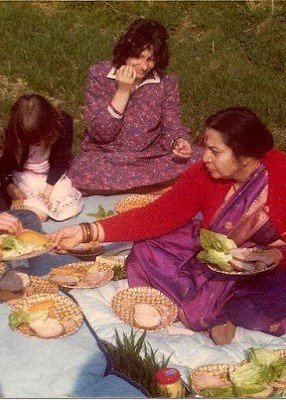 Shri Mataji Nirmala Devi (1923-2011): Christian by birth, Hindu by marriage and Paraclete by duty.
“Firstly, as you understand, is the Catholic Church ... perhaps you are not aware of, perhaps maybe because you don't read any other languages ... that this Catholic Church has done so many horrible things in the past, that is unbelievable that they have anything to do with God... they killed so many people who ever tried to utter a word about them.
They were much worse than Muslim people. They went to other countries like South America, America—all these places they're all Catholics—even our country. And they killed millions and millions of people.
Now as this is Kruta Yuga that has started, one of the things as I said yesterday is that: you will have to pay for whatever you have done, on mass scale or individual scale.'
THE MOTHER: Messiah-Paraclete-Ruh-Devi
Paris, France—July 25, 1992
 Shri Mataji Nirmala Devi (1923-2011): Christian by birth, Hindu by marriage and Paraclete by duty.
“Now the problem of Islam must be understood clearly? First of all, the religion, anybody who says "I follow this religion" say. They just say it. It's like a brand but it has no meaning? I might say I am a Christian, alright.? But I do all kinds of nonsensical things. But, I say I am a Hindu and I do all kinds of immoral things and I am a Hindu, you see. Same with Islam.
So one should see as an intelligent man that there is something basically wrong about it. That, why is it, when we call ourselves by a particular religion, we don't follow it?
Now, in Islam, there is one very big problem, that is the force? We have to follow because there is some sort of a force behind it. Same in Christianity. Christianity same thing.
I was born in a Christian family. Christianity also, if you don't follow it, if you don't go to the church, if you don't practice it, if you don't give money to the Church, then you are a bad [...]. You are not a Christian. Goes on like this. But, when you see the priests, how they are, then you get a shock.
Now this Catholic Church. I'm in Italy every day I get horrible news about them what they are doing now.? You get a Pope, written by [...] very interesting in which it says that nine billion dollars were counterfeited by Catholic Church, counterfeited and were distributed through their bank. The Bank which is call as Vatican Bank. Can you imagine? To the people, such a horrible thing was done.
Now, when you read other things like in Austria, must tell you what has happened about it is, was very [yogi speaks untintelligible] very surprising thing that they caught one priest. They are not supposed to marry.? This is something unnatural, but they are not supposed to marry, the priests are. Was caught with a woman, then he gave away sixteen names of priests who were doing this kind of thing.”
THE MOTHER: Messiah-Paraclete-Ruh-Devi
Public Program, Cairo, Egypt—October 28, 1996
"John 13.31-17..26 is generally considered Jesus' farewell discourse. At this upper-room Gathering, he prepares his followers for his final departure in death. Most of these paragraphs are words of assurance and preparation but even here Jesus reminds them of the nature of the world and its opposition to him and his message. Once again the same theme regarding sin emerges. The sin of the world is its denial of revelation. 'If I had not come and spoken to them, they would not have; but now that have no excuse for their sin' (Jn 15.22). Therefore it is Jesus' coming and speaking, it is self-revelation in the world that now has removed any excuse for the world's sin. And again: 'If I had not done among them the work which no one else did, they would not have sin; but now they have seen and hated both me and my father' (Jn 15.24). The revelatory acts of incarnation and divine disclosure, of coming and speaking, now confront the world with a crisis: to refuse this revelation is to enjoin a foundational problem in relation to God. It is to be in sin.
However this crisis is not something that will end with the glorification (the death, resurrection and ascension) of Jesus. Jesus provides multiple promises of the Spirit (Jn 14.17, 26; 15.26; 16.13) and in these we learn that the Spirit, here called the Paraclete (parakletos), will continue this crisis of revelation and judgment that Jesus began.
Nevertheless I tell you the truth: it is to your advantage that I go away, for if I do not go away, the Counselor [parakletos] will not come to you; but if I go, I will Send him to you. And when [S]he comes, [S]he will convince [elenchein] the World concerning sin and righteousness and judgment concerning sin, because they do not believe in me; concerning righteousness, because I go to the Father, and you will see me no more; concerning judgment, because the ruler of this world is judged. ( Jn 16.7-11) [emphasis ours]
Precisely how we are to understand the work of the Spirit in relation to sin, righteousness, and judgment in these verses has been difficult. The Greek verb elenchein might be translated 'persuade' or convince'. Here the idea is that of convincing (generally the world) about the truth of its wrongdoing. But many scholars see this translation as doubtful.”
(Johnson and Lauber 2016, 82-3)
 Shri Mataji Nirmala Devi (1923-2011): Christian by birth, Hindu by marriage and Paraclete by duty.
�Given this Pentecostal preference for the Spirit, the question asked in this article is how the notion of the Spirit as Paraclete is interpreted and explained from a primarily (although not exclusively) Pentecostal perspective. Preference will be given to resources by Pentecostal researchers. The term Paraclete (...) appears four times in the Gospel according to John in reference to the Holy Spirit (Jn 14:16, 26; 15:26; 16:7) and once in 1 John 2:1 in reference to Jesus. It is only used by John in the New Testament (Borchert 2002:121).
... refers literally to one who is called to someone's aid, a lawyer, one who advocates another (Elwell & Beitzel 1988:1614), an intercessor (Cross & Livingstone 2005:1226), called to the side of (Smith 2011:739) or alongside to help (Strong 2003:1247), called in aid, or one who speaks in the defence of another person (Myers 1987:25). 'One called alongside to help' is derived from analysis of the passive verbal adjective consisting of two parts of the compound Greek word: para, meaning 'by' or 'with', and kaleo, meaning 'to call' (Turner 1992:349). Thus it is deduced that the Paraclete is one 'called alongside (to help)' (Carpenter & Comfort 2000:255). Other interpreters relate the word to paraklesis, which means 'exhortation' or 'encouragement', hence the traditional rendering 'comforter'. However, what the function of the Paraclete in the Gospel of John is, must be discerned from the Gospel itself and not from dubious etymological arguments (Thompson 1992:382).
What does the context in the Johannine usage of Paraclete indicate in terms of the meaning of the term? Should it be understood in terms of 'comforter', 'exhorter', 'counselor', 'helper', 'teacher', or 'master', or are the functions attributed to the ... in John 14-16 consistent with a forensic setting and the associated sense of 'advocate?'�
Nel, M., 2016, 'The notion of the Holy Spirit as Paraclete from a Pentecostal perspective', In die Skriflig 50(1), a2095. https://dx.doi. org/10.4102/ids.v50i1.2095
“I will tell you about Christianity. Christianity, when Christ died, this fellow Mr. Paul, who was a Roman executive, or bureaucrat, working with the government. So, he thought that all the blame of the death of Christ will fall upon the Roman government. So first thing He said, that Christ was killed by Jews, so condemn them. Poor things, for years together, these Jews were condemned, and every action has a reaction: because they were condemned, so now they have become aggressive.
Then this Paul thought that this is a very good platform, he can jump on it. And he found this fellow whose name was Peter, who was the weakest disciple of Christ. Christ had said that the Satan will take you over. Had said it. In the Bible it is.
So he got hold of this fellow, Peter, and both have joined hands, and they re-edited Bible. Despite that there are lots of truths there left, but they re-edited, and in that, He said that Christ said that Peter will establish a church, and I give him the key. It's impossible.
See now, we have so many Sahaja Yogis. Among them, the one who is the weakest, good for nothing, for whom I say that Satan will take over, do you think he will be appointed as the head? Not possible! That's how this horrible Roman Catholic church started.
Now the less said the better about Roman Catholic. They are, firstly, very money-oriented people. So many things are coming out about them that's shocking. Very licentious, horrible people; they have been abusing children, their priests have been doing all kinds of things, and their church itself has counterfeited ten million dollars. Counterfeited. And distributed this through their bank.
Why should any divine person think of having a bank? They have a bank of their own. Can you imagine? And in the bank they use the counterfeited money. And that counterfeited money is distributed. I have now, recently, living in Italy, so many things are coming out about this church.
Now the latest is that this Pope has taken five hundred thousand pounds as a kickback from one man. This man was arrested. And he said that, "This man has taken a kickback from me, but I have been giving him since long.” And now, it was also said that, I mean it's there, that he has a keep. He had her there in Warsaw, and he has brought her here.
And this book, there is one book, In The Name of God where this author, English author, American, he's American, he has pointed out that this Pope murdered the previous Pope.”
THE MOTHER: Messiah-Paraclete-Ruh-Devi
Persian Public Program, Ashram, Los Angeles, U.S.—September 15, 1992
Disclaimer: Our material may be copied, printed and distributed by referring to this site. This site also contains copyrighted material the use of which has not always been specifically authorized by the copyright owner. We are making such material available to our readers under the education and research provisions of "fair use" in an effort to advance freedom of inquiry for a better understanding of religious, spiritual and inter-faith issues. The material on this site is distributed without profit. If you wish to use copyrighted material for purposes other than "fair use" you must request permission from the copyright owner.

 THE EIGHT COMMANDMENT