The Third Commandment
Remember that thou keep holy the sabbath day. The Third Commandment declares the sabbath mus be for doing good rather than harm, for saving life rather than killing.
“Remember the sabbath day, to keep it holy. [90]
The sabbath was made for man, not man for sabbath. [99] With compassion, Christ declares the sabbath for doing good rather than harm, for saving life rather than killing.100 The sabbath is the day of the Lord of mercies and a day to honour God.”[101]
(90. Ex 20:8-10; cf. Deut 5:12-15; 99. Mk 2:27; 100. Cf. Mk 3:4; 101. Cf. Mt 12:5; Jn 7:23.)
Joseph C. Ratzinger, Catechism of the Catholic Church
U.S.C.C. Inc., 1994, p. 523-4.
What are the 10 Commandments? Laws that define sin
"The Bible uses the word sin to describe disobeying God's laws, including the 10 Commandments. "Whoever commits sin also commits lawlessness, and sin is lawlessness" (1 John 3:4). The King James Version translated the last part, "Sin is the transgression of the law.”
Sin is the opposite of God's law—the antithesis of how God thinks and acts. And, as we mentioned, sin causes suffering. Its eventual result is death: "For the wages of sin is death, but the gift of God is eternal life in Christ Jesus our Lord" (Romans 6:23).
Sadly, every human being has sinned and disobeyed the 10 Commandments (Romans 3:23; James 2:10-11). It is only because of the mercy of God that Jesus Christ was willing to pay our death penalty for us. When we repent, Jesus Christ's blood covers our sins that are past. But does God's grace and forgiveness somehow give us license to continue doing things that God hates?
"What shall we say then? Shall we continue in sin that grace may abound? Certainly not!" Paul said (Romans 6:1-2) "Therefore do not let sin reign in your mortal body, that you should obey it in its lusts" (verse 12). Christians are given access to the power of God through the Holy Spirit to combat the temptations to sin (Acts 2:38; Galatians 5:16).”
www.https://lifehopeandtruth.com/
Web (January 3, 2014)
His Holiness Alexander VI had two peculiarly bad habits. The first was that "he thought nothing of stealing a man's wife, raping her and tossing her into the Tiber.” The second was commissioning cardinals ("Chief of Father") for a handsome fee. This was standard papal practise and we cannot censure enterprise. However, he had a peculiar habit of calling them over for sumptuous meals and poisoning them with arsenic — just to increase turnover.
Stephen VIII had his ears and nose cut off and never had any further public contact, for obvious reasons.
Leo X (1513-21) became cardinal at the age of thirteen. As a pope he "peddled cardinalities, created new offices sold to the highest bidders, and took the proceeds of the sale of indulgences to pay for his lavish excesses ...” He is remembered for his appropriate observation: "Let us enjoy the papacy since God has given it to us.”
Pope John XXIII did not believe in the immortality of the soul, the resurrection of the dead and, probably, even the Almighty Creator. But then we have to be cautious and not pass harsh judgment, without looking at his psychological profile. After all, he was “A former pirate, pope-poisoner (poor Filargi), mass-murderer, mass-fornicator (with preference for nuns), adulterer on a scale unknown outside fables, simoniac par excellence, blackmailer, pimp, master of dirty tricks.” He could always plead innocence by reason of satanic possession.
Pope Boniface VIII had a colourful history of sexual adventures. "The pope was bisexual, and certainly catholic in his sexual tastes, having kept a married woman and her daughter as his bedfellows, as well as attempting to seduce a number of handsome young men, apparently with a good measure of success. He was quoted as saying that the sex act was 'no more a sin than to rub your hands together.'"

Hedge had denied the attacks, which
took place in the 1990s Vicar found guilty of raping boys
A West Yorkshire vicar has been found guilty of raping two young boys and sexually attacking others who were in his congregation.
The Reverend Peter Hedge, from Holy Trinity Church at Queensbury, near Bradford, had denied the attacks over a period of years in the 1990s.
A jury at Bradford Crown Court found him guilty of more than 30 indecent assaults as well as the rapes.
BBC, 16 October 2009
Six years for priest who broadcast abuse of boys to Internet paedophiles
A ROMAN Catholic priest who sexually abused young boys while exchanging pornographic material with a paedophile ring on the Internet was jailed for six years yesterday.
Fr Adrian McLeish, 45, lured victims from church-going families and made them take part in degrading acts, Newcastle Crown court was told. He also gave accounts of his conquests through the Internet and built up a library of computer disks containing 11,000 images. Detectives seized four computers from his presbytery at St Joseph's Church, Gilesgate, Durham, with software capable of storing all 29 volumes of the Encyclopaedia Britannica 11 times.
The haul of pornography was the largest ever in Britain, and possibly the world, concerning the Internet. Beatrice Bolton, prosecuting, said: "It is the first time in this country where there is a proved link between pornographic communications on the Internet with other paedophiles and the sexual abuse of young children.”
www.telegraph.co.uk/, 13 November 1996

German Church leader Kaessmann admits drink-driving
The head of Germany's Protestant church has admitted drink-driving, after she was charged with passing a red light while three times over the legal limit.
Bishop Margot Kaessmann, appointed the church's first female leader last year, was arrested in Hanover at the weekend.
She told Germany's Bild newspaper: "I am shocked at myself that I could have made such a grave error.”
Leaders of the 25 million-strong church are discussing how the incident affects the 51-year-old's official position.
Ms Kaessmann, who became the first bishop in Germany to divorce in 2007, allegedly drove her VW Phaeton through a red light in central Hanover on Saturday night while "completely unfit to drive.”..
The BBC's Oana Lungescu in Berlin says it is not just the Protestant church in Germany that faces controversy.
On Monday, the head of Germany's Catholic Church apologised for the growing number of sexual abuse cases that are coming to light at Jesuit high schools across the country.
BBC, 23 February 2010
Critics slam Pope's apology for glaring omissions
Vatican has erred by not addressing similar sex scandals erupting across the globe, they say
Eric Reguly
Rome — From Monday's Globe and Mail
Father Collins was just one of many Irish priests who got away with abusing children for many years, even decades, as the Catholic church in Ireland protected its own or failed to understand the severity of the allegations. Eventually, three state investigations were launched, two of them last year, each a damning chronicle of sexual horror. The Vatican refused to co-operate in those probes. But this weekend, Pope Benedict XVI apologized for the trauma inflicted on the victims and their families.
The Pope's unprecedented apology for the Irish scandal will only erode the credibility and authority of the Catholic church rather than salvaging its reputation, critics said Sunday. They said the Pope had made a tactical and moral error by not addressing similar scandals that are erupting all over the globe or spelling out precise disciplinary action.
The Pope's long-awaited 4,700-word apology, read aloud in Irish churches Sunday, may have been simple and direct but was flawed because of its omissions, critics said.
"There is a difference between being sorry and accepting responsibility," Colm O'Gorman, co-founder of a sexual-abuse victims' group, One in Four, and author of Beyond Belief , the best-selling book about the clerical abuse he himself suffered, said in an interview.”Nowhere in the document is there an acceptance of responsibility. It's clear that the Pope and the Vatican are determined not to address this global crisis.”
Globe and mail, Mar. 21, 2010
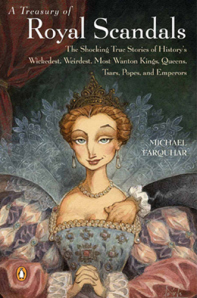
A Treasury of Royal Scandals: The Shocking True Stories History's Wickedest, Weirdest, Most Wanton Kings, Queens, Tsars, Popes, and Emperors
Michael Farquhar, Penguin Books; (10) edition (May 1, 2001)
Part III - Unholy Matrimony
A Marriage Made In Hell
Among the legendary fiascoes that were so many royal marriages, few stand out as more discordant than the one between George IV of Britain and Caroline of Brunswick. This miserably mismatched pair made a royal sideshow out of a union that was doomed before it ever began. George, Prince of Wales at the time, already had a favorite mistress and a secret wife. But he had married the widow Mrs. Fitzherbert on the sly, without the king's consent, which violated one law, plus she was Catholic, which violated another. Prince George was facing the prospect of losing his place at the head of the line for the throne.
Lured by the promise of having Parliament pay off his massive debts, George was persuaded to dump his illegal wife and marry his German cousin, Caroline. It was a steep price to pay for a clean credit report. Among other qualities, Caroline was a crude, foul-smelling exhibitionist with an enormous sexual appetite. Harris, Lord Malmesbury, the diplomat given the task of bringing Caroline from Brunswick to marry the prince, described her as having "no acquired morality, and no strong innate notions of its value and necessity"—a reputation she enjoyed all over Germany. She was short and stocky, described by Malmesbury as having “A head always too large for her body, and her neck too short.”
She also apparently shared the same royal malady—porphyria—that is thought to have driven her future father-in-law and uncle, George III, into babbling fits of insanity. While Prince George's mother, Queen Charlotte, had serious reservations about Caroline's suitability, his father was delighted. Demonstrating all the shrewd judgment he had earlier used in assessing the mood of the American colonists, George III roundly endorsed his niece. "Undoubtedly she is the person who naturally must be most agreeable to me," he wrote Prime Minister William Pitt. "I expressed my approbation of the idea.”
The Prince of Wales was introduced to his betrothed for the first time on April 5, 1795. Malmesbury was there to relate the scene at St. James's Palace. "He turned around, retired to a distant part of the apartment, and, calling me to him, said, 'Harris, I am not well; pray get me a glass of brandy.'" Three days, and many brandies later, the happy couple were married. George spent the wedding night passed out drunk on the floor, with his mistress Lady Jersey in close attendance during the entire honeymoon.
Several weeks later, they were no longer living as man and wife, although Caroline did manage to get pregnant. Having satisfied the dual purposes of his marriage—siring a legitimate heir and settling his debts—George announced to Caroline a formal separation. "Our inclinations are not in our power," he wrote her, "nor should either of us be held answerable to the other, because nature had not made us suitable to each other. Tranquil and comfortable society is, however, in our power; let our intercourse, therefore, be restricted to that.”
Caroline took her estranged husband's letter as a license to let loose, which she did on a spectacular scale. She took to indecorous public displays of flesh. Basically, she became a flasher. "Oh! what an impudent woman was that Princess of Wales," cried Lady Hester Stanhope. "How many sea-captains used to color up when she danced about, exposing herself like an opera-girl.” Lord Holland called her "utterly destitute of all female delicacy," while the Rev. William Mason wrote to Bishop Hurd and declared himself “A perfect convert to Your Lordship's Hypothesis of Insanity.”
All the tongue-wagging eventually landed Caroline in court. A Lady Douglas was spreading tales that the wayward princess had gotten pregnant in an adulterous affair and had given birth to a bastard boy. Caroline's indignant husband called for an inquiry and the king agreed. What became known as "The Delicate Investigation" convened in July 1806. Several months later, Caroline was acquitted of the charges, but a thorough review of her sex life left her reputation in ruins.
The Princess of Wales became a social pariah. Eight years later, tired of the relentless persecution, she fled Britain right into the arms of King Joachim of Naples. This was a stinging slap at George, now serving as Regent of his father's kingdom, because Joachim was the brother-in-law of the Prince Regent's archenemy, Napoleon of France. While the Naples revel ended when Napoleon escaped his exile on Elba in 1815, Caroline's adventures abroad were just beginning. Soon she had a new beau. "I have Napoleon's courier with me," she announced, "Which is quite a treasure to me, faithful and prudent. I shall keep him.” The courier and the queen-to-be marauded all over Europe, flaunting their treasonous affair everywhere they went. She showered him with honors, having him named a Knight of Malta and a Knight of the Holy Sepulchre, for example, as well as Grand Master of her own Order of St. Caroline.
Never intending to return to England, Caroline found she had changed her mind upon the death of her husband's father, George III. Since she was not officially divorced, she was now the Queen of England and fully intended to serve. But the new King George IV thought otherwise and set out pursuing a divorce through Parliament. A problem arose, however, as it was determined that the public sentiment was firmly with Caroline—not so much out of loyalty to her, but due to deep disdain for him.
The people reminded George just how unpopular he was with them when they turned out in droves to support Caroline as she faced the "Bill of Pains and Penalties" to "deprive Her Majesty Caroline Amelia Elizabeth of the Title, Prerogatives, Rights, Privileges and Pretensions of Queen Consort of the Realm, and to dissolve the Marriage between His Majesty and the said Queen.” Guards had to be stationed all over the area of Westminster to control the crowds as a parade of witnesses testified inside about the queen's outrageous conduct abroad. But without the support of the people, the bill, after some debate, was abandoned in Parliament.
George was stuck, but not defeated. When Caroline, looking like a caricature of a queen, arrived at his coronation and demanded entry, the doors to Westminster Abbey were slammed shut right in her face. Several weeks later she was dead, suffering from acute porphyria, or maybe poison, as some suggested. The inscription on her coffin, which she wrote herself, read: "Deposited, Caroline of Brunswick, the Injured Queen of England.”
George IV never remarried.
“The long line of popes who were libertines before and sometimes after ascending the throne of Peter suggests that celibacy was not honoured by the rank and file of the clergy, either. As we noted in Part One, a list of popes who misbehaved would include, among others, Benedict V, Sergius III, John X, John XII, Benedict VII, Benedict IX, Clement V, Clement VI, 'John XXIII', Sixtus IV, Pius II, Innocent VIII, Alexander VI, Julius II, Paul III, Julius III, Gregory XIII, Gregory XV, Urban VIII, Innocent X, Alexander VII. When popes had mistresses of fifteen years of age, were guilty of incest and sexual perversions of every sort, had innumerable children, were murdered in the very act of adultery, there can be no doubt that celibacy among the clergy as a whole was more honoured in the breach than in the observance. In the old Catholic phrase, why be holier than the pope?”
Peter de Rosa, Vicars of Christ: The Dark Side of the Papacy
Bantam Press (1988) p. 397.
“What that one man in Rome teaches in the name of Jesus Christ does not concern mere 'mind' and 'will' or even 'spiration' and 'faith.' For all those so-called qualitative factors have in themselves nothing to do directly with God and his salvation, belonging as they do to this material cosmos. That salvation taught by that one man comes gratuitously from outside the cosmos — not spatially, as if God dwelt beyond the reaches of space, but existentially. The salvation proffered by the Bishop of Rome comes from a totally different dimension of existence, the supernatural, which is utterly unattainable by any force, qualitative or quantitative, originating in this cosmos of man. That one man in that one place holds the keys to that salvation. He is the Keeper of the Keys of the Kingdom of Heaven.
Catholic teaching holds that any Roman Catholic, any non-Catholic Christian, or any non-Christian of whatever other religion who receives God's salvation receives it through the spiritual office of that one man in Rome and the merits of his Church of believers.”
Malachi Martin, Rich Church, Poor Church
G. P. Putnam's Sons (1984) p. 85
UK Sex change priest goes online
“A long-serving Welsh church minister could face the sack because he wants to become a woman.
Reverend Bill Parry, 59, recently told his stunned wife and congregation that he can no longer resist his "female impulses.”
He now intends to set up an Internet site to provide information and support to other Christians going through gender crises.”
BBC, Thursday, 20 August 1998
LA church sale to fund sex claims
"The Roman Catholic archbishop of Los Angeles has said his archdiocese will sell its main office to raise money to settle lawsuits for sexual abuse.
Cardinal Roger Mahoney also said some 50 other buildings could be sold to settle hundreds of lawsuits brought by people who had been abused by priests.”
In December, the archdiocese - America's largest - paid $60m (30m) to settle 46 lawsuits.
But it still faces more than 500 claims that have been in litigation for years.
BBC, Wednesday, 16 May 2007
“The Republic of Ireland has been shocked by a torrent of child abuse allegations in recent years and soon an independent commission will investigate what really went on the country's children's homes....
It is the fulfilment of a promise by Bertie Ahern, the Irish Taoiseach, who earlier this year apologised to those who had been abused in institutions paid for by the state, but often run by religious orders.
In recent years the trickle of allegations that began in the 1980s has turned into a torrent. The Commission to Inquire into Child Abuse is an unprecedented attempt to establish the scale of mistreatment of several generations. The panel of three independent experts is expected to spend a couple of years piecing together the story of a system which it's now recognised was often brutal and cruel.”
BBC, Saturday, 18 September, 1999

Catholic bishop selling indulgences
Antichrist
"Antichrist is translated from the Greek antkhristos, which literally means "opposite of Christ.” A broader meaning is "In place of Christ.”
Therefore, antichrist means opposed to Christ by being in the place of Christ. The term itself appears 5 times in 1 John and 2 John of the New Testament—once in plural form and 4 times in the singular.[1]
Paul, Peter and John warned believers to watch for antichrists, false prophets, and the man of lawlessness The following verses are related to each other by the words in italics. Together they give a good picture of what the Bible means by antichrist.
"Concerning the coming of our Lord Jesus Christ and our being gathered to him, ... Don't let anyone deceive you in any way, for that day will not come until the rebellion occurs and the man of lawlessness is revealed , the man doomed to destruction. He will oppose and will exalt himself over everything that is called God or is worshiped, so that he sets himself up in God's temple, proclaiming himself to be God.”[2]
In the picture above the artist has implied that the Catholic Bishop as pictured is viewed by many protestants as the Anti-Christ as he is practising against the apparent protestant teachings and selling indulgences to people who will pay him to reduce their time in Purgatory in the name of God.”
Source: Wikipedia

THE ANTICHRIST
"The world is expecting the antichrist to come in the near future. Will the antichrist announce his arrival when he gets here? An essence of evil surrounds the term antichrist, and evil rarely works openly. Instead, evil usually wears a facade of righteousness to cover its real character in order more easily to deceive.
THE ANTICHRIST HIDES BEHIND A FACADE.
What better facade than a "church" to cover the antichrist's real identity? The Bible tells us that Satan, the devil, "deceives the whole world.” (Revelation 12:9). Everyone in the world has been deceived by the devil and by his agent, the antichrist.
ATROCITY
Hitler has been thoroughly condemned by the world for murdering six million Jews during the Second World War. This holocaust is frequently talked about even today, and many books have been written on this subject condemning Hitler and his associates.
THE GREATEST ATROCITY
During the Dark Ages the Catholic Church slaughtered over 150 million Christians, and this atrocity is never mentioned today! The world has almost completely forgotten the many millions of people who were burned at the stake by the papacy because they wanted to worship God according to the Bible.
The slaughter in Bosnia, Kosovo, Serbia, and Croatia is a direct result of the Vatican's involvement in this area, but you will never hear about it because the Jesuit-controlled news media not only refuse to mention it but they lie about the situation to keep the papacy from being suspected of their true involvement.
FROM HISTORY
A secular history book declares: "That the Church of Rome has shed more innocent blood than any other institution that has ever existed among mankind, will be questioned by no Protestant who has a competent knowledge of history.”
W. E. H. Lecky, History of the Rise and Influence of the Spirit of Rationalism in Europe
(reprint: New York: Braziller, 1955), Vol. 2, pp. 40-45.

"The papacy still claims that it has a right to slaughter so-called 'heretics,' as it did in the Dark Ages.
'The Church of Rome says that she has a right to punish with the confiscation of their goods, or the penalty of death, those who differ in faith from the Pope.'"
Charles Chiniquy, Fifty Years in the Church of Rome
The Wickliffe Press, Protestant Truth Society, Wickliffe Avenue, 104 Hendon Lane, Finchley, London, N3., 1885, p. 376.
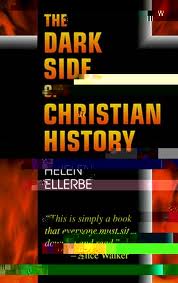
The Dark Side of Christian History
By: V Sundaram, IAS, Retd.
May 24, 2006
I have just finished reading a remarkably perceptive book called The Dark Side of Christian History by Helen Ellerbe. This is simply a book that everyone must sit down and read. Alice Walker in her review of this book has observed: "At a time when the so called 'religious right' asserts that Christian values will save society from its rampant sins, the ordinary citizen should know exactly how the Christian Church has attempted 'to save' societies in the past. It is a grim lesson, but one that is imperative to absorb. Doing so could save lives.”
In a lucid, objective and accessible style, Helen Ellerbe presents some of the long-hidden shameful secrets of organized patriarchal religion. There is much in this book that does bear out the stigma of a dark side: the role of Crusades, Inquisition, Witch-hunts etc. in Church history, a knowledge of which is essential for a complete picture of the cultural evolution of Western civilization. By denying evil we do harm. By denying darkness we obscure the light. Over a period of more than two millennia, the Christian Church has oppressed and brutalized millions of individuals in an attempt to control and contain spirituality. "The Dark Side of Christian History" reveals in full detail the tragedies, sorrows and injustices inflicted upon humanity by the Church. Helen Ellerbe's expose is a compelling and passionate cry for human dignity and spiritual freedom.
During the dark Middle Ages, civilization collapsed as the Church took control of education, science, medicine, technology and the arts. Crusaders marched into the Middle East killing and destroying in the name of the One Christian God. The Inquisition established a precedent in the Middle Ages for the systematic policing and terrorization of society. The Protestant Reformation and the Catholic Counter Reformation sparked wars where Christians slaughtered other Christians, each convinced that theirs was the one and only true path. And the Holocaust of the witch-hunts plumbed the depths of horror as it eradicated countless women and men as well as the belief in earth-based divinity. In 1785, the future American President Thomas Jefferson wrote: "Millions of innocent men, women, and children since the introduction of Christianity, have been burnt, tortured, fined, imprisoned; yet we have not advanced one inch towards uniformity. What has been the effect of coercion? To make one half of the world fools, and the other half hypocrites. To support error and roguery all over the earth.”
In June 1995, the Chicago Tribune reported that Pope John Paul II had urged the Roman Catholic Church to seize the "particularly propitious" occasion of the new millennium to recognize "The dark side of its history.” In a confidential letter to Cardinals in 1994 which was leaked to the Italian Press, Pope John Paul II asked the question: "How one can remain silent about the many forms of violence perpetuated in the name of our faith wars of religion, tribunals of the Inquisition and other forms of violations of the rights of persons?”
It is one of the known facts of history that orthodox Christianity originally represented but one of many sets of early Christian beliefs. With the passage of time, these orthodox Christians came to wield immense political power in the Roman Empire. By cleverly adapting their Christianity to appeal to the Roman Government, they were able to win unprecedented authority and privilege. Their Church became known as "The Church.” This political victory in the field of religion enabled them to enforce conformity to their practices. In doing so, the Church consistently chose tenets and ideologies that best supported its control over the individual and society. It let loose a process of terror and persecution among those who did not conform to the tenets and ideology of the Church.
With the fall of the Roman Empire in 476 AD, the Church took over temporal and spiritual leadership in Europe. Several distinguished historians starting from Edward Gibbon in the 18th century have categorically stated that the Church all but wiped out education, technology, science, medicine, history, art and commerce. The Church amassed enormous wealth even as the rest of society continued to languish in the dark ages. When dramatic social changes took place after 1000 AD, the Church fought to maintain its supremacy and control. It organized and rallied an increasingly dissident society against its imagined or perceived enemies, instigating attacks upon Muslims, Eastern Orthodox Christians and Jews. When all these military crusades failed to put down dissent, the Church turned its might against European Society itself, launching a brutal attack upon France and instituting the Inquisition.
There has been no more organized effort by a religion to control people and contain their spirituality than a Christian Inquisition. Developed with the Church's own legal framework, the Inquisition attempted to terrify people into obedience. As the Inquisitor Francisco Pena declared in 1578: "We must remember that the main purpose of the trial and execution is not to save the soul of the accused but to achieve the public good and put fear into others.” The Inquisition took countless human lives in Europe and around the world as it followed in the wake of missionaries. And along with the tyranny of the Inquisition, Churchmen also brought religious justification for the commercial practice of slavery.
Thus the crusades and even the early centuries of the Inquisition did little to teach people a true understanding of orthodox Christianity. On the other hand, it was the Protestant Reformation and the Catholic counter-Reformation in the 16th century and the first half of the 17th century that accomplished this. Only during the Reformation did the populace of Europe adopt more than a veneer of Christianity.
Orthodox Christians built an organization that from the time of its inception encouraged not freedom and self-determination, but obedience and conformity. To that end, any means were justified. Grounded in the belief in a singular, authoritarian and punishing God, orthodox Christians created a Church that demanded singular authority and punished those who disobeyed its edicts. It is the limited belief in a singular supremacy and only one face of God that has resulted in tyranny and brutality. Unity and oneness within an orthodox Christian belief system are perceived to come from sameness and conformity, not from the synergy and harmony of difference. A society's diversity is more often viewed as a liability rather than as an asset. A peaceful society is thought to be one where everyone is the same. No wonder Bertrand Russell wrote that Christianity believes in creating a world of morons by morons for morons.
Unfortunately for all mankind too many people have chosen to remain silent about the dark side of Christian history. We often hear from many people that a Christian Church embodies the best of Western civilization and that it has always brought peace and understanding to the people it has touched in all parts of the world. They seem to be entirely unaware of the Church's dark past. My intention is not meant to diminish the beautiful, noble and glorious work that countless Christian men and women have done through the ages to truly help others. I am only referring to the "side" which has hurt so many and did such damage to spirituality across centuries.
As Helen Ellerbe beautifully puts it: "The Christian Church has left a legacy, a world view, that permeates every aspect of Western society, both secular and religious. It is the legacy that fosters sexism, racism, the intolerance of difference, and the desecration of the natural environment. The Church, throughout much of its history, has demonstrated a disregard for human freedom, dignity, and self-determination. It has attempted to control, contain and confine spirituality, the relationship between an individual and God. As a result, Christianity has helped to create a society in which people are alienated not only from each other but also from the Divine.”
Jean-Pierre Lehmann has recently written a brilliant article entitled "The Dangers of Monotheism in the Age of Globalization.” In this article he asks the question: "Is there a link between monotheistic religions and intolerance and hostility in the world as a whole today? Jean-Pierre Lehmann has argued that monotheistic religions like Judaism, Christianity and Islam have caused much turmoil throughout history" and continue to do so even today. What is needed is a new global ethical and spiritual role model, and in his opinion, the best candidate to fill that spot is India. The planet needs a sense of moral order, spirituality and an ethical compass. The Indian religious and philosophical traditions can provide a great deal of all three. India is a microcosmic reflection of how globalization can work, especially in its remarkable ability to have managed multiculturalism to such a brilliant extent even in these turbulent times of never ending flux.
It should be clear from all this that the belief in a singular supremacy lies at the root of chauvinism, racism and totalitarianism. In this age of ever-expanding globalization, mankind cannot escape from moving towards a more understanding world that values diversity, spiritual freedom and human dignity. And we have to embrace the hope and pursue the dream that not in the very distant future humanity will be free to act humanely.
V Sundaram, IAS, Retd.
https://www.ivarta.com/columns/OL_060524.htm
Web (November 16, 2013)
Disclaimer: Our material may be copied, printed and distributed by referring to this site. This site also contains copyrighted material the use of which has not always been specifically authorized by the copyright owner. We are making such material available to our readers under the education and research provisions of "fair use" in an effort to advance freedom of inquiry for a better understanding of religious, spiritual and inter-faith issues. The material on this site is distributed without profit. If you wish to use copyrighted material for purposes other than "fair use" you must request permission from the copyright owner.

 THE THIRD COMMANDMENT