The Third Jesus: A Sahaja Yoga Integration
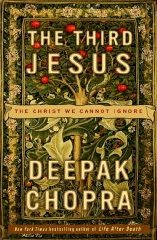
Deepak Chopra’s The Third Jesus: The Christ We Cannot Ignore transcends historical and dogmatic portrayals, offering a mystical teacher accessible in “our own awareness at the level of God-consciousness.” This review, inspired by Frederic and Mary Ann Brussat’s analysis, weaves together Chopra’s vision with the living wisdom of Sahaja Yoga. In Sahaja Yoga, the Paraclete—Shri Mataji Nirmala Devi—reveals that Jesus resides in the Agnya Chakra (the third eye), the seat of forgiveness and thoughtless awareness. This alignment shows that Chopra’s “third Jesus” is not a metaphor but the inner divine manifestation awaiting self-realization.
Core correspondence: “Jesus in our own awareness at God-consciousness” (Chopra) ≡ Jesus as the presiding deity of the Agnya Chakra in Sahaja Yoga. The “Kingdom of Heaven is within you” becomes a tangible reality through Kundalini awakening.
Summary of Brussat Review
Frederic and Mary Ann Brussat commend Chopra’s book as profoundly thought-provoking, delineating three representations of Jesus: the historical man, the church’s doctrinal creation, and the transformative mystical teacher who lives beyond time within each being. They highlight spiritual essentials—meditation, contemplation, revelation, prayer, grace, love, faith, salvation, and unity—reinterpreted through Chopra’s lens. Notably, the Brussats appreciate Chopra’s take on karma as an invisible scale of actions leading to spiritual growth, and the entry into God’s Kingdom through inner awareness. This cross-religious dialogue builds bridges between Eastern wisdom and Western mysticism.
Chopra's Third Jesus Concept
For Chopra, the third Jesus functions as a guide to enlightenment and God-consciousness, asking for neither blind faith in miracles nor external saviorhood, but rather inner transformation through higher awareness. This Jesus teaches stillness for union with God, drawing from core verses like “the Kingdom of Heaven is within you” to unlock transcendent dimensions. Brussat notes the practical steps Chopra offers: 15 exercises derived from the New Testament that cultivate simplicity, forgiveness, and spiritual growth as keys to this expansive consciousness. [adishakti.org] The third Jesus encourages us to look past organized religion and encounter Christ as the eternal state of awakened awareness—available now, not in a far-off heaven.
Third Jesus Essentials
- Meditation & stillness for God-union
- Karma as seed for spiritual evolution
- Forgiveness without condition
- Inner revelation over external ritual
Reinterpreted Teachings
- “Narrow gate” = entering thoughtless awareness
- Grace = spontaneous Kundalini awakening
- Salvation = self-realization (Atma Sakshatkar)
Agnya Chakra: The Seat of Christ in Sahaja Yoga
In Sahaja Yoga, founded by Shri Mataji Nirmala Devi—recognized as the Paraclete (the Comforter promised by Jesus)—the Agnya Chakra (sixth chakra or third eye) houses Jesus Christ as its presiding deity. Located at the optic chiasma, intersecting the pineal and pituitary glands, this center governs the ego and superego. When the Kundalini pierces the Agnya, it grants thoughtless awareness (nirvichara samadhi) and the state of true forgiveness. Shri Mataji has explained that Jesus prepared this chakra for humanity, and the mantra of the Agnya is the power of forgiveness, dissolving the ego’s barriers and opening the “narrow gate” to the Sahasrara—the Kingdom of God. [sahajayogabengal.com]
Key practice: Forgiveness meditation — placing attention at the Agnya Chakra (center of the forehead) and mentally affirming “I forgive everyone, I forgive myself.” This aligns with Chopra’s forgiveness principle and activates the living presence of Christ within.
Correspondences & Synthesis
Chopra’s statement of “Jesus in our own awareness at the level of God-consciousness” finds its exact spiritual anatomy in the Agnya Chakra, where Jesus resides as the eternal gatekeeper to the realm of divine silence. Both paradigms stress that transcendence is not external but internal. In Sahaja Yoga, the ascent of Kundalini through the Agnya produces the state of drishti (true vision) and unity with the all-pervading divine power. Chopra’s 15 meditative practices mirror the spontaneous meditation that arises after self-realization. This synthesis bridges Eastern chakric science with Western mystical Christianity, validating an interspiritual transformation where the “third Jesus” is no longer a metaphor but a living reality within every seeker. [adishakti.org - Agnya Gateway]
Implications for Spiritual Practice
Integrating these views offers a profound roadmap: daily forgiveness meditation to activate the Agnya Chakra, practicing thoughtless awareness, and cultivating humility. This mirrors Brussat’s highlighted essentials (meditation, grace, love) while adding a tangible energetic dimension. Practitioners can experience Jesus not as a distant historical figure, but as the eternal inner presence who guides the Kundalini towards collective consciousness. Such practices foster global interfaith unity, dissolving sectarian divides. By honouring both Chopra’s intellectual mysticism and Shri Mataji’s direct realization, spiritual aspirants find that the third Jesus awakens when the ego yields at the threshold of the Agnya — the narrow gate to the Kingdom of Heaven.
Daily Practices
- Morning affirmation of forgiveness (Agnya focus)
- Meditation on “I am the spirit”
- Observing thoughtless awareness for 5–10 min
- Reading New Testament verses as inner inquiry
Fruits of Integration
- Compassion without judgment
- Freedom from guilt and conditioning
- Unity consciousness & interfaith harmony
- Direct experience of Christ within
In the words of the Brussat review, Chopra invites us to “live the questions” of Jesus. Sahaja Yoga answers by opening the chakra where that question dissolves into silence — the silence where the third Jesus breathes as our own awareness. Ultimately, this integrated vision offers a new renaissance of Christian mysticism rooted in the universal energy of self-realization.
The Third Jesus - Book review by Frederic and Mary Ann Brussat
Book Review
By Frederic and Mary Ann Brussat
The Third Jesus
The Christ We Cannot Ignore
Deepak Chopra
Harmony Books 02/08 Hardcover
"I believe that Jesus was not only real, but perhaps the most significant person in Western history," writes bestselling author Deepak Chopra in this amazing and thought-provoking book. He identifies three Jesuses: the historical man of flesh and blood who lived more than 2,000 years ago; the figure created by the church and its dogma and doctrines; and the radical mystical teacher who set out to transform the world. The last Jesus is"The Christ We Cannot Ignore"Who lives in"our own awareness at the level of God-consciousness.”Chopra sets out in this ambitious work to explain the implications of this third Jesus who exists beyond time and yet within each of us.
Jesus was very clear about the essentials of the spiritual life and they are in his teachings:
● Meditation — Going within to contact the silent mind.
● Contemplation — Reflecting on the truth.
● Revelation — Receiving spiritual insight.
● Prayer — Asking for higher guidance.
● Grace — Taking God into one's heart.
● Love — Participating in divine love.
● Faith — Believing in a higher reality.
● Salvation — Realizing that you have a place in higher reality.
● Unity — Becoming one with God.
Chopra moves on in"Realizing What Jesus Said"to discuss various verses in the New Testament that reflect the wisdom of this seer, including know thyself, God values you, be humble, know where the heart is, be persistent on the path, and much more. In the most interesting of these passages is Chopra's treatment of Jesus' version of karma:
● Every action leads to a result.
● Good actions have good results, bad actions, bad results.
● Every action is seen and weighed. Nothing can be hidden or kept secret.
● If your actions are good, you will grow spiritually.
● As you grow, your thoughts and wishes will manifest in the material world. Karma operates faster and more consciously.
● God's intention is to make your actions turn out for the best. His ultimate concern is to bring you into the Kingdom, where the soul is freed from the law of Karma.
It is refreshing to see the idea of you will reap what you sow spelled out in this interpretation. It opens the door to more cross-fertilization between Christianity and other world religions. Chopra recognizes the contemporary relevance of Jesus' message:
"The real Jesus is as available today as he ever was, perhaps more so. Instead of relying on faith alone, we can go beyond worship to find a body of teachings consistent with the world's wisdom traditions, a corroboration in Christian terms that higher consciousness is real and open to all.”
In the section on"Taking Jesus as Your Teacher," Chopra presents Jesus as the initiator of a new path of enlightenment that offers personal transformation. His 15 Steps to God-Consciousness include daily exercises based on verses from the New Testament, such as"For my yoke is easy and my burden is light"or"Ask and you will receive.”These are followed by some stimulating meditations on keeping it simple, the process of spiritual growth, why we resist spirit, how the path opens, and the tradition of unity. Chopra ends with an essay"What Would Jesus Do," that salutes him as a person who valued courage, truth-telling, sympathy and tolerance, love and forgiveness.
The Third Jesus is another volume promoting an interspirituality for the twenty-first century that tears down the walls between East and West and reveals how all the world's religions encourage the practice of transformation.
www.spiritualityandpractice.com/books/books.php?id=17843