"Allah Will Not Address Them"

"It is true that there is plenty of material in the Koran that is more egalitarian than the western Christian tradition, which was heavily influenced by the misogyny of Greek thought. Perhaps the most fundamental is that the Islamic God does not have a gender. Arabic may refer to him by use of the male pronoun, but he is never described as "father" or "lord" as he is in the Judeo-Christian tradition. Indeed, the Islamic God has characteristics that are expressly feminine; one of his most important "names" is al-Rahman (the All-Compassionate) from the Arabic rahma , which comes from the word rahim, meaning womb. In Islamic mysticism, the divinely beloved is female.”- The Guardian, Dec. 8, 2001

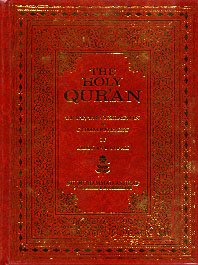
The Holy Quran The Holy Quran The Holy Quran
The Holy Qur'n

Surah 2:174-176

Those who conceal Allah's revelations in the Book,
And purchase for them a miserable profit -
They swallow into themselves naught but Fire:
Allah will not address them on the Day of Resurrection, nor purify them:
Grievous will be their Penalty.
They are the ones who buy Error in place of Guidance,
And Torment in place of Forgiveness.
Ah! What boldness (they show) for the Fire!

surah 2:174-176 Al Baqarah (The Cow)
(Abdullah Yusuf Ali, The Holy Qur'n, Amana Corporation, 1989), p. 724.)

"Allah Will Not Address Them"

The chapter in the Qur'n on Qiyamah, or Resurrection, is perhaps the most important Revelation to humans. In it lies the Absolute Reality of Resurrection. All seekers of Truth have to thoroughly understand this 1,400 year-old prophecy with all its clear Sure Signs as each and every human, irrespective or race, religion, creed or ignorance is unconditionally subject to it. No non-Muslim will escape this Will of Allah by seeking shelter behind their favorite deities or godlings. This Call and Command of God Almighty and His Spirit is unconditional and leaves no avenue to plead ignorance. Even mere reading of these lines subjects you to its penalties. The very fact that you are aware, no matter how remotely, binds you irrevocably to the fact that the Warning was delivered!

However, there is another reason that His Message and all related information be thoroughly cross-examined as it confirms that another Quranic prophecy will also be fulfilled: On 28 February 1990 Shri Mataji Nirmala Devi, on Her way to Australia, stopped at Changi Airport, Singapore. She informed the Sahaja Yogis who had gathered to meet Her that "In Islam there was a complete surah written about Her. In this surah it was stated that the Sent One will give Realization, will make you Pirs and give Collective Consciousness. But you will be non-believers.” (Divine Cool Breeze Revelations 1989-90, Vishwa Nirmala Dharma, p. 141.) The surah She refers to is Al Qiyamah (The Resurrection)!

Over the centuries the Thieves of Truth—ulama, imams, ayatollahs, amirs, caliphs, mu'ttilah, aalims, mujtahids, mullahs and muftis—numbering in the hundreds and thousands first molested, then raped, and finally mutilated the revelation of Al-Qiyamah beyond recognition - disfiguring it so horribly that the Ummah till today still recoils at it in fear and terror - before leaving it pregnant with distortion, delusion and deceit. From the wanton seed of their unforgivable collective orgy was born the satanic lie that the wrath of Allah will descend suddenly on humankind without warning, and punish the sinners in a murderous rage of death and destruction - thus fulfilling Iblis' promise to Allah that he will mislead Adam's descendents till the Day of Resurrection:

And the non-Believers will be the entire Muslim community who, even after being explicitly accused of mutilating the Revelation of Al-Qiyamah, will still collectively reject what is written in black and white in their own Qur'n! They will be the greatest hypocrites in the eyes of Allah because for all their professed religiosity and shedding of so much blood to protect the Quran, they will defy its very heart and soul. Only the most satanic and blasphemous will deny and defy the Good News of Al-Qiyamah!

There is a Century of Spiritual Death approaching. Beware, Ummah, beware!

Exegetical Questions on Surah Al-Baqarah 2:174-176 (Yusuf Ali Translation)

Hermeneutical Examination of Surah Al-Baqarah 2:174-176

"Allah will not address them on the Day of Resurrection, nor purify them"

Those who conceal Allah's revelations in the Book,
And purchase for them a miserable profit -
They swallow into themselves naught but Fire:
Allah will not address them on the Day of Resurrection, nor purify them:
Grievous will be their Penalty.
They are the ones who buy Error in place of Guidance,
And Torment in place of Forgiveness.
Ah! What boldness (they show) for the Fire!

Surah 2:174-176, Al-Baqarah (The Cow)

(Abdullah Yusuf Ali, The Holy Qur'n, Amana Corporation, 1989), p. 724.

Lexical Foundations from Webster's New World Dictionary

conceal: 1. to put out of sight, hide. 2. to keep from another's knowledge; keep secret.

address: 1. to direct (spoken or written words to). 2. to speak to or write to.

purify: 1. to rid of impurities or pollution. 2. to free from guilt, sin, or ceremonial uncleanness. 3. to free from incorrect or corrupting elements.

forgive(ness): 1. to give up resentment against or the desire to punish; stop being angry with; pardon. 2. to give up all claim to punish or exact penalty for (an offense); overlook.

Webster New World Dictionary, Third College Ed., Simon & Schuster, Inc. 1988.

Questions for Theological Reflection and Exegesis

For scholars and students of Quranic studies, considering both textual and practical implications.

On Divine Communication and Withheld Address

  1. What is the theological meaning and implication of the divine decision to not "address" certain individuals on the Day of Resurrection? How does this differ from other forms of divine punishment?
  2. In the context of Quranic eschatology, what might be the nature of the "Great Announcement" (Surah 78:1-5, An-Naba), and who might be excluded from hearing or comprehending it?
  3. If the Day of Resurrection contains elements of both cosmic cataclysm and divine revelation, how do exegetes reconcile the withholding of divine speech with the overall purpose of the Day?

On Withheld Purification and Spiritual Growth

  1. What does it mean for God to withhold purification on the Day of Resurrection? Considering the definition, is this a refusal to cleanse from sin, to remove corrupting elements, or both?
  2. If purification is a prerequisite for entering divine presence, what does its withholding indicate about the final state of these individuals?
  3. Does the process of divine purification, as implied in other scriptures, involve specific instructions or techniques for cleansing the human psyche and body? If so, what might these entail?
  4. What might be the duration and nature of this purification process for those who do receive it? Is it instantaneous or gradual?

On the Psychology of Persistent Error

  1. The verse describes individuals who actively "buy Error in place of Guidance." What psychological, doctrinal, or social mechanisms could lead to this persistent choice, even in the face of eschatological reality?
  2. Similarly, what leads someone to choose "Torment in place of Forgiveness"? Is this a conscious rejection of mercy, or the culmination of a life patterned on rejecting divine grace?
  3. How can religious communities cultivate the spiritual discernment necessary to recognize and avoid such fundamental errors in valuation?

On the Apparent Contradiction of Choice During Cataclysm

  1. The questions present a tension: if the Day of Resurrection is marked by universal panic and cosmic disintegration, how can individuals still be making rational "choices" between guidance and error, forgiveness and torment?
  2. Does this suggest that the Quranic depiction of Qiyamah might encompass more than a single moment of terror? Could it include periods of revelation, discernment, and decision-making alongside moments of judgment?
  3. Or does it imply that the "choices" described are not made in that moment, but are the final manifestation and confirmation of choices made throughout one's earthly life?

Synthesis: The Duality of Qiyamah in Quranic Imagery

The Quran employs diverse imagery for the Resurrection. Considering this verse's emphasis on withheld address and purification, alongside other descriptions:

  1. Is Qiyamah best understood as:
    • A Day of Uniform Cataclysm: A singular event of destruction and punishment?
    • A Day of Ultimate Sorting (Al-Furqan): A revelatory event that separates truth from falsehood, the receptive from the resistant?
    • A Multifaceted Process: An era encompassing both the "Night of Power" (Surah 97) – a time of divine descent and blessing – and the "Day of Clamour" (Surah 101) – a time of upheaval and accounting?
  2. Could the experience of Qiyamah be fundamentally different for different groups? For some, a "Serenity of spiritual cleansing"; for others, a "Terror" of consequence?
  3. Does the "boldness for the Fire" mentioned suggest that for some, the path of error becomes so ingrained that even faced with ultimate reality, they persist in the identity they have forged?

Conclusion for Reflection: This verse presents Qiyamah not merely as external punishment, but as the ultimate unveiling of one's internal relationship with divine truth. The withholding of address and purification may represent the tragic culmination of a life spent concealing truth and bartering away guidance for petty gains.


Reflections on Surah Al-Baqarah 2:174-176

"And God Will Not ... Nourish Them For Growth"

Those who conceal any part of the Scriptures, that God has revealed,
And thus make a little profit thereby, take nothing but fire as food;
And God will not turn to them on the Day of Resurrection,
Nor nourish them for growth;
And their doom will be painful.
They are those who bartered good guidance for error,
And pardon for punishment:
How great is their striving for the Fire!

Surah 2:174-176, Al-Baqarah (The Cow)
(Arthur J. Arberry, The Koran Interpreted, Oxford University Press, 1983.)

Key Terminological Definitions

nourish
1. to feed or sustain (any plant or animal) with substances necessary to life and growth.
2. to foster; develop; promote (a feeling, attitude, habit, etc.).

growth
1. the process of growing or developing; specif., a) gradual development towards maturity b) formation and development.
2. a) degree of increase in size, weight, power, etc., b) the full extent of such increase.

guidance
1. the act of guiding; direction; leadership.
2. something that guides.
3. advice or assistance, as that given to students by vocational or educational counselors.

error
1. the state of believing what is untrue, incorrect, or wrong.
2. a wrong belief; incorrect opinion.
3. something incorrectly done through ignorance or carelessness; mistake.
4. a departure from the accepted moral code; transgression; wrongdoing; sin.
5. a) the difference between a computed or estimated result and the actual value, as in mathematics. b) the amount by which something deviates from what is required.

pardon
1. to release (a person) from further punishment for a crime.
2. to cancel or not exact a penalty for (an offense); forgive.
3. a) to excuse or forgive (a person) for some minor fault, discourtesy, etc. b) to overlook (a discourtesy, etc.).
- n. 1. a pardoning or being pardoned; forgiveness. 2. an official document granting a pardon.

Webster's New World Dictionary, Third College Ed., Simon & Schuster, Inc. 1988.

Questions for Theological and Textual Reflection

For scholars (ulema) and seekers alike, regarding the implications of these verses.

On Concealment of Scripture

  1. How is the act of "concealing any part of the Scriptures that God has revealed" understood within Islamic theological and historical discourse?
  2. In a practical and metaphysical sense, how can any part of the Qur'an, considered protected by Allah, be "concealed," and what forms might such concealment take?
  3. What is meant by making "a little profit thereby"? Does this refer solely to material gain, or could it encompass social, political, or doctrinal capital?

On Divine Rejection and Spiritual Nourishment

  1. What is the theological significance of the phrase "God will not turn to them on the Day of Resurrection"? What does this imply about the relationship between the Creator and such individuals in the afterlife?
  2. Drawing on the provided definitions, what does it mean for God to "nourish them for growth"? What kind of spiritual growth is withheld, and what are its consequences?
  3. If the Day of Resurrection is a time of final judgment, what is the purpose or nature of the "growth" mentioned here? Does it suggest a process that occurs before or during the resurrection?

On the Barter of Guidance for Error and Pardon for Punishment

  1. Who are those who "bartered good guidance for error," and in what ways can this exchange manifest in belief and practice?
  2. Similarly, who are those who choose "punishment" over "pardon"? What theological or psychological state leads to this rejection of divine mercy?
  3. How can the act of "bartering" or choosing error/punishment be reconciled with the concept of a Day of Judgment where true scales are revealed? Is this a conscious, ongoing choice?

On the Nature of Al-Qiyamah (The Resurrection)

  1. How do these verses inform our understanding of Al-Qiyamah? Is it depicted solely as a "Day of Distress" and "Doom," or do concepts like "growth," "guidance," and "pardon" suggest other dimensions?
  2. Could these verses support an interpretation of Qiyamah as both a moment of ultimate reckoning and a culminating point in a longer process of spiritual revelation and maturity for believers?
  3. Is the "Fire" they strive for merely punitive, or is it also the natural consequence of rejecting spiritual nourishment and choosing spiritual error?

Synthesizing Questions

  1. Ultimately, do these verses present Al-Qiyamah primarily as:
    a) A single day of catastrophic judgment and darkness for disbelievers, or
    b) A transformative era of revelation, discernment, and ultimate growth for true believers (Al-Mu'minun), with severe consequences for those who reject truth?
    Or is it an inseparable combination of both?
  2. What responsibility do scholars and communities bear in ensuring that scripture is not "concealed," whether through omission, misinterpretation, or selective emphasis, to avoid the severe warnings outlined here?


An Examination of Surah Al-Baqarah 2:174-176 (Rodwell Translation)

"God Will Not Speak To Them, Or Assoil Them, On The Day Of The Resurrection"

They truly who hide the Scriptures which God hath sent down, and barter them for a mean price -
They shall swallow into their bellies nought but fire.
God will not speak to them, or assoil them, on the day of the Resurrection:
And theirs shall be a grievous torment.
These are they who have bartered guidance for error, and pardon for torment?
But how great their endurance in fire!

Surah 2:174-176, Al-Baqarah (The Cow)
(J. M. Rodwell, The Koran, J.M. Dent & Sons, 1978.)

Lexical Analysis of Key Terms

barter
to trade by exchanging goods or services without using money ... to give or trade for too small a return.

mean (in this context)
1. low in quality, value, or importance; paltry; poor; inferior.
2. ignoble; base; small-minded; petty.

assoil
1. to absolve or acquit.
2. to atone for.

error
1. the state of believing what is untrue, incorrect, or wrong.
2. a wrong belief; incorrect opinion.
3. a departure from the accepted moral code; transgression; wrongdoing; sin.

Webster's New World Dictionary, Third College Ed., Simon & Schuster, Inc. 1988.

Questions for Scholarly and Theological Consideration

For scholars of Islam (ulema) and for critical reflection on the text's implications.

On Divine Silence and Absolution

  1. What is the theological and existential meaning of the divine decree, "God will not speak to them... on the day of the Resurrection"? What does the absence of divine speech signify for the fate of a soul?
  2. Correlatively, what does it mean that God will not "assoil" (absolve or acquit) them? How does this compound the severity of their state beyond the absence of speech?
  3. How might the act of "bartering" scripture for a "mean price"—understood as trading divine truth for something petty or base—naturally culminate in these specific forms of divine withdrawal (speech and absolution)?

On the Nature of the "Barter"

  1. The verse describes a double exchange: "guidance for error" and "pardon for torment." Are these two separate transactions, or two facets of the same fundamental error? What is the relationship between them?
  2. In practical terms, how might this "barter" manifest within a religious community? Does it pertain to individual corruption, institutional failing, or doctrinal deviation?
  3. Given that the "price" is described as "mean" (base/petty), what does this suggest about the perceived value of the scripture being concealed and the triviality of what is gained in return?

On the Character and Fate of the Actors

  1. What spiritual or psychological state characterizes those who, even facing the Resurrection, would persist in choosing error over guidance and torment over pardon?
  2. The verse concludes, "But how great their endurance in fire!" Is this a statement of amazement at their misplaced steadfastness, or an ironic commentary on their fate? How should this exclamation be interpreted?

On the Broader Conception of Al-Qiyamah (The Resurrection)

  1. How do these verses, focused on a specific group's condemnation, inform the broader Islamic understanding of the Day of Resurrection? Do they emphasize judgment, the finality of choices, or the unveiling of truth?
  2. If, for this group, the Resurrection is marked by divine silence and the absence of pardon, what must it entail for the righteous? Does it logically follow that for them it is a day of divine address, acquittal, and therefore, liberation?
  3. Can the Resurrection therefore be understood as a day of separation (Al-Furqan) more than a day of uniform terror? A day where the ultimate consequence of one's chosen path—guidance or error, acceptance or rejection of pardon—is fully realized?

Synthesis and Final Reflection

  1. Ultimately, do these verses portray Al-Qiyamah primarily as:
    • A singular event of catastrophic punishment for a specific group of transgressors?
    • The inevitable cosmic culmination and public revelation of a "barter" already made in this life?
    • A day that inherently contains both the "grievous torment" for some and, by implication, the joyful "pardon" and divine speech for others?
  2. What is the most urgent warning for contemporary believers and scholars in these verses regarding the handling, teaching, and valuing of revealed scripture?


Exegetical Questions on Surah Al-Baqarah 2:174-176

"And God Will Not Turn To Them On The Day Of Resurrection"

Those who conceal any part of the Scriptures that God has revealed,
And thus make a little profit thereby, take nothing but fire as food;
And God will not turn to them on the Day of Resurrection,
And nourish them for growth;
And their doom will be painful.
They are those who bartered away good guidance for error, and pardon for punishment;
How great is their striving for the Fire!

Surah 2:174-176, The Cow (Al-Baqarah)
(Ahmed Ali, Islam: The Qur'n, Princeton University Press, 1988.)

Definition of Key Term

profit
1. to be of advantage or benefit.
2. to reap an advantage, financial or otherwise.

Webster's New World Dictionary, Third College Ed., Simon & Schuster, Inc. 1988.

Questions for Theological and Hermeneutical Reflection

For Islamic scholars and students of scripture, considering the implications of these verses.

On the Prophecy of Scriptural Concealment

  1. What does it indicate about divine foreknowledge that the Qur'an anticipates the future concealment of its own scripture? How should this warning shape approaches to textual preservation and interpretation?
  2. What forms might the "little profit" mentioned take in contemporary contexts? Does this refer solely to material gain, or could it include political power, social status, or doctrinal control?

On Alleged Areas of Concealment or Misinterpretation

  1. Some interpreters suggest certain Qur'anic themes are systematically deemphasized. What critical methodology should be used to evaluate such claims while maintaining theological integrity?
  2. Regarding specific theological themes often debated, how should Muslims approach passages concerning:
    • Future Guidance: The coming of divine comforters or guides?
    • Cosmic Signs: The relationship between natural phenomena (eclipses, winds) and eschatological events?
    • Progressive Revelation: The completion of divine light across multiple revelations?
    • Universal Prophethood: The validity of all divine messengers and scriptures?
    • Eschatological Timing: The signs and chronology of resurrection?
  3. How should the principle of "naskh" (abrogation) be balanced against the unity and completeness of revelation when interpreting seemingly contradictory verses?

On the Nature of Divine Withdrawal

  1. What is the theological significance of God "not turning to them" on the Day of Resurrection? How does this differ from active punishment?
  2. The verse states God will not "nourish them for growth." Considering the definition of spiritual nourishment, what developmental processes are being denied, and what are the implications for the soul's trajectory?
  3. Does the withholding of nourishment suggest the Resurrection involves a process of spiritual maturation, not merely instantaneous judgment?

On the Psychology of "Bartering" in Eschatological Context

  1. What psychological or spiritual state enables someone to "barter guidance for error" even when facing ultimate reality? Is this a conscious choice or the culmination of habitual patterns?
  2. Similarly, what leads to choosing "punishment" over "pardon" at what should be a moment of desperate seeking for mercy?
  3. How do these verses challenge simplistic views of the Resurrection as merely terrifying, given that rational "bartering" seems to require some level of deliberation?

Synthesis: The Dual Nature of Al-Qiyamah

  1. Considering both the severe warnings and the language of "growth" and "nourishment," does the Qur'an present Al-Qiyamah as:
    • A Day of Uniform Terror: A singular catastrophic event causing universal panic and destruction?
    • A Day of Discernment: An event or era that reveals truth, where guidance and error, pardon and punishment are clearly distinguished and chosen?
    • A Process of Separation: A period where the consequences of earthly choices become fully manifest, leading to different experiences for different souls?
  2. Could Qiyamah be understood as having multiple dimensions: both a "Blast of Truth" that liberates believers through revelation, and a "Trumpet of Doom" that condemns rejecters through the exposure of their error?
  3. What is the ultimate purpose of these severe warnings? Are they meant solely to inspire fear, or to provoke careful self-examination regarding one's relationship with scripture, truth, and divine mercy?


Comparative Analysis of Surah Al-Baqarah 2:174-176 Across Translations

Dawood Translation

Those that suppress any part of the Scriptures which God has revealed,
In order to gain some paltry end shall swallow nothing,
But fire into their bellies.
On the Day of Resurrection, God will neither speak to them nor purify them.
Theirs shall be a woeful punishment.
Such are those that barter guidance for error, and forgiveness for punishment.
How steadfastly they seek the Fire!

surah 2:174-176 Al Baqarah (The Cow) (N.J. Dawood, The Koran, Penguin Books, 1993.)

Khalifa Translation

Those who conceal God's revelations in the scripture,
Seeking a lowly material gain, are eating fire into their bellies.
God will not speak to them on the Day of Resurrection,
Nor will He sanctify.
They will suffer painful retribution.
It is they who chose the straying instead of guidance,
And the retribution instead of forgiveness.
Consequently they have to endure the hellfire.

surah 2:174-176 Al Baqarah (The Cow) (Rashad Khalifa, Quran: The Final Scripture, Islamic Productions, 1981.)

Pickthall & Shakir Translations (Composite)

Lo! those who hide aught of the Scripture which Allah hath revealed,
And purchase a small gain therewith,
They eat into their bellies nothing else than fire.
Allah will not speak to them on the Day of Resurrection,
Nor will He make them grow/purify them.
Theirs will be a painful doom.
Those are they who purchase error at the price of guidance,
And torment at the price of pardon.
How constant are they in their strife to reach the Fire!

surah 2:174-176 Al Baqarah (The Cow) (Mohammed Pickthall & Muhammad Shakir translations synthesized)

Lexical Analysis of Critical Terms

suppress: 1. to put down by force; subdue; quell; crush. 2. to keep from appearing or being known, published, etc.

paltry: practically worthless; trifling; insignificant; contemptible; petty.

speak: to utter words; to express or communicate; to converse.

sanctify: 1. to make holy; to set apart as holy; consecrate. 2. to make free from sin; purify. 3. to make productive of spiritual blessing.

retribution: punishment for evil done.

stray(ing): 1. to wander from a direct course. 2. to go wrong; be in error; deviate from what is right.

Webster's New World Dictionary, Third College Edition, Simon & Schuster, Inc. 1988.

Questions for Theological and Hermeneutical Examination

For scholars and students of Quranic exegesis, focusing on textual and interpretive issues.

On the Nature of Scriptural Concealment

  1. What constitutes the "suppression" or "concealment" of revelation in contemporary contexts? Does it involve textual alteration, interpretive distortion, selective emphasis, or neglect of certain teachings?
  2. How does the concept of a "paltry gain" or "small price" manifest in religious communities? Could this include political influence, social status, financial benefit, or doctrinal supremacy?
  3. If the Quran is considered perfectly preserved textually, how might these verses apply to interpretive traditions, pedagogical emphasis, or practical application of teachings?

On Divine Communication and Purification

  1. What theological significance lies in God's refusal to "speak to them" on the Day of Resurrection? How does this differ from divine punishment, representing instead a withdrawal of relationship?
  2. The translations vary between "purify," "sanctify," and "make them grow." How do these different concepts enrich our understanding of what is withheld? Is it cleansing, spiritual maturation, or consecration?
  3. If purification/sanctification is a prerequisite for divine encounter, what does the withholding of this process imply about the state of these souls?

On the Psychology of Spiritual Choice

  1. The verses describe a conscious "barter," "choice," or "purchase" of error over guidance and punishment over forgiveness. What psychological or spiritual mechanisms might lead to such seemingly irrational choices?
  2. How can religious communities cultivate environments that prevent such "bartering" of core principles for secondary gains?
  3. The text notes they "steadfastly seek the Fire" or are "constant in their strife to reach the Fire." What does this imply about the persistence and intentionality of their deviation?

On the Nature of Qiyamah (Resurrection)

  1. Do these verses suggest Qiyamah is primarily:
    • A moment of final sorting where pre-existing choices are confirmed?
    • A period of ultimate opportunity where final choices are made?
    • A revelatory event that exposes the true nature of earthly "barters"?
  2. How does the imagery of divine speech and purification relate to traditional depictions of Qiyamah as cosmic cataclysm?
  3. Could Qiyamah encompass both a period of trial and a moment of judgment, where some experience purification and guidance while others face silence and retribution?

Reflective Considerations

Challenges for self-examination within religious communities:

  1. In what ways might communities or individuals unconsciously "conceal" challenging aspects of revelation to maintain comfort, power, or doctrinal simplicity?
  2. How can believers distinguish between authentic guidance and its distortion, especially when distortion may be culturally or institutionally sanctioned?
  3. What spiritual practices protect against the gradual "bartering" of core truths for secondary advantages?

Synthesis: The Dual Reality of Resurrection

Based on these translations, is Al-Qiyamah better understood as:

  1. A Singular Event or a Process? Does the language of withholding growth/purification suggest an extended dynamic rather than an instantaneous verdict?
  2. Exclusively Punitive or Also Purificatory? If purification is withheld from some, does it imply it is offered to others?
  3. The End of Choice or Its Culmination? Are the "choices" described active during the Resurrection, or merely finalized from earthly life?

The consistent theme across translations suggests Qiyamah serves as the ultimate revelation of spiritual realities, where the consequences of one's relationship with divine truth become fully manifest, resulting in either communion or devastating silence.


LAA UQSIM BI-YAWM AL-QIYAMAH;
WA-LAA UQSIM BI-AN-NAFSAL-LAWWAAMAH
I do call to witness the Resurrection Day;
And I do call to witness the self-reproaching Spirit.

The Holy Qur'an

Concerning what are they disputing?
Concerning the Great News. [5889]
About which they cannot agree.
Verily, they shall soon (come to) know!
Verily, verily they shall soon (come to) know!

surah 78:1-5 Al Naba' (The Great News)

"5889. Great News: usually understood to mean the News or Message of the Resurrection.”

Abdullah Yusuf Ali, The Holy Qur'n
Amana Corporation, 1989.


QUOTES OF ALLAH'S (SWT) RUH SHRI MATAJI NIRMALA DEVI

The Imam Mahdi Shri Mataji Nirmala Devi
His Ruh Shri Mataji

“Now when I say something I am sure about it, what I say. I never say anything but the Truth. I know that I am saying only the Truth. But I do not go inside and find out whether it's the Truth or not. I don't read a book to find out. I don't ask you. I have faith in Myself, full faith in Myself. Whatever I say is the Truth - I know for definite!"

Shri Matajii Nirmala Devi
U.K. - August 6, 1982


“We have people from all kinds of races, all kinds of religions, all kind of nationalities, all kinds of political systems. But there is such a beautiful brotherhood and sisterhood among them. Without any effort it has been achieved. Automatically, they have become so beautiful because there is between ourselves and the Reality a very little distance. If we can cover that distance and if we could absorb the Reality, then you'll be amazed how you are so fantastic, so glorious, so wonderful.

If we see the world, we have all kinds of problems - ecological problems, political problems, economic problems, family problems, all kinds of problems. But the centre point of all these problems is one that's the human being. And if somehow we can transform this human being into a new awareness of universality, then all these problems can be solved. As we had saints in our country and as we had great philosophers in so many countries, all of them have talked about the Spirit. All the scriptures also have talked about becoming the Spirit. But in reality, all these religions which were very great, which were very pure, were absolutely real, got into a mess because people who followed them were either money-oriented or power-oriented. They were never Spirit-oriented. They never bothered as to how to achieve this ascent.

Take the example of Buddha, Mahavira. Both of them did not even want to talk of God Almighty because they though if you start talking about God Almighty, people just start thinking they belong to this religion, that religion. 'So let us talk about something which is formless.' That is the Spirit and they insisted that you should have your Self-Realization. Without Self-Realization, they did not want to talk about anything. Same with Mohammed-sahib, Nanak-sahib; they all talked about the Formless Divinity, reason being the same.

But whether you talk of the form or the formless, it is a talk. Like if you talk about the flowers, you don't get the honey. And if you also talk of the honey, you don't get the honey. Talks are talks. These are words. In Sanskrit Adi Shankaracharya called this as Shabda Jalam, is the web of the words. How to go beyond the web of the words?

Of course, Kundalini awakening is not a new thing in this country. Sahaja Yoga also is not a new thing. And it has been expressed in all the scriptures that unless and until you become the Spirit, unless and until you are reborn, you cannot know the religion. That doesn't mean you know it by your mental efforts. Mentally, everybody knows what is their religion is or what is their philosophy is. Everybody knows mentally, but, as you see recently I was shocked to hear so many people, Armenians killed Azerbaijans because they're Muslims. But before going to kill them, they used to read the Bible. How can it be? Just imagine Christians doing that. If you read also about Islam, it's one of the best religions, is so beautiful, so good, but nobody has understood what Mohammed Sahib has said. That you have to know it.

Now the know word comes from the word gna, as in Sanskrit means to know - gna. Early Christians were called as Gnostics because they knew. Knew means to know on your central nervous system - not to know mentally, but to know on your central nervous system. That's why when as soon as this Paul took over, Christ's disciples ran away and when Thomas came to India he hid all the Knowledge about Reality in a jar in Egypt and then he came down. Why? Because he would have been persecuted by people who were interested in organizing religion, in making money out of it.

As a result of all this nonsense, people said better not talk of religion. If you talk of religion, that means there is a quarrel, there's a fight, there's 'I belong to this religion, you belong to that religion, so let us fight.' As if religion means you have to fight; killing people, murdering people - how can it be a religious act? Impossible! But it has become because human beings are like that. They can make a mess of everything, if you allow them and, if they have made a mess of this, I am not surprised the way they have been killing people. They have been making money; they have been smuggling things. I mean, all sorts of things which thugs and [-] won't do, they are doing in the name of God. But that does not mean there is no divinity, there is no Reality.”

The Messiah-Paraclete-Ruh-Devi
Delhi, India - March 21, 1992


“The worst part is the practice of conversion. People are being converted from one religion to another not for faith but for non-religious reasons such as matrimony or monetary gain. Bitter fights are going on in different parts of the world between followers of different religions, all in the name of God Almighty! This cruel phenomenon is not understood by any saintly person. Groups of people claiming to profess the Islamic religion are in the forefront of these fights.

The Sufis amongst the Islamic people tried to tell them that this is not the way to behave if you are a follower of Mohammed Sahib, because this brings a bad name to Mohammed Sahib and to Islam.

There are some people who believe that Islam should be spread by Jihad. This was never the idea of Mohammed Sahib. At the time when He was here on this Earth, the people we facing a very difficult situation because there were lots of tribes, and these tribes were fighting and killing all the people who were taking to Islam. That was the time when it was alright to talk about Jihad, but today there is no such problem. Moreover by talking incessantly of Jihad, they are becoming very unpopular. Not only that, actually, they have achieved nothing.

By doing all this have they achieved their Self-Realization? Have they attained their Qiyamah and have they found the Truth? Nothing of the kind has happened to them. They are diverting the attention of people to wrong things and are trying to do something which is absolutely no good for the peace of the world. It is because of them that there are little wars going on in so many places...

These religions inject fixed ideas into the brains of people. These fixed ideas start developing in a collective way and this can produce a very big, collective monster which can believe only in killing others and pushing its own ideas.”

The Messiah-Paraclete-Ruh-Devi


“All the living processes we accept blindfolded and we are not at all concerned as to know how: how these flowers have come out of the Mother Earth? how their heights are maintained? how their colours are reproduced from a small little seed? All this comes to us because we do not know about it. But this All-Pervading Power, which they are talking about Pure Love, that Pure Love is One; that Energy that does all these beautiful, delicate things.

Once you are connected with that, your Spirit gets enlightened. In the sense it is an enlightenment, but it enlightens your attention. As your attention enlightens, you become a different personality altogether. First of all, you become collectively conscious means you know about others also. You know about your own centres on your fingertips. Also you know about others, their subtle centres, what is their problem. Now, these centres are the ones which are the foundations of our physical, mental, emotional and spiritual being. When you put these centres right, you are all right. That's how you know here in Delhi we have two doctors and third one is coming up, who have got their M.D. in cures of Sahaja Yoga. Many diseases which are suppose to be incurable can be easily cured in Sahaja Yoga because when this Kundalini, when She passes through these six centres, She enlightens those centres, nourishes those centres and integrates them, so in totality you are all right. it's not like that one part of the body is treated, another is neglected. In totality, in the whole balance and She puts you in the central path of balance. Of course, with this Light, you become definitely a very wise person because your mind, you can empty it at any time, which we call as thoughtless awareness. At that time you become absolutely peaceful.

After little working out, this connection, when it is established well, then you become a person which we call as full of doubtless awareness. Means you become so powerful that you can give Realization to others, you can cure people, you can talk about Sahaja Yoga as your own Knowledge. it's true, I have guided whenever they have asked questions and things about it, but much has come from within and the enlightenment has told them that these scriptures are very different from the way the people are following them. They can now see the enlightenment of these great souls who came on this Earth to help us.

So in the evolutionary process now, we are just standing at the edge of our last breakthrough and that is Self-Realization and the whole world has to get it. Of course, I don't know if the whole world will get it or not but the way it is moving in Sahaja Yoga in thousands and thousands and thousands everywhere, I feel that lots of people in My lifetime only will get Realization. Not only that, but they will form that beautiful society which doesn't fight, which doesn't have violence, which is not cheating, which is not ambitious, which is not quarrelling with each other, which doesn't talk ill of others, which doesn't cut each other's throat. These ideas do not come into their head. They're extremely moral. They don't look at other women. They do not trouble their children. They are the most law-abiding people automatically. I don't have to tell them, 'Don't do. Don't do.' All their bad habits drop out.”

Shri Mataji Nirmala Devi Delhi, India - March 21, 1992


“In the final reckoning, the warners and teachers will give evidence of their preaching the truth, and the wicked will themselves have to acknowledge the truth.”

Abdullah Yusuf Ali, The Holy Qur'n, 1989, p. 346.


“It is true that there is plenty of material in the Koran that is more egalitarian than the western Christian tradition, which was heavily influenced by the misogyny of Greek thought. Perhaps the most fundamental is that the Islamic God does not have a gender. Arabic may refer to him by use of the male pronoun, but he is never described as 'father' or 'lord' as he is in the Judeo-Christian tradition. Indeed, the Islamic God has characteristics that are expressly feminine; one of his most important names is al-Rahman (the All-Compassionate) from the Arabic rahma, which comes from the word rahim , meaning womb. In Islamic mysticism, the divinely beloved is female.”

The Guardian, Dec. 8, 2001

The Guardian, Saturday December 8, 2001


“"According to the Qur'an, the names Allah and Rahman are quasi-equivalent: 'Call Him Allah or call Him Rahman, to Him belong the most beautiful names'; which indicates the as it were Shaktic character of the name Rahman. The name Rahîm, 'Merciful', in a way prolongs the name Rahman, 'Gracious'; it prolongs it in view of the creatures, and in this sense it is taught that Allah, who is Rahman in His Substance, is Rahîm in relation to creation. The great Shakti in Islam is the rahmah: it is the Goodness, Beauty, and Beatitude of Allah. (Note that in Arabic the word rahmah is derived from the root rahim, a word signifying 'womb', and this corroborates the interpretation of the rahmah as Divine Femininity, thus as mahashakti.)"

www.penkatali.org


“Besides the teachings in Allah's Word, and the teaching in Allah's world, of nature and history and human contacts, many Signs come to the men of God, which they humbly receive and try to understand; and many Signs also come to the ungodly, in the shape of warnings or otherwise, which the ungodly either do not heed, or deliberately reject. The Signs in the two cases are not the same, and that becomes one of their perverse arguments against faith. But Allah's working will be according to His own Will and Plan, and not according to the wishes or whims of the ungodly.”

Abdullah Yusuf Ali, The Holy Qur'n


Disclaimer: Our material may be copied, printed and distributed by referring to this site. This site also contains copyrighted material the use of which has not always been specifically authorized by the copyright owner. We are making such material available to our readers under the education and research provisions of "fair use" in an effort to advance freedom of inquiry for a better understanding of religious, spiritual and inter-faith issues. The material on this site is distributed without profit. If you wish to use copyrighted material for purposes other than "fair use" you must request permission from the copyright owner.


search


Home
Introduction
New Age Children
Miracle Photo
Meeting His Messengers
Prophecies
Age Of Aquarius
Nostradamus
Mayan End Age 12-21-2012
Our Conscious Earth
Descent Of The Divine Mother
Witnessing Holy Spirit's Miracles
Jesus' Resurrection
Book Of Revelation
His Human Adversary
Kitab Al Munir
Al-Qiyamah (The Resurrection)
75:16. Move not thy tongue concerning the (Resurrection), to make haste therewith
(Do not speculate about the Resurrection [at every solar eclipse] and assume its commencement sooner than decreed)
75:17. It is for Us to collect and to promulgate it
(As it is for Us to bring together the various surahs [in the future] and put the Resurrection into effect by official proclamation).
75:18. But when We have promulgated it, follow thou its recital
(But when We have officially proclaimed the Great News [Al-Naba] of the Resurrection, obey the enumerated surahs).
75:19. Nay more, it is for Us to explain
(More so, it is for Us to make clear [by describing in detail its relevant facts]).

—  AL-QIYAMAH  (THE RESURRECTION)
—  AL-QIYAMAH  (THE RESURRECTION) AYAT 1-2
—  AL-QIYAMAH  (THE RESURRECTION) AYAT 3-4
—  AL-QIYAMAH  (THE RESURRECTION) AYAT 5-6
—  AL-QIYAMAH  (THE RESURRECTION) AYAT 7-10
—  AL-QIYAMAH  (THE RESURRECTION) AYAT 11-13
—  AL-QIYAMAH  (THE RESURRECTION) AYAT 14-15
—  AL-QIYAMAH  (THE RESURRECTION) AYAT 16-19
—  AL-QIYAMAH  (THE RESURRECTION) AYAT 20-21
—  THOSE WHO BEHAVE ARROGANTLY ON EARTH
—  SO THAT EVEN THOUGH THEY SEE ALL THE SIGNS
—  AND IF THEY SEE THE WAY OF RIGHTEOUSNESS
—  BUT WHEN THEY SEE THE PATH OF STRAYING
—  IBLIS: "I WILL CAUSE THEM ALL TO DEVIATE!"
—  AL-QIYAMAH  (THE RESURRECTION) AYAT 22-25
—  AL-QIYAMAH  (THE RESURRECTION) AYAT 26-30
—  AL-QIYAMAH  (THE RESURRECTION) AYAT 31-35
—  AL-QIYAMAH  (THE RESURRECTION) AYAT 36-40
—  WINDS OF QIYAMAH ARE BLOWING (FATIR)
—  YOUR HANDS WILL SPEAK (FUSSILAT)
—  ANGELS SENT HAVE ARRIVED (AL MURSALAT)
—  SIGNS ON EARTH AND WITHIN SELVES SHOWN (FUSSILAT)
—  SUN AND MOON JOINED TOGETHER (AL-QIYAMAH)
—  ALLAH'S IRON HAS BEEN DELIVERED (Al Hadid)
—  REVELATION OF LIGHT COMPLETED (AL SAF)
—  MIGHTY BLAST ON EARTH ON EARTH ANNOUNCED (QAF)
—  MIGHTY BLAST IN SKY HAS OCCURED (QAF)
—  CHILDREN OF ISRAEL GATHERED (AL ISRA)
—  HIDDEN IMAM MAHDI HAS EMERGED (QAF)
—  KITAB AL MUNIR IDENTIFIED (AL HAJJ)
—  RUH (SPIRIT) OF ALLAH (AL ISRA)
—  THE BAPTISM OF ALLAH (SIBGHATU I'LAH)
ALLAH WILL NOT ADDRESS THEM (AL BAQARAH)
—  THE DEALERS IN FRAUD (AL MUTAFFUN)
—  THE DAY YOU WERE NOT AWARE (AL RUM)
—  WHAT WILL EXPLAIN TO THEE? (AL INFITAR)
—  MY MESSENGERS MUST PREVAIL (AL MUJADIDAH)
—  NIGHT OF POWER AND FATE (AL QADR)
—  EID AL-ADHA OF 1994
—  EID AL-ADHA OF 1995
—  MERAJ OF PROPHET MUHAMMAD
—  BELIEF IN HIS ANGELS
—  HIS SPIRIT (RUH) AND ANGELS
—  DAY OF NOISE AND CLAMOUR (AL QARIAH)
—  THE NIGHT VISITANT (AL TARIQ)
—  JESUS SIGN OF RESURRECTION (AL ZUKHRUF)
—  CALLER FROM WITHIN (QAF)
—  BLASTS OF TRUTH (QAF)
—  FEAR MY WARNING (QAF)
—  DELIVER MESSAGE (AL MUZZAMIL)
—  DELIVER WARNING (AL MUDDATHTHIR)
—  CONCLUSION

His Light Within
His Universe Within
His Beings Within
Subtle System
Lectures To Earth
Shri Mataji
Frequently Asked Questions
Self-Realization
Drumbeat Of Death
Table Of Contents
Contact Us
Declaration of the Paraclete
The Paraclete opens the Kingdom of God
Cool Breeze of the Resurrection - BBC 1985
The Supreme Source Of Love 1985
The Great Mother
The Vision Part One
The Vision Part Two
The Vision Part Three
The Vision Part Four

Editor's Choice
Ayatollah Dr. Mehdi Rouhani
Seekest thou Laila (Divine Reality)
In Pakistan, sermons and signals
Pakistan's wonderlands with little wonder
Between mullahs and mystics
Confusion of the scholars
Union of Faiths