

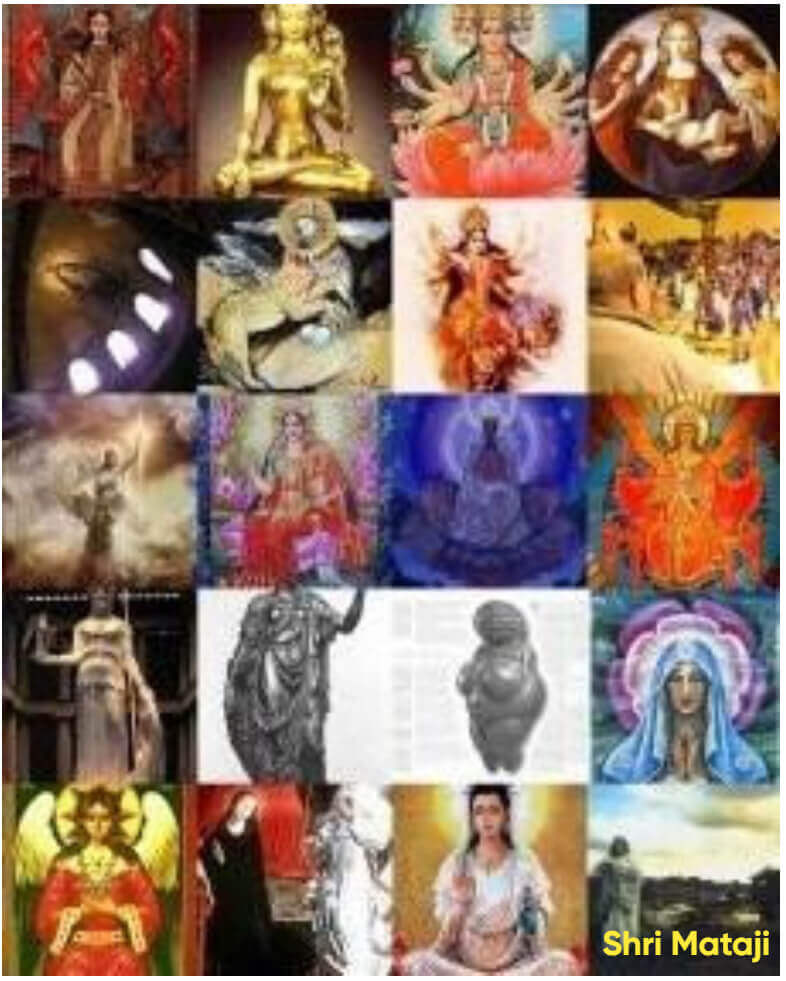
The Kitab Al Munir: An Inquiry into the Identity of the Pre-Quranic “Book of Enlightenment”
"Yet there is among men such a one as disputes about Allah, without knowledge, without guidance and without the Book of Enlightenment" surah 22:7-8 Al Hajj. According to Abdullah Yusuf Ali "There is no doubt about the literal meaning of the words, 'the Book of Enlightenment'.” But where is this non-Islamic scripture without which the Quran declares it is impossible for Muslims to know about God Almighty?




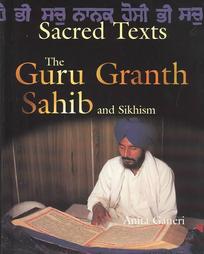
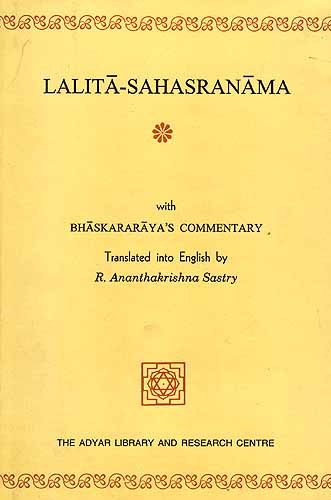
Which is the Kitab al-munir, the Book of Enlightenment?
Table of Contents
1. Introduction: The Unidentified Scripture
The Holy Quran, the central religious text of Islam, makes several explicit references to a mysterious scripture termed the Kitab al-Munir, or the “Book of Enlightenment.” These references, found in Surahs such as Al-Hajj and Ali 'Imran, present a profound theological puzzle. The Quran declares that without this “Book of Enlightenment,” individuals are left to dispute matters of faith “without knowledge, without guidance.”[1] This paper will argue that the Kitab al-Munir, by necessity, must be a non-Islamic scripture. This argument is grounded in the core Islamic belief that the Quran is the final and only scripture revealed to the Muslim community. Through a detailed exegesis of the relevant verses and an examination of classical and modern Islamic scholarship, this paper will demonstrate that the “Book of Enlightenment” refers to pre-Quranic, and indeed pre-Abrahamic, revelations that lie outside the traditional lineage of Semitic prophecy.
2. Exegesis of Surah 22:7-9 (Al-Hajj)
The most direct and powerful reference to the Kitab al-Munir appears in Surah Al-Hajj. The verses establish a clear trichotomy of deficiencies for those who dispute the divine without proper authority:
“And verily the Hour will come: There can be no doubt about it, or about (the fact) that Allah will raise up all who are in the graves. Yet there is among men such a one as disputes about Allah, Without knowledge, without guidance and without the Book of Enlightenment, disdainfully bending his side in order to lead men astray from the path of Allah: For him there is disgrace in this life, and on the Day of Judgement, We shall make him taste the Penalty of Burning (Fire).”[2]
The Arabic phrase, wa-la kitabin munir (وَلَا كِتَـٰبٍ مُّنِيرٍ), is consistently translated by scholars as “a Book of Enlightenment” or “an illuminating Scripture.”[3] The structure of the verse distinctly separates three necessary components for true faith: 'ilm (knowledge), huda (guidance), and the Kitab al-Munir. Classical commentators like Ibn Kathir affirm this distinction, explaining that such disputers lack “correct rational thought” and “clear transmitted text.”[4] The fact that the “Book of Enlightenment” is listed as a separate and necessary item alongside general guidance and knowledge strongly implies it is a specific, tangible source of divine wisdom.
3. Exegesis of Surah 3:183-184 (Ali 'Imran)
Surah Ali 'Imran provides crucial historical context, placing the Kitab al-Munir in a pre-Islamic prophetic timeline:
“They said: ‘Allah took our promise not to believe in a messenger, unless he showed us a sacrifice consumed by fire (from heaven.)’ Say: ‘There came to you messengers before me with Clear Signs, and even with what ye ask for: Why then did ye slay them, if ye speak the truth?’ Then if they reject thee, so were rejected messengers before thee who came with Clear Signs, and the Scriptures, and the Book of Enlightenment.”[5]
Here again, the Quran lists three distinct proofs brought by past messengers: al-bayyinat (Clear Signs), al-zubur (the Scriptures, often associated with the Psalms), and al-kitab al-munir (the Book of Enlightenment). The renowned translator Abdullah Yusuf Ali, in his commentary, acknowledges the distinct nature of these three items.[6] While he interprets the Kitab al-Munir somewhat vaguely as “the fundamental guide to conduct,” his analysis confirms it is a separate entity from the other prophetic proofs. Tafsir al-Jalalayn identifies the “Illuminating Book” with the Torah and Gospel, but this interpretation is problematic as the verse speaks of messengers *before* Muhammad, and the context suggests a broader history of revelation.[7]
4. The Irrefutable Case for a Non-Islamic Scripture
The central argument of this paper rests on a foundational principle of Islamic theology: the Quran is the final, complete, and sole scripture for the Muslim ummah. If the Kitab al-Munir were an Islamic scripture, it would either be the Quran itself or a text that has been lost or superseded. However, the Quranic verses clearly speak of it as a pre-existing source of enlightenment necessary for true knowledge of God. This leads to an irrefutable conclusion: the Kitab al-Munir must be a non-Islamic scripture.
The adishakti.org website posits that the collective silence from Islamic scholars on the identity of this book stems from a reluctance to acknowledge a source of divine wisdom outside the Abrahamic faiths.[8] The Quran itself states that messengers with the “Book of Enlightenment” came *before* the era of the well-known Semitic prophets. Since Abraham, Moses, and Jesus are not recorded as having brought a scripture by this name, the reference must point to more ancient, non-Abrahamic traditions. The website suggests that the Hindu scriptures, such as the Vedas and Puranas, which predate the Abrahamic religions, fit the description of a “Book of Enlightenment.” This is a compelling argument, especially given the Islamic tradition that Allah sent 124,000 prophets to all nations on Earth.[9]
5. Conclusion: The Resounding Warning
The Quran’s reference to the Kitab al-Munir is not a mere historical footnote; it is a profound and enduring challenge to believers. It suggests that a complete understanding of the divine requires an intellectual and spiritual openness that transcends the boundaries of a single tradition. The inability of mainstream Islamic scholarship to definitively identify this “Book of Enlightenment” lends credence to the theory that it lies outside the conventional Abrahamic framework. The Quran itself issues a stark warning to those who ignore this essential source of wisdom, a warning that resonates with resounding clarity:
“verily the Hour will come: There can be no doubt about it, or about (the fact) that Allah will raise up all who are in the graves. Yet there is among men such a one as disputes about Allah, Without knowledge, without guidance and without the Book of Enlightenment, disdainfully bending his side in order to lead men astray from the path of Allah: For him there is disgrace in this life, and on the Day of Judgement, We shall make him taste the Penalty of Burning (Fire).”[10]
6. References
[1] Quran 22:8, Translation by Abdullah Yusuf Ali.[2] Abdullah Yusuf Ali, The Holy Qur'an, Amana Corporation, 1989, Surah 22:7-9.
[3] See translations by Mohammad Asad, Marmaduke Pickthall, and others at Alim.org.
[4] Tafsir Ibn Kathir, commentary on Surah 22:8, available at QTafsir.
[5] Abdullah Yusuf Ali, The Holy Qur'an, Amana Corporation, 1989, Surah 3:183-184.
[6] Abdullah Yusuf Ali, The Holy Qur'an, Note 490.
[7] Tafsir al-Jalalayn, commentary on Surah 3:184, available at QuranX.
[8] “Kitab Al Munir (Book of Enlightenment),” adishakti.org.
[9] While the exact number is debated, the tradition of numerous prophets sent to all nations is widely accepted in Islam. See discussion on Islam Stack Exchange.
[10] Abdullah Yusuf Ali, The Holy Qur'an, Amana Corporation, 1989, Surah 22:7-9.
Kitab Al Munir: Book Of Enlightenment
For centuries, a peculiar and profound silence has enveloped the Islamic world. It concerns a specific divine revelation mentioned in the Qur’ān itself: the Kitāb Al‑Munīr, or “Book of Enlightenment.” Despite the Qur’ān’s clear assertion that this scripture was revealed to messengers who came long before Prophet Abraham, it remains conspicuously absent from Islamic discourse. No scholar, theologian, or imam discusses it, seeks it, or even acknowledges its existence as a tangible book. This collective amnesia is not accidental; it stems from a deep‑seated fear of where the search for this book might lead.
The Qur’ānic Challenge and the Uncomfortable Truth
The Qur’ān (3:183–184, 22:7–9) speaks of messengers sent before Abraham who were granted three things: Clear Signs (miracles or proofs), Scriptures (revealed texts), and the Book of Enlightenment (Kitāb Al‑Munīr). The logic is inescapable: if this Book of Enlightenment predates Abraham, Moses, and Jesus, its origins lie outside the Abrahamic tradition. The only major religious traditions with scriptures that predate Abraham are the ancient faiths of India—primarily Hinduism, and its offshoots, Buddhism and Sikhism. It is here, in the vast and ancient body of Vedic literature, that we find scriptures which fulfill all four Qur’ānic criteria.
Muslim scholars, however, have avoided this conclusion. They have rendered the “Book of Enlightenment” into an abstract, non‑physical concept—a mysterious set of divine rules common to all religions. This interpretation effectively conceals the revelation. The irony is stark: they admit “Kitāb Al‑Munīr” literally means “Book of Enlightenment,” yet they redefine it to mean something else entirely.
Why the silence? The fear of humiliation and the loss of exclusivity
The reason for this 1,400‑year‑long silence is simple: acknowledging the Book of Enlightenment would mean admitting that ultimate knowledge of God (Allah) requires a scripture outside of Islam. The Qur’ān itself guides believers to this book to know God, particularly through understanding His Spirit (Rūḥ). To seek it out would be a humiliating admission for a religion that often presents itself as the final and most complete revelation. It is far safer for religious authorities to bury their heads in the sand than to confront a truth that challenges their exclusive claim to divine knowledge.
“There are many ways of preventing the access of people to the truth. One is to tamper with it… Another is to conceal it altogether.”
As Yusuf Ali noted, this is precisely what has happened. The keepers of religious doctrine have, for centuries, shielded their followers from seeking knowledge elsewhere, fearing it would expose them to the truth of Allah’s other messengers and their revelations.
The Nature of the Qur’ān vs. The Purpose of Enlightenment
This is not to diminish the Qur’ān’s role. The Qur’ān is a book of guidance, wisdom, and law (Sharī‘ah). It was revealed to a specific people—the pagan tribes of 7th‑century Arabia—to instill in them a consciousness of the one Almighty God and to provide a just social order. Its greatness lies in its prophecies, its moral teachings, and its role as a guide for humanity.
However, it is decidedly not the Book of Enlightenment. Enlightenment, by definition, is the dispelling of ignorance, the revelation of profound truths, and the freeing of the mind from prejudice and superstition. While the Qur’ān speaks of God, the Day of Judgment, and righteous living, it does not delve into the esoteric knowledge of the human spirit—the nature of the soul, the structure of the inner self, or the direct, experiential knowledge of the Divine. As Professor Mahmoud M. Ayoub observes, the Qur’ān is not a unified philosophical treatise but a collection of revelations addressing the circumstances of its time. Its strength is as a guide, not an encyclopedic source of spiritual enlightenment.
The profound knowledge of God’s Spirit (Rūḥ, known in other traditions as the Holy Spirit or Ādi Śakti) is the very foundation of the Book of Enlightenment and is found elsewhere—chiefly in the ancient scriptures of India.
The Harmony of Religions and the One Essential Message
The Qur’ān itself affirms the unity and harmony of all divine revelations. Verses like 5:48 and 42:13–15 make it clear that Allah sent messengers to every nation and that the diversity of religious traditions is a divine mystery, a test of faith, and a source of spiritual strength. The core message has always been the same: surrender to the one Reality.
The stature of prophets from all traditions is immense. Abraham, Moses, Jesus, and Muhammad are towering figures. But so are the ancient sages and messengers of India, like the ṛṣis who revealed the Vedas. To accept the Qur’ān is, by its own logic, to accept the revelations that came before it, including the Book of Enlightenment. To deny them is to deny a part of Allah’s own message.
“The various Divine Revelations… are unique and self‑authenticating holy ways of life, not just various sets of doctrines. Allah assures humanity in His Holy Koran that such diversity should not be regarded as the deviation of one tradition or another from the truth, but as a Divine Mystery which will be explained and illuminated by Allah Himself in a context of consciousness which transcends history.” — from The Holy Qur’ān 22:67‑70 (inner‑meaning exposition)
The Inner Jihād and the Path to True Knowledge
The ultimate goal of religion is not just outward compliance with laws, but inner transformation. This is the “greater jihād” (jihād al‑akbar)—the inner struggle against the ego and the impurities of the soul to awaken to divine reality. As the Prophet Muhammad said, “Man is asleep and when he dies he awakens.” The inner jihād is the process of awakening in this very life.
This awakening, this true knowledge of God, is impossible without the enlightenment provided by His Spirit. And the detailed knowledge of this Spirit—its nature, its power (Kundalini), its relationship to the human subtle system, and the techniques to realize it—is the exclusive domain of the Kitāb Al‑Munīr. The Qur’ān points to the destination, but the Book of Enlightenment provides the map and the vehicle for the journey.
Conclusion: Where is the Book of Enlightenment?
So, where is this book? The Qur’ān assures us it exists. It tells us it was given to messengers before Abraham. It tells us that without it, people dispute about Allah without knowledge, guidance, or enlightenment. The search, therefore, must logically lead us to the most ancient body of revealed scripture on Earth: the Sanātana Dharma, or the Hindu traditions.
The Vedas, Upanishads, Purāṇas, and the Bhagavad Gītā are vast repositories of spiritual knowledge. They contain detailed expositions on the nature of God, the soul, the cosmos, and the path to liberation. They describe the inner spiritual anatomy of human beings (chakras, Kuṇḍalinī) and provide the practical methods for achieving Self‑Realization—the direct experience of the Divine within. It is within this vast library of spiritual enlightenment that the Kitāb Al‑Munīr, the Book of Enlightenment, is to be found.
The challenge for the Muslim world, and indeed for all followers of religious dogma, is to overcome centuries of conditioning and false pride. It is to accept the truth, wherever it may be found, and to embrace the unity of all divine revelations as a single, magnificent message from the One Source. To do otherwise is to remain in the very state of ignorance and disputation that the Qur’ān warns against, awaiting an explanation on the Day of Judgment that is already available today to those who seek it with an open heart and mind.