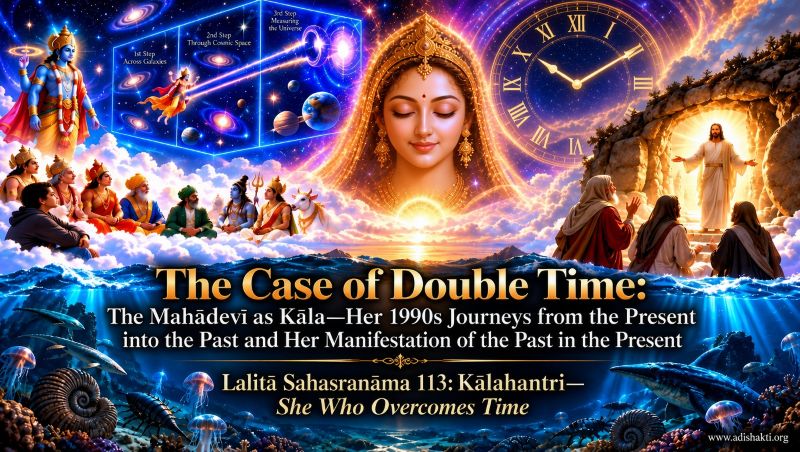
 The Case of the Double Time
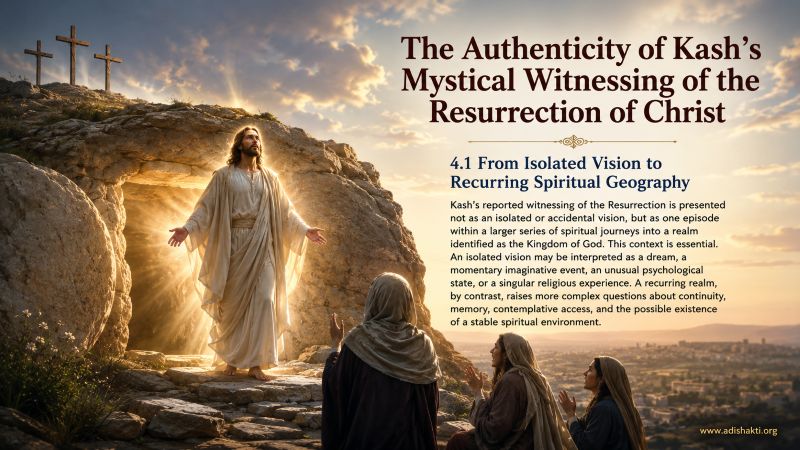 the Resurrection of Christ
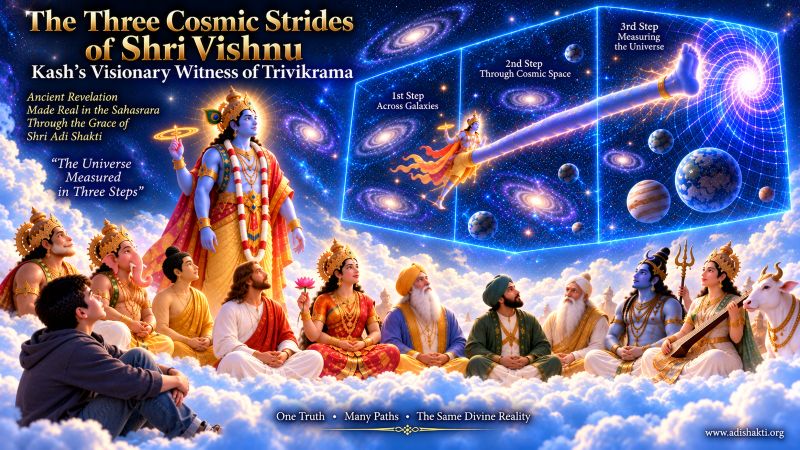 Vishnu measures Universe
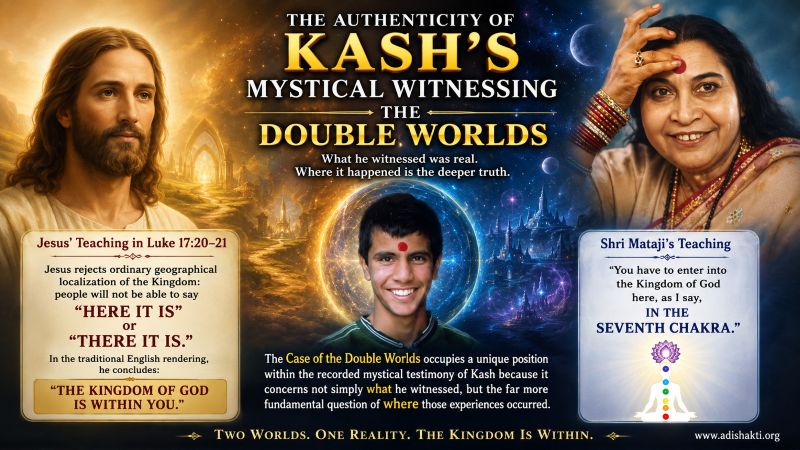 Double Worlds
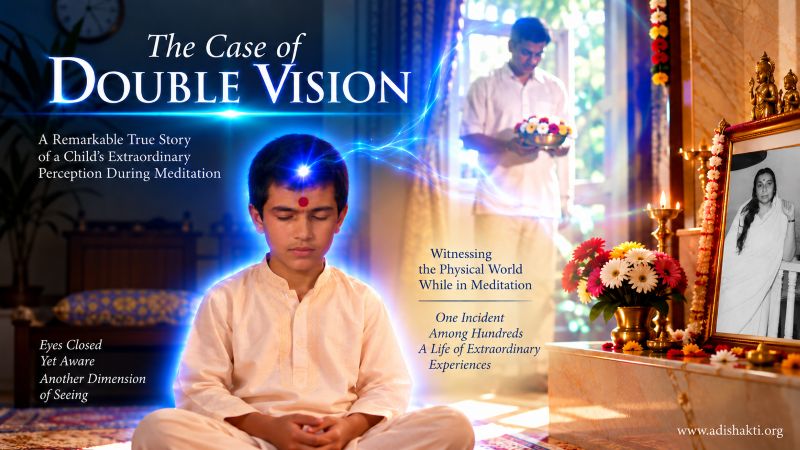 The Case of the Double Vision
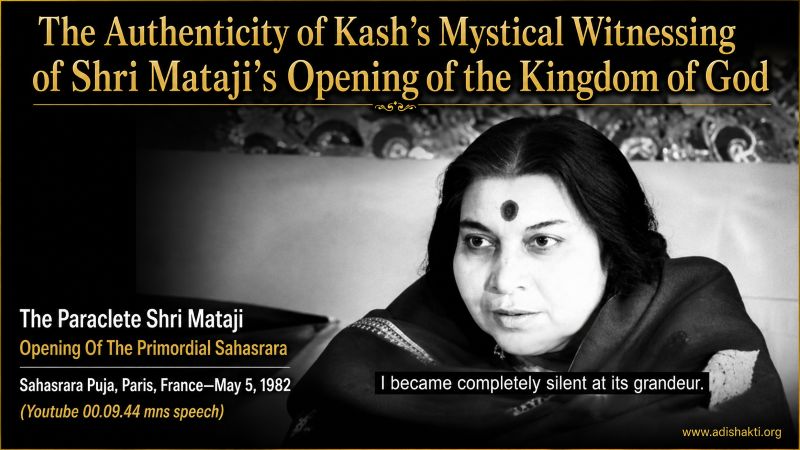 the Kingdom of God
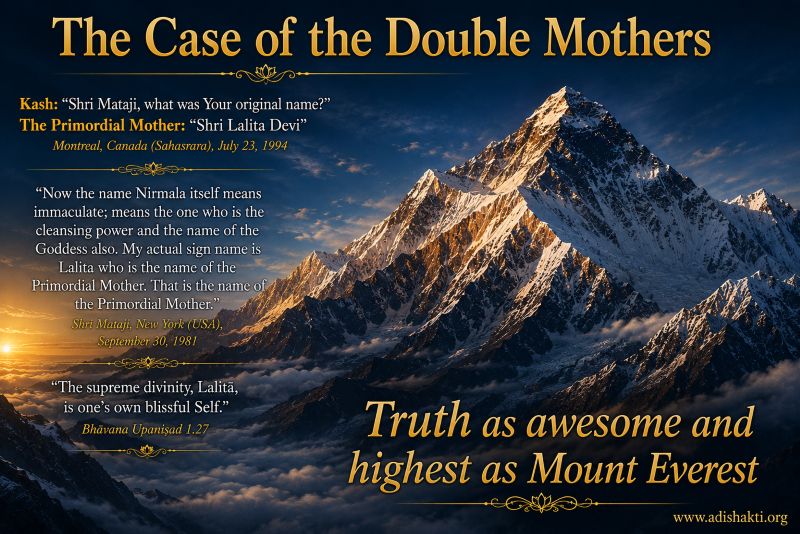 Double Mothers
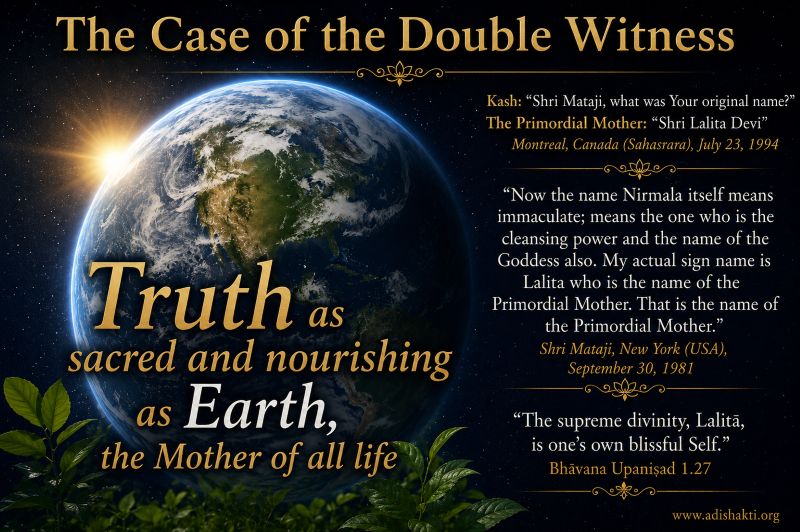 The Case of the Double Witness
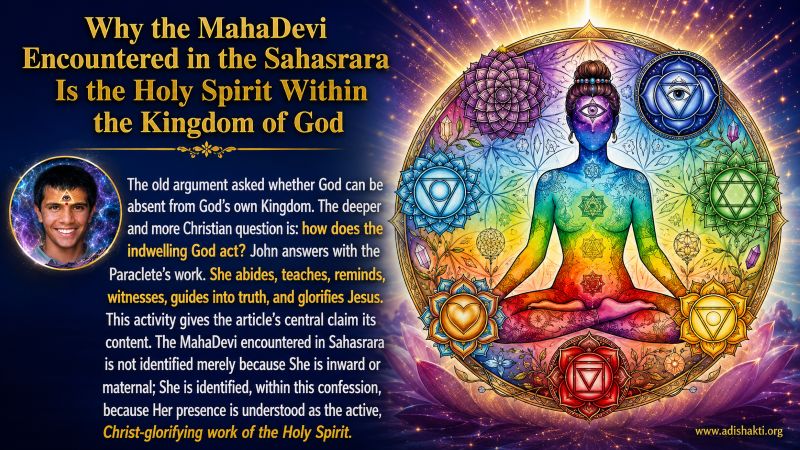 Why the MahaDevi Encountered
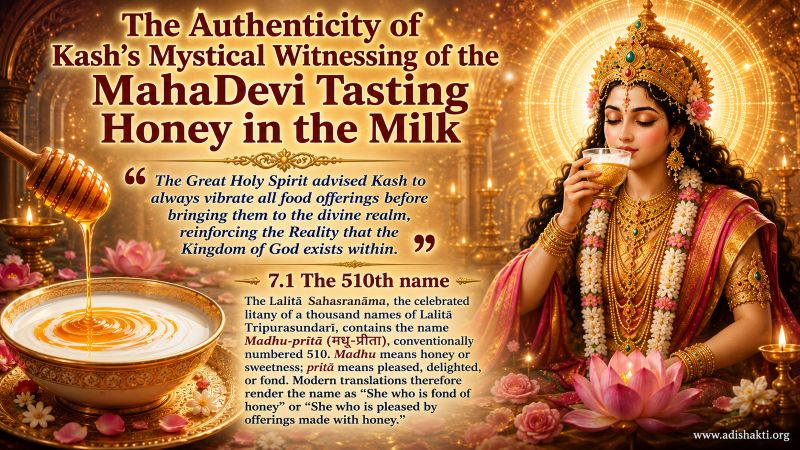 Honey in the Milk
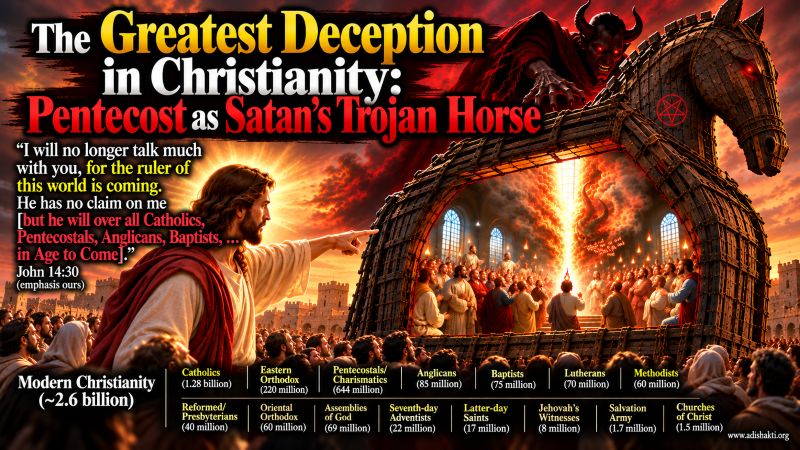 The Greatest Deception in Human History: Pentecost as Satan's Trojan Horse
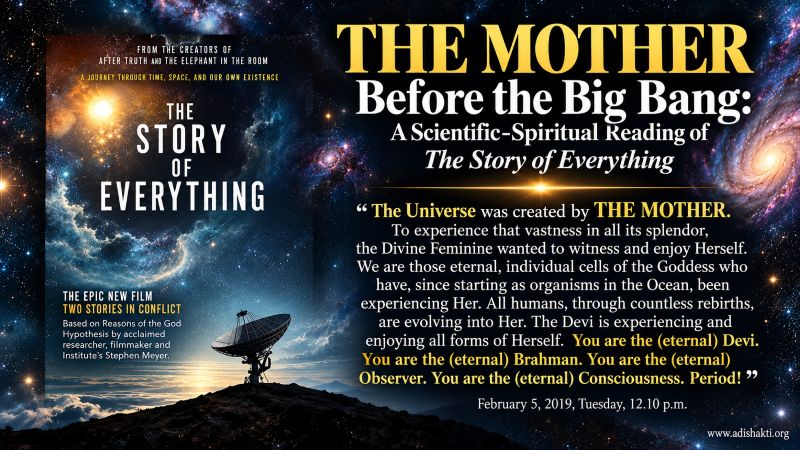 THE MOTHER Before the Big Bang: A Scientific-Spiritual Reading of The Story of Everything documentary
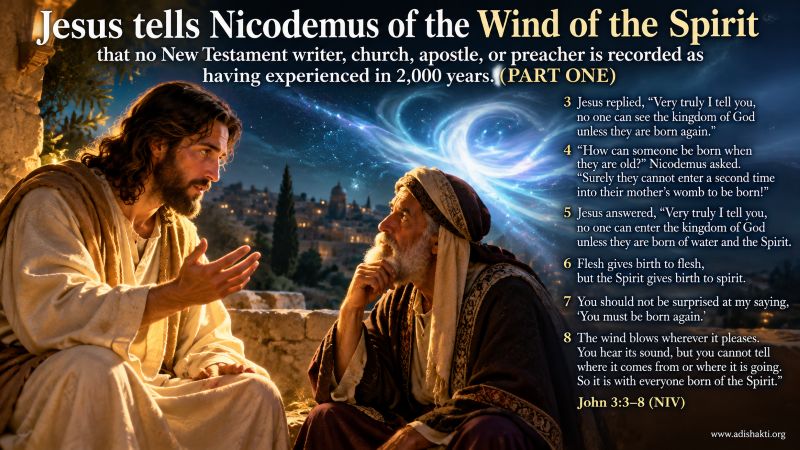 The Cool Breeze as the Exclusive Documented Claim of Spirit-Birth: Shri Mataji’s Disciples and John 3:8
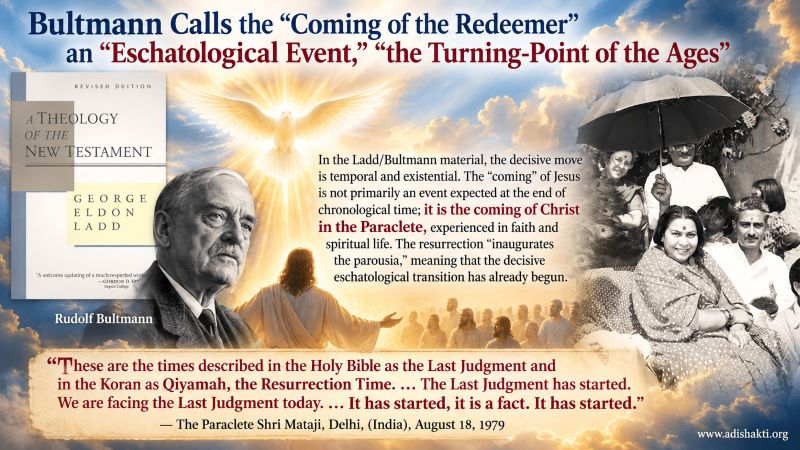 Bultmann Calls the “Coming of the Redeemer” an “Eschatological Event,” “the Turning-Point of the Ages”
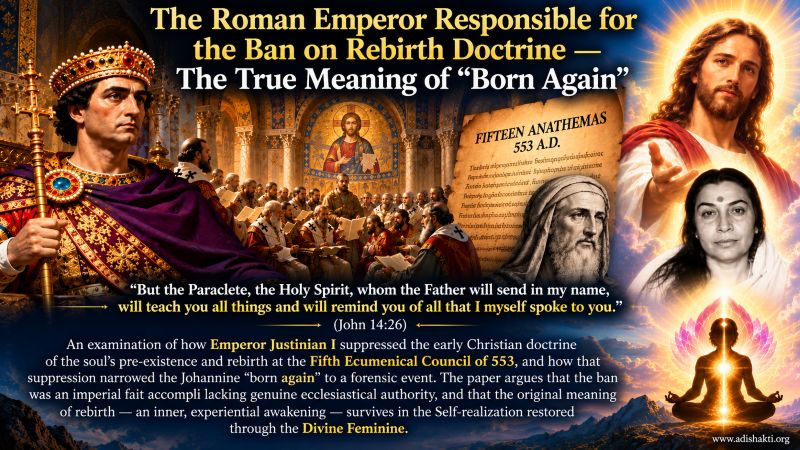 Reincarnation in Early Christianity — Lost Teachings and Suppressed Origins
 A New Axial Age Fulfilled: The Paraclete Shri Mataji and the Spiritual Transformation Foreseen by Karen Armstrong
 A New Axial Age Fulfilled: The Paraclete Shri Mataji and the Spiritual Transformation Foreseen by Karen Armstrong
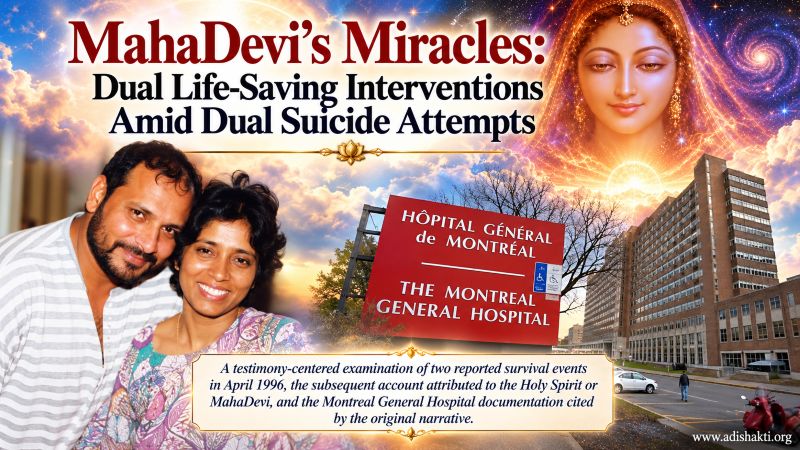 MahaDevi's Miracles
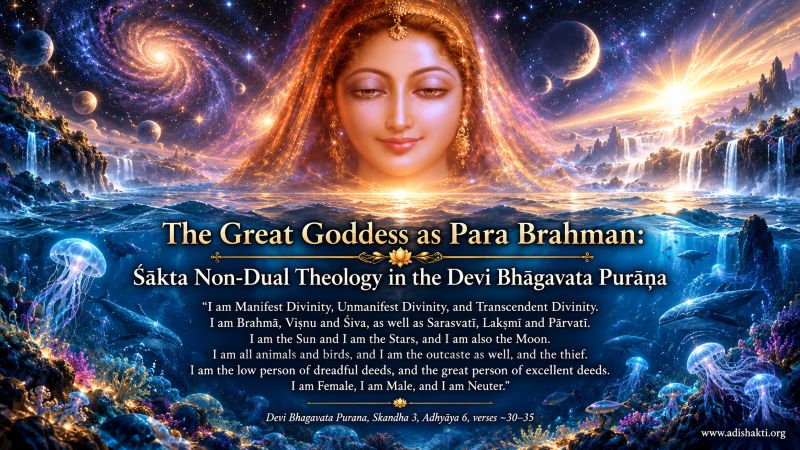 The Great Goddess as the Totality of Being
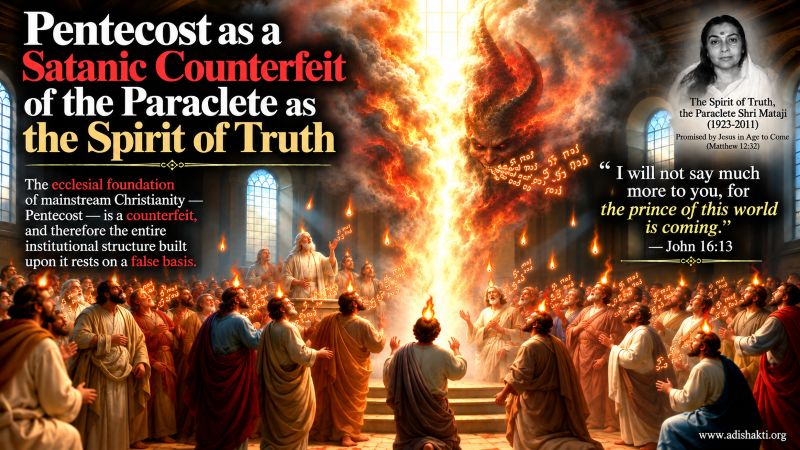 Pentecost as a Satanic Counterfeit
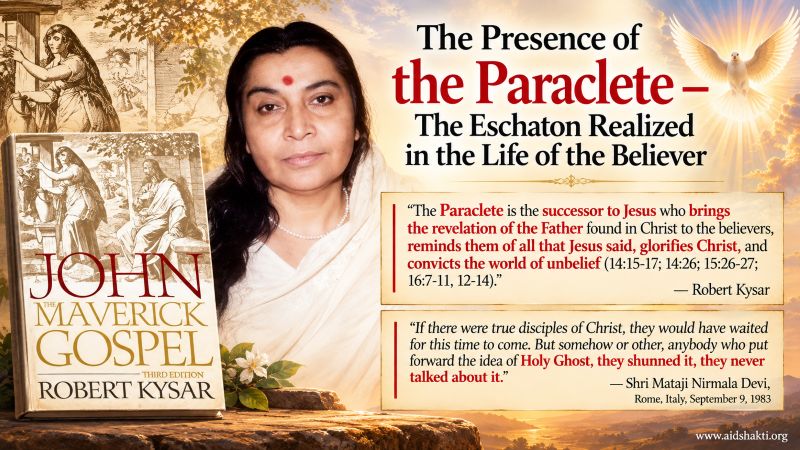 The Presence of the Paraclete – The Eschaton Realized in the Life of the Believer
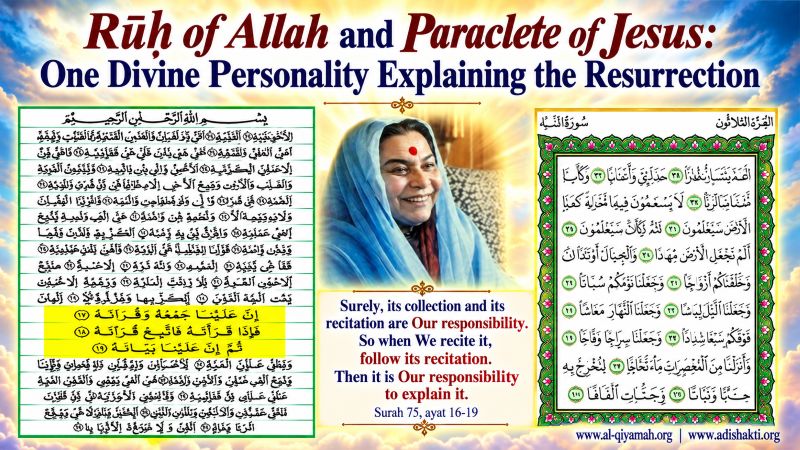 Rūḥ of Allah and Paraclete of Jesus: One Divine Personality Explaining the Resurrection
 Join-Shri-Mataji-The-Majestic-Call-of-Shri-Ganesha-and-the-Primordial-Mother
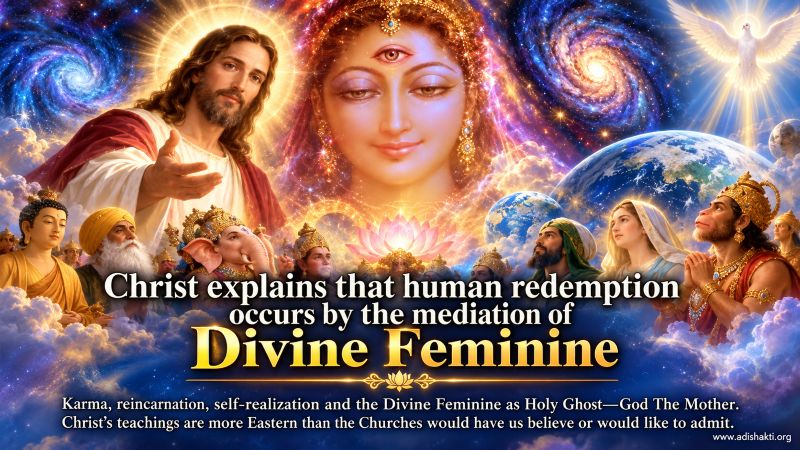 Christ-explains-human-redemption-occurs-by-mediation-of-Divine-Feminine
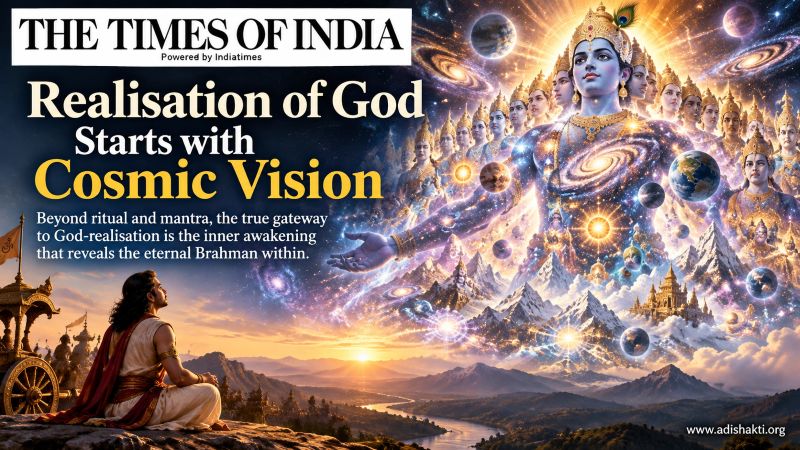 Realization of God Starts with Cosmic Vision
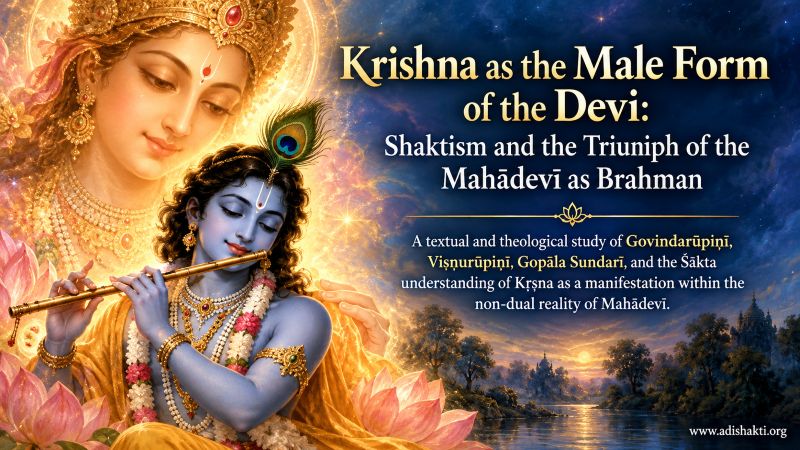 Krishna as Male Form of the Devi
 The Clay Oil Lamps
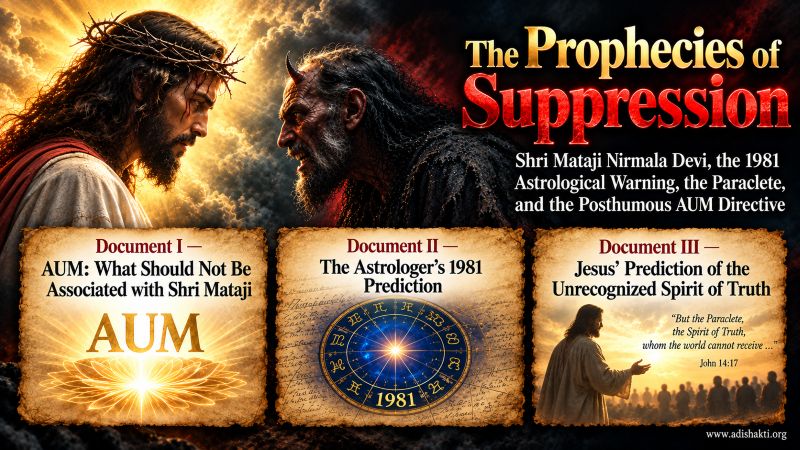 Shri Matajis Astrology Chart
 Walter Mercado — Visions of the New Millennium
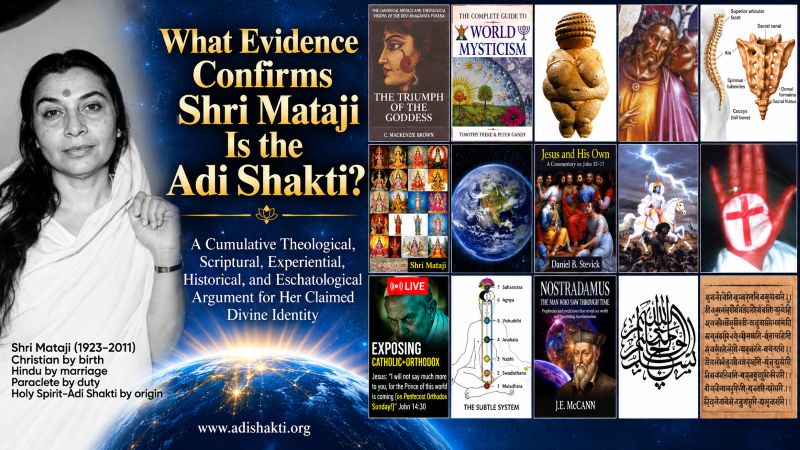 Shri Mataji — "I am the Adi Shakti. I am the One who ..."
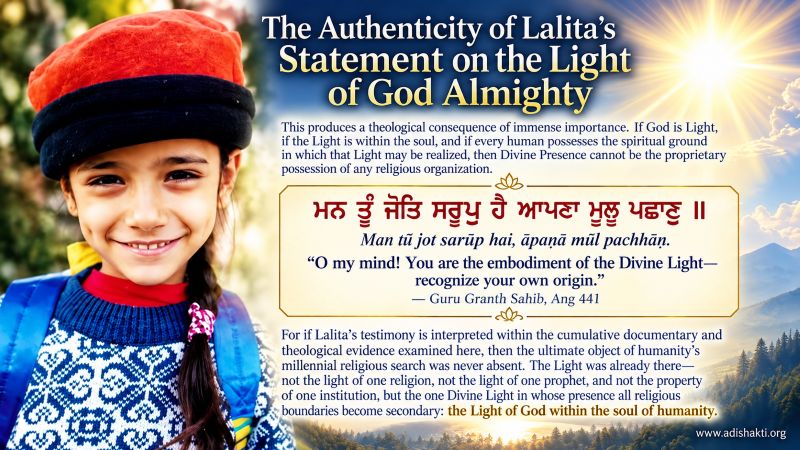 Witnessing Light — Authenticity of Witnessing the Light
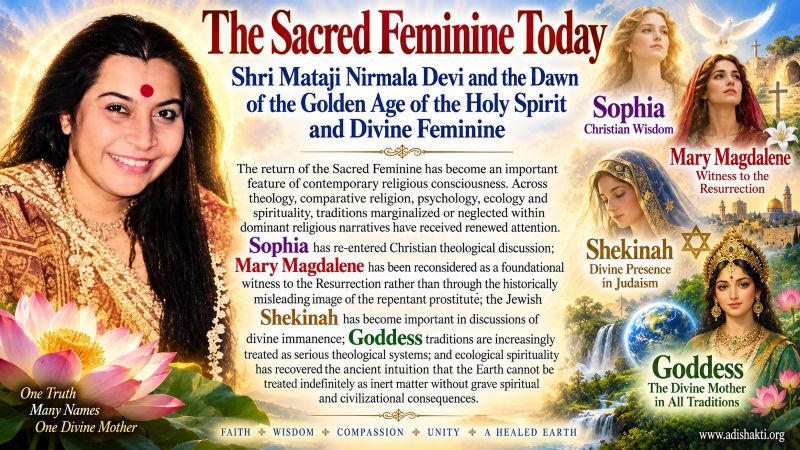 Divine Feminine — Presence of Mother in All Traditions
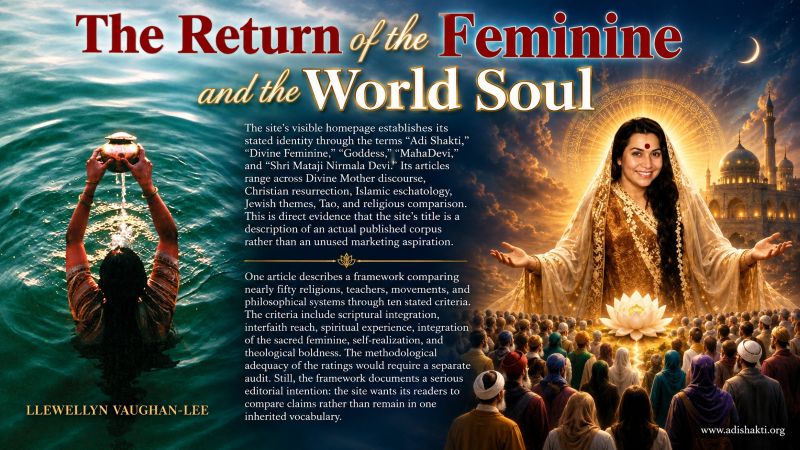 Vaughan-Lee — Return of Feminine and World Soul
 Jesus the Christ — ... and those who hear will live!
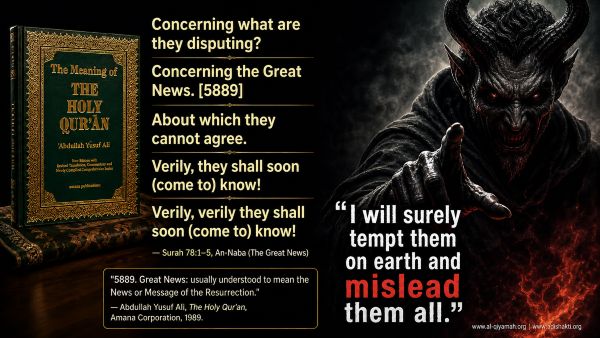 Allah (SWT) — Concerning what are they disputing?
 Shaykh Palazzi — Qur'an 17:104 and Return of Jews
 Huston Smith — Happy Ending and the Coming of Messiah
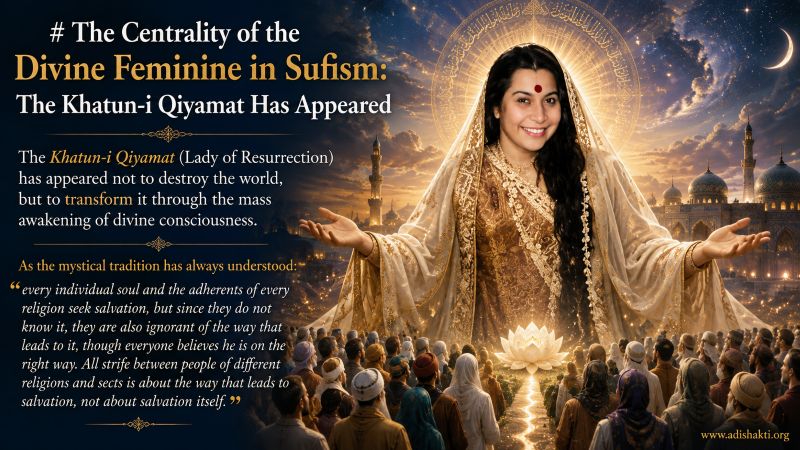 Khatun-i Qiyamat — The Lady of Qiyamat (The Resurrection)
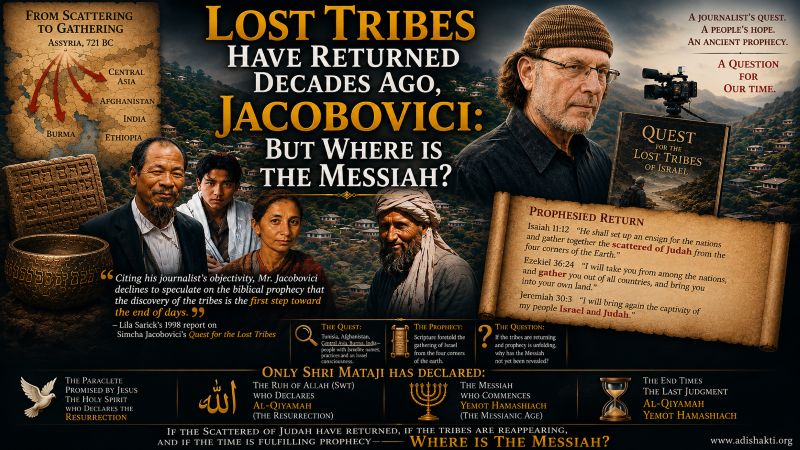 Simcha Jacobovici — But Where Is the Messiah, Jacobovici?
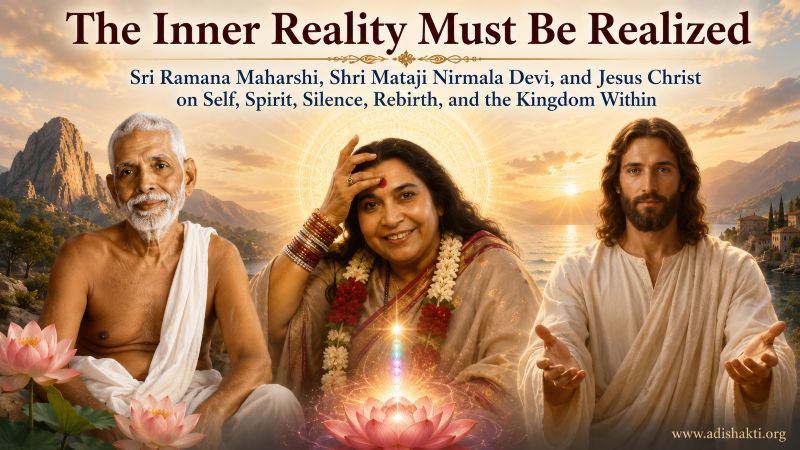 Ramana-Jesus-Mataji — The Inner Reality Must Be Realized
 13 Grandmothers — Prophecy of 13 Grandmothers
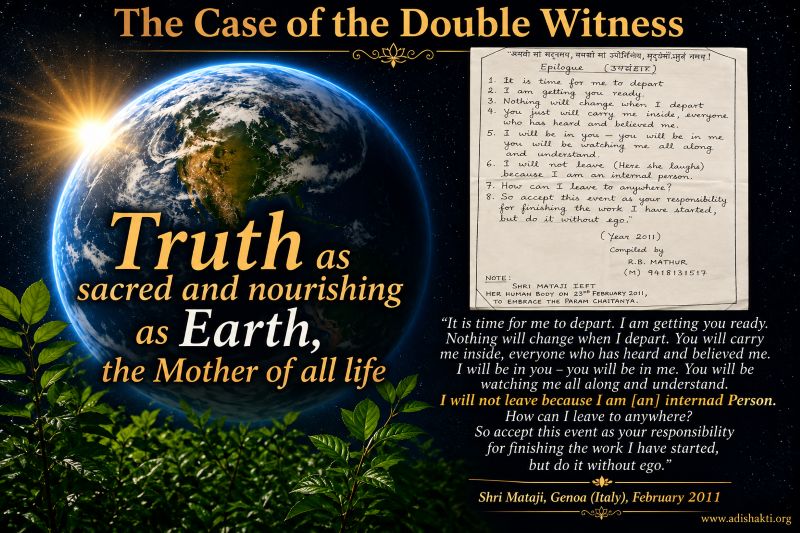 Shri Mataji — The Final Epilogue of Divine Departure
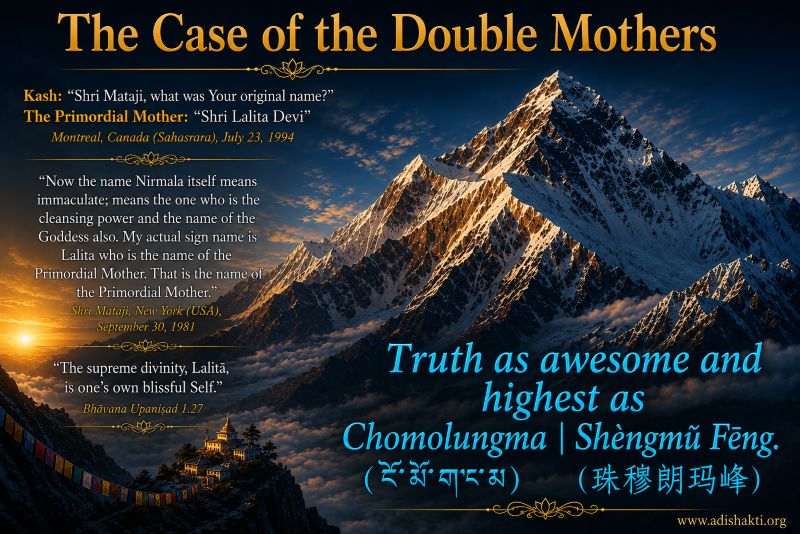 Kash — 双母案 (Shuāng Mǔ Àn)
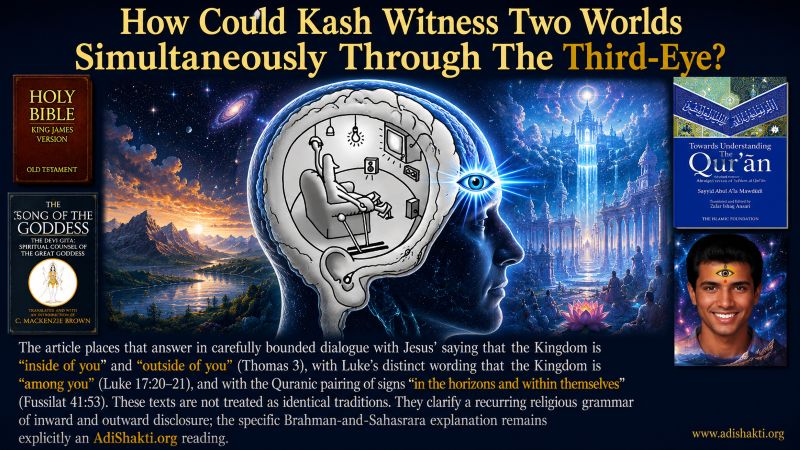 Kash — Witnessing With the Third Eye
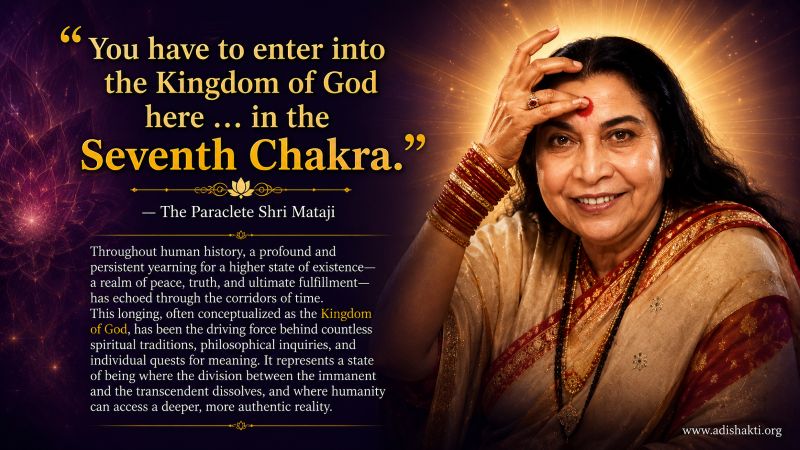 Shri Mataji — "You have to enter into Kingdom of God"
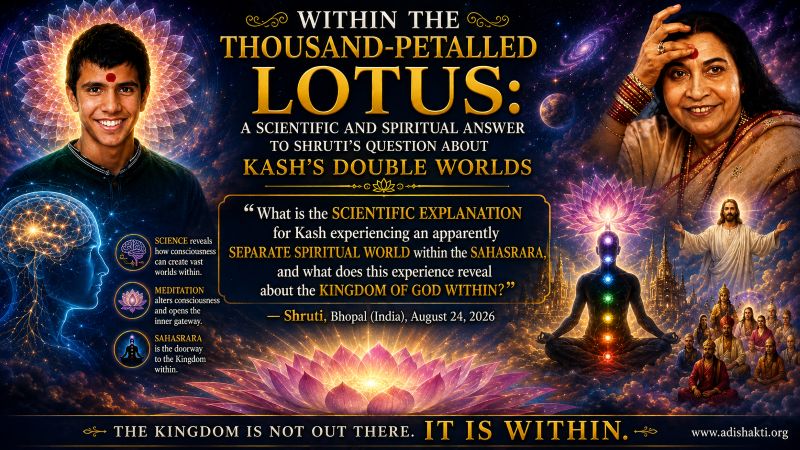 Shruti — "What is the scientific explanation?"
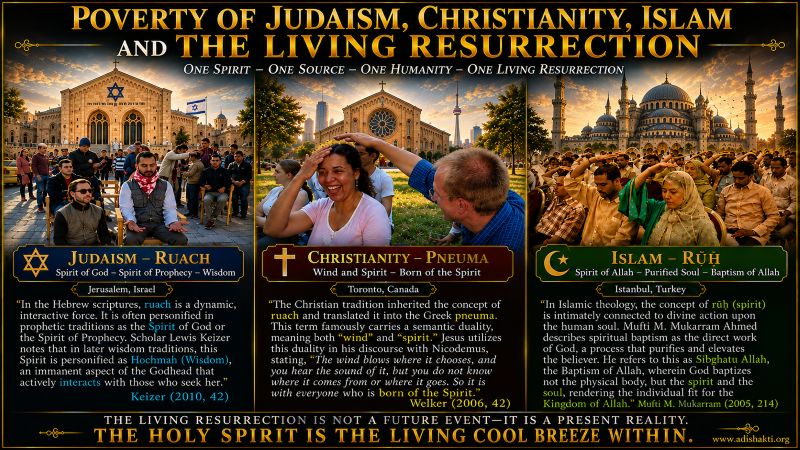 Living Resurrection — Poverty of Judaism, Christianity and Islam
 TIME Magazine — The “God of the present” End Times
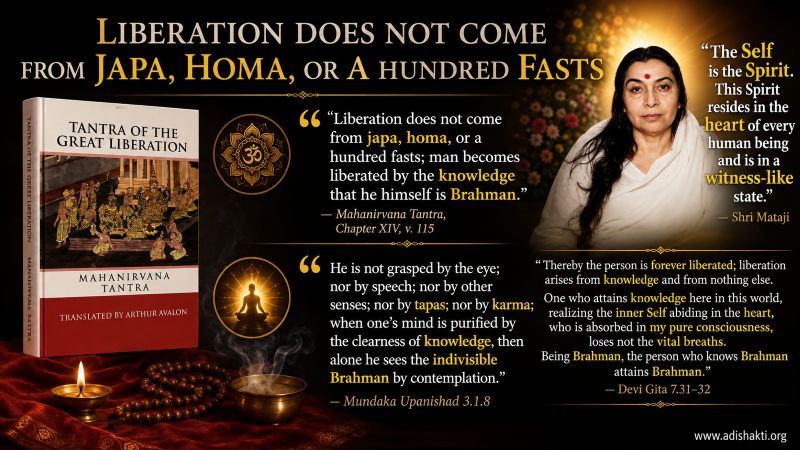 Mahanirvana Tantra — Liberating knowledge of Brahman
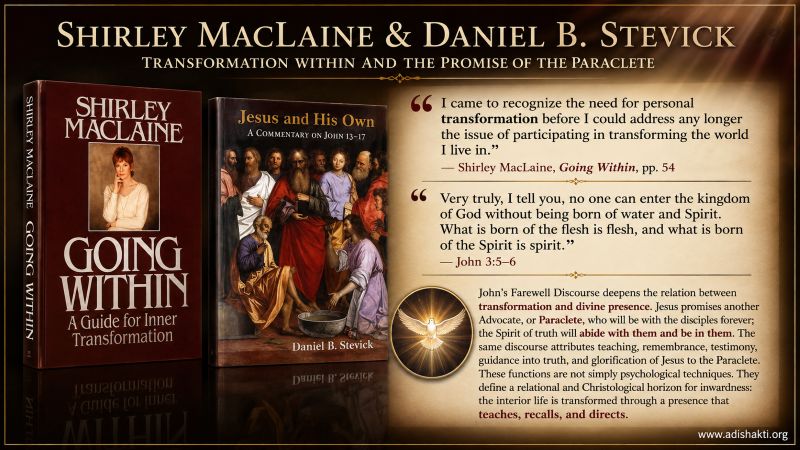 Shirley MacLaine — Going Within and Going Beyond
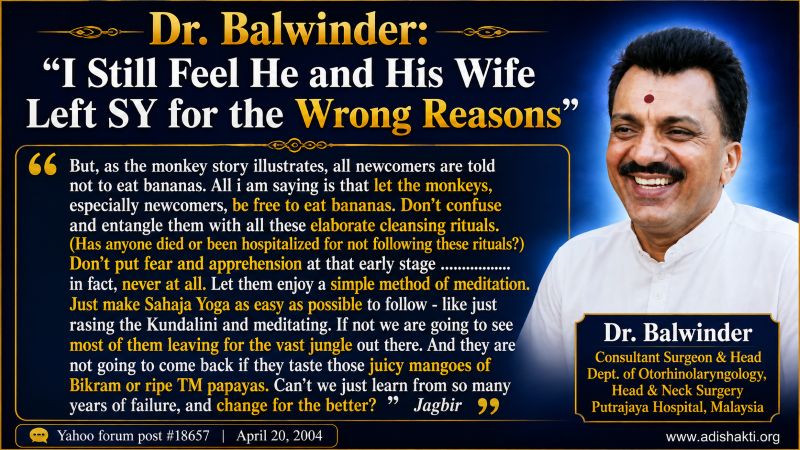 Dr. Balwinder Singh — SYs have left for wrong reasons
 A.C. Bhaktivedanta — Witnessing Celibacy Fallacy of ISCKON
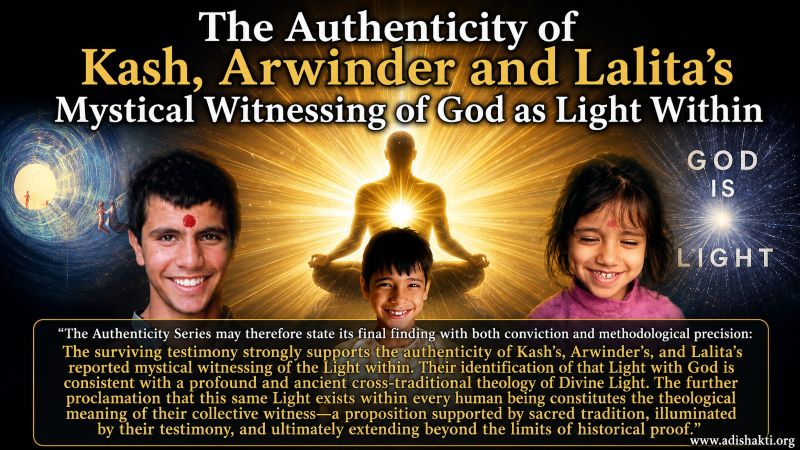 God Almighty — Witnessing the Light of God the Almighty
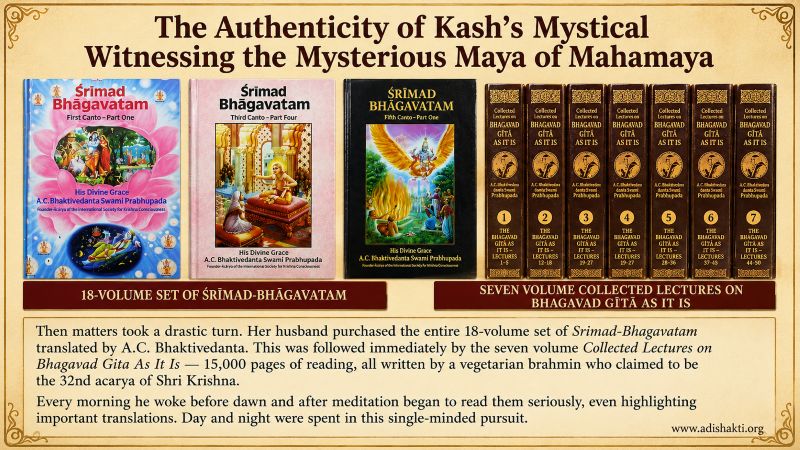 Shri MahaMaya — Witnessing the Maya of MahaMaya
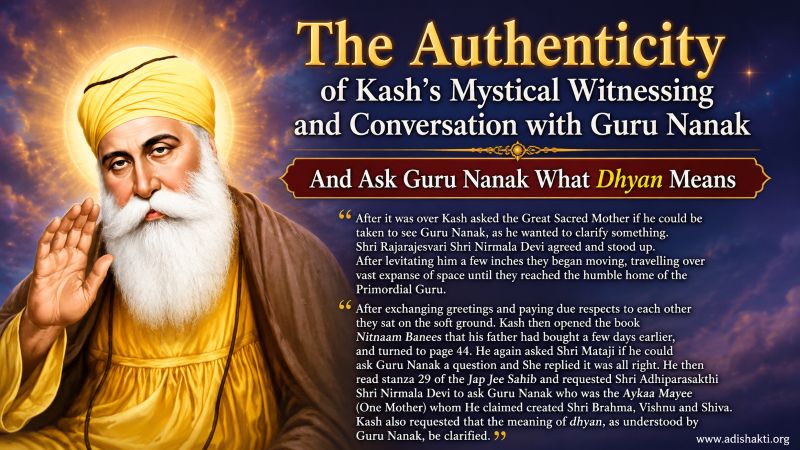 Guru Nanak — Witnessing the Guru of Sikhism
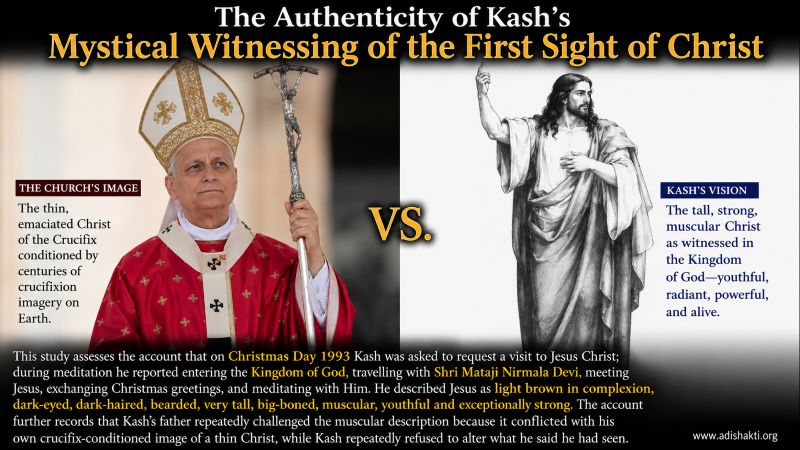 Jesus the Christ — Witnessing First Sight and Size of Christ
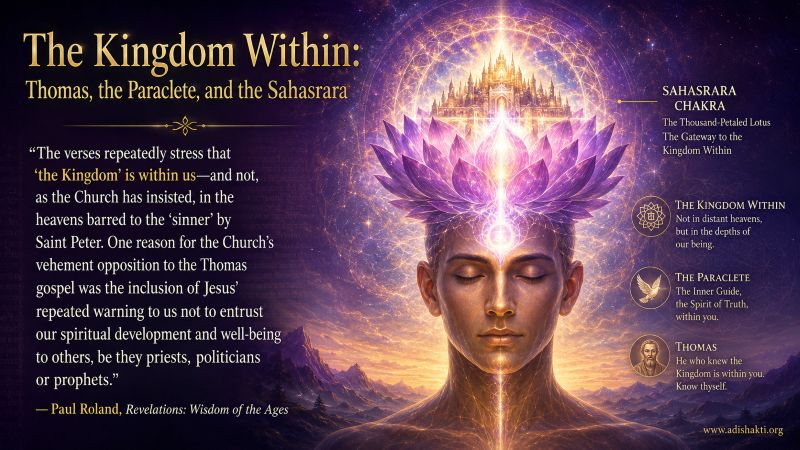 Paul Roland — The Kingdom of God is within us
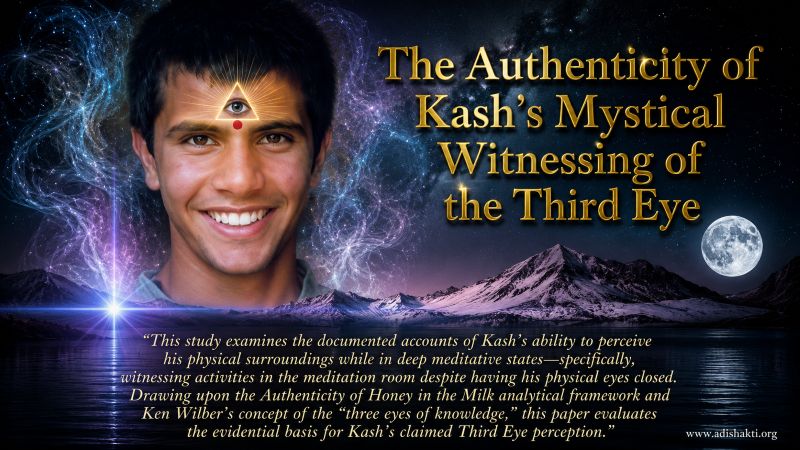 Third Eye — Witnessing Vision of the Third Eye
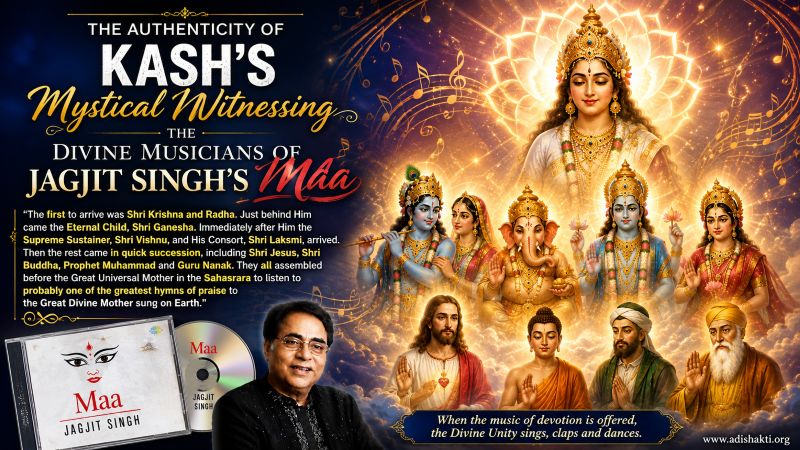 Jagjit Singh — Witnessing the Divine Musicians of Maa
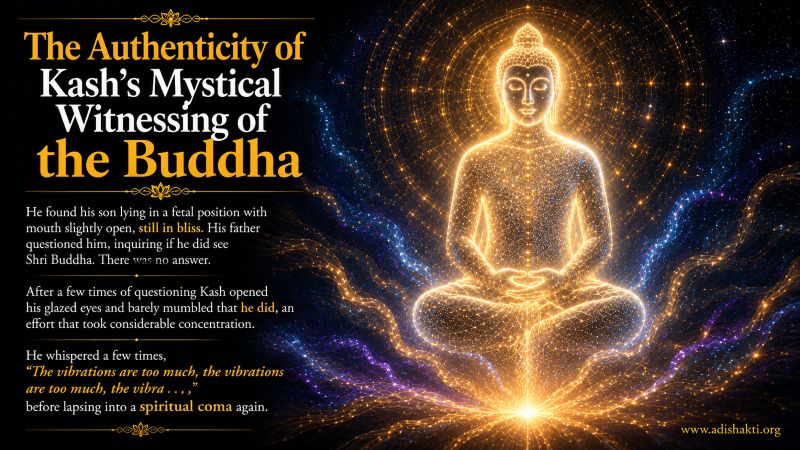 The Buddha — Witnessing the Living Buddha with Devi
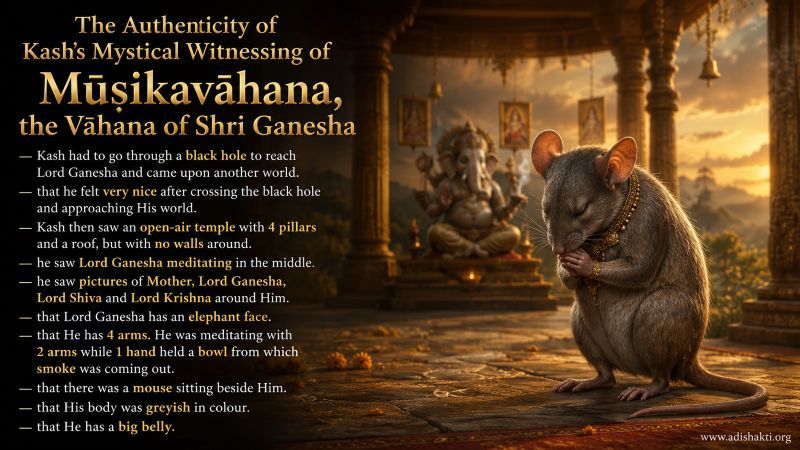 Mushikavahanaya — Witnessing Vāhana of Shri Ganesha
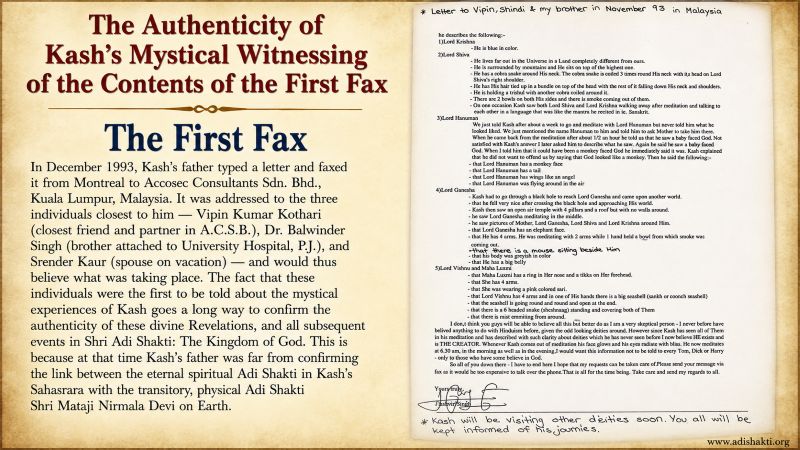 MahaDevi — Witnessing Contents of First Fax
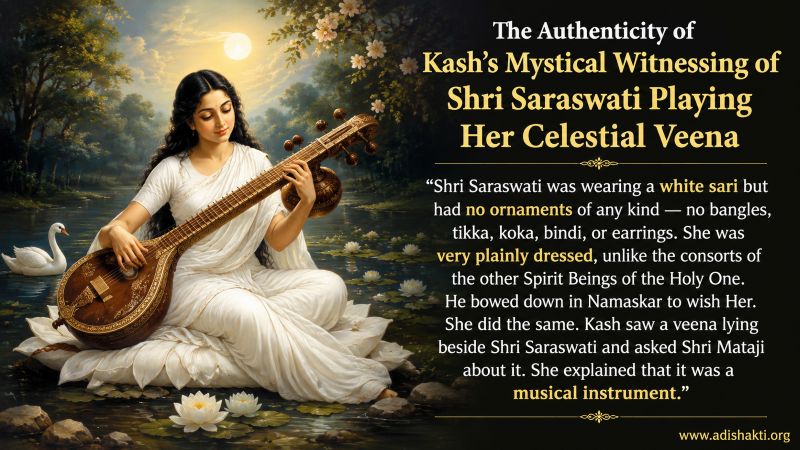 Shri Saraswati — Witnessing Her playing Veena
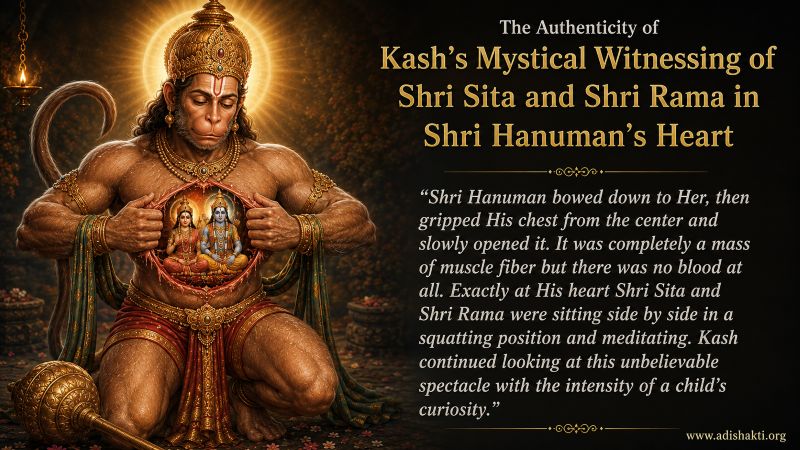 Shri Hanuman — Witnessing the Divine Couple in His Heart
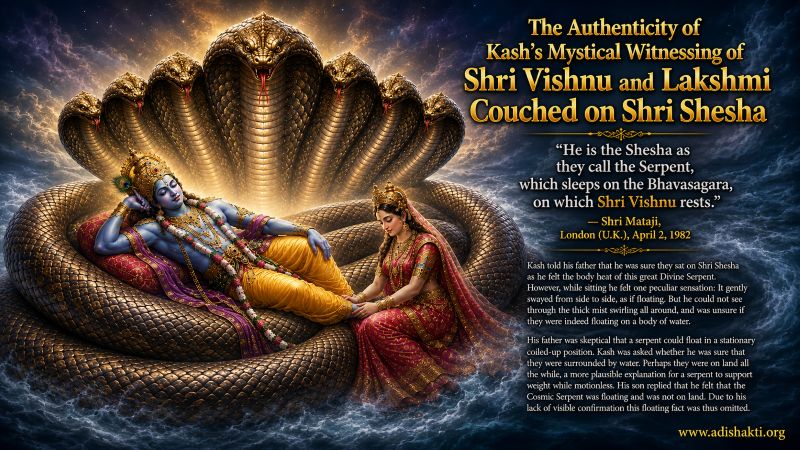 Shri Shesha — Witnessing the Primordial Shesha
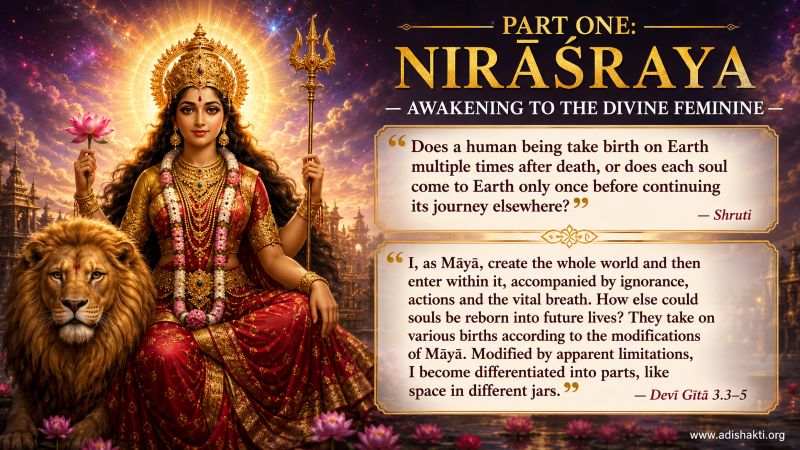 PART 1: NIRĀŚRAYA — Awakening to the Divine Feminine
 2: RESURRECTION — Awakening to the Resurrection
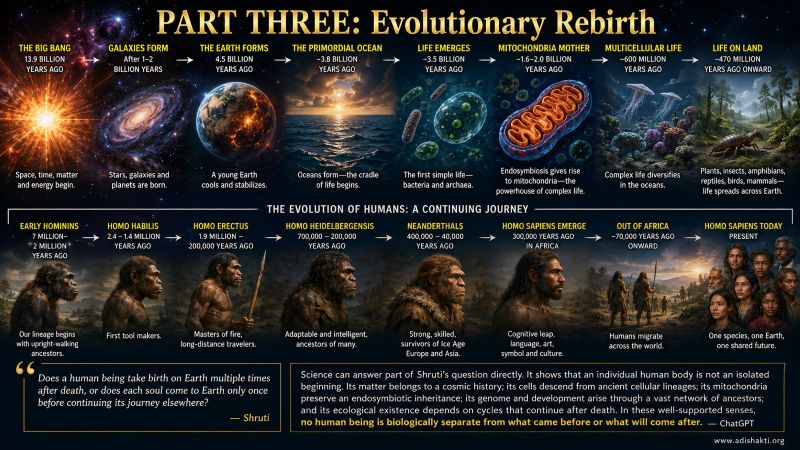 3: EVOLUTION — Awakening to Evolutionary Rebirth
 4: ETERNAL LIFE — Awakening to the Eternal Life
 One Divine Feminine — Comparisons of Religions and Gurus
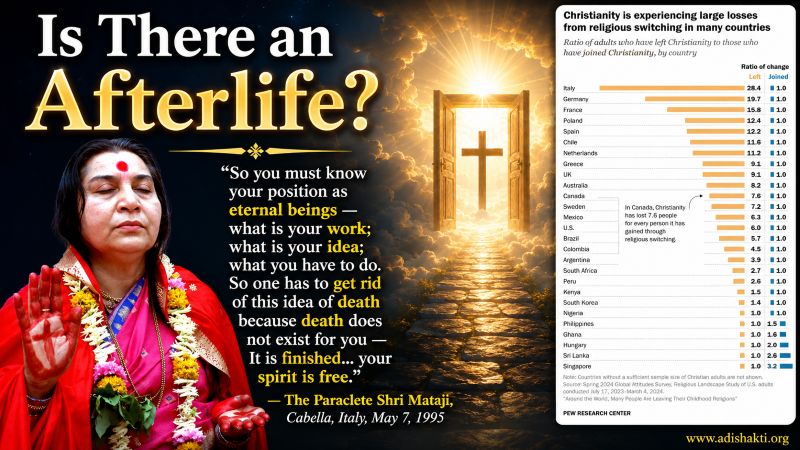
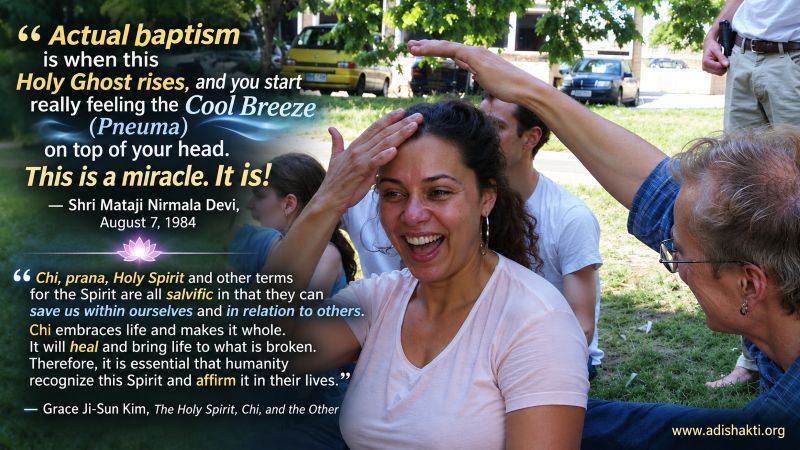 The Paraclete — Is There an Afterlife? Resurrection? ...
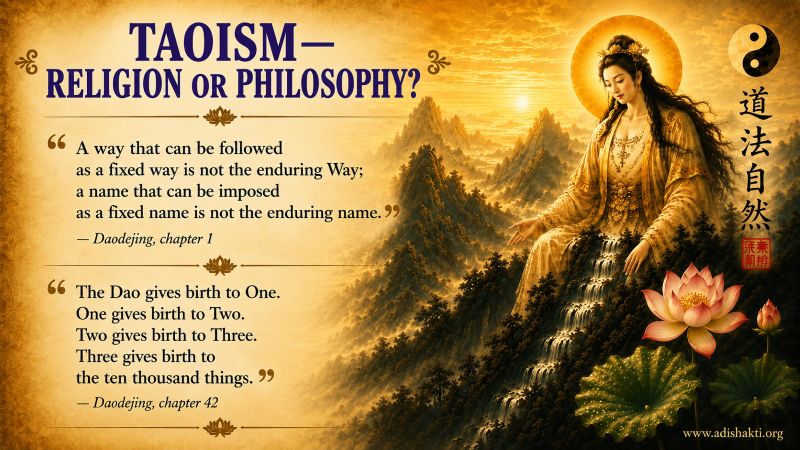 One Divine Feminine — Chi, prana, Holy Spirit and other terms
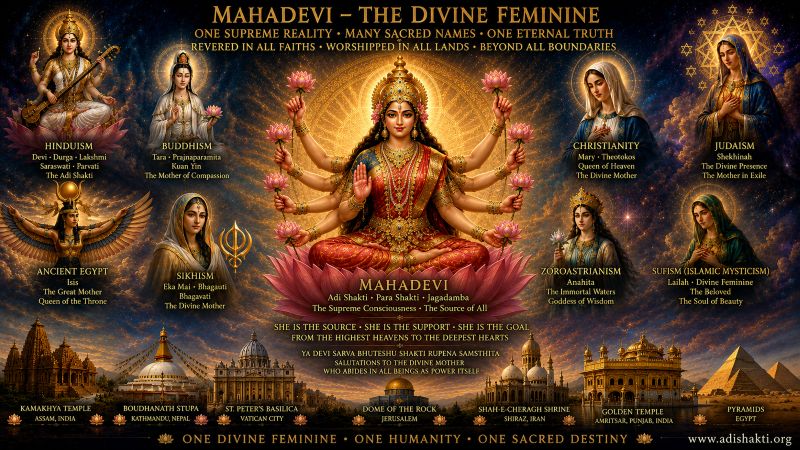 Mother Tao — Taoism—Religion or Philosophy?
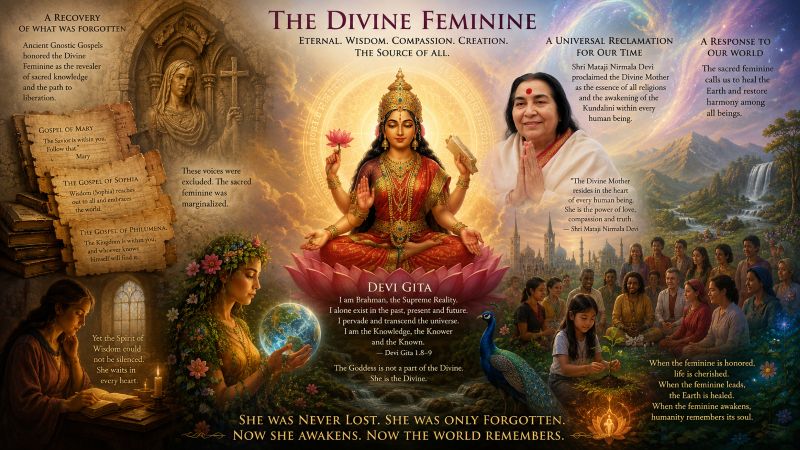 One Divine Feminine — Her Supremacy Across All Faiths
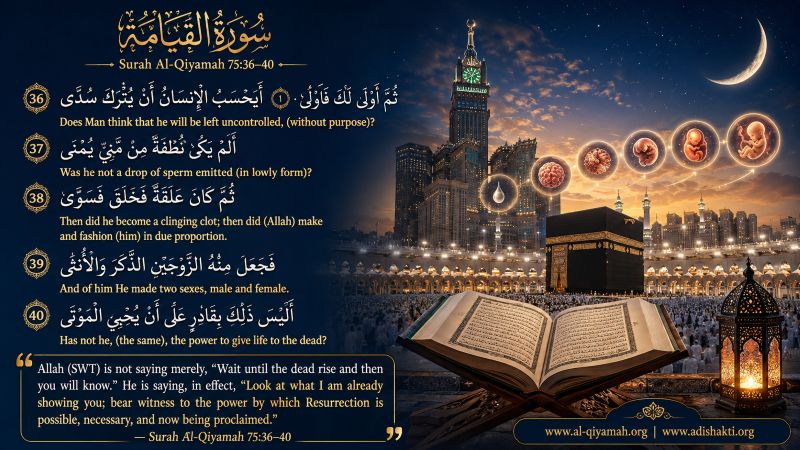 One Divine Feminine — Recovery of Sacred Feminine Today
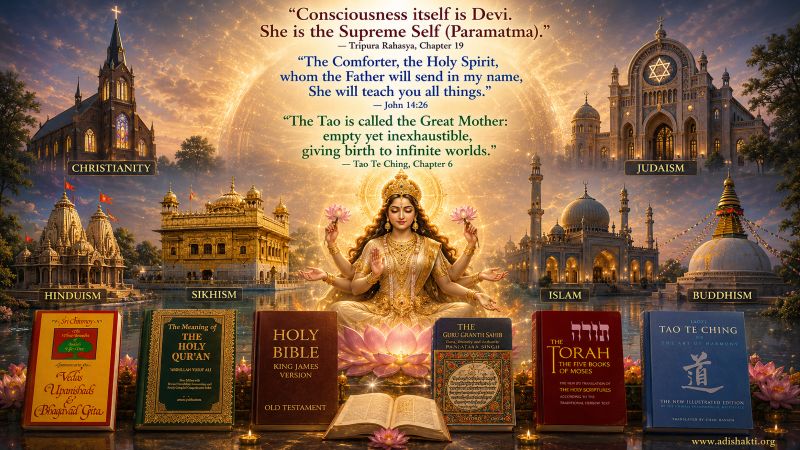 The Paraclete — Torah, Bible, Qur’an Under Same Test
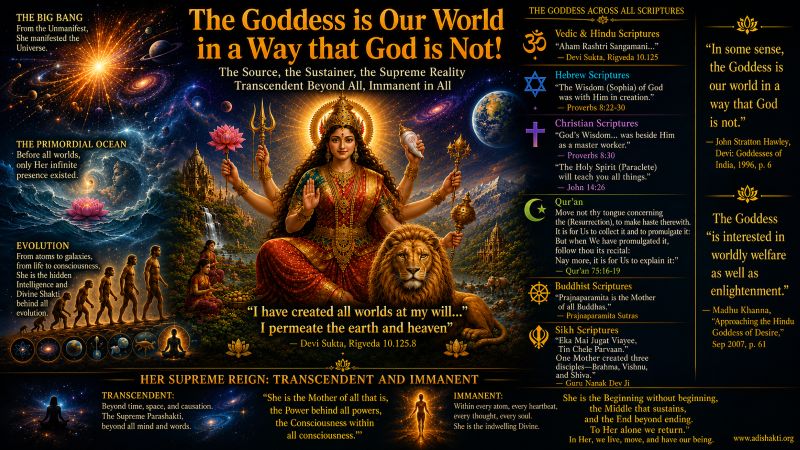 One Divine Feminine — One Mother Found in All Scriptures
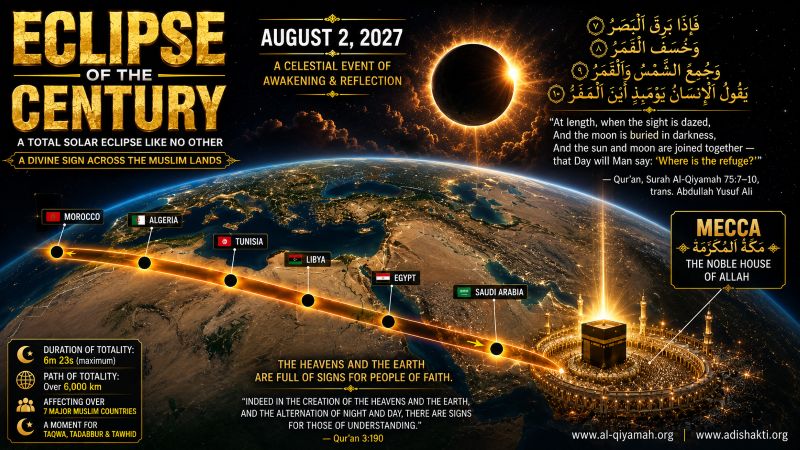 The Goddess — Our World in a Way that God is Not
 Allah and His Ruh — The Salat al Kusuf of Prophet Muhammad
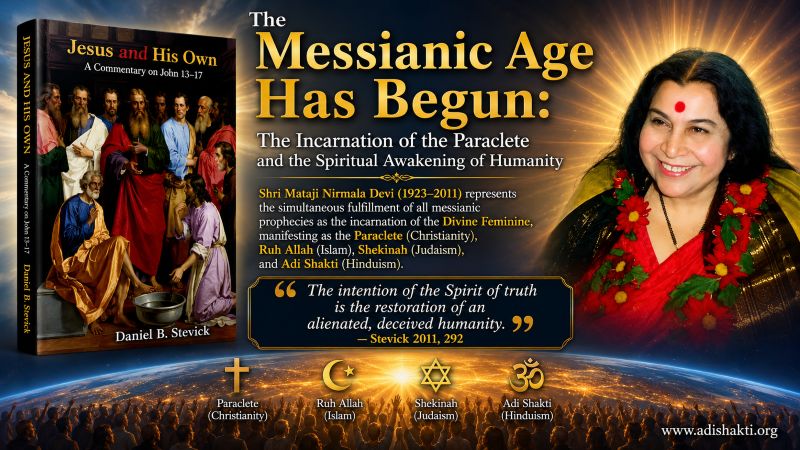 Allah and His Ruh — 2,100,000,000 Muslim Disbelievers!?
 One Divine Feminine — Logical Impossibility of Sequential Saviors
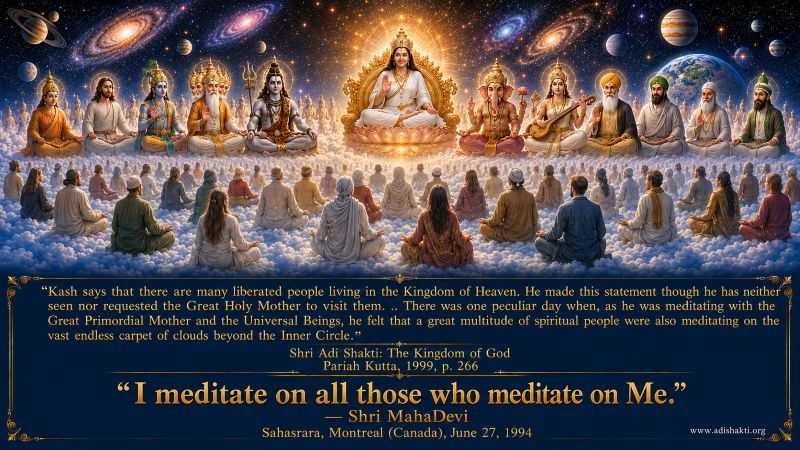 Jesus The Christ — The Paraclete and Last Judgment
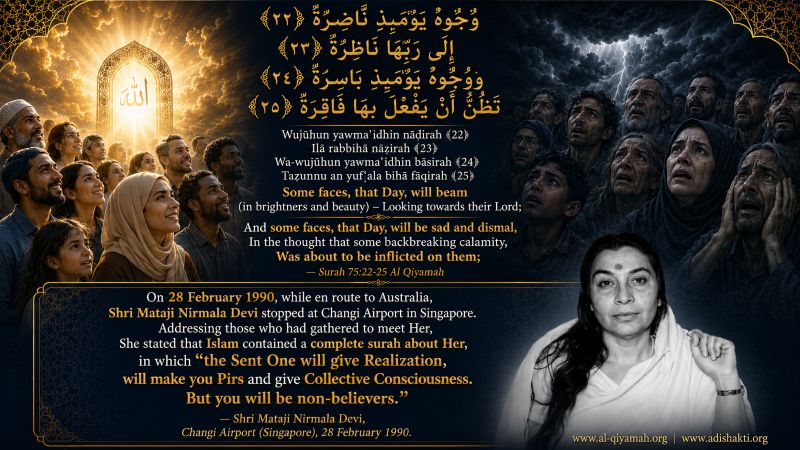 One Divine Feminine — Liberated Souls in Realm of MahaDevi
 Allah and His Ruh — Her Face brings either glory or gloom
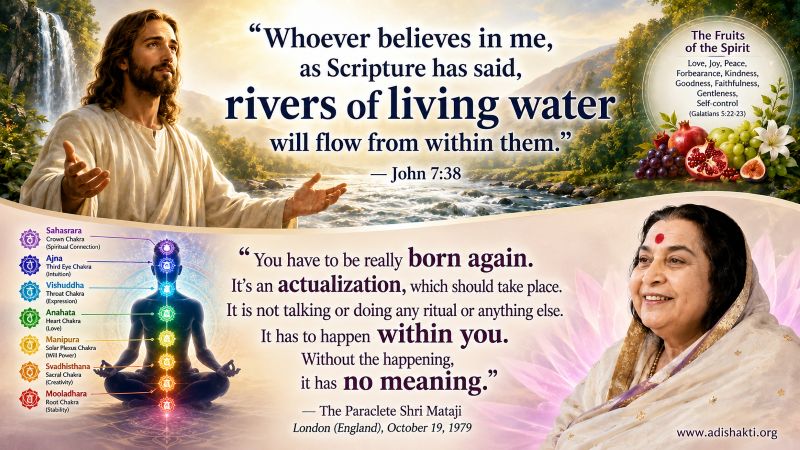 Allah and His Ruh — Man will be evidence against himself
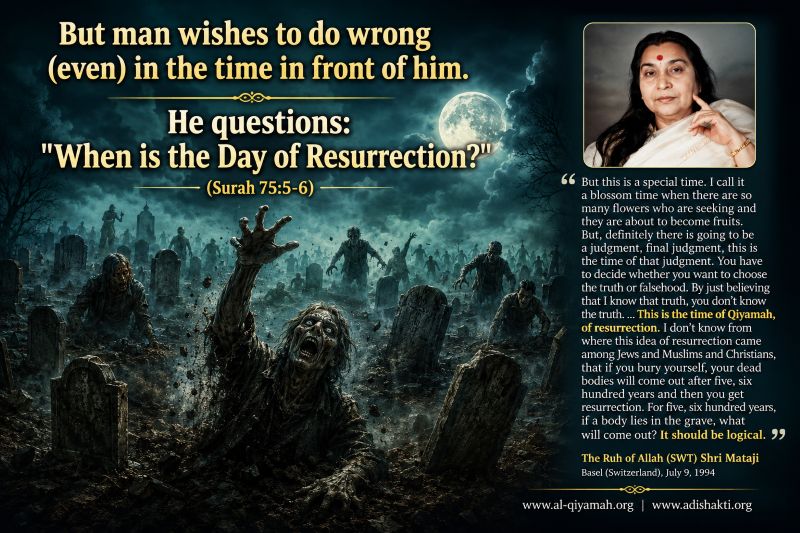 Jesus The Christ — Resurrection and the Fruits of the Spirit
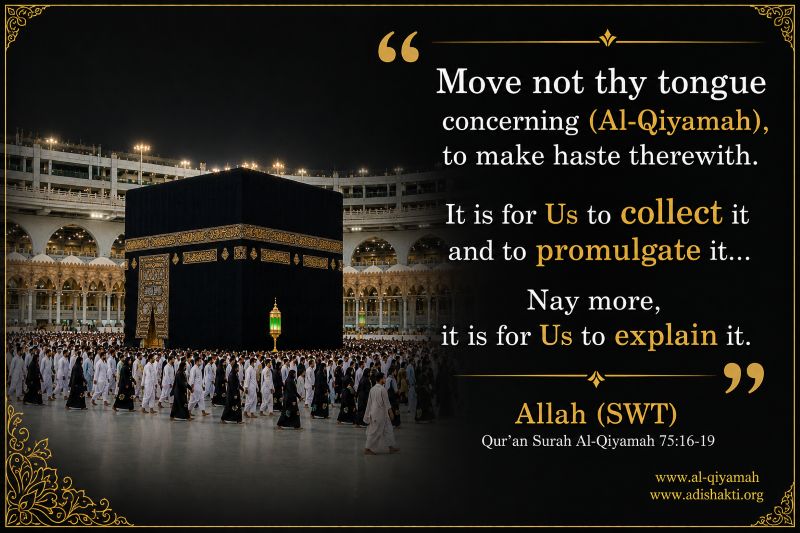 Allah and His Ruh — Resurrection of dead, decayed bodies!!!???
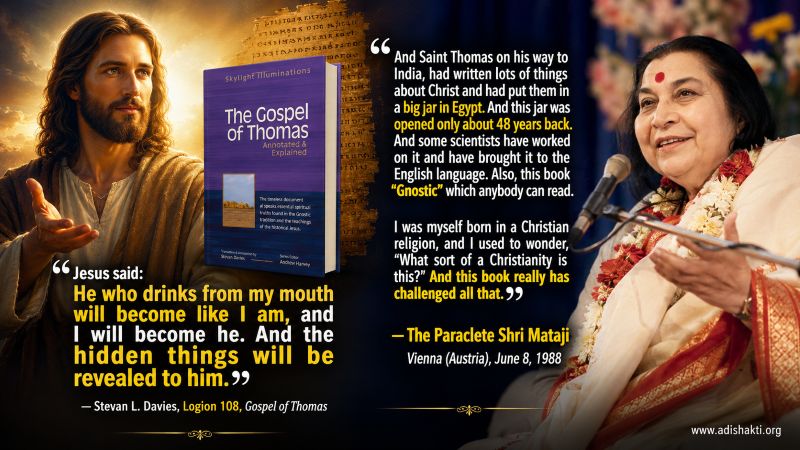 Allah and His Ruh — It (Resurrection) is for Us ... to Explain
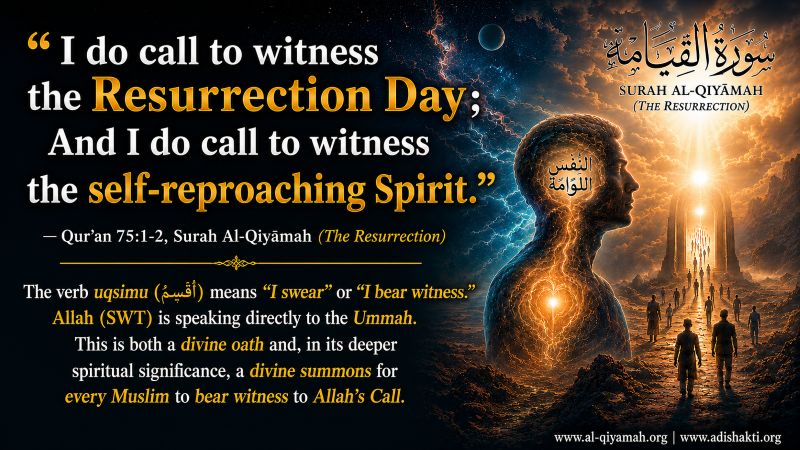 Stevan L. Davies — Huge transforming power is born
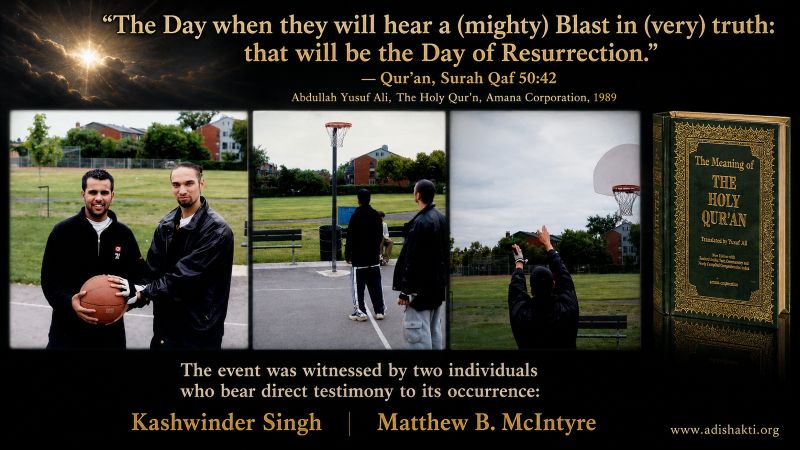
 Allah (SWT) Calls — Muslims to bear witness with Him
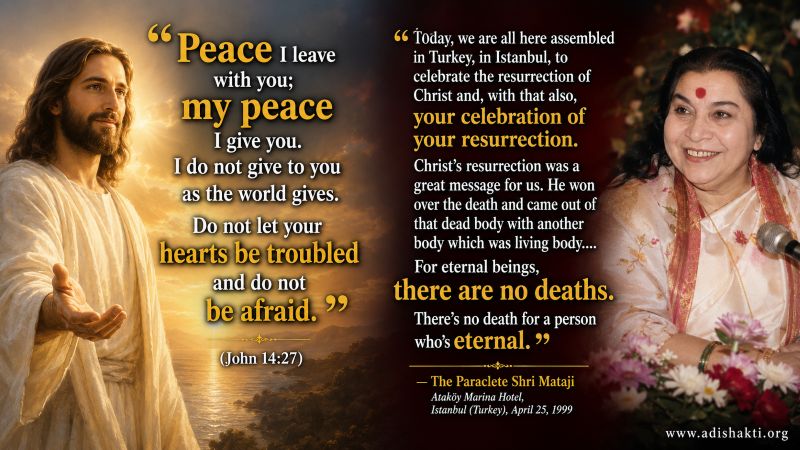
 Jesus The Christ — The Peace of the Risen Christ
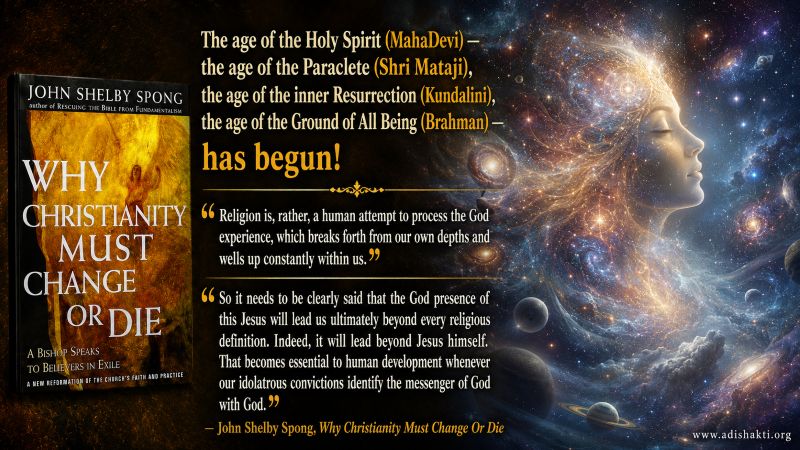
 John Shelby Spong — 2000 Years of Catastrophic Failures
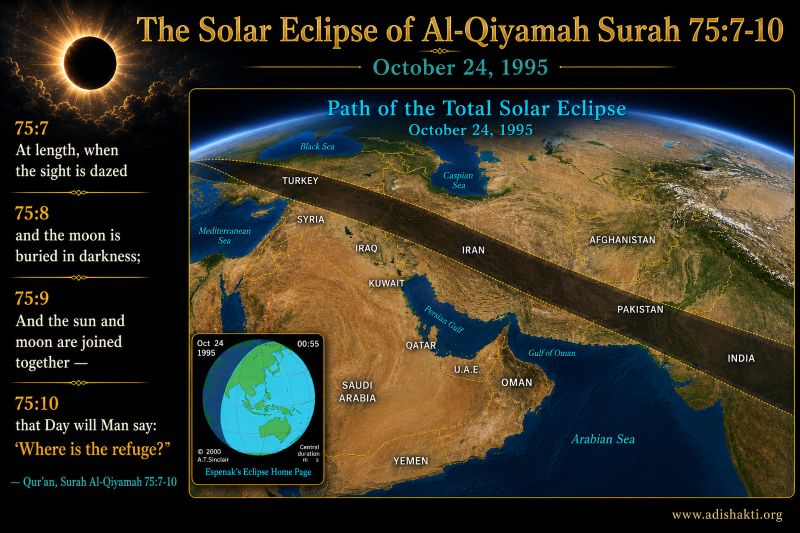
 Al-Qiyamah of Quran — Bearing witness to the Divine Eclipse
 An Naba of Quran — Bearing witness to the Great News
 Jesus The Christ — Is He small-sized or big-sized?
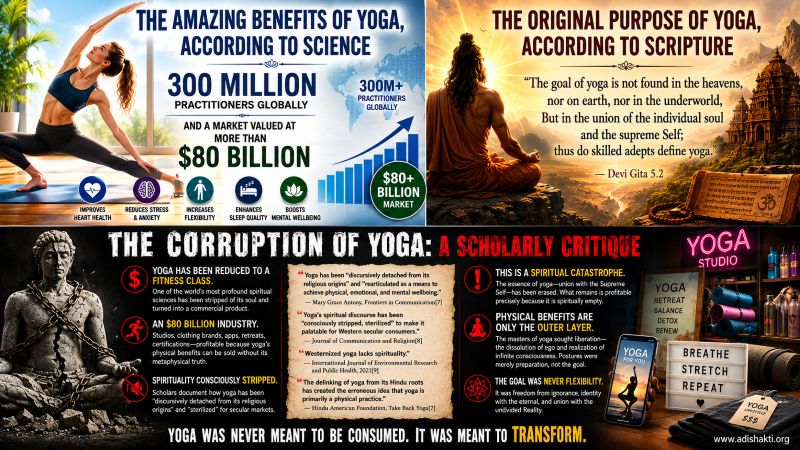
 Yoga Today — A $80 Billion Market Selling Shells of Yoga
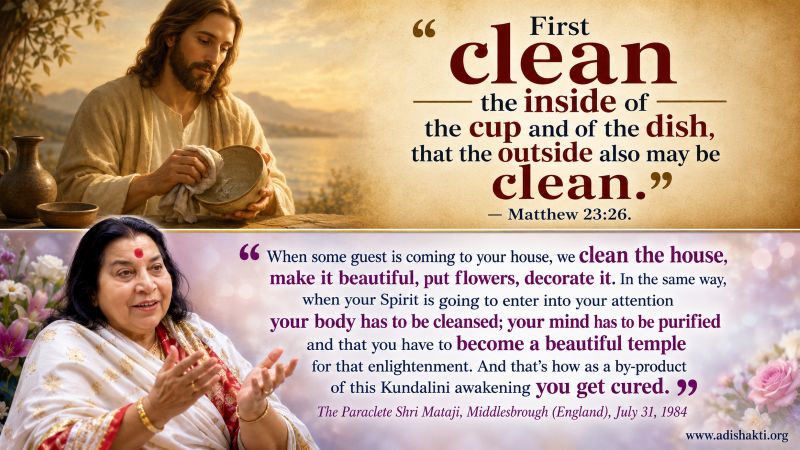
 Jesus The Christ — First clean the inside of the cup
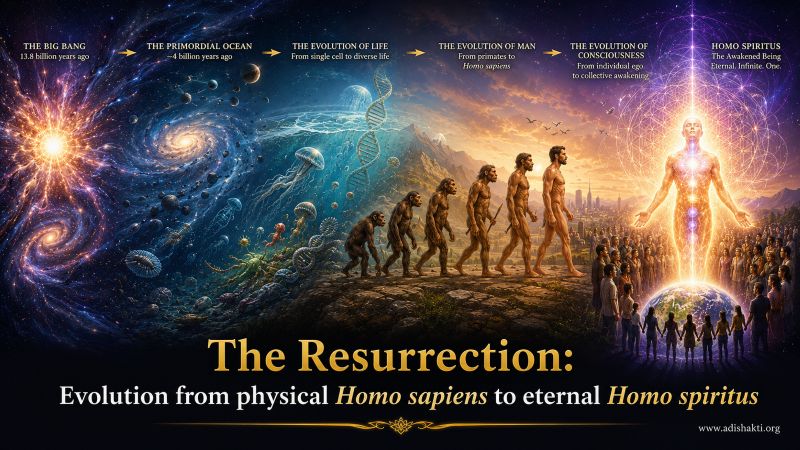
 The Resurrection — Evolution of Humanity into Homo Spiritus
 Nostradamus — 108 Reasons for rejecting Prophecy
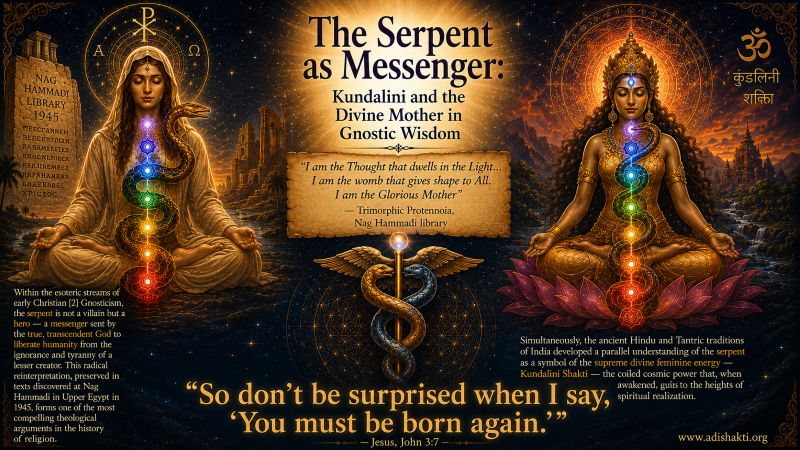 Manus AI — Self-Gnosis is the Knowledge of God
 Holy Spirit of God — The Presence of Christ Revealed
 Holy Spirit of God — I will pour out my Spirit on all flesh
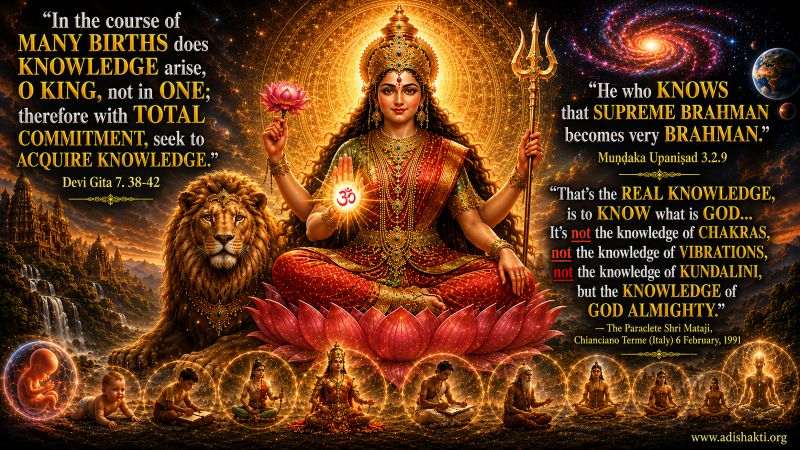 Divine Feminine — I am the Glorious Mother
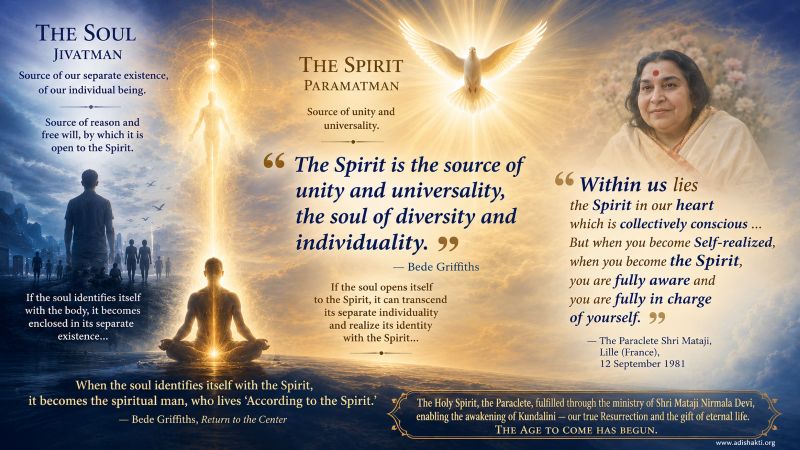 Shri Mataji — I will tell you all the secrets
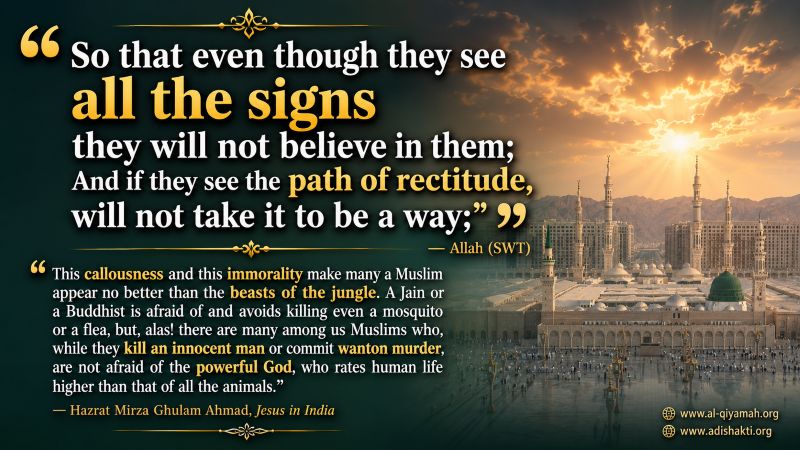 Jesus The Christ — Do not marvel ... You Must Be Born Again
 The Goddess — Supreme Knowledge of your Self
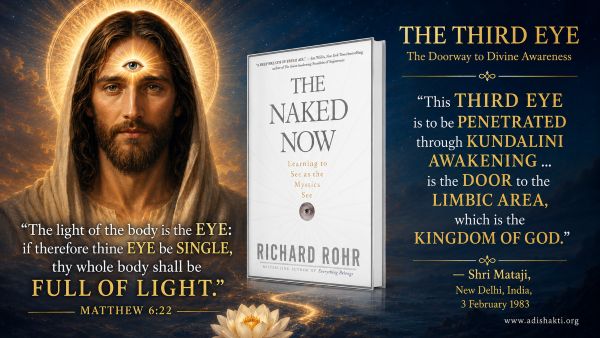 Bede Griffiths — Mystery of the soul and Spirit
Eschatology | Paraclete Theology | Last Judgment
Sahaja Yoga—Shri Mataji Archives: A Documentary History of Revelation, Self-Realization, and the Paraclete
This expanded Authenticity Series archive preserves the original linked record while distinguishing primary testimony, recorded teaching, scriptural interpretation, and claims requiring independent corroboration. Its central subject is the Adi Shakti as understood by Adishakti.org and the proposed identification of Shri Mataji Nirmala Devi with the promised Paraclete.
CONTENTS
1. Introduction: The Divine Mandate
The purpose of this archive is not simply to accumulate religious links. It is to make a decades-long documentary record intelligible: what Shri Mataji taught; what children and other witnesses reported; how those reports were interpreted through Hindu, Christian, Islamic, and Sikh traditions; and how debates over recognition, institutional authority, and Self-realization unfolded.
The theological proposition underlying the collection is that the primordial Divine Mother, or Adi Shakti, may be understood as the living source of spiritual transformation and as the fulfillment of promises associated with the Holy Spirit and the Paraclete. This is the interpretive position advanced by Adishakti.org; it is not an established historical or scientific conclusion.
The archive therefore separates three kinds of evidence: the words attributable to Shri Mataji in dated teachings; first-person recollections of unusual spiritual experiences; and subsequent theological interpretations connecting those experiences to scripture. Their significance depends on their provenance, chronology, textual accuracy, and the openness with which alternative interpretations are considered.
2. Archive Listings
The linked archive begins with the website's development around 2000 and extends across many years of essays, correspondence, discussions, scriptural comparisons, and recollections. The original entries remain below in their existing order, allowing readers to trace the evolving vocabulary and concerns of the project rather than encounter a selectively reconstructed history.
Its major strands include the nature of the Self, the experience of the Cool Breeze, the identity of the Divine Feminine, Christian expectations of the Paraclete, Qur’anic eschatology, the Guru Granth Sahib, and disagreements within Sahaja Yoga about the interpretation and public presentation of visionary testimony.
3. How to Read the Archive
Recorded teachings: A dated quotation should be checked against its complete transcript, recording, original language, and context. A brief excerpt may establish that particular words were used, but not necessarily that a later interpretation was intended by the speaker.
Witness accounts: Reports involving Kashwinder Singh and other children are presented as testimony about what witnesses say they experienced. The archive should preserve the original account, date, question-and-answer wording, and any independent contemporaneous records. Such testimony can be significant to a religious community without itself constituting externally verified proof of a supernatural event.
Scriptural parallels: John 14–16, the Devi literature, the Qur’an, and Sikh scripture belong to distinct literary and theological traditions. Similar language about spirit, truth, inward knowledge, or divine presence invites comparison but does not automatically establish historical identity or doctrinal equivalence.
Disputed institutional history: Allegations of suppression, accusations against witnesses, or opposition by Sahaja Yoga leaders should be attributed to identifiable documents and parties. The archive preserves such claims as part of the history of controversy without treating uncorroborated accusations as settled facts.
4. Major Research Themes
4.1 The Adi Shakti and the Primordial Mother
The Devi-centered articles explore the relationship between the transcendent Absolute and divine manifestation, and ask how the Mahādevī can be understood as both the ground of existence and the Mother encountered in spiritual experience. This reading is central to the archive's interpretation of Shri Mataji's mission.
4.2 The Paraclete and the Promise of Further Teaching
John 14:16–17, 14:26, 15:26, and 16:7–13 describe the Advocate or Spirit of truth in relation to Jesus and his disciples. Adishakti.org interprets these passages in light of Shri Mataji's teaching and the experience of Self-realization. Mainstream Christian interpretation generally identifies the Paraclete with the Holy Spirit; the proposed identification with Shri Mataji is a distinctive comparative-theological argument requiring explicit defense.
4.3 Self-Realization and the Cool Breeze
Many archive entries address the experiential claim that spiritual awakening is accompanied by a subtle cool sensation and a change in awareness. These reports should be described precisely as experiences reported by practitioners; the subjective sensation alone does not demonstrate a particular metaphysical explanation.
4.4 Resurrection, Judgment, and the Age to Come
Christian resurrection and eschatological imagery recur alongside Qur’anic descriptions of the Last Day. The archive investigates whether these can be read as present spiritual transformation rather than exclusively future cosmic events. Readers should distinguish the website's interpretation from the historical meanings of the texts in their respective communities.
4.5 Children's Testimonies and the Chronology of Revelation
Accounts beginning in the 1990s include reported encounters with divine figures and visions of events from sacred history. A careful chronology should identify the date of an alleged experience separately from the date on which it was written down or published. The June 20, 1995 account concerning the presentation of past events provides a particularly important case for studying how witnesses described spiritual time.
4.6 Recognition, Controversy, and Documentary Responsibility
Conflicts about how extraordinary claims should be assessed form part of the archive's history. A durable scholarly presentation preserves both the testimony and the objections, cites primary evidence where available, and avoids confusing disagreement with proof of bad faith.
Archival Disclaimer: Historical Preservation, Authenticity, and AI-Assisted Scholarship
This archive is maintained as a historical and documentary record of the teachings, testimonies, correspondence, publications, and spiritual claims associated with Shri Mataji Nirmala Devi, Sahaja Yoga, and Adishakti.org. Its primary purpose is to preserve the original materials faithfully, including their wording, dates, authorship, historical context, and documentary provenance.
All archived links and documents are intended to undergo progressive review and verification. Where appropriate, their contents will be examined through AI-assisted academic research papers incorporating historical, textual, theological, scriptural, and comparative analysis. Such studies will distinguish between primary-source evidence, personal testimony, religious belief, scholarly interpretation, and independently verifiable facts.
The original historical record will not be silently altered to accommodate later interpretations or AI-generated conclusions. Corrections, clarifications, annotations, and subsequent research findings will be identified separately, with the original texts, dates, and documentary evidence preserved wherever available. AI-generated analysis will be treated as an interpretive research aid, not as an independent historical authority or substitute for primary-source verification.
The continuing objective of Adishakti.org is to preserve its documentary heritage while developing a transparent, critically examined, and academically responsible body of research for present and future generations.
5. Original Linked Archive Catalogue
The catalogue below preserves the source document's hundreds of linked entries, retaining their original wording, dates, attributions, and documentary context wherever available. Some historical URLs may be unavailable or malformed; preserving a link does not certify its present accessibility or the accuracy of its contents. All links will be progressively double-checked and their contents examined through AI-assisted academic papers, with critical commentary clearly distinguished from the original materials. The original documents will remain intact rather than being silently rewritten or replaced.
- 2001 poster declaring Shri Mataji as World Savior
- 2008 is also a watershed for understanding Lord Jesus
- Aakhan-Jor: The Great Surrender
- A blatant and celebrated corruption of a most sacred secret!
- A Christian practicing sahaja yoga meditation
- A letter from a former fundamentalist Christian seeking the Truth
- A messianic deliverer who will usher a short golden age
- A most important realization before the inaugural celebration of Divine Feminine Day
- A most shocking satanic silence keeps humanity in darkness
- A Muslim message more irresistible than hate
- A new major religion on the scale to rival any of the great religions
- A Neuroscientist's case for the existence of the Soul
- A pearl of great price where the words of Jesus reads
- A question from a new Sahaja Yogi
- A very important point to remember about our own individual soul
- A willful and deliberate rejection by Muslims (Christians and Jews) of the Great News
- According to biblical prophecy, their reappearance signals Messianic time.
- According to Shri Mataji "Christ is settled on your Agnya Chakra"
- Across the crowd, I suddenly caught a glimpse of His mother, Mary.
- Adi Shakti, Holy Spirit and God Almighty - what is the difference?
- Age when the Holy Breath will testify anew for Christ
- Aim of being reborn within the spiritual motherhood is known to almost every religion
- Albert Einstein: "A spirit is manifest in the laws of the Universe"
- All Holy Scriptures uphold the Self as Spirit, for Self is God
- All you can do to understand Her is through Silence on Self
- All-Pervading Power of God felt as cool breeze or vibrations
- All-Pervading _has_started_acting_10-29-2004.htm) Power has started acting
- Allah is "closer to him (the human) than [his] jugular vein.”
- Allah's (SWT) Decree: "I do call to witness the Resurrection Day"
- Al Muddathir _6-06-2004.htm) (The One Wrapped Up): Arise and deliver warning
- An anti/ex-SY begins giving self-realization and telling truth about Shri Mataji
- An unpardonable crime against God Almighty
- And in the Hereafter Muslims will be asked: "O ye assembly of Jinns ...”
- And the Spirit and the Bride say "Come. And let them that hears say come"
- And tha t the whole story of Last Judgment which looks such a horrifying experience - 1
- And that the whole story of Last Judgment which looks such a horrifying experience - 2
- And that the whole story of Last Judgment which looks such a horrifying experience - 3
- And what does "eschatological" mean?
- And when you do get your Self-realization there is no religion to follow
- And where there is direct revelation, there is no room for doubt
- Anglican priest defends himself on conversion to Hinduism
- Apocalypse entails revelation of mysteries beyond human knowledge.
- An epistemological study of mysticism in Christianity and Hinduism
- Another Sahaja Yogi regains lost faith and determination
- Any suggestions on how to meditate in a non-Sahaj environment?
- Any event, transformation or tragedy may trigger this germination
- A Self Realization experience that is 100% verifiable.
- Arwinder: "I think He (Shri Buddha) is bald ...... a bit big.”
- Arwinder, what it is to be a spirit?
- A religious fanatic asks how can Mohammad be a prophet.
- A return of believed lost faith
- A revealed religion where those born of Spirit within feel cool breeze
- A single spark can start a prairie fire
- At a certain gap Kash felt the distinguishing vibrations of Shri Gautama Buddha
- At deepest level Tai Chi is a spiritual practice to achieve oneness
- At last i do not have to search in temples, churches, mosques ...
- Attention Sufis: Divine Feminine appears as Khatun-i-Qiyamat
- Ayatollah Rouhani: Sahaja Yoga in perfect harmony with teachings of Islam.
- Because She is incapacitated SYs do not think they can proclaim Her
- Being thoughtless \- is it a matter of practice, will-power...?
- Beliefwatch: 12/21/12
- Betrayal: The Crisis in the Catholic Church
- Bible and Qur'n confirm Day Spirit/Shakti/Ruh is poured
- Book of Revelation prophesies a general resurrection, judgment and new age
- Books written by other gurus
- Both Devi and Shri Krishna caution against the contradicting scriptures
- Boundless Scripture of Guru Granth Sahib
- Brahman incarnating as Shri Sita in past and Shri Kalki in future
- Brahman overcomes all Muslim/Christian objections
- Brahman/God-realization is far more difficult than Self-realization
- The Buddha and God - Buddha did not deny God's existence
- But his mother ... cried out against him, "Do not lie, Ialdabaoth"
- But if you do not know yourselves, then you dwell in poverty
- But there is a fundamental difference between present experience of Pentecost
- But absolutely nothing whatsoever can tarnish the Devi within
- Centrality of the Divine Feminine in Sufism
- Christ demonstrated Great Truth that resurrected body does not die
- Christ explains human redemption occurs by mediation of Divine Feminine
- Christian Comforter has come
- Christianity \- Jesus' religion or the religion about him?
- Christians need the "Mark of the Spirit" to overcome their fear
- Cit-Shakti (The Consciousness aspect of the Universe)
- Comforter (Holy Spirit) would be like a breath, like a wind
- The Comforter will explain "mysteries which are beyond the world ...”
- Coming Age where gifts poured forth will be the Age of Holy Spirit
- Comparing a single note from the Quran with an entire orchestra of the Guru Granth
- Concept of Shakti: Hinduism as a liberating force for women
- Consciousness: a new spirituality that addresses our deepest longings and dilemmas
- Confucius: "Now where does such a man derive his power?”
- Confucius recognized attainment of Tao is ultimate enlightenment
- Conservative rabbis loathe Sex and the City, love unholy sex
- Controlling the weather - Guru Patanjali preaching in Yoga Powers
- Cool Vibrations/Breeze/Wind - Testimony by the Most Veracious
- Core teachings of Jesus' Kingdom within have been lost
- Could you perhaps tell us how long it took?
- Countering stereotypes
- Christianity & Yoga - Why they belong together
- Dan Costian's "Bible Enlightened" A highly recommended book
- Dangers of Clairvoyance and other 'Powers'
- Dangers of Fundamentalism- I've been talking to Jesus all my life
- Day His Spirit/Shakti/Ruh is poured will coincide with day of Messiah
- Dear Preeti, the future failure/success of Sahaja Yoga will depend on ...
- Deepak Chopra: "We return to God remembering him"
- Despite unsurpassable knowledge of Shakti why do Hindus fear? 1
- Despite unsurpassable knowledge of Shakti why do Hindus fear? 2
- Despite unsurpassable knowledge of Shakti why do Hindus fear? 3
- Devadatta Kali: _In Praise of the Goddess_
- Devi and Her incarnation Shri Mataji Nirmala Devi are two different personalities
- Devi is avidya because She binds and vidya because She liberates
- Devi insists that liberating knowledge can be attained here in this world
- Devi: "Till the complete knowledge in the form of my consciousness arises, there is no liberation.”
- Devi, The Mother Goddess: "We have done our job here.”
- Devi, The Mother Goddess who resides within every being
- Devotee as Inquirer after Truth
- Devotees steal Sri Lalita title under noses of subtle system SYs
- Did Jesus die by crucifixion? Yes, otherwise how can you resurrect?
- Did Shri Mataji subject us to any of these demands, donations ...?
- Did the kundalini serpent lie?
- Difference between the higher self and lower self
- Difficult children feeling the Wind of the Tree of Life
- Disappearance of the Universe
- Disasters serve as wake up call to repentance and His Final Judgment
- Divine Cool Breeze of the Holy Ghost (Ruh/Adi Shakti)
- Divine Feminine is indeed rasing us humans
- Divine Mother by Ricky Hoyt
- Divine Wind flowing out of those born of the Spirit within
- Doctors _4-04-2004.htm) and Cool Breeze (Wind of Qiyamah)
- Doctrine Of Incarnation by Hari Prasad Shastri
- Does Shri Shiva incarnate? and does He actually reside at Mount Kailash?
- Dr. Gumaste, you should start looking into the psychological well-being of your patients
- Earthquakes as predicted in hadiths important signs of Last Day
- Edgar Cayce on Oneness
- Emancipation of human race is objective of Shri Mataji Nirmala Devi
- Enlightenment requires transcending both ego and ignorance
- Eternal life a law of the universe as true as any law of physics
- Every July 16 will be celebrated as _Al-Qadr_ (The Night of Power)
- The evidence is nailed on the front door of www.sahajayoga.org
- Evidence the Holy Spirit - the power of God - is feminine
- Explain to me a bit about the spiritual tradition of gurus and disciples 1
- Explain to me a bit about the spiritual tradition of gurus and disciples 2
- Explain to me a bit about the spiritual tradition of gurus and disciples 3
- Explain to me a bit about the spiritual tradition of gurus and disciples 4
- Explain to me a bit about the spiritual tradition of gurus and disciples 5
- False religion preached by those who have edited out Divine Message
- Fatimah, Mary and the Divine Feminine in Islam
- Feminine Spirit of God is working for our providence, redemption, guidance
- Final events in history, Resurrection and the souls that are making their way to God
- For if you walk on this road, it is impossible to go astray
- Francois Gautier: "It is false to say that Jesus is the only true' god.”
- Frances, i am working on your enquiries about Mary and angels.
- God (Brahman) exists in every living being. An individual needs no salvation therefore
- God intervenes directly only in one supernatural religion
- God is the eternal Root, the Ground of our being, our greater Self
- God Realization \- Not Just Sermonizing
- Gods for Sale
- Growing trend where Shri Buddha, Jesus and Ganesha meet
- Guru Granth Sahib: 1\. Mool Mantra - Fundamental Meanings
- Guru Granth Sahib: 2\. Ik Onkaar - The One God, the Absolute Reality
- Guru Granth Sahib: 3\. Satnaam - His name is Sat, Ever True
- Guru Granth Sahib: 4\. Kartaa Purakh - The Only Doer, the One Creator
- Guru Granth Sahib: 5\. Nirbhau Nirvair - Fearless and All-loving is He
- Guru Granth Sahib: 6\. Akaal Moorat - His Form Transcends Time
- Guru Granth Sahib: 7\. Ajuni - He is Without Birth or Beginning
- Guru Granth Sahib: 8\. Saibangh - He is Self-illuminating
- Guru Granth Sahib: 9\. Gurparsaad - The Grace of the Guru
- Guru Granth Sahib: 10\. Jap - Chant
- Guru Nanak: "My Light is the name of One and only God"
- Guru Nanak's teachings explained by Aykaa Mayee
- Has Shri Mataji's original Vision , Mission and Message been hijacked?
- Has Yoga strayed from its core?
- Having that co-efficient whereby vibrations can be worked out
- Healing of mind, body and soul is part and parcel of Divine Message
- He is devoted utterly to the God who is the Self - the Spiritual Person within
- He (Jesus) spoke the truth with complete courage, intensity
- Highest state is 'friendship and interior communion with God'
- Highest state of bliss is where knowledge of Brahman becomes a fact
- Hinduism studies are prejudiced but Shakti synthesizes
- Hindus still do not really know what Sanatana Dharma is
- His questions are the questions any seeker would ask - 1
- His question s are the questions any seeker would ask - 2
- Historical Sources and Knowledge of Kundalini
- History of Isha Messiah - Jesus the Christ
- Hold the heart and soul of the Bible right in front of their faces
- Hold the heart and soul of the Qur'n right in front of their faces
- Holy Spirit is not really an intellectual premise but a faith experience
- How a SY should be?
- How are these websites going to help in world peace?
- How can we throw off the dominion of priestly dark powers and walk in Light?
- How many leaders are asking us SYs to uphold Her Divine Message?
- How on earth can genuine-like SY fare so badly?
- How long will this chakra charade continue?
- Hypocritical hype of Christians evading Helper promised by Christ
- "I call it the Sahaja Yoga Subtle System Religion"
- "I felt drops flowing on my face from my Sahasrara.”
- I have said, Ye are gods; And all of you are children of the most High
- i heard 'with my own ears' Shri Mataji tell us: "I was the Buffalo Calf Woman.”
- I just used the word "THIAN" Instead of "Shri Mataji.”
- I must ask the question - the Kalki Avataar
- "I really did, you know! "he went on ...” What's it [cool breeze] all about?”
- "I still remember the day my foot touched its soil October 28, 1988"
- I will pour out in those days of My Spirit; And they shall prophesy - Acts 2:18
- If SYs do not articulate deep truth that the real master lies within
- In between Jesus Christ and His destroying incarnation of Mahavishnu
- In Luke 17:20, the Kingdom of God is said to be an interior state; "It's within"
- Idol worship is perhaps the greatest falsehood of Hinduism
- Idol worship: Jain Agamas give no reference to moorthis
- Idol worship: Fools think I am equipped with a manifested form
- Idol worship: They have simply puts idols in His place
- Idol worship: They who say the stone is God
- Idol worship: God's meeting place with man is heart
- Is Eucharistic adoration akin to worshipping an idol?
- Idol worship: Christians venerate statues of Christ and/or the Virgin Mary
- Idol worship: Ultimate act against Spirit
- Indweller (Antharayamin) is the only Being worth realizing
- Indweller (Antharayamin) is Shakti/Holy Spirit/Ruh/Eykaa Mayee
- Indweller (Antharayamin) - Liberation (moksha) consists in realizing this
- Indweller (Antaryamin) of Granth drawn from Brihadaranyaka Upanishad
- Inner experience of Jesus is available to all: Beware that no one lead you astray
- Inner experience of Jesus is available to all: The Son of Man is within
- In June 1994, Pramila's son, SY Harsh Mehra, took these faxes to London, UK
- In Luke 17:20 the Kingdom of God is said to be interior state
- Internet is the best approach to spread Shri Mataji's gift
- In the end the Truth matters most, whether a priest or pimp proclaims it
- In the final stage of consciousness man is enveloped by the will of God
- In the first quarter of the 21st century there will be a restoration
- Iqbal: "It is God's will. It is for the betterment of mankind at large.”
- i remember when Lalita wrote on the forum
- It is easy for people to confuse Chi (Cool Breeze) with the air
- "It is exactly the beginning of parousia in the holy souls ...”
- It is only during the Last Judgment and Resurrection will humans experience
- It is th e Divine Message that matters, not the divine messenger
- It is the talisman by which death itself becomes the portal to life
- Is Shakti Force?
- It takes 21 SYs to lie about Divine Message to humanity.
- Is the Buddhistv Sahasrarapadma, Hindu Sahasrara and Christian...?
- In the Brahma Purana, in the Lalitapakhyana, Devi says, "My male form ...”
- Is thoughtless awareness like this?
- It will all bring a great renown, an enormous following all over the world.
- It will obliterate all Muslim resistance to Great News of Al-Qiyamah
- I urgently need photographs of storm-damage
- It's a sign from God. He's giving us a sign that we must learn fast.
- I want to tell you something that Shri Mataji said about you
- I will pour out in those days of My Spirit; And they shall prophesy - Acts 2:18
- Jagbir's childre n are not the only ones to have visited Shri Mataji
- J. C. Ratzinger: "Spirit will now be with and in disciples to teach ...”
- Jesus' beard is slightly thicker and longer than the image below
- Jesus declared that gospel of the resurrection is the heritage of every man
- Jesus did not die for your sins ... proclamation is theological nonsense.
- Jesus: "God is spirit, and those who worship him must worship in spirit and truth.”
- Jesus Christ: "The works that I do, he will do also;"
- Jesus often spoke of the Kingdom of God as the theme of His gospel
- Jesus' point is that Kingdom of God is a historical process...
- Jesus reveals that Elijah and Moses are Divine Incarnations too
- Jesus said: "If the Son sets you free you will actually be free"
- Jesus: "They will set up their own churches in the image of my Body"
- Jesus: "You will learn Truth (gnosis), which will free you"
- "Jupiter will again pass Libra in 1993 and Sahaja Yoga will blossom.”
- Just exactly what is Consciousness?
- Kabir: The Man, The Myth, The Mystic, The Master and More
- Kahlil Gibran: "The Mother ... is the Eternal Spirit"
- Kali Yuga, the Consciousness of lower chakras
- Kalki Avatar: The Coming Prophet by Swami Amar Jyoti
- Karma of capitalist students and religious masses
- Katha Upanishad \- Part One (chapters I-III)
- Katha Upanishad \- Part Two (chapters I-III End)
- The Kingdom of God cannot be understood or experienced without the Holy Spirit
- The Kingdom of God realized during Last Judgment through the Comforter
- Knowledge is far more priceless than Silence, and precedes it.
- Knowledge of Devi that Liberates
- Kumud, you can, by reason of lack of conscience ...
- Kundalini Shakta (Yoga)
- Kundalini Shakti is the supreme power to realize God in this very life, within the physical body
- Laa Uqsim Bi-yawm Al-Qiyamah Wa-laa Uqsim Bi-an-nafsal-lawamah
- Lao Tzu: the Tao of Reality
- Laozi (one of 10 Primordial Masters) had high regard for females
- Last Birth on Earth
- Last Days: Even families will have greater conflict and break apart
- Last Days: False prophets and false christs will deceive many people
- Last Days: Famines, floods, diseases and epidemics will worsen
- Last Days: People will love pleasure more
- Last Days: World will be talking peace but there will be wars
- Last Judgment: "Only those whose beings remain rooted in Spirit ...”
- Last Things and the Kingdom of God
- Learning who Shri Mataji was i was completely filled with joy.
- Letter to Shri Mataji - i know this post will make many SYs angry and agitated
- Let's have collective meditation to commence Satya Yuga by 2013
- Let's raise the bar and set a minimum standard for the Blossom Time
- Light Above Shakti
- The Light of God ... is the first thing to appear when God wants to guide - #1
- The Light of God ... is the first thing to appear when God wants to guide - #2
- The Light of God ... is the first thing to appear when God wants to guide - #3
- Just like Judith Coney, i too have found many flaws in Sahaja Yoga
- Look deep with
- "Lord Jesus , who is your Father?” Shri Jesus immediately replied ...
- Long awaited Avatar who will establish new religion and new age
- Mahdi is the Saviour to come at time of Last Judgment
- Mahdi prepares us for the mystery of Resurrection
- Maybe SYs will stop turning Sahaja Yoga into a religion of lemons
- Magic photos \- Mother's garland in LA 2004
- Maha Shakti: The Universal Mother
- Many foreigners taking to Sahaj Yoga - Indian Express 23 July 1996
- Materialisation of the Spiritual Body of Jesus
- Matina, your friends have good reasons to have faith in Shri Mataji
- Maya-Shakti (The Psycho-Physical aspect of the Universe)
- The Mayan Calendar End-Date: 21 December 2012
- Meaning and significance of the phrase "Kingdom of God"
- Messiah will bear the Signs of that same Jesus who arrived in the past
- Meta Modern Era, The Advent, Bible Enlightened, Koran Enlightened
- Miracle from the Andaman Islands: All 50+ SYs are safe and sound
- Mishkat al-anwar: We are two spirits dwelling in one body
- Modern baptism false - read "Embracing Jesus and the Goddess"
- Mohamed Oumalek, Al Qadr will determine final destiny of all humans.
- Mohamed Oumalek, Al Qadr is the Night of Power because for the first time ...
- Mohamed Oumalek: "How to delete this previous karma?”
- MO: "What do you think the Baptism of Allah during Al Qadr is all about?”
- Mohd: "Isn't it unfair if good non-Muslims go to hell?”
- Mool Mantar is the basis of Sikhism
- More importantly, he expects scribe not to reject instruction about the Kingdom of Heaven
- Most important of all, why imperil your own soul?
- Mother's picture changes to Christ: "I do not know why ...”
- Muslims are as ignorant about Resurrection today as ancestral pagans
- Muslims can only ban yoga but not Al Naba, the Great News of their Quran
- Muslim nations have begun blocking www.al-qiyamah.org
- Muslim pujari in Durga's abode
- Muslims unable to find even one of 123,974 missing prophets 14 centuries later
- My sahaji sister, i know the Divine Feminine within me acknowledged your message
- Mystery of the Crucifixion
- Mystic's discovery of the higher Self is only a step on a greater journey
- Mystics have always drawn the ire of institutionalized religion 1
- Mystics have always drawn the ire of institutionalized religion 2
- Nature of Brahman: The Supreme Self By Prof. Harish C. Gaur
- Neither Shri Mataji nor Jesus claimed to be God Almighty
- Never heard again from WCASY # 8 Majid Golpour since April 30, 2002
- Never in history have so many borne witness to a greater act of ...
- Nine Nights and a Thousand Names
- No Jewish state before coming of Messiah
- No object athat is worshipped as a this' will enlighten - only Silence on Self
- No one can know ... unless someone comes down from heaven
- Not through discourse, intellect or study of scriptures can the Self be known
- Nothing less than the Gospel message is at stake
- Now and again a daring soul, desiring immortality, has ...
- Now in these last days God is restoring the knowledge of truth
- Now then boys and girls, let's play the 'religious dogma'
- Number of 'divine mothers' keep on rising.
- Of Her alone was born Brahma, Vishnu, Rudra - Japji Sahib & Bhavnopanishad
- Oh! Vast Rome, your ruin approaches!
- Om, take Alex's advise and do Sahaja Yoga for 6 months at least
- On retaining the integrity of the original texts regarding Sophia
- On September 22, 1994 the MahaDevi told him that ...
- One day we will challenge a billion Muslims to dare defy Him, His Spirit and Great News
- One major Christian theological debates -"free will" vs. ”predestination"
- Only purpose of being born as man is to evolve spiritually, nothing else
- Only by practically touching the truth itself can liberation be won
- Only His Spirit/Shakti/Ruh's Divine Message can destroy divisions
- Only Last Judgment of Bible and Al-Qiyamah of Quran
- Only Shakti is entrenched in Bible (Comforter), Koran (Ruh)
- Only Shri Mataji's message of the Great Event can end clash
- "Only when the hour has arrived for his glorification does Jesus promise ...”
- Only within humans She finds the possibility of being consciously awakened
- Our Mayan web page rockets to #1 Google rankings in just seven days
- Lalita Kaur: "Papa, do not leave me alone on Earth.”
- Paraclete will enlarge range and understanding of Jesus' teaching
- Param Chaitanya \- The All-Pervading Power of God Almighty
- Passion of Christ - It will be an insult to the Savior
- Past resurrection of Jesus now generates present power of spiritual rebirth
- Pope claims to be God on Earth
- Preordained Mighty Blast witnessed by only two persons
- Principles that will assure success of Shri Mataji and Sahaja Yoga
- Prophecies of the Q'ero Inca Shamans
- Prophetic promise of Resurrection after Children of Israel gathered
- Prophet Muhammad: "Era will come when humanity will re-commit ...”
- _Qi_ is a Chinese term that is translated as breath, vapour, and energy
- Quran 41:53: "We will soon show them Our signs ... in their own souls"
- Questions from inquiring seekers and answers given without fear
- Quotes of Shri Mataji to introspect and cherish
- Quotes from "Unmasking Catholicism" by Mary Ann Collins
- Qur'n 17.85: "They ask thee concerning the Spirit"
- Raising Kundalini With Sahaj Yog (The Times of India)
- Ramana Maharshi (1879-1950) - Sage of Arunachala Hill
- Realization is rice; all else is chaff - Amritabindu Upanishad
- Reaping the fruits of our past lives is a difficult concept for me
- Reasons why we need www.holyspirit-shekinah.org
- Reincarnation the the Bible
- Relationship between Vibrations and Scriptures
- Renitha Govan: "As I say I have not gone into yoga or anything.”
- Ruach is the activity of God in connection with the prophetic word or messianic expectation
- Ruach, _11-06-2004.htm) the breath of God experienced daily as cool breeze/wind 1
- Ruach, _11-06-2004.htm) the breath of God experienced daily as cool breeze/wind 2
- Ruh of Allah \- the third most important article on Islam
- Shri Ganesha Is Shri Mataji's Son
- Sahaja Yoga \- A revealed religion or a cult of mind control?
- Sahaja Yoga, Osho and Zen represents struggle to cross the Void
- Sahaja Yogini with a Moslem husband
- SYs must face the issues presented by those who challenge them
- Sahaj Love shines from The Light within - the same God/Allah/Brahman
- Sahasrara Puja 2004, Nargol, India
- Sakti or Devi is Brahman revealed in The Mother aspect (Srimata)
- Sakti or Devi is the Sacred Mother: the Seer, the Seen and Seeing
- Salvation through the Church
- Sanskrit, the Deva-vani (language of the gods) is an eternal language
- Searching for the Divine Feminine
- Secret Prophecy Of The Grandmothers
- Secret taught by living Jesus: "If you know yourself then ...”1
- Secret taught by living Jesus: "If you know yourself then ...”2
- Self as Spirit: "Jesus answered them ...”
- Self-Realisation: Cosmic Vision Alone Reveals the Truth
- Semira, She indeed is The Mother of the Millennium
- Semira, the 2nd dream seems to point to End and Second Coming
- Shakti in Taoism
- Shakti is not the possession of a male deity, as She is the consort of none
- Shakti pervades all religions and is entrenched in their scriptures.
- The Shakti Principle
- Shakti: The World as Power
- Shakti and Maya
- Shakti and Shakta
- Shakti as Mantra (Mantramayi)
- Shapers of Destiny: Leaders and followers co-create each other
- Shapers of Destiny \- The 1452 Inquisytion
- Sharing consciousness of the Divine Message
- She is medium through whom they will enter into full understanding of Christ.
- She is the holiest and most secret inwardness of Allah
- She represents battle of Divine forces against forces that are Asuri
- She saw all the gods and goddess paying obeisance to SM
- She sees all, but no one sees Her - Japji Sahib & Brihadaranyaka
- Shortest distance to The Mother is within yourself
- Shri Mataji: “A day will dawn, when the whole world would bow ...”
- Shri Mataji: “A great war is taking place between the satanic forces and the Divine Forces"
- Shri Mataji: "About Sahasrara nowhere in the scriptures something was described"
- Shri Mataji: "Achieve your Self, become your Self"
- Shri Mataji: "After all we are all human beings created by one God"
- Shri Mataji agreed puja be held in Montreal
- Shri Mataji: "All the people laugh at us, nobody believes us.”
- Shri Mataji: "All these rituals have entered into Sahaja Yoga.”
- Shri Mataji: "Among Muslims there are Sufis... who are realized souls"
- Shri Mataji: "And now the time has come for it to be blasted.
- Shri Mataji: "Angels ... sometimes working through a human form"
- Shri Mataji: "Announce it to all the seekers of truth, to all the nations.”
- Shri Mataji: "But if you put one little fish and two eggs for ten people"
- Shri Mataji "But now it is you people who have to prove it that I am that!"
- Shri Mataji: "But the Muslims do not want to talk about Resurrection at all"
- Shri Mataji: "But this Judgment is so beautiful ... you enjoy the bliss of your Spirit"
- Shri Mataji: "But you know that you have eternal life. You can never die.”
- Shri Mataji confirmed approval of book for a total of FIVE times!
- Shri Mataji: "Death does not exist for you — It is finished... your spirit is free.”
- Shri Mataji: "Do not destroy your spirit by going to such people.”
- Shri Mataji: "Every religion has said you have to have Self-realization"
- Shri Mataji explains what real leadership quality entails
- Shri Mataji: "For all people whom I gave Self Realization yesterday"
- Shri Mataji: "He (Jesus) was the Holiest of the Holy. You accept that position.”
- Shri Mataji, how many languages do you speak?
- Shri Mataji's Identity and Divine Message may be too much for seekers?
- Shri Mataji: "I don't care for your protocols and rituals. It is nonsense for me.”
- Shri Mataji: "I have to warn all the SYs ... Sahaja Yoga is the Last Judgment"
- Shri Mataji: "I must say they are committing the greatest sin ...”
- Shri Mataji: "I was with Him (Guru Nanak Ji), in fact with all of Them.”- 1
- Shri Mataji: "I was with Him (Guru Nanak Ji), in fact with all of Them.”- 2
- Shri Mataji: .”... if you see around the world is in chaos"
- Shri Mataji: "It means the Last Judgment has begun with full force"
- Shri Mataji: "It will be slowly revealed by Me ...”
- Shri Mataji: "Like all the thieves of the world ... have taken over.”
- Shri Mataji: "Meditation is not to sit before the photograph ...”
- Shri Mataji mentioned twice that we should go to Canada
- Shri Mataji: My actual sign name is Lalita who is the name of the Primordial Mother
- Shri Mataji: "Nobody has to change dresses or anything - it's nothing outside.”
- Shri Mataji: "Now watch. I will change the direction of the waves.”
- Shri Mataji: "No reality in those religions...no Divine Force working"
- Shri Mataji: "Pure knowledge is not of chakras, vibrations, kundalini but of God Almighty.”
- Shri Mataji never insisted footsoaking be a daily ritual
- Shri Mataji said there was no knowledge before about the 7th chakra
- Shri Mataji: "Self-Realization will progressively lead to the creation of a new race"
- Shri Mataji: "Tell Jagbir now to leave it to Her.”
- Shri Mataji: "The expression of the Adi Shakti (Holy Ghost) within you is the Kundalini.”
- Shri Mataji: "Christianity has nothing to do with Christ.”
- Shri Mataji: "The time has come for you to get all that is promised"
- Shri Mataji: "The ultimate act against the Spirit ...”
- Shri Mataji: "The whole Cosmos is waiting for their arrival.”
- Shri Mataji: "They are stagnated at the point of dharma, so they start telling ...”
- Shri Mataji: "There is so much blind faith ...”
- Shri Mataji: "They came to Sahaja but they said "We cannot worship Goddess.”
- Shri Mataji: "They made Christ look like a TB patient"
- Shri Mataji told of a great blessing to mankind that would confirm Her
- Shri Mataji: "You have to enter into the Kingdom of God"
- Shri Mataji:v "Your job is, in a way, greater than the saints and sages.”
- Shri Mataji's Divine Gift To Humanity
- Siddhis absolutely necessary to prove Shri Mataji is Shri Lalita
- Siddhis \- Gift of God's Grace or consequence of own efforts?
- Signs of the Last Day: Earthquakes, poverty and collapse of values
- Signs of the Last Day: The Destruction of Great Cities
- Signs of the Last Day: The Rejection of True Religion
- Signs of the Last Day: War and Anarchy
- Silence on Self \- She who is the Self in all (Shri Lalita Sahasranam)
- Silence on Self: There is nothing else to learn, realize or meditate on
- Sikh saints have no idea where or what Dasam Dwar is
- Sikhism \- Valus and Beliefs
- Spirituality, Theosis, Holy Spirit, the Indiviudal and the Church
- So does god really kill to save? Yes, says Billy Graham of Sri Lanka
- So is everyone who is born of the Spirit going to feel the cool breeze
- So just dig a single pit fifty yards deep
- So Non Being, having decided to be, became Spirit and said
- Soul or soulless, God or godless?
- So where else does the Goddess reside, if not in your Sahasrara?
- Specifically for those who claim World Council has the highest powers
- Spiritual experience that dissolves karmans accumulated over aeons
- Spirit World you write of so often
- Stages of spiritual development
- Striking A Pose By Hanna Rosin
- Substance abuse and reason why Mother Kundalini will heal
- Supporting evidence that the Holy Spirit is feminine
- Supreme Devotion to Devi
- Supreme Master Ching Hai's wombless babies
- Surah Al-Qadr: "We have indeed revealed this Message"
- Swami Chidananda on Self-Realisation
- Swami Vivekananda: "Mark me, every one of you will have to be a Govind"
- SY leaders who are even afraid to talk about the Resurrection
- SYs who are able to roar like lions and squeak like mice too
- SYs, will conjectured human fiction or revealed divine truth emancipate?
- SYSSR set up by WCASY will always be self-destructive
- Tao, (Great Mother) is an entirely comfortable and universal idea
- The illumined man observes no rites or ceremonies - Paramahamsa Upanishad
- The Tao-te ching and Lao-tzu
- Ten Commandments and Manav-Dharm-Shastra give way
- Testimony by the Most Veracious of Witness
- Testimony of Themba, an abused child and gang member
- That control includes the exclusion of the message of Christ and the Comforter
- That great causeway like unto a line traced on the waves ...
- The Apocalypse and SY: How does it fit in?
- The discoverer of the Atman must also discover this inner Light
- The eternal, ever-youthful and extremely beautiful Devi in his Sahasrara
- The First and Second Deaths of the Quran, Srimad Bhagavatam and Bible
- The Goldilocks Enigma: Why is the Universe Just Right for Life?
- The godly light is exactly the beginning of parousia in holy souls
- The Great Cover Up [of Christianity]
- The Great Goddess who illuminates and breaks the self-hypnotism
- The harvest should be taken to represent final judgment
- The Holy Spirit: the Christian Goddess
- The Indian Magna Mater - I The Divine Mother
- The Indian Magna Mater - II Evolution
- The Indian Magna Mater - III Dissolution
- The "individual human being" is a dwarfed, misshapen wretch
- The Light \- Buddhiism
- The Light \- Christianity
- The Light \- Hinduism
- The Light \- Islam
- The Light \- Judasim
- The Light \- Sikhism
- The Light is not more in Buddhas and not less in ordinary beings.
- The Mysteries of the Kingdom: reasons i am stunned (Part 1)
- The mortal race and the immortal race
- The Mystic Path
- The Reincarnation of Jesus
- "The religion of Vedas knows no idols.”- German philosopher Max Muller
- There were no religions when rishis proclaimed these Truths
- The serpent is a messenger from the true God of divine wisdom
- The Speaking Tree : Sahaj Yoga - The Master Key to Happiness
- The Shakti Principle
- The Spirit and Angels
- The supreme divinity, Lalita, is one's own blissful Self.
- The supreme divinity, Lalita, is one's own blissful Self - Look deep within
- The supreme divinity, Lalita, is one's own blissful Self. #1
- The supreme divinity, Lalita, is one's own blissful Self. #2
- The Three Mothers who birth, nourish and liberate every human being
- The true story of a monk, boy, donkey and murmuring souls
- The very survival and salvation of humanity and Mother Earth is at stake
- The Vision for the Future - i am still reeling from a devastating email
- The word "pope" was to both Lord Jesus and the Great Adi Shakti ...
- Theosis is state akin to 'enlightenment' and 'self realization' through which soul reflects itself.
- There is no duality between my Guru and Self Lalita Devi, and me
- There can be no idols of formless Lalita Devi
- They come back to inspire others to build a divine kingdom
- They say that at Sahasrara when the Goddess will appear ...
- This quote is the very foundation on which www.adishakti.org stands
- Those who know the Self become the Self - Mundaka Upanishad
- Though it validates religion, mysticism also tends to escape the fetters of organized religion
- Three Taoisms and Their Approaches to Te
- Till complete knowledge of Shakti's consciousness arises
- Till today 10-29-2006 WCASY unable to muster courage and conviction
- Times Of India Articles
- To all people around the world
- To all Muslims: "You persistently closed your mind to this promise" of the Resurrection!
- To those management SYs who want to organize/ suppress the Truth
- Today i feel a bit foolish that it took me that long
- True metaphysical knowledge that dispels ignorance and delusion
- True Muslims are those submitted to Allah's Will
- Truth alone triumphs, not untruth
- Truth about all religions is pre-condition for harmony
- Truth is we Muslims are bankrupt as a religious community
- Truth that subtle system SYs and WCASY conveniently forgot
- Ultimately the yogi must be guided by the Divine from within
- _Upanishad Amrut_ will help you understand reality of Brahman/Lalita
- Use Quran (and Bible) against those who scoff at Last Judgment
- US evangelical movement, Ummah and SYs seek same refuge
- Various guises are the diverse forms She adopts
- Vibrations and difference between using them in Heaven and Earth
- Vatican recognizes Jewish expectations of a Messiah
- Vedanta says that all religions contain within themselves the same truth
- Visualization \- try continuing and see where you will end up
- WCASY do not officially uphold Shri Mataji's Message as requested
- Walter Mercado: "But before it comes, the old must be purged.”
- We are bu t at the earliest dawn of the Millennium of the Spirit
- We need spiritual understanding to grasp Devi's incarnation
- What Became of God The Mother? - 1
- What Became of God The Mother? - 2
- What Is Meditation? By Dr. Harsh K. Luthar
- What is Reincarnation?
- What is Spirituality?
- What is the difference between TM and Sahaja Yoga?
- What is this Trinity that both religions [Hinduism & Christianity] worship?
- What is in the scriptures that has been collectively promised to all humans?
- We will have to celebrate the experience of the Great Mother
- "We will show them Our signs in the universe and within their own beings"
- What Shri Mataji said about..........
- What we need today is a conscious effort to see the thread connecting all
- We are Her gurus now, and trace a direct, flawless and well-documented lineage
- When She has come, the Comforter, She will convince the world
- When Jesus and Shri Mataji talk about God Almighty you (suspect ...
- When Jesus and Shri Mataji talk about God Almighty you (know ...
- "When will of man and will of God are one, the resurrection is a fact.”
- Who has the Power to give spontaneous union with the Divine?
- Who is the Being having Intelligence and purpose for humanity?
- Who is the Virgin Mary and what are angels?
- Why Christianity must change or die - A Bishop Speaks
- Why Christianity must change or die - Review by Peter A. Young
- Why did Shri Christ die for us anyway?
- Why does Shri Mataji keep reminding us of Jesus Christ?
- Why not defend all religions and end the deep divisions?
- Why religions discouraged followers from learning reincarnation?
- Will it be a turning point? Yes, once it becomes clear
- Witness to the Sahasrara, the Kingdom of the Spirit
- World today is fast becoming a giant spiritual supermarket
- Yoga is an art of living and not a religious practice
- Yoga is being vigorously commercialized in America
- Yogi is superior to the ritualists; therefore O Arjuna be a yogi
- Yogis considering the kundalini awakening as resurrection
- "You ain't seen nothing yet applies to all who believe
- You can begin taking part in Great Event ordained for humanity.
- You will find Him here within yourself. Awakened He resides.
- Young of African/Muslim descent experiencing Winds of Qiyamah
6. Conclusion: Preservation, Discernment, and the Search for Truth
The significance of this archive rests in the continuity of its documentation and in its invitation to examine claims rather than merely repeat them. Its theological vision presents the Divine Mother as the source of Self-realization and interprets Shri Mataji through the language of the Adi Shakti and the Paraclete. The strongest version of that case will make original testimony accessible, identify sources precisely, acknowledge competing readings, and distinguish spiritual conviction from publicly verifiable history.
Artificial intelligence can help index, compare, and clarify a large corpus; it cannot independently certify divine identity, validate miracles, or replace the critical judgment of readers. The archive is most valuable when it enables careful investigation across traditions and generations.